
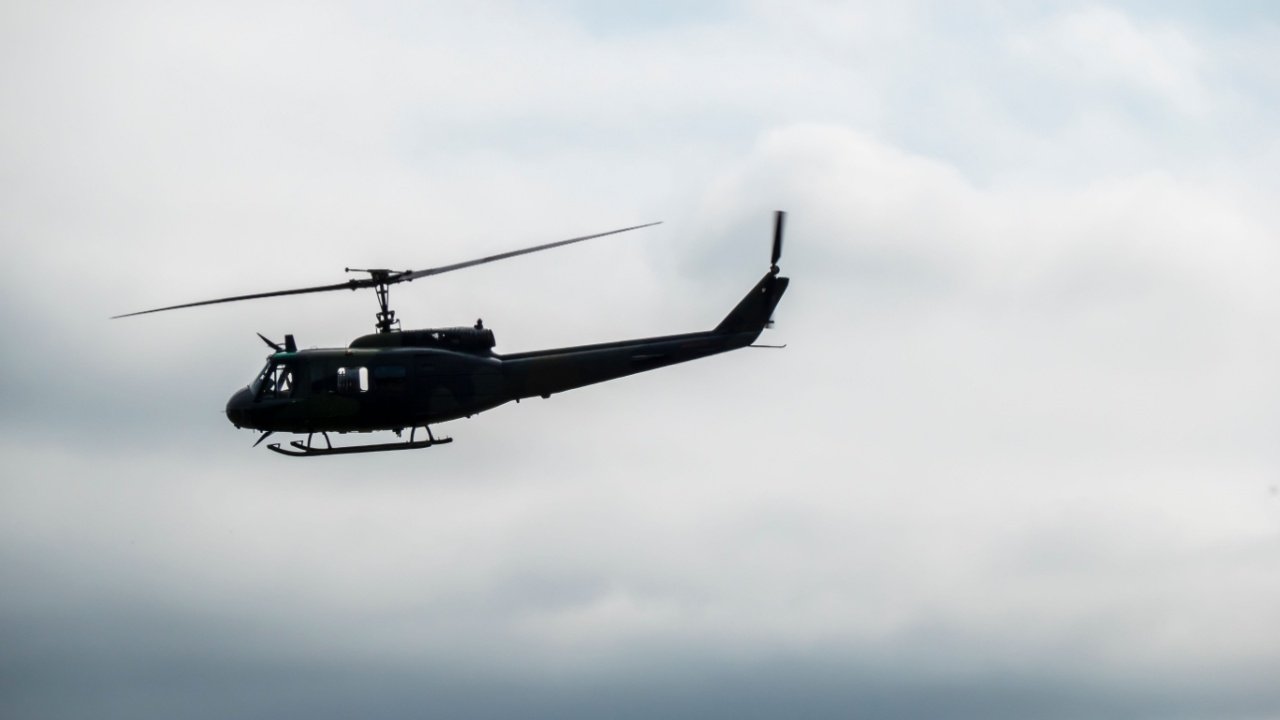
Current strategic parallels suggest a transition from limited air-and-sea operations to an expanded ground presence. The pursuit of unattainable goals, such as securing subterranean nuclear stockpiles and reopening the Strait of Hormuz, mirrors the “mission creep” that led to the Vietnam escalation, threatening a long-term, unplanned occupation.
While the Iran War is often compared to the Iraq War, it could more closely resemble the botched US entry into the Vietnam War.
As the joint US-Israeli war against Iran passes its fifth week, the future of the conflict remains murky. After weeks of destructive fighting and the closure of one of the world’s most vital oil arteries, backchannel communications have produced a fragile two-week ceasefire during which Pakistani-mediated talks between the United States and Iran are set to take place in Islamabad.
Through it all, the Trump administration has yet to provide Congress, the American public, or the international community with a clear and convincing casus belli or military objectives. Meanwhile, the durability of the ceasefire remains unclear, especially since the Strait of Hormuz remains mostly sealed. Fighting could resume at any moment.
Throughout America’s latest conflict in the Middle East, some have noted eerie patterns reminiscent of the last major US misadventure in the region—the 2003 invasion of Iraq.
Writing recently for Time, Frederic Wehrey of the Carnegie Endowment for International Peace, himself a veteran intelligence officer of the Iraq War, noted the historical similarities in President Donald Trump’s and Israeli Prime Minister Benjamin Netanyahu’s decisions. In attempting to topple the Islamic Republic’s wobbly scaffolding, they have discovered an equally shaky political and economic foundation in their own countries. Neither has a clear plan for handling the current situation, and a ground war remains a real possibility if hostilities resume. History appears poised to repeat itself.
And yes, 2026’s parallels with 2003 are certainly real. But the trajectory of this war suggests that another historical parallel may be more instructive. The Iran War isn’t another Iraq. It’s another Vietnam.
The war against Iran was originally premised on hard-hitting but limited action, albeit with maximalist aims. It is a war fought at a distance. No such conceit of limited war burdened the US invasion of Iraq. Its shock-and-awe opening act was always meant to be followed by a massive ground invasion and occupation of the country. When 150,000 US ground troops thundered into Iraq in March 2003, they did so with the robust backing of the public and the approval of Congress.
Whereas Iraq was intended to be a major ground war, the US intervention in Vietnam was a gradual trickle of missteps. It was intentionally limited in scope and objective—until one day it suddenly wasn’t. What began as limited air and naval operations expanded after Marines landed at Da Nang early in 1965, accompanied by a much larger bombing campaign, for the limited purpose of protecting US airbases from increasing Communist attacks.
Yet to secure these airbases, ground commanders quickly discovered security had to be established miles beyond them. That meant enemy forces had to be sought and destroyed, which required still more troops. Almost by accident, US forces found themselves conducting offensive operations in a ground war no one in Washington had planned for or wanted.
The Trump administration is reportedly pursuing a similar folly in Iran. Several weeks ago, elements of the US Army’s 82nd Airborne Division, as well as two amphibious ready groups (and their embarked Marine expeditionary units), were deployed to the Gulf alongside 10,000 more waiting in the wings—some 17,000 troops in all. They may be meant to capture Kharg Island or to seize some—or perhaps all—of Iran’s Gulf coast. These actions are unlikely to force open the Strait of Hormuz since Iranian offensive weapons can reach virtually the entire region. To deny their use, US forces would need to penetrate deeper into the Iranian interior, which would doubtlessly demand yet more troops.
The administration may also attempt to secure Iran’s 440-kilogram stockpile of highly enriched uranium. However, one recent report from the Bulletin of the Atomic Scientists estimated it may be as high as 540 kilograms. Spread across several sites and entombed underground, seizing Iran’s uranium would require a massive, complex, and highly risky US ground operation. This would take time and require a sustained ground presence, further heightening the risk of pulling the US deeper into a quagmire. And even if such an operation succeeded, Iran’s nuclear knowledge cannot be eliminated through military action. Its ability to reconstitute its nuclear program would remain.
Just like their forebears in Vietnam, US forces could soon trickle onto enemy soil in limited numbers with limited goals. However, when it becomes clear to the White House that these forces are unequal to their given objectives, the United States may be compelled to send even more troops to join an expanding operation whose mission continues to creep. This, in essence, is how Vietnam became a ground war. It could also be how Iran becomes a ground war. Donald Trump is nearing his Da Nang moment. It is a threshold that does not need to be crossed, and for the sake of thousands of lives—American and Iranian—it should not be.