
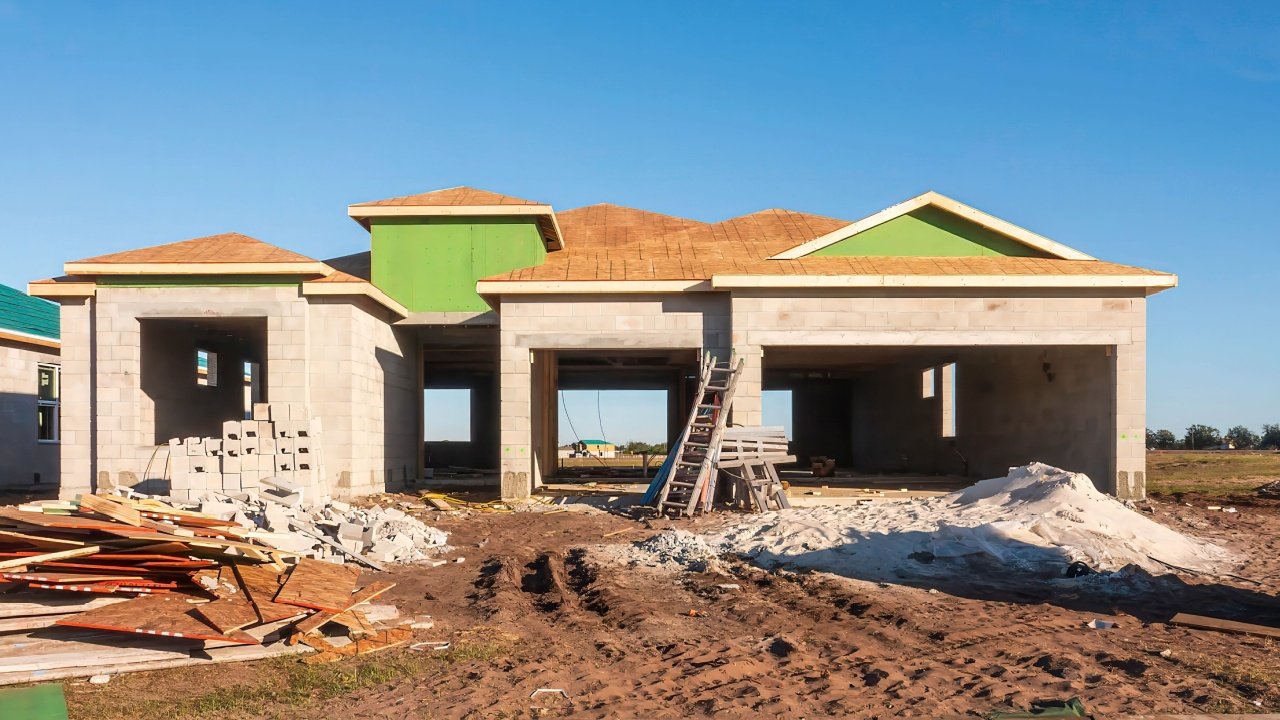
Supply chain shocks from the conflict have driven up the Baltic Dry Index and increased the cost of petrochemical-based construction materials. These inflationary pressures undermine housing pledges in Europe and Australia, while potentially reigniting regional instability by threatening government-subsidized housing models essential to Middle Eastern social cohesion.
The increase in construction costs resulting from the Strait of Hormuz blockade may strain an already overstretched global housing supply.
The disruption of the Strait of Hormuz and production facilities across the Gulf states’ economies over the last month has affected not only energy markets but also the production and transport of key construction inputs. Those impacts will linger long after the missiles stop landing and the drones stop flying. Indeed, it is far from clear if the strait will actually open for international shipping after the announcement of the Pakistani-mediated ceasefire on April 7. Following Israeli strikes on Lebanon, Iran has already ordered the strait to close again.
Beyond fuel, global supply chains for aggregates—cement, sand, and petrochemical-based materials like plastics—are under strain. Petrochemicals are used to create the plastics used for insulation and piping. The Baltic Dry Index, a handy benchmark of global bulk trade costs, has continued to rise.
The closure of the strait, however temporary, has forced shipping companies and oil demand to re-route elsewhere. A return to a more normal shipping schedule, if the ceasefire holds, will take significant time.
Energy costs account for 30–40 percent of cement production costs and 20–40 percent of steel production costs. Consumers will bear the dramatic rise in costs. The Iran War shock comes only a handful of years after the COVID-19 pandemic, a major supply-system and energy disruption in its own right. In some markets, steel prices increased by 200 percent during the economic recovery following the pandemic. This crisis will likely not see such a severe economic shock, but its impact is already being felt.
Supply chain disruptions such as this one are often felt first in economies far from the epicenter. The Australian government’s pledge to build 1.2 million houses by 2028 now appears under pressure due to rising construction costs. Over time, reconstruction efforts on both sides of the Arabian Gulf will absorb even more global capacity.
For the United States, which will be less impacted, a 4.5 million-unit housing deficit still looms large. Europe’s economies are also impacted. The Netherlands has one of Europe’s worst housing deadlocks and had planned to build 100,000 housing units annually to help reverse the crisis. Its new housing minister is a former military officer, a sign of just how serious the issue has become for the Dutch government.
There is, of course, spare capacity in the system. Yet even that may not be enough to meet competing demands in a prolonged crisis environment.
The global housing crisis is acute; more than 300 million people worldwide remain homeless, and over 1 billion live in informal settlements or slums without reliable access to clean water or basic sanitation. Within the Middle East, tens of millions live in informal settlements, where public services are limited or nonexistent. In Egypt, a country of roughly 100 million, that number may be as high as 22 million. Variants of such housing precarity can even be found in parts of the Gulf as well.
This year has seen events and commemorations across the Arab world marking 15 years since the start of the Arab Spring. The upheaval of 2011 brought down regimes in Tunisia and Egypt, ignited a civil war in Syria, and contributed to prolonged instability in Yemen. A second wave later toppled governments in Algeria and Sudan.
The Gulf Arab states largely avoided the same trajectory by building an unspoken but durable new social contract. Government-subsidized housing for citizens is a bedrock of this agreement, and it will have to remain so in the wake of the Iran War.
In the United Arab Emirates, major new projects have continued construction despite Iranian missile and drone strikes. Ground has been broken on other new developments as well, though these are often commercial rather than residential. Still, the Gulf States’ ability to sustain this generous economic and social model will depend, in the medium and long term, on a stable Persian Gulf. If the Iran War has taught one lesson, it is that this prospect can no longer be taken for granted.
The Strait of Hormuz crisis has rippled outward into energy markets, supply chains, and, ultimately, the cost of housing and everyday life. Its consequences will be slow to dissipate further afield, and its second- and third-order effects will bounce around the global economic system for years to come.