
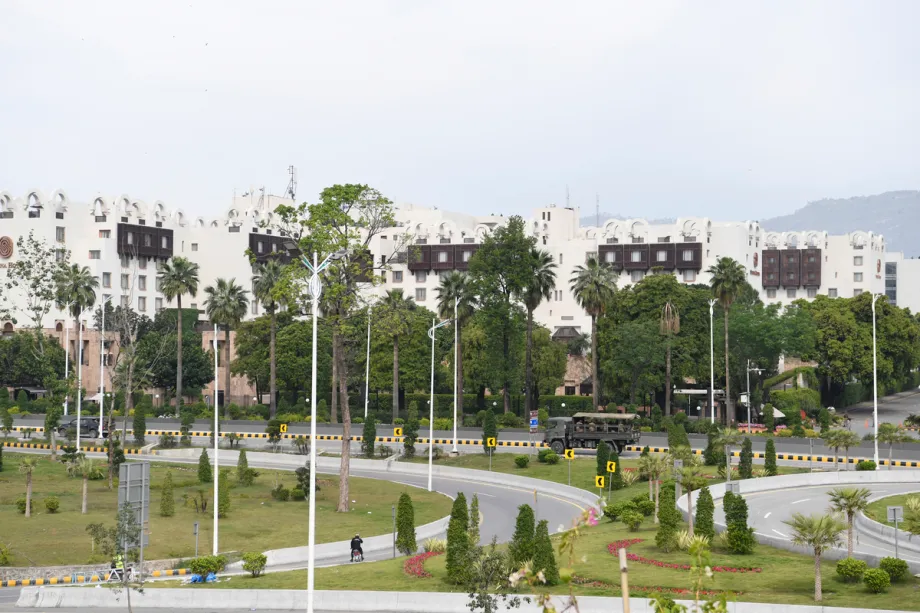
The diplomatic convergence in Islamabad reflects the collapse of coercive Western strategies. Iran’s survival of sustained aggression has forced a recalibration of regional order. However, domestic Pakistani instability and Israeli commitment to strategic impunity threaten the durability of any negotiated containment, rendering the current diplomatic framework fragile and reactive.
History, when it chooses to humiliate power, does not bother with elegance — it stages spectacle. Islamabad — a capital long patronized, managed, and dismissed — now hosts the very powers that presumed they could redraw the region with missiles and press briefings. But let us be precise: this is not a meeting of equals. It is the convergence of aggressors and the state they failed to break. Washington and its Israeli ally waged war; Iran resisted — and refused collapse. What unfolds in Islamabad is not diplomacy by design, but necessity by failure: an American search for an exit from a war it could not win, and an Iranian willingness to talk only on terms that secure its position, not pause its vulnerability.
Iran did not collapse under pressure. It absorbed it, hardened through it, and converted it into leverage.
What stands now is not a weakened state dragged to the table, but a fortified one that endured sustained assault and emerged strategically intact — if not strengthened. Iran’s resistance was structural. It withstood coordinated pressure from Washington and Tel Aviv without conceding its deterrence, its interests, or its regional weight. It enters Islamabad not as a supplicant, but as an actor that has imposed costs and retained agency — prepared to negotiate, but only on terms that prevent its adversaries from regrouping under the cover of a ceasefire.
Washington arrives not to dictate, but to deal with what it could not defeat.
But this external precision rests on a deeply unstable domestic base. The regime now praised abroad is widely regarded at home as coercive and illegitimate. Its authority is enforced, not granted. The most popular political figure in the country, former Prime Minister Imran Khan, remains imprisoned; his movement dismantled, his supporters harassed and silenced. Elections have been hollowed out, dissent criminalized, and politics reduced to managed compliance. What Islamabad presents as stability abroad is experienced as repression at home.
And yet — this is precisely what makes it useful.
Foreign powers admire what Pakistani citizens reject: control without consent, decisiveness without accountability. The regime’s global relevance rises in inverse proportion to its domestic legitimacy. Its strength abroad is built on its weakness at home. This is not contradiction. It is calculation.
This is not excess. It is doctrine.
Israel violates ceasefires as policy. Lebanon is not a sideshow; it is a laboratory for mass murder. Gaza is not collateral; it is sustained pogroms recast as security. Agreements, in Israeli hands, are temporary inconveniences — documents to be incinerated the moment they constrain its machinery of violence. Restraint is absent. Impunity is absolute.
This is the rot at the core of Islamabad’s fragile theatre.
Washington may begin to grasp that maximalist demands cannot coexist with durable outcomes. Tehran may translate resistance into diplomatic weight. But Israel requires no such recalibration. It thrives in instability, feeds on crisis, and ensures — methodically — that no agreement survives long enough to impose limits. It does not bend rules. It annihilates them.
That is why these talks feel brittle before they begin. They are haunted by a force that does not believe in negotiation, only domination — and failing that, destruction. Washington may posture as the senior partner, but it increasingly resembles an exhausted patron trying — and failing — to restrain a client that has mistaken impunity for sovereignty. Israel does not follow the script. It burns it.
And still — something has shifted.
This is not peace. It is containment. Islamabad is the stage. The failure is the script. And for the first time in decades, it is not being written in Washington.