
The Islamabad summit represents a calculated transition from military confrontation to structured diplomacy. Built on months of backchannel groundwork and coordination with Beijing, this process utilizes Pakistan’s unique access to both Tehran and Washington to establish a containment strategy, despite persistent threats from Israeli non-compliance and regional ambiguity.
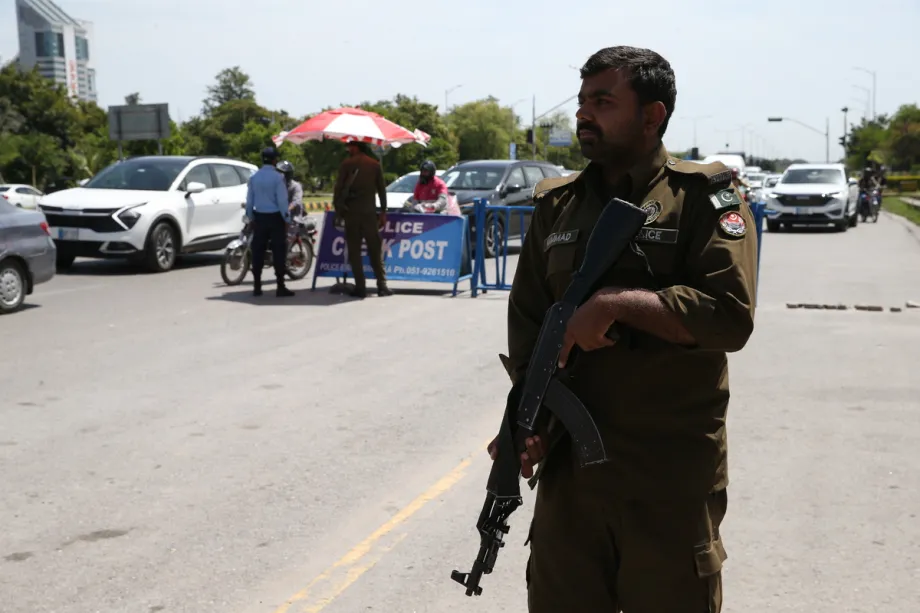
Islamabad is ready to host something that, until recently, seemed almost unthinkable: direct, high-level talks between the United States and Iran. The city is under tight security, senior delegations from both sides have arrived, and regional representatives are also in town as Pakistan hosts what is being described as the highest-level US-Iran engagement since 1979. Regional partners have already signalled support for Pakistan’s diplomatic role, and that matters. This is not a meeting that emerged out of nowhere. It is the visible culmination of a broader process in which Islamabad steadily positioned itself as a venue, a facilitator, and, above all, a state willing to create diplomatic space when the region was sliding toward wider war.
That wider process deserves more attention than the talks alone. Pakistan did not suddenly discover diplomacy after the ceasefire. It had already been working on multiple tracks: bilateral outreach, quiet message-passing, a regional consultation process, and coordination with major partners such as China. Islamabad hosted a quadrilateral foreign ministers’ meeting with Saudi Arabia, Türkiye, and Egypt in late March, where the emphasis was squarely on dialogue, restraint, and structured negotiations. Shortly afterwards, Pakistan and China jointly put forward a five-point initiative calling for an immediate cessation of hostilities, urgent diplomatic engagement, protection of sovereignty, and the restoration of normal maritime traffic through the Strait of Hormuz. Read together, these moves show that Pakistan’s role has not been episodic. It has been cumulative.
This is why today’s talks should be seen not as a diplomatic surprise, but as the product of sustained groundwork. Reporting from Islamabad suggests Pakistan had been trying for months to keep channels open between Tehran and Washington.
Pakistan maintained its own parallel track while other mediation channels were active, seeking to prevent events from outrunning diplomacy altogether. In my view, substantial groundwork has already been laid through backchannel diplomacy. If there were no real prospects of progress, it is hard to believe Washington and Tehran would have come all the way to Islamabad at this level.
To understand why Pakistan has invested so heavily in this process, one must begin with geography and strategic reality. Iran is not a distant theatre for Pakistan; it is a close neighbour. The Gulf states, meanwhile, are not peripheral actors but close economic, political, and security partners. Pakistan therefore experiences this crisis from both sides of the regional equation. It cannot afford a rupture with Iran, nor can it ignore the security and economic centrality of the Gulf. That dual reality explains why Islamabad has approached the conflict with such caution and such urgency. It is not mediating from the comfort of distance. It is acting from within the fallout zone.
That balancing act also explains why Pakistan was a logical host. First, Pakistan is uniquely positioned to understand and translate each stakeholder’s red lines. It has credible access to Tehran, longstanding ties with Gulf capitals, and working channels with Washington. Second, Pakistan is not merely a recipient of Gulf support; it is also a provider of strategic value. Its geography, security profile, and convening ability give it relevance beyond economics. Third, Pakistan’s own experience with India lends credibility to its warnings about escalation. Islamabad understands crisis signalling, deterrence, limited-war logic, and the danger of assuming escalation can always be controlled. That allows Pakistan to speak with authority on the need for off-ramps before rhetoric hardens into strategic entrapment.
The February 28 attacks changed the strategic environment dramatically. Since then, the region has lived under the shadow of a broader confrontation involving Iran, Israel, Gulf states, and the maritime chokepoints that affect the global economy. Shipping disruptions around the Strait of Hormuz, missile and drone exchanges across multiple fronts, and fears of further regional spillover all pushed the costs of continued escalation sharply upward. Pakistan’s diplomacy has reflected a clear judgment: force alone could not stabilise this crisis; only a political process could. That is the larger context in which Islamabad’s current role should be read.
At the same time, none of this means the diplomatic opening is secure. In fact, the fragility of the process has already been exposed. Barely a day into the ceasefire announcement, Israeli attacks on Lebanon threatened to derail everything. The problem was not simply renewed violence. It was also the ambiguity around whether Lebanon was included in the ceasefire understanding.
This is precisely why I would not read too much into the public rhetoric. The tone remains hardline. The statements remain maximalist. But that is often the nature of diplomacy at moments like this. Public language is crafted for domestic audiences, alliance management, and negotiating leverage. The more important signal is the one conveyed by action: both sides are here, at this level, in Islamabad. That suggests seriousness beneath the posturing. The very fact that these talks are taking place under such intense diplomatic and security management points to the existence of real stakes and at least some shared recognition that the alternative is far worse.
There is another factor that should not be overlooked. Netanyahu’s corruption trial is set to resume on 12th April following the end of Israel’s emergency suspension of normal court activity. It would be simplistic to reduce regional escalation to one man’s legal troubles, but it would also be naive to ignore the political incentives that operate in moments like these. In the past, critics have repeatedly argued that external confrontation has helped divert attention from Netanyahu’s domestic pressures. At the very least, the timing adds another layer of uncertainty to an already brittle regional environment.
Still, diplomacy rarely begins in conditions of trust. It begins when the cost of refusing diplomacy becomes too high. That appears to be the point the region has reached. The economic consequences have already been felt. The military risks remain obvious. The diplomatic channels, fragile as they are, now offer the only serious route away from a deeper and more uncontrollable crisis. Pakistan’s contribution has been to keep that route open when many assumed it had already closed.
Pakistan’s role has not been to grandstand. It has been to create conditions in which diplomacy, however uncertain, remains possible.
If there were no real prospects of movement, the United States and Iran would not have come to Islamabad in this way, at this level, and under these conditions. That alone tells us that something significant is being tested here. Whether it results in a durable understanding or only a temporary pause remains to be seen. But one point is already clear: Pakistan has shown that it can do more than comment from the sidelines. It can shape the diplomatic stage itself.
All eyes are on Islamabad.