
The collapse of Strait traffic to 5% and the $20 billion hit to Qatar’s LNG exports are accelerating a GCC shift away from U.S. “energy dominance” toward China’s reciprocal green-tech and AI investment model.
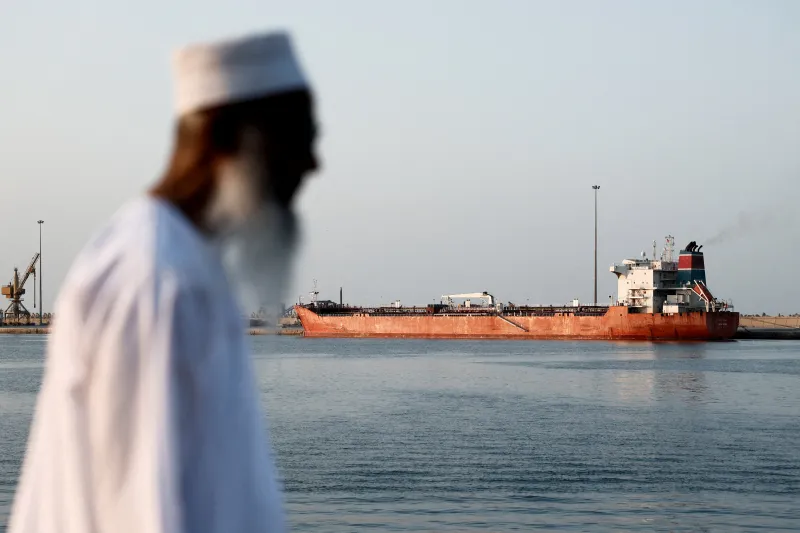
The U.S.-Israeli war against Iran has created the largest disruption to global oil and liquefied natural gas supplies in modern history. Just before the war, roughly 20 percent of the world’s oil supply and 20 percent of liquefied natural gas exports flowed through the Strait of Hormuz. Over the past month, traffic through the strait has collapsed, slowing to a daily average of five percent of its normal flows. Saudi Arabia and the United Arab Emirates have sought to reroute crude oil shipments, but these other pipelines and avenues cannot make up the lost volume and are themselves vulnerable. And the damage to Ras Laffan, Qatar’s main liquefied natural gas export facility, from an Iranian attack on March 18 means that the world’s largest LNG producer may face reductions in its capacity for years to come.
But the war’s effects on energy go well beyond the closure of the Strait of Hormuz and Ras Laffan. As Kuwait Petroleum’s CEO, Sheikh Nawaf al-Sabah, has pointed out, the disruptions create a domino effect: even if a cease-fire were accomplished tomorrow, reinstating insurance for tankers at acceptable rates could take months. Crude oil needs to be released from storage to allow pumps to restart before jet fuel and diesel refineries can begin operating again and jump-start the production of key petrochemicals. History offers alarming precedents for how long this iterative process can take. The Houthi rebel group in Yemen launched attacks on shipping in the Red Sea in late 2023, but despite a cease-fire, transit through the waterway remains 60 percent below pre-2023 levels. It took TotalEnergies four years to restart construction on its Mozambique LNG project after a major jihadist assault near the site in 2021.
There is a tremendous amount of economic uncertainty for Gulf states to navigate, and it will reshape the way they engage with one another and with Iran, Israel, and the United States for years to come. But this war has also laid bare how urgently the United States needs to update its own approach toward the Gulf states when it comes to energy. Especially under U.S. President Donald Trump, Washington has viewed these countries as piggy banks and energy reservoirs instead of what they have really become: increasingly valuable partners in states’ broader efforts to achieve energy security in oil and gas and navigate the transition toward renewables. Trump has said that if the United States ends its direct conflict with Iran, it intends to protect the Gulf Arab states “from far away,” but has not signaled he will cease calling on Saudi Arabia to use its spare capacity to meet U.S. and global oil needs. Trump’s frequent demands that the Gulf states invest in U.S. energy suggest an assumption that these countries should settle for a little security in exchange for a lot of money.
But the Gulf oil producers are changing how they think about energy. Oil for security is no longer a tenable strategy. Aware of the need to diversify their economies and their energy offerings, Gulf states have been working to become sophisticated players throughout the energy value chain—investing in refining, storage, and production and partnering on developing renewable as well as oil and gas projects around the world. Saudi Arabia has transformed its domestic electricity generation to save oil for exporting, and Riyadh and Abu Dhabi are building some of the world’s largest solar projects. Non-oil GDP in Gulf countries has grown steadily, including in the petrochemical sector but also in tourism, hospitality, mining, AI, and financial services.
No matter how the war ends, Gulf oil producers are likely to speed up their efforts to diversify their economies and play an even bigger role in global energy supply chains. They will seek partners—principally China—who see the future of energy not just as the quantity of oil or gas a state possesses. And they will do it with or without the world’s largest oil and gas producer, the United States.
POTENTIAL ENERGY
Between the 1970s and the early 2010s, the oil-producing Gulf states primarily reinvested their oil revenues into the U.S. financial system, using energy exports to buy dollar-based assets and reserve currency. Since around 2014, however, the Gulf’s oil exporters—particularly Saudi Arabia—have increasingly sought to deploy energy revenues domestically and to borrow to build new local industries such as mining and AI. This strategy shift has led the Gulf’s state-owned investment vehicles to become more active and strategic investors, expecting stronger returns and more advantageous partnerships instead of relying on passive stakes in U.S. debt or dollar reserves. At the same time, Saudi Arabia—as well as Kuwait and the United Arab Emirates—has invested in oil production and new technologies in order to sustain its ability to deploy spare capacity in ways that other producers, including privately owned U.S. companies, cannot do at scale.
Becoming investment partners in private equity–backed infrastructure projects and building their domestic economies made the Gulf’s oil producers more attuned to the pace of the global energy transition. Their shift in strategy has not only been domestic, it reflects an awareness of the new roles they could play worldwide. By 2050, emerging economies’ growing need for electricity is expected to drive a 25 percent increase in energy use. AI data centers will only add to this demand. Middle powers that both produce and invest in a diverse variety of energy products and can dominate this shift, especially if the United States and Europe become less interested in financing energy for the developing world.
The Gulf states have moved to future-proof their own hydrocarbon products, making them more resilient to customers’ demands for a lower carbon emissions profile. They have put money into natural gas production at home and abroad: Qatar’s prescient investment in U.S. LNG production on the Gulf coast is, by 2027, expected to nearly equal the Ras Laffan facility’s recent loss in production. Saudi Arabia and the United Arab Emirates have created state-owned renewable power companies. It is increasingly in resource-rich countries’ national interest to seek investors, source new technologies, and diversify their energy supplies to reap the economic and political benefits of selling energy in all its forms, and the Gulf states have understood and embraced these changes.
POWER PLAYS
Washington’s approach to the energy transition, by contrast, has veered between poles. The Biden administration attempted to commit to green energy, subsidizing and providing government-backed financing and tax credits for renewable energy build-outs while discouraging growth in U.S. oil and gas production. The second Trump administration set the goal to achieve so-called energy dominance and conceptualized the problem as a competition between the United States and China, identifying clean energy supply chains as a competitive threat.
Trump is, of course, generally hostile to green policies; he has called Biden’s Green New Deal the “green new scam.” But his administration has also concluded that Beijing’s existing advantage in the manufacturing and export of clean energy—and its control of the refining and processing of critical minerals associated with these products, such as batteries and solar panels—means that Washington should go all-in as a “petro-state” and treat its rival as an “electro-state.” Washington has recently boosted U.S. LNG exports, trimmed regulations on fossil fuel producers, opened federal lands to exploration, reopened decommissioned nuclear reactors, canceled government investments in electric vehicle charging stations, and rolled back fuel-efficiency standards. Where the United States lacks key resources, it has simultaneously put money into processing and stockpiling them at home and collaborated with partners such as Saudi Arabia and the United Arab Emirates to invest in overseas supplies such as copper in the Democratic Republic of the Congo. Both Biden and Trump tried policies of market interference, leaning toward state capitalism to compete with China as well as the state-led investments made by Gulf sovereign wealth funds.
But both administrations failed to see the big picture and embrace an “all of the above” energy strategy. Petro-states are ceasing to exist in pure form; the Gulf states—which everyone thinks of when they think of that term—have already realized this. And the United States is leaving a great deal on the table with this false binary, particularly when it comes to the Gulf. By choosing not to invest in domestic renewable energy capacity and limiting Chinese imports, the United States risks becoming more dependent on fossil fuels and thus less flexible during future energy crises. Maintaining the United States’ status as the world’s biggest producer of oil and gas will not be feasible forever without significant investments into the shale fields in the Permian Basin in the American Southwest. Washington’s choices will limit the United States’ ability to provide the energy that the fast-growing AI sector needs; electricity-hungry data centers will benefit from more ample and flexible combined solar, battery, and gas-fired power generation.
The Trump administration also fundamentally misunderstands China’s energy strategy. Beijing does not seek to build the electro-state to Washington’s petro-state. In fact, China is simultaneously leveraging domestic production of fossil fuels and accelerating its use and export of green energy. China is already a major oil and gas producer, generating the same amount of oil every day as the United Arab Emirates did before the Iran war. Its embrace of electric vehicles and renewable energy (in 2025, China added more than 430 gigawatts of new wind and solar capacity; these energy sources now account for nearly half of its total installed power capacity) has allowed for a steady reduction in its reliance on oil and gas imports, including from the Middle East.
But that doesn’t mean it is dropping its energy partnerships with the Gulf states. Instead, it is changing the nature of those partnerships by pursuing reciprocal investments in clean energy. Chinese entities have invested capital and technical expertise into Gulf renewable projects—most notably in 2019, when the state-owned Silk Road Fund acquired a 49 percent stake in the Riyadh-based Acwa, the world’s largest water desalination company and a leading solar power producer in the Middle East. This partnership has supported the large-scale deployment of solar power, including Dubai’s Mohammed bin Rashid Al Maktoum Solar Park, one of the world’s largest renewable projects. Masdar, the UAE’s state-owned renewable energy developer, has also carved out a synergistic relationship with Chinese state investors and supply chains: for example, by collaborating with the Chinese companies Goldwind and PowerChina to establish the Zarafshan wind farm in Uzbekistan, the largest single-unit wind energy project in Central Asia.
These cross-investments create a deepening strategic interdependence. China gains reliable partners and export markets for its clean energy technologies while Gulf states accelerate their domestic energy transitions and secure stakes in growth sectors other than oil. The United States, meanwhile, has failed to see or seize such new opportunities, especially in the Gulf. The Trump administration has solicited Gulf investments into U.S. gas production, but these deals lack reciprocal U.S. investments in Gulf-led energy projects; the United States has no sovereign wealth fund to align or direct toward such initiatives. China accounted for nearly 20 percent of the Gulf Cooperation Council’s petrochemical exports in 2023; in the future, those products are more likely to be produced inside China, and state-owned Gulf oil companies are betting on coinvesting in Chinese petrochemical complex production. Petrochemicals will be in high demand long after the demand for crude oil declines.
China also is setting up solar panel factories in Saudi Arabia and the UAE to support those countries’ solar targets and help build industries beyond oil. Last November, Washington committed to cooperating with Riyadh on civilian nuclear projects. But it has no comparable strategy to build localized industrial capacity or transfer technology to Gulf states that want to diversify their economies. Instead, it expects a transactional relationship in which Gulf states are the customers—and it wants to privilege U.S. suppliers in nuclear tenders. China’s approach reflects a belief in the Gulf states’ future competencies and relevance in the global economy that the United States simply does not share.
The Iran war has only underscored this lack of appreciation for the key role the Gulf will play in future energy flows. The U.S. and Israeli attacks have made the Gulf states’ economies targets for Iranian retaliation. And Washington continues to measure the damage incurred by the war narrowly, in terms of the price of oil, rather than considering its effects on the Gulf’s broader role as energy system players and developers on a global scale.
FIND THE BALANCE
Right now, the Gulf states look vulnerable, and they are. If the Strait of Hormuz can be reopened, a lasting rise in oil prices will benefit the Gulf oil exporters. But the many other disruptions caused by the war and any lingering threats from Iran will likely hurt their non-oil economies in the near term. On March 11, Goldman Sachs projected that if the conflict lasts through the end of April, Saudi Arabia and the UAE could see their 2026 GDPs shrink by three to five percent. For Kuwait and Qatar, which lack alternative export pathways to the Strait of Hormuz, it estimated that the decline in GDP could be as high as 14 percent. That projection now seems low, given that it predated the Iranian attack on Qatar’s main LNG facility, which is expected to drive losses of $20 billion per year in exports for up to five years. Qatar’s 2025 budget for government revenue was $54 billion, to contextualize the scale of the loss.
The Gulf states, however, had already begun pursuing long-term strategies to offset these kinds of vulnerabilities. And once the war is over, they will almost certainly seek to diversify their energy (and security) partnerships even further. Many analysts have argued that the Gulf states will become increasingly wary of the United States given the exposure they have endured because of U.S. and Israeli actions. But there could be a big opportunity now to build a more diversified U.S. energy system while embracing the Gulf states’ role as global energy developers, especially in emerging markets.
In the near term, that will require Washington to stop punishing the U.S. solar industry by seeking to damage Chinese solar supply chains. But it should also look for new manufacturing and technology advances in the United States and the Gulf. The war will also create a decision point on how to share U.S. nuclear technology in the region. Washington could let its energy strategy become mired in conflict with a smoldering Iranian threat—or it could choose a forward-looking path.