
The US strikes raise questions over China’s policy to forge energy and trade ties with US rivals. But in the long term, Beijing sees itself gaining diplomatic capital through a contrasting role as a stable and peaceful superpower.
The US attack this month on Iran, coupled with that on Venezuela in January, register as a blow to China’s diplomatic and economic statecraft. Beijing has forged a comprehensive relationship with both countries that spanned diplomacy, energy, trade, infrastructure and even military cooperation.
China has a ‘Comprehensive Strategic Partnership’ with Iran, denoting one of the highest tiers in China’s hierarchy of diplomatic ties. Significant investments are involved. As part of the partnership, in 2021 Beijing and Tehran signed a 25-year, $400 billion deal to invest in Iran’s energy, infrastructure and banking sectors, partly in exchange for discounted oil exports to China. Tehran exported more than an estimated 80 per cent of its oil to China in 2025, representing a lifeline for the regime.
Other aspects of China’s involvement in Iran include the construction of new railway lines from Tehran to Hamadan and Sanandaj, as well as from Kermanshah to Khosravi. Ports, airport and navigation systems are also under development, according to local media reports, and a $2.1 billion project to upgrade the Abadan refinery is underway.
China enjoys an ‘All-Weather Strategic Partnership’ with Venezuela, a term that also indicates a significant level of diplomatic affinity. China received three quarters of Venezuelan oil exports in 2025, according to Reuters, using oil to repay significant loans.
But now, as the US strikes these Chinese partners and goes after Chinese strategic assets (such as two ports in the Panama Canal controlled by a Hong Kong Chinese company), Beijing is finding that its strategy of courting US adversaries threatens to jeopardize some of its interests.
Broadening out this theme are the cases of Ukraine and, potentially, Cuba. In Ukraine, China – as a staunch partner to Russia – finds itself on the opposing side to the US-led West. In Cuba, where President Donald Trump has said he wants to effect a ‘friendly takeover’, China has significant commercial ties and some aspects of military cooperation.
US intentions
All this raises a question: is US action in Iran, Venezuela and Cuba intended to impede China’s statecraft? Clear answers remain elusive.
President Donald Trump has justified the Iran intervention for reasons including supporting Iranian protestors, combating Iran’s regional network of proxy groups, and eliminating its ballistic missile programme.
The Venezuelan attack had a similar range of justifications, from acting as a judicial extraction mission against an alleged ‘narco-terrorist’ (former Venezuelan president, Nicolás Maduro), and compensation for supposedly stolen US energy assets. In each case, the prime motivation appears to have been specific to each country as opposed to part of a broader strategy to counter Beijing’s influence.
China’s pragmatism revealed by lack of concrete support for Tehran
Regardless of US motivations, its attacks on Iran and Venezuela have demonstrated the limits of China’s support for countries with which it professed to share ‘strategic partnerships’ – and the strain of pragmatism in Beijing’s foreign policy.
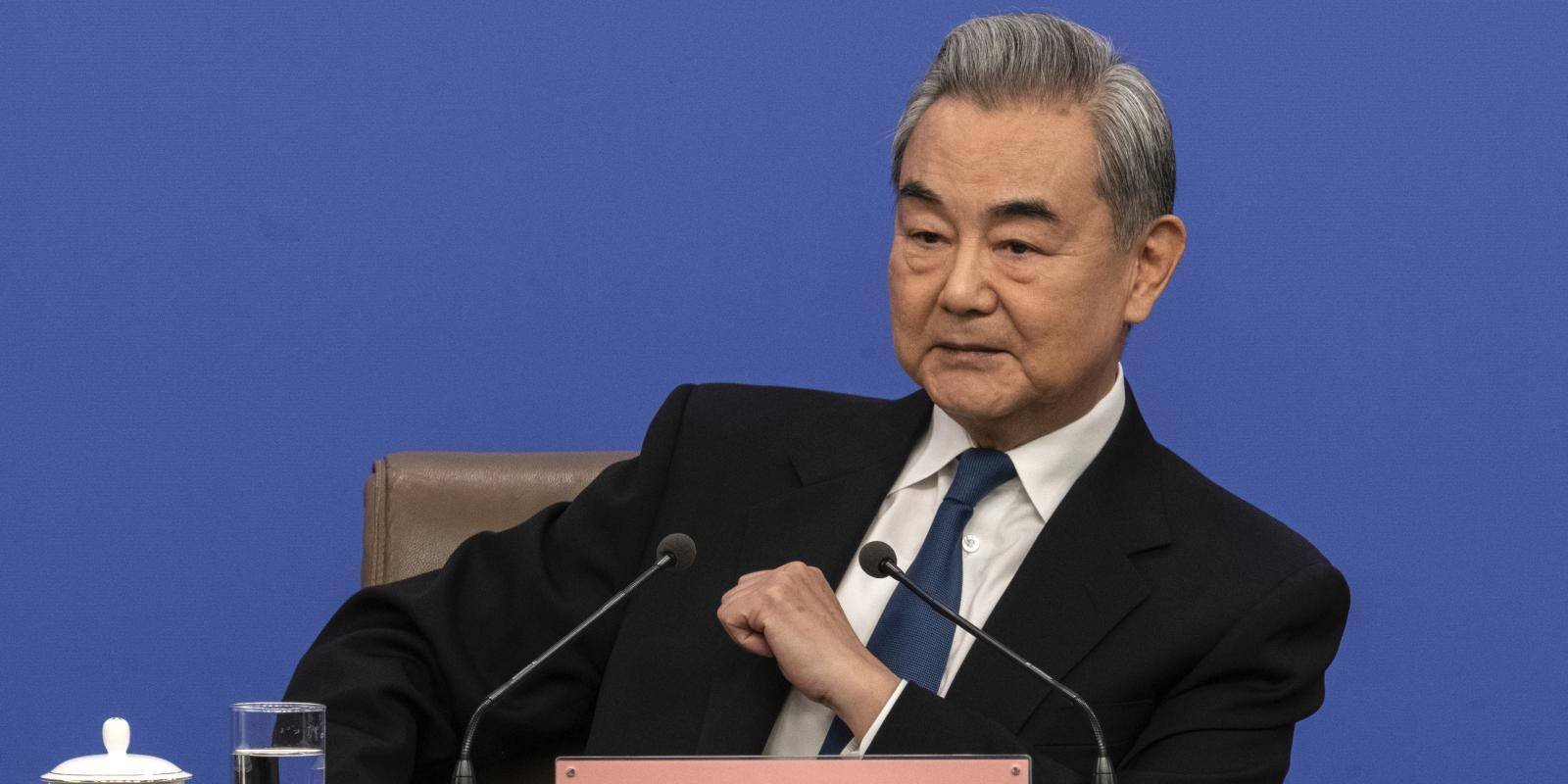
China has resisted taking concrete action against the US in response to the strikes on its partners. Not only that, but it appears likely to go ahead with plans to host Trump for a summit at the end of the month. Asked this week if China would still host the US president, Wang Yi, China’s foreign minister, did not answer directly but hinted the summit was still on, saying ‘the agenda of high-level exchanges is already on the table’.
To be sure, Beijing has been forthright in its verbal criticism of US operations this year. After the abduction of Maduro, Wang Yi said: ‘We have never believed that any country can act as the world’s police, nor do we accept that any nation can declare itself the world’s judge’.
Addressing Iran, he said it was ‘unacceptable for the US and Israel to launch attacks against Iran… still less to blatantly assassinate a leader of a sovereign country and instigate regime change’.
‘This was a war that should never have happened, and a war that benefited no one,’ he said on Sunday, portraying China as ‘the world’s most important force of peace, stability and justice’. Wang reiterated Beijing’s call for an immediate ceasefire to ‘prevent the situation from escalating and avoid the spillover and spread of the flames of war’.
But the reality is that in spite of its pledges of partnership, and its public condemnations, Beijing has clearly demonstrated that ties with Iran and Venezuela do not rank anywhere close to the utility it sees in trying to improve relations with the Trump White House, and prevent it from again turning vengeful on China.
Washington retains a panoply of economic sanctions against China, including hundreds of Chinese companies identified on the so-called ‘entity list’, a separate regime of restrictions on semiconductor exports, and a range of other bans related to military, human rights, narcotics, cybersecurity, surveillance and other issues.
It also maintains some tariffs on Chinese exports to the US. The Chinese economy has not been excessively hindered by these measures – exports, for instance, have surged this year. But Beijing still prioritizes preventing a new round of trade war with Washington.
China may benefit from portraying itself as the stable superpower
Beijing’s inaction in support of its partners may cause some short-term damage to China’s prestige – and the perceived value of its ‘strategic partnerships’. But China will also see merit in its approach over the long-term.