
Edward Salo argues that the Trump administration’s failure to build a diplomatic coalition before engaging Iran undermines U.S. strategic interests. By analyzing lessons from World War I and the Gulf War, Salo demonstrates how retroactive coalition-building diminishes international legitimacy and leverage.
Donald Trump wants an international coalition to defend the Strait of Hormuz. He should have thought of that before striking Iran.
One of the most cited quotes about coalition warfare is Winston Churchill’s observation that “There is only one thing worse than fighting with allies, and that is fighting without them.” As the Iran War continues to escalate, the current Trump administration is beginning to understand the British prime minister’s insight. The United States’ greatest strategic mistake in a conflict with Iran would not be military; it would be diplomatic: failing to build a coalition before the first shot is fired.
One of the major problems emerging in the war is Iran’s closure of the Strait of Hormuz, one of the world’s most critical maritime chokepoints, through which 20 percent of globally traded oil passes. Disruption here is already sending pandemonium through global energy markets and the broader international economy. Currently, the US objectives include maintaining freedom of navigation of the straits and deterring further Iranian interference with commercial shipping, while avoiding a wider regional escalation of the conflict. These goals require not only military capability but also a sustained multinational presence to ensure continuous maritime security operations.
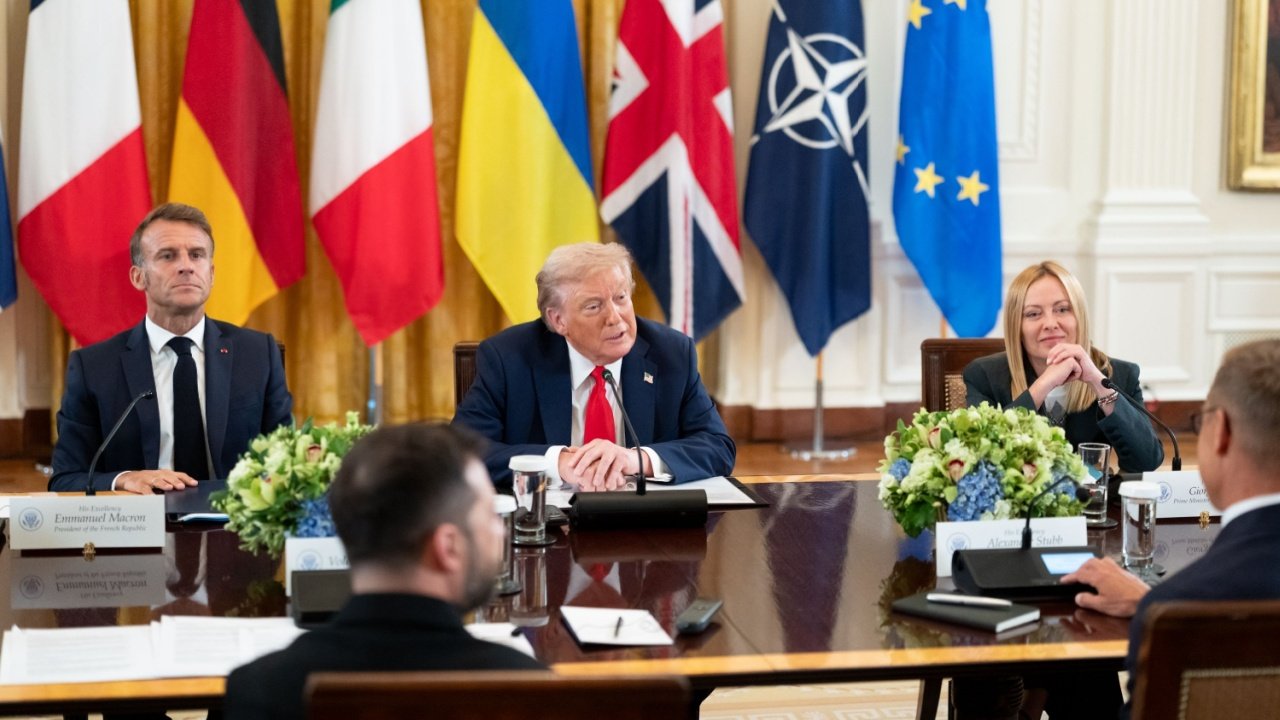
The Trump administration’s request for allied participation is not merely an attempt to gain political legitimacy for the operation but also an operational necessity. Many US allies initially stated their reluctance. German Defense Minister Boris Pistorius said, “This is not our war, we have not started it.” Moreover, Italian Deputy Prime Minister Matteo Salvini said, “sending military ships in a war zone would mean entering the war.”
Now, as attacks on Persian Gulf energy infrastructure intensify, the United Kingdom, France, Germany, Italy, the Netherlands, and Japan have jointly expressed greater openness to keeping the straits clear. Still, the Trump administration is frustrated by the less-than-total support and has even called on China to help, undermining previous US rhetoric about countering Chinese influence in the region.
Regardless of one’s interpretation of the Trump administration’s rationale for the recent military action against Iran, it is clear that White House strategists overlooked key coalition-building lessons from two earlier conflicts, World War I and the Gulf War. By initiating military operations without first assembling a robust coalition, the administration has weakened its strategic position, undermining both the legitimacy of its actions and its capacity to shape postwar outcomes.
When the United States entered World War I in 1917, the government debated how it would use the newly mobilized forces in the conflict. The French and British forces had been bled white, and their governments wanted to deploy US troops to replace existing units. However, President Woodrow Wilson believed that without an independent American fighting force, he would have no hope of shaping the post-war peace, thereby negating the overwhelming sacrifices of American troops. President Wilson’s logic was sound, and the United States gained a significant role in both combat operations and peace negotiations, providing a significant boost to American international prestige.
Today, the Trump administration risks reducing US leverage by asking China and other nations to join a coalition retroactively. Giving China a seat at the table in framing the post-war Middle East order lends credence to China’s great-power ambitions and harms US interests. It also gives the impression that the United States must rely on allies for military operations, countering the image of a decisive, unilateral actor cultivated by the successful military operations in Venezuela.
Rather than jerry-rigging a post hoc coalition, the United States should have learned lessons from the Gulf War. President George HW Bush and his National Security Advisor Brent Scowcroft understood that the United States needed a broad coalition to enter the first major post-Cold War military conflict. Accordingly, the Bush administration created a 35-nation international coalition that participated in Operation Desert Storm in 1991.
Authorized by a United Nations resolution to liberate Kuwait, this coalition included the United Kingdom, France, Saudi Arabia, Egypt, and others. While some nations provided military might, others provided logistical or diplomatic support for the operations. However, Scowcroft and others realized that it was critical to form the coalition before the hostilities commenced to present a unified front and ensure a unity of purpose.
Had the United States constructed a coalition after hostilities began, it would have introduced significant strategic risks and become an exercise in concession rather than coordination. This would have limited Washington’s ability to dictate both the conduct of the war and the structure of the peace, thus potentially weakening the post-war order.
The lesson from both World War I and the Gulf War is clear: coalitions are most effective when they are constructed deliberately and in advance of military action. By contrast, attempting to assemble partners after the onset of conflict weakens both strategic coherence and diplomatic leverage. If the United States sought to not only prevail militarily over Iran but also to shape the political order in the region that follows the conflict, it should have treated coalition-building not as an afterthought but as a central element of strategy from the outset.
In great power competition, battlefield success is only half the war. The other half is deciding who shapes the peace. And that contest is often decided before the war even begins.