
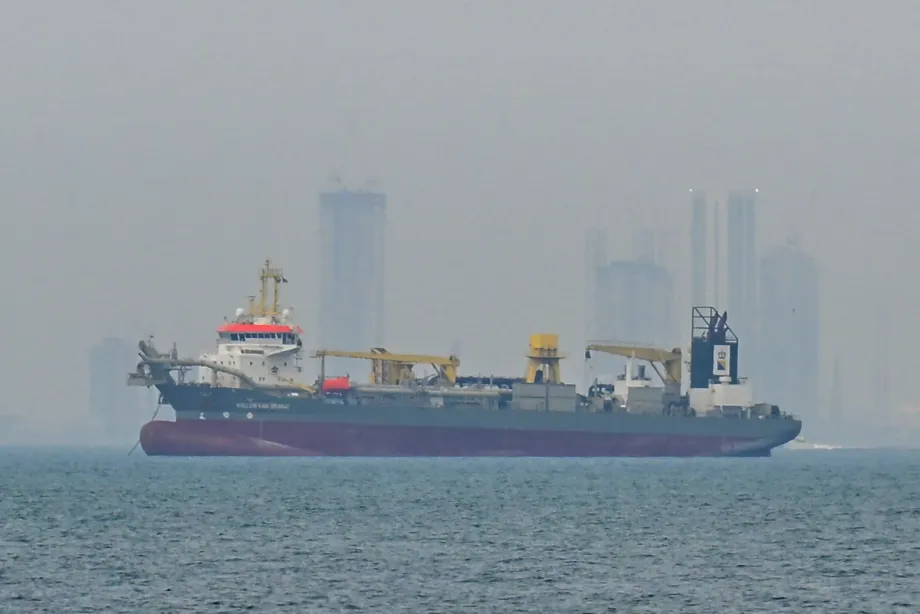
The escalating military confrontation in the Middle East, pitting the United States and Israel against Iran, has become a transmission belt, channeling external shocks directly into Indonesia’s domestic economy. Nowhere is this more evident than in the price of cooking oil, one of the country’s most politically sensitive commodities. The potential closure of the Strait of Hormuz, through which roughly one-fifth of global oil supply flows, has created the most severe energy disruption since the 1970s.
For Indonesia, the world’s largest producer of crude palm oil (CPO), this crisis exposes a striking paradox. Rising global crude prices, projected to hover between $100 and $120 per barrel, are lifting CPO prices through substitution effects in biodiesel markets. As fossil fuel costs surge, demand for palm-based biofuel intensifies. Yet this windfall at the export level simultaneously translates into mounting pressure on domestic food prices and household purchasing power.
Beneath headline production figures lies a more fragile reality. Indonesia’s CPO output reached 51.66 million tons in 2025, but this growth masks structural stagnation. Replanting programs have fallen short of targets, leaving an aging plantation base and declining yields per hectare. The sector’s long-term productivity remains under strain, even as global demand rises.
Fragile Supply Chains and Rising Input Costs
These vulnerabilities are compounded by Indonesia’s heavy reliance on imported agricultural inputs, particularly fertilizers.
Production costs are rising, while farmgate prices for fresh fruit bunches risk falling if export flows are disrupted.
Domestic cooking oil prices, meanwhile, are closely tethered to international benchmarks in Malaysia and Rotterdam. As a tradable commodity, CPO pricing follows global parity. Should crude oil remain elevated, international CPO prices could climb to $1,300–$1,500 per ton. Without calibrated policy intervention, domestic cooking oil prices will inevitably follow, despite Indonesia’s status as a major producer.
Logistics disruptions in the Strait of Hormuz further complicate the outlook. Key export routes to South Asia and Africa face heightened risk, forcing tankers to reroute via the Cape of Good Hope. This detour adds weeks to shipping times and drives freight costs sharply higher. For an export sector that contributes over 10% of Indonesia’s non-oil exports, such disruptions could trigger significant bottlenecks.
Ironically, even if exports stall and domestic stockpiles rise, prices may not fall meaningfully. Producers are likely to divert supply toward subsidized biodiesel programs rather than release it into the domestic market. This dynamic underscores a deeper structural tension between Indonesia’s energy ambitions and food security priorities.
The Biodiesel Dilemma and Domestic Price Pressures
Indonesia’s push toward energy independence, through biodiesel mandates such as B40 and the planned B50 rollout, adds another layer of complexity. The B50 program alone is expected to require around 19 million kiloliters of palm-based fuel. With supply growth constrained, competition between food and energy uses of CPO is intensifying.
This policy rigidity effectively creates a price floor for CPO, limiting the government’s ability to stabilize cooking oil prices. By late 2025, subsidized cooking oil had already exceeded official price ceilings, with sharper increases in remote regions. For lower-income households, these are not abstract inflation metrics but immediate threats to daily consumption.
Two price transmission scenarios illustrate the risks. In a moderate case, where crude stabilizes around $100 per barrel, CPO prices may settle between $1,100 and $1,250 per ton. Domestic cooking oil prices would likely remain elevated, forming a “new normal” above official caps but still within manageable bounds.
A more severe scenario emerges if crude prices climb to $120 per barrel or higher. Under such conditions, CPO prices could surge further, pushing domestic cooking oil prices into the range of Rp20,000 to Rp25,000 per liter. At this level, conventional subsidy mechanisms would be severely strained, forcing policymakers into difficult trade-offs between energy support and food affordability.
Social Impact and Policy Imperatives
As a result, households are forced to cut spending elsewhere, often at the expense of nutrition or education. In practice, this leads to coping strategies with serious long-term consequences: repeated use of degraded cooking oil, or a shift toward less nutritious diets. In effect, rising cooking oil prices act as a regressive tax, disproportionately burdening those least able to absorb the shock.
The Strait of Hormuz crisis is therefore not merely an external shock, it is a stress test of Indonesia’s policy architecture. Reactive measures are no longer sufficient. Structural reforms are needed, particularly in the management of palm oil funds. Currently, the bulk of these funds is allocated to subsidizing large-scale biodiesel producers, with only a small fraction directed toward smallholder replanting. In a crisis environment, this allocation must be rebalanced. Direct subsidies for low-income households—delivered through targeted mechanisms such as food cards or digital vouchers, would offer more effective protection.
Equally critical is the introduction of flexibility into biodiesel mandates. Blending requirements should be adjustable, allowing policymakers to scale back from B40 or B50 levels when domestic prices breach critical thresholds. Energy policy cannot be pursued in isolation from food security. Finally, Indonesia must strengthen its strategic reserves of cooking oil, ensuring sufficient buffer stocks to withstand supply disruptions. These reserves should be geographically distributed to mitigate logistical bottlenecks. On the supply side, targeted fertilizer subsidies for smallholder farmers are essential to sustain productivity under rising input costs.
In sum, the Hormuz crisis highlights a fundamental vulnerability: Indonesia’s food security remains tightly coupled to global energy dynamics. Without precise and forward-looking policy interventions, the country risks not only eroding household purchasing power but also undermining broader social stability. Ensuring affordable access to cooking oil is not merely an economic imperative, it is a cornerstone of national resilience.