
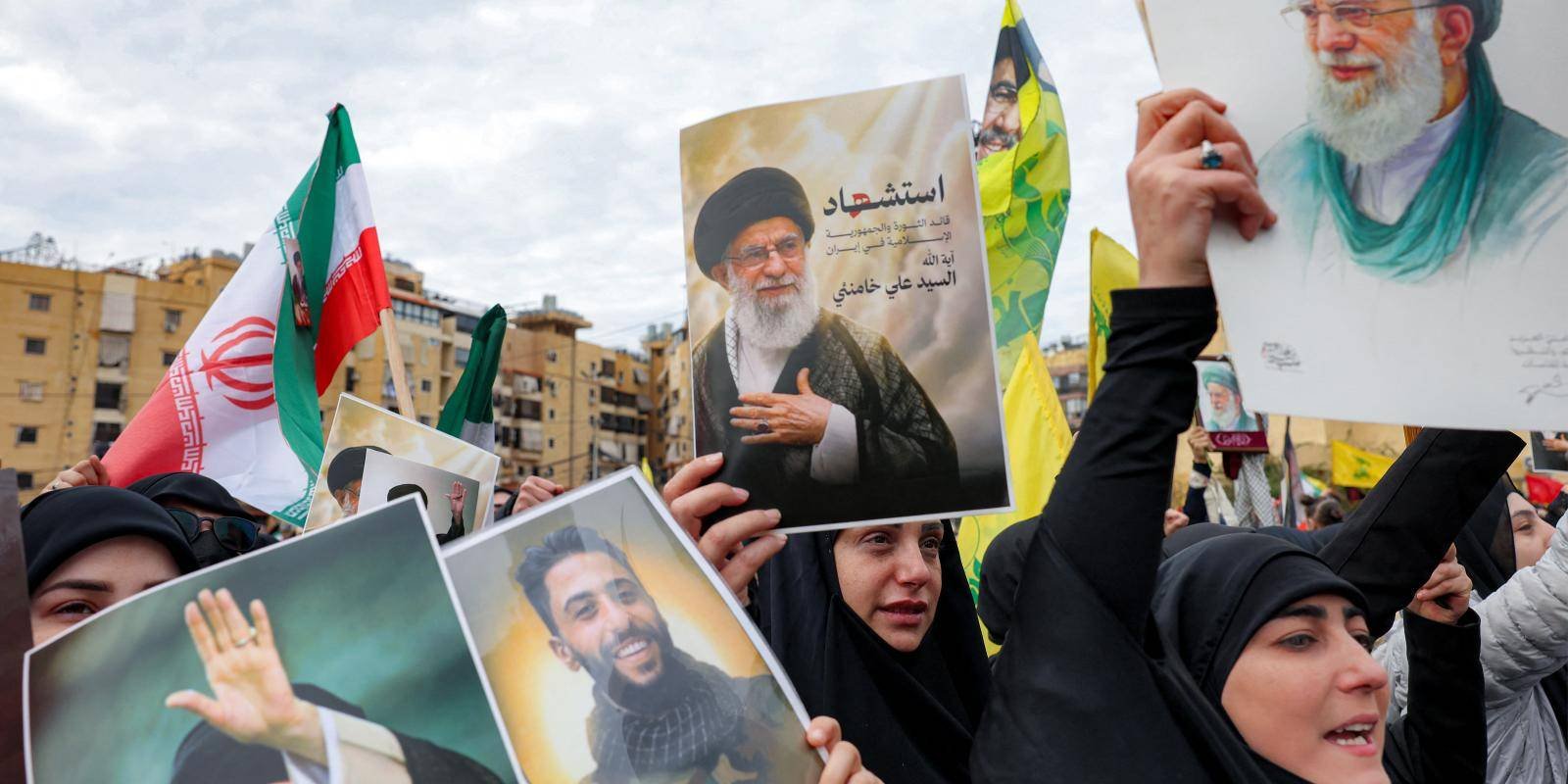
Iran’s “forward defence” strategy—building proxy networks to keep war at bay—has backfired. Designed to avoid direct conflict, it instead provoked Israel and the US into open war. The axis is shattered; Iran is weakened. The strategy meant to protect the regime now threatens its survival.
Tehran’s decades-long cultivation of the ‘axis of resistance’ led to the war with US and Israel that it long sought to avoid – whatever the outcome, the regime is weakened, writes Sanam Vakil.
The war between the United States and Israel and their enemy Iran marks the most consequential turning point in the 47-year history of the Islamic Republic. For decades tensions between Washington, Tel Aviv and Tehran played out across the Middle East through proxy conflicts, indirect confrontation and competing security strategies.
Today, thanks to the US–Israel strikes that started on 28 February and Iran’s retaliation, that long-running rivalry has exploded into open war, embroiled Arab states and placed the Islamic Republic in greater danger than ever before. Washington aims to degrade Iran’s nuclear programme, weaken its missile and military capabilities and roll back the network of armed groups Tehran cultivated across the region. Israel’s leadership has voiced broader ambitions, and some officials openly argue that sustained military pressure could weaken the Iranian regime itself. Yet the consequences of this war extend far beyond these immediate objectives.
The war has exposed the limits of Iran’s long-standing strategy of ‘forward defence’. Worse still, that strategy has significantly contributed to Iran’s current predicament. So much so that, depending on the current conflict’s outcome, Tehran may need to fundamentally reconsider an approach to its security that it has refined, expanded and invested in for more than four decades.
Since the 1980s, Iranian leaders have tried to push threats away from their borders by cultivating armed partners in fragile and divided Arab states. Through Hezbollah in Lebanon, militias in Iraq and Syria, Palestinian militant groups in Gaza and the Houthis in Yemen, Iran built a destabilizing network that allowed it to project influence while avoiding direct armed conflict with Israel and America.
However this war ends, whether through regime change or negotiation, it will almost certainly leave Iran weaker and far less able to sustain that level of regional influence. Israel’s campaign since the Hamas attacks of 7 October, 2023, has already dealt serious blows to many of the groups that formed the backbone of Iran’s regional strategy. Hamas has suffered major losses; Hezbollah and the Houthis face sustained military pressure and the fall of Bashar al-Assad in Syria has pushed the broader ‘axis of resistance’ on to the defensive. Many of these actors are now focused on survival.
The networks Tehran built will not disappear, particularly since they are local. Yet the military, financial and political costs of the conflict, together with Israel’s persistent efforts to roll back these groups, will limit Iran’s ability to support and coordinate them at the same scale. The strategy designed to keep war away from Iran’s borders has produced a strategic boomerang and drawn the Islamic Republic into the very confrontation it tried for decades to avoid.
Trauma of 1979
To understand how Iran built this system one must return to the formative trauma that shaped the Islamic Republic’s worldview. Only a year after the 1979 revolution overthrew the monarchy of Mohammad Reza Shah Pahlavi, Saddam Hussein’s Iraq invaded Iran and launched a devastating eight-year war. During the fighting Iran found itself largely isolated as several Arab states financed Baghdad while both the United States and Soviet Union tilted towards Iraq. Iranian leaders drew a clear lesson from the war – that the country could again face a major conflict with little external support in the future.
From that experience emerged what Iranian officials later described as forward defence. The principle was simple. Iran would confront threats beyond its borders so that wars would not take place on Iranian soil. Instead of relying entirely on conventional military power which Tehran could not access due to sanctions, it invested heavily in asymmetric tools of deterrence such as missile programmes, unconventional warfare and most importantly a network of allied armed resistance movements.
The first and most successful example of this strategy appeared in Lebanon. In 1982 Israel invaded the country and Iran’s Islamic Revolutionary Guard Corps deployed to the Bekaa Valley where they helped organize what later became Hezbollah. It evolved into a powerful political and military force that combined Lebanese Shia mobilization with Iranian revolutionary ideology.
For Tehran, Hezbollah provided both deterrence against Israel and a demonstration that Iran could project influence indirectly. The group’s ability to challenge Israel militarily during the 2006 Lebanon war strengthened Iranian confidence in its model.
Over the following decades Iran expanded this approach across the Middle East. The US invasion of Iraq in 2003 removed Saddam Hussein and dismantled the Iraqi state which opened the door to deeper Iranian influence in Baghdad. Tehran cultivated close ties with Shia political parties and militias. It also built enduring relationships with Palestinian militant groups, especially Palestinian Islamic Jihad and, at times, Hamas.
These connections served both ideological and strategic purposes. They reinforced Iran’s narrative of resistance against Israel while allowing Tehran to remain an important player in the Israeli-Palestinian conflict.
The Syrian civil war created another arena for Iranian intervention. When protests against Bashar al-Assad escalated into a nationwide uprising in 2011, Tehran moved quickly to support its long-time ally. Iranian advisers, funding and fighters drawn from allied militias across the region helped stabilize the Syrian government before Russia intervened militarily in 2015 and changed the balance of the war.
Iran also developed a relationship with the Houthi movement in Yemen which represented another extension of forward defence. Iranian training, missile technology and financial assistance strengthened the Houthis after they seized the capital Sanaa in 2014 and improved their ability to strike targets inside Saudi Arabia and threaten shipping in the Red Sea.
By the middle of the last decade Iranian officials openly boasted that Tehran exercised influence in four Arab capitals: Baghdad, Damascus, Beirut and Sanaa. The axis of resistance was seen as a system that allowed Iran to surround Israel with several fronts and expand its political reach across the region.
From Tehran’s perspective this strategy served a defensive purpose. Iran faced a dense network of US military bases across the Gulf, American troops in Iraq and Afghanistan after 2001 and a powerful Israeli military with major technological advantages. By working with non-state actors, Iran could deter its adversaries without waging state-to-state war.
Cost of expansion
Yet the strategy carried serious costs and Arab governments across the region viewed it as aggressive expansionism. In Iraq, militia competition weakened state institutions after the 2003 US invasion. In Syria, Iranian intervention prolonged a devastating civil war that displaced millions of people. In Yemen, the rise of the Houthis contributed to a long and destructive conflict that created one of the world’s worst humanitarian crises as well as threatening Saudi Arabia and Gulf Arab security. Iran’s investment in armed networks deepened regional fragmentation while stretching Tehran’s own resources.
Iran also faced growing pressure in managing these alliances. Maintaining influence across several conflict zones required financial resources, political capital and close military coordination. The killing of Qassem Soleimani, a senior commander of the Islamic Revolutionary Guard, by the Trump administration in 2020 dealt a serious blow to the coordination of these networks.
The Hamas attacks on Israel on 7 October, 2023, produced a major shift in Israel’s posture towards these groups. For years Israel followed a containment strategy – ‘mowing the lawn’ – in which periodic strikes controlled rather than eliminated threats. After 7 October, Israeli leaders concluded this system of deterrence had failed and turned towards dismantling Iran’s regional network.