
If regime survives, the war raises the ante. Israel abandons containment for prevention; US patience may differ. Deterrence after actualized threat is spent; Iran may dash for nuclear weapons. Return to “mowing the grass” requires patience, credible force, and sustained US commitment—all uncertain. High-stakes gamble.
The United States and Israel both hope for the grand prize: the emergence of a new regime in Iran to replace the Islamic Republic. For the US, this would close the chapter on a hostile and at times violent relationship that has endured since 1979. For Israel, this would see the end not only of a regime with a deep ideological commitment against it but also the foe that Israel sees as behind all the fronts on which it has fought since October 7, 2023.
A different regime in Iran, depending on what form it takes, could also be transformative for Iranians and many others in the region, including Lebanese, Iraqis, and Yemenis. And indeed, Iranians may replace their regime in the coming months or years in what would be a huge payoff from the US-Israeli gamble. But there is no guarantee of regime change anytime soon. Repressive regimes can survive for a long time, and while war can destabilize their hold on power, at other times it can solidify it.
If that maximalist goal is not achieved, Iran’s capabilities will be dramatically reduced by this war, but it will still have asymmetric options at its disposal. Israel and possibly the US may find themselves turning to a new version of Israel’s longstanding practice of forceful containment, the periodic use of force to degrade enemy capabilities, while maintaining a credible threat of far greater force to deter large-scale retaliation. Both elements were crucial for this practice: the ability to effectively hit limited, high-value targets through quality intelligence and strike capabilities, and the credible threat of far worse force should the enemy retaliate. This was sometimes grimly called “mowing the grass.” A weakened Iran would pose less of a threat, but containment would also likely be more complicated in the wake of the current US-Israeli campaign against Iran’s regime — the down side of that same gamble.
Before October 7, 2023, Israel employed this forceful, but limited, containment approach on multiple fronts, most notably against Hamas in Gaza but also in Lebanon, to disrupt Iranian efforts to arm Hizballah. Dubbed “the campaign between the wars,” these operations cumulatively involved over a thousand airstrikes between 2017 and 2022 alone, especially in Syria and Lebanon.
From containment to prevention
Israel’s approach changed dramatically after October 7. Instead of forceful containment, it adopted a standing preference for prevention and preemption of rising dangers through overwhelming force. With very low tolerance for any risk, a natural product of October 7, Israel undertook major operations on several fronts, against different members of Iran’s axis. This was explicitly a rejection of the containment strategy that Israelis believed had led to that day. But it woefully underemphasized statecraft that could leverage Israel’s military achievements into lasting diplomatic ones and underestimated the cost, the human cost especially, of continued war.
Israelis believe what followed October 7 was one overarching conflict between Iran and its axis and Israel. Rather than a series of discrete conflicts in different theaters, it was one war fought on many fronts, from Gaza, to Lebanon, to Yemen, to Iran. They now felt they could no longer live with an Iranian “ring of fire” around their country, unwilling to accept quiet so long as the threat remained.
Thus, unlike the valid debate in the US — where public disapproval of the war with Iran has been consistent — there is almost no parallel discussion in Israel as to the wisdom or legality of the conflict. To the contrary, polling has shown overwhelming public support. There is a consensus that the ideal outcome — regime change led by the Iranians themselves — would be truly transformative. It would be the culmination, and perhaps the end, of Israel’s long war against this axis.
If regime change does not materialize, however, it may prove harder to return to forceful containment after the war. Instead, it could spell a countdown to the next major conflagration, the next disruption of lives in the region, including in Israel itself, and the next upheaval in the global economy.
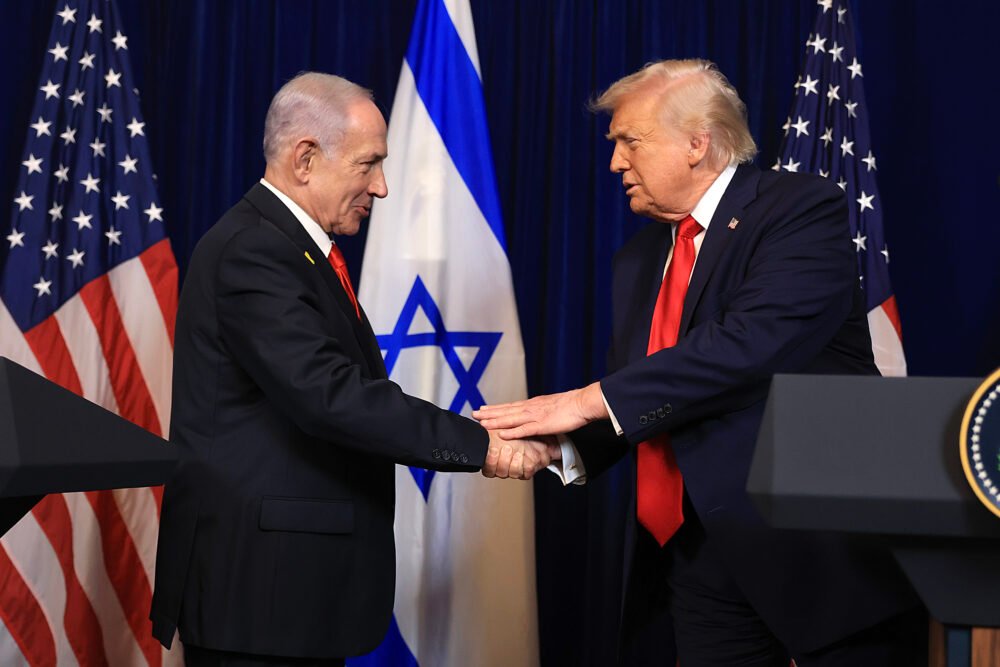
As US President Donald Trump has vacillated between various stated objectives for the war — regime change, “unconditional Iranian surrender,” a say in the selection of the next supreme leader, or military aims such as the destruction of Iran’s air, naval, and missile capabilities — Israeli Prime Minister Benjamin Netanyahu offered his own newly limited enunciation of war aims. In his first press conference of the war, two weeks in, he acknowledged to Israeli citizens: “I do not deny that I can’t tell you with certainty that the Iranian people will bring down the regime. A regime is ultimately brought down from within.” But he argued that Israel was “creating the optimal conditions,” hoping Iranians would seize them.
It was not lost on Israeli citizens that after the 12-day war in June 2025, merely eight months prior, Netanyahu announced that Israel had “achieved a historic victory, which will stand for generations,” that it had “removed two existential threats: the threat of annihilation by nuclear weapons and the threat of annihilation by 20,000 ballistic missiles.” Israel had “sent Iran’s nuclear project to oblivion.” The 12-day war was indeed very successful against Iran’s capabilities and left it far more vulnerable to further strikes. It did not, however, close the file on either the Iranian nuclear program or its ballistic missile capacity.
In pursuing another war against Iran, this time on a much larger scale, Netanyahu and Trump rolled the dice on a high-stakes gamble. The potential reward could be huge, but the cost has already been substantial and global in scope, and the down side must be prepared for. Netanyahu’s same speech pointed to the fallback option: If Iran tried to reconstitute its capabilities, he promised to strike again.
Containment and deterrence require patience
If one opts to revert to “mowing the grass,” one must have the conditions that allow it to succeed. To forcefully contain — perhaps until regime change materializes, hopefully in a positive way — one must also maintain a credible threat to use far greater force in the case of a major retaliation. Without it, forceful containment can quickly spiral into full-scale war, with everything that entails for people in the region and around the world.
But returning to that approach now would face two new problems.
First, to effectively deter Iran, Israel would require the material means to do so, including supplies from the United States, and at least American acquiescence to Israeli action. Yet US patience with open conflict with Iran is not the same as Israeli patience for it. Israelis are far more likely to believe this was a war of necessity, that they had no choice but to act. Americans believe this was a war of choice; they simply did not face the same threats from Iran, for geographic reasons if nothing else. The same could apply to the next round, but with added US public impatience born of this controversial war.
The American leadership’s attitude, moreover, is attuned to factors Israel is not nearly as sensitive to: global energy prices, pressure from countries in the region with close ties to the US or to President Trump that are currently under Iranian attack, and domestic US public opinion.
To be clear, by opting for a joint war with Israel against Iran, Trump dramatically raised the credibility of any future use of force while he remains in power. But Trump has also been known to change his mind; and if regime change in Iran does not come by the time he leaves the White House, the American calculation under his successor may look quite different.
Moreover, Iran has an interest in heightening these pressures on American decision making. It will want to impose as heavy a cost as possible on the US, the region, global markets, as well as Israel for their latest attack, to deter another one. It therefore has an interest in prolonging the conflict, focusing on the Strait of Hormuz and on energy prices, on casualties among Americans and Israelis, and on damage to US allies in the region, notwithstanding the massive pain to Iran and its people. The United States is indeed focused on the Iranian navy and its capacity in the strait, but even an American success there might lead to future reticence to revisit the effort.
This becomes, then, a battle of wills: Iran and Israel feel their very futures are at stake. The United States, writ large, does not. So long as Trump is in power, and if he adopts a prolonged, patient, calculated strategy, while withstanding domestic, regional, and international pressure, forceful containment could continue without much modification. But that is not the safest bet in the long run.
A spent threat
Second, an actualized threat can sometimes prove weaker than a potential one. Threats are most effective as coercive measures when the target has a lot to lose and is uncertain about the terms of coercion. After the 12-day war in June 2025, there remained a threat in place to enforce new “rules of the game.” Iran’s vulnerability to Israeli attack had been both demonstrated and heightened by that war, making the threat that much more credible. Yet even then, deterrence was no guarantee.
Now, with everything on the line and regime change explicitly in play, Iran’s leadership has little to hold it back, notwithstanding the huge damage to its capacity to strike. It may become less likely to accept terms put forth to avoid conflict. An actualized threat can become a spent threat.
The Islamic Republic has shown a willingness to turn to international terrorism and assassinations (counter-assassinations, in its eyes). It would also now have an incentive to attempt a high-risk dash to full nuclear weapons capacity, should containment falter and an opportunity arise in the future, for protection from the next attack, making that next war more likely.
This war, then, raises the ante. If the regime falls or changes from within in the coming months, the payoff could be huge. It would change the fate of millions in Iran and in countries throughout the region, depending on how it falls and what replaces it. If the regime survives, the risk could grow. A severely battered Iran would have far fewer capabilities at its disposal, but it would still have the capacity to harass its neighbors and impose costs on others. Containing it would require steadfastness, patience, and careful planning. That would be the difficult task ahead.