
The Iran war and Gaza plan teach Gulf states: US security guarantees are a liability. Tehran’s strikes targeted them; Washington’s plan sidelines them. Trust broken, the GCC will diversify partners and embrace hard power—America’s protection costs too much.
Tehran’s strikes and Trump’s Gaza peace plan show Saudi Arabia, the UAE and other Gulf states that they should no longer rely on America for security guarantees, write Neil Quilliam and Kristian Alexander.
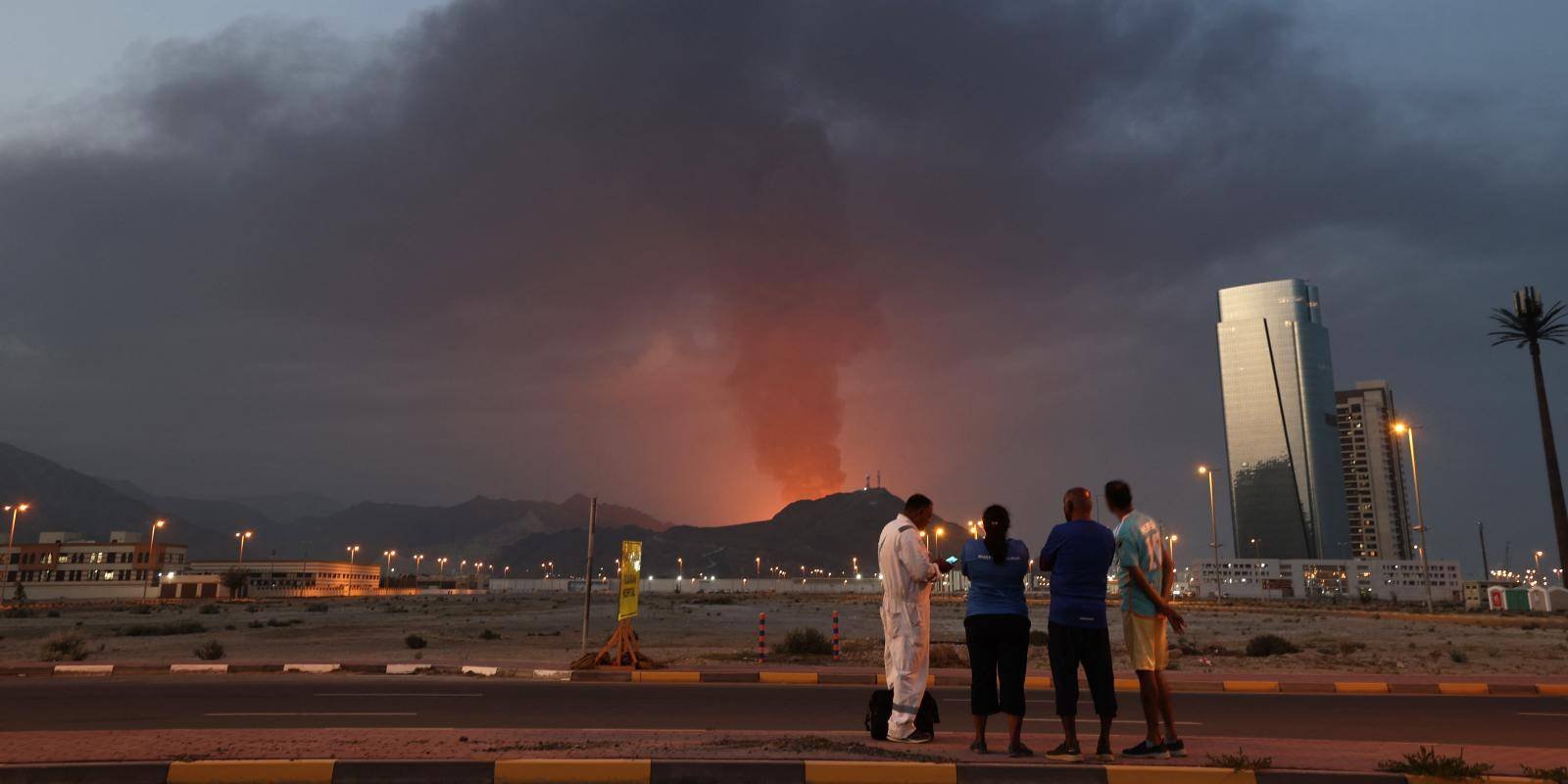
The military campaign that the United States and Israel launched against Iran on 28 February has plunged the region into conflict, triggering retaliatory strikes from Tehran, including against all six states of the Gulf Cooperation Council. Amid frantic efforts to defend their airspaces and populations, these countries are counting the high cost of partnering with the US – a price they were already paying by accepting a compromised role in Donald Trump’s Gaza peace plan. As a result, they are likely to increasingly embrace hard power and diversify security partnerships in the face of worsening regional volatility.
In October last year, US President Donald Trump presented his Gaza peace plan as a historic breakthrough. ‘It’s the start of a grand concord and lasting harmony for Israel and all the nations of what will soon be a truly magnificent region,’ he told the Israeli parliament. ‘This is the historic dawn of a new Middle East.’ Instead, it heightened the unease of Saudi Arabia, the United Arab Emirates and other states in the Gulf Cooperation Council (GCC). While the US continues to promote the initiative as a ceasefire blueprint and pathway to reconstruction, reality tells a different story.
Continuing Israeli air strikes and operations in Gaza and escalating settler violence in the West Bank not only strain the ceasefire but reveal the plan’s underlying weakness. Fundamentally it is an imposed solution that excludes the Palestinians, lacks detailed enforcement mechanisms and fails to address the conflict’s core issues. ‘If we are just resolving what happened in Gaza, the catastrophe [of] the past two years, it’s not enough,’ said Qatari Prime Minister Sheikh Mohammed bin Abdulrahman Al Thani in Doha in December 2025. ‘This conflict is not only about Gaza. It’s about the West Bank. It’s about the rights of the Palestinians for their state.’
After all, even if the plan were successful, Gaza cannot be isolated from other conflicts in the region. Indeed, Israel’s creeping annexation of the West Bank will give non-state actors in the region yet another reason to target Israel, its allies and vital shipping lanes – already under fire from Iran. Thanks to their dependencies on the US, the GCC states – Saudi Arabia, United Arab Emirates, Qatar, Oman, Bahrain and Kuwait – now find they have little choice but to support Washington’s policies in the region. Yet the consequences, painfully evident in Tehran’s strikes, will compel them to take up hard power in pursuit of security.
Building the Board of Peace
In October 2025, Trump announced a 20‑point plan for Gaza, excluding the West Bank, built around two phases. The first required an immediate ceasefire, reciprocal release of hostages and prisoners, an Israeli pullback to agreed positions and full humanitarian access. The second, initiated in January, focuses on disarming Hamas, establishing a transitional technocratic administration, rebuilding Gaza’s infrastructure and creating two new bodies: the international Board of Peace and a temporary International Stabilization Force to oversee security and coordinate reconstruction.
The UN Security Council endorsed the plan in November, and the board was launched in January at Davos. Some 27 states have joined so far, including Saudi Arabia, the UAE, Qatar, Egypt, Jordan, Kuwait, Bahrain and Turkey. The board’s remit extends beyond Gaza, reflecting US intent to use it as a conflict‑management platform.
In Gaza, it serves as the interim administration until the Palestinian Authority completes reforms under the Trump plan and the New York Declaration, the roadmap to a two-state solution endorsed by 142 countries at the UN General Assembly last September. Day‑to‑day services are being restored by the National Committee for the Administration of Gaza (NCAG), a group of 15 Gazan technocrats selected by the US and approved by Israel, which has no political or security mandate. The Board of Peace’s Gaza Executive Board links international actors to the NCAG; of its 14 members, two are ministers from GCC states.
The Trump plan stands alone – no other peace initiative is on the table. Therefore, regional states, especially those in the GCC, felt compelled to support it to maintain favour with the Trump administration and to halt the large‑scale killing of Palestinians, whose death toll in the war had surpassed 71,000, according to local health officials, and threatened regional security. By engaging with the plan, the GCC states aim to help sustain the ceasefire and advance a pathway to Palestinian statehood.
The plan aims to end the war, restore stability and rebuild Gaza under new leadership. However, by ignoring the root causes of the conflict – which include competing territorial claims, enforced displacement and decades of accumulated mistrust – it reinforces the very conditions that led up to the Hamas attacks of 7 October, 2023. Essentially, it attends to the population’s pressing humanitarian and economic needs but risks depriving Palestinians of political agency.
The plan aims to re-engineer society in Gaza by creating securitized residential zones in a property development ‘master plan’ unveiled by Jared Kushner, Trump’s son-in-law, at Davos in January 2026. The experience of Iraq and Afghanistan showed that conflict resolution approaches that prioritize economic over political interests are doomed to fail. Nor are the GCC states content they should share the burden of funding Gaza’s reconstruction – apart from the UAE, each has expressed reservations. All of which presents GCC states with a dilemma.
An imperfect plan
The GCC states’ close partnerships with the US, personal links to Trump and involvement in the Board of Peace mean Saudi Arabia, Qatar and the UAE have no option but to project confidence in the process. Indeed, they are in a strong position to lend it critical political, diplomatic and financial support. Point 3 of Trump’s plan asserts that once both Hamas and Israel agree to the proposal, the war will ‘immediately end’. Yet the national security establishments of the GCC states see the status of the conflict differently – as static and unresolved.
Despite the plan’s intention to disarm Hamas and exclude it from the governing process in Gaza, GCC security officials believe it is unlikely to extinguish support for the group, nor quell anti-Israeli and anti-US sentiment in the territory. Herein lies the quandary: the GCC states must invest in a plan that they do not believe will resolve the conflict nor endure, and at the same time, prepare for its failure when regional stability is already under threat from US and Israeli action against Iran.
GCC members share unease about the plan’s limited scope and lack of detail, although they diverge sharply in how they approach it and judge its likely consequences. The UAE was the first GCC member to join the Board of Peace. Over the past two years, it has established three field hospitals in Gaza and provided aid. It has endorsed the NCAG and is contributing to committee member salaries, according to a speaker at a closed‑door Chatham House meeting.
The UAE appears less concerned that Trump’s plan might further decouple political and economic connectivity between Gaza and the West Bank, though it has made clear its red line on any move by Israel to annex parts of the occupied West Bank. Saudi Arabia has joined the board but continues to affirm its commitment to establishing a Palestinian state in line with the 2002 Arab Peace Initiative. Riyadh wants the plan embedded within a broader effort to advance Palestinian statehood and, with Qatar and the UAE, pushed to ensure that statehood appeared in Trump’s plan. Israel later diluted the wording to avoid any firm commitment.
Qatar takes a more sceptical view. Doha maintains that any sustainable peace must include credible Palestinian political representation and keep the Gaza Strip connected to the West Bank. Although it funded reconstruction after previous conflicts, this time it declined because the initiatives risk sidelining Palestinian political authority.
Nice in theory
The UAE and Qatar indicated conditional openness to joining a UN-mandated peacekeeping force to deploy in Gaza after the disarming of Hamas but no Arab state will deploy troops to Gaza amid unresolved questions over disarming Hamas and the authority of a UN force. Their reluctance stems from shared concerns about the lack of effective implementation mechanisms, and the risk of being drawn into a deeply unpopular open‑ended security operation. Now, after suffering the consequences of US and Israeli action against Iran, they will find it even harder to justify involvement that could blow back on Gulf state interests.
Moreover, GCC states are reluctant to fund Gaza’s reconstruction without credible assurances on governance and security control. Indeed, Israeli Prime Minister Benjamin Netanyahu and GCC leaders view the end goal of the peace plan very differently – respectively, managed instability versus a pathway to credible Palestinian statehood.
The GCC’s distrust is justified. Ongoing Israeli settler violence in the West Bank has further undermined confidence in Tel Aviv’s commitment to peace. Moreover, Israel has continued to strike inside Gaza, killing more than 600 Palestinians since the ceasefire came into effect. Israeli forces have also created a semi-permanent security perimeter policed by air power, drones and ground incursions. As such, Israel retains military superiority without assuming full occupation and, in doing so, may institutionalize instability.
Critics argue that Trump does not sufficiently constrain Israel’s military actions in the region. Amid US unwillingness to curb Israeli action and Washington’s predilection towards unilateral military intervention, the GCC will pay the cost of greater regional insecurity. The GCC states have long relied on external security guarantees, primarily from the US, for protection. However, trust in those guarantees was already under strain following Iranian strikes against Saudi Arabia in September 2019 and Israel’s strike against Hamas operatives in Doha in September 2025. Now, whatever was left of that trust has been broken, accelerating the GCC states’ push to diversify security partners.