
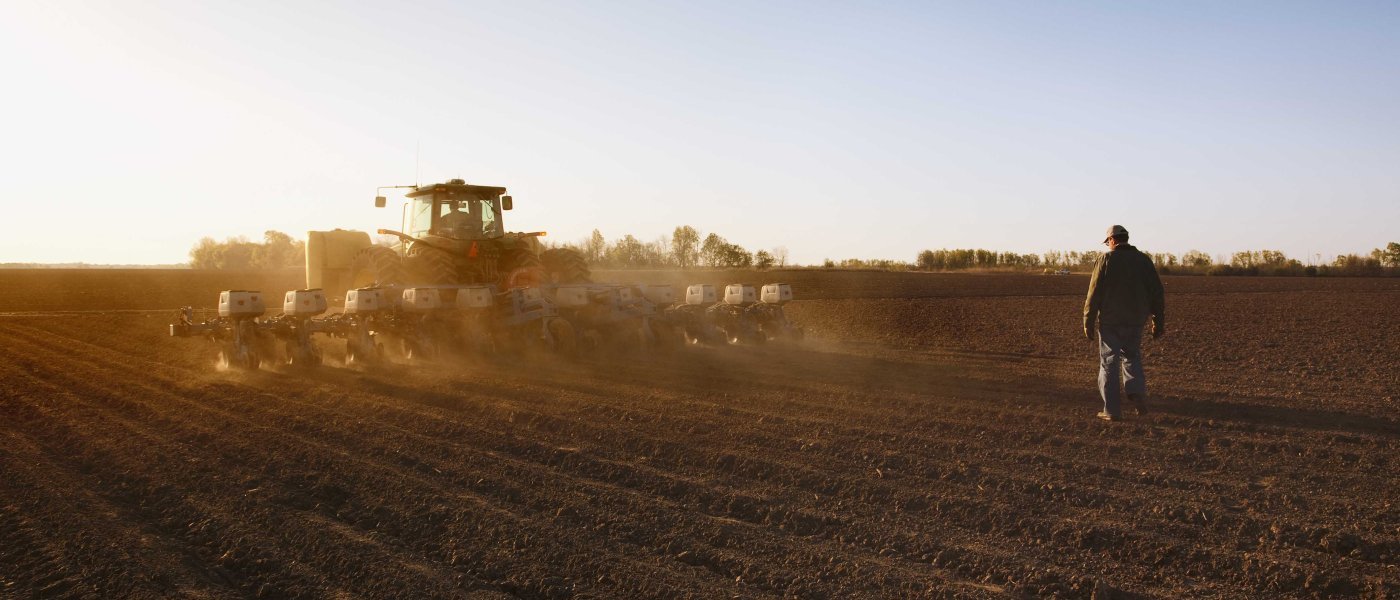
Welsh analyzes the war’s “double mechanism” of inflation: soaring LNG/oil prices and the blockage of 20-30% of global fertilizer exports. She evaluates the 2026 USDA planting shifts and warns that a prolonged conflict could push an additional 45 million people into acute hunger.
Critical Questions
The energy and fertilizer market disruptions resulting from the Iran war are threatening agriculture markets and food prices around the world. How could these market shocks affect food systems? What evidence are we seeing to date, and what are the policy solutions for farmers and consumers—in the United States and worldwide?
Q1: How is the Iran war affecting agriculture markets and food prices?
A1: The war with Iran is affecting food systems through two mechanisms: the price of energy and the price of fertilizers, which are pushed higher through the destruction of energy-production infrastructure and the effective closure of the Strait of Hormuz.
High energy prices translate to high food prices for several reasons. Energy—including motor oils and liquified gases—powers food production and processing, from tractors and irrigation systems to transportation and refrigeration. High energy costs for farmers, food transporters, and retailers are passed to consumers through high food prices. Furthermore, when fossil fuel prices rise, demand for alternative sources of energy, including biofuels, increases, and some farmers divert crops like corn, sugar, and soy to energy rather than food. Finally, high energy prices increase the cost of fertilizer. Liquified natural gas (LNG) is a key input to nitrogen-based fertilizers, so high LNG prices push up the prices of fertilizers like ammonia and urea, while high oil prices increase processing and transporting costs, which ultimately put upward pressure on all fertilizer prices.
Beyond high energy prices, the war with Iran is also directly increasing the price of fertilizer through the restriction of exports of fertilizers and inputs to fertilizer production. Prior to this war, approximately 20–30 percent of global fertilizer exports transited the Strait of Hormuz, including approximately 23 percent of ammonia and 34 percent of urea, the most commonly used nitrogen-based fertilizers, along with 20 percent of phosphates traded globally. The strait also transits approximately 20 percent of global LNG exports, and approximately 45 percent of global exports of sulfur, a byproduct of oil production that is used to produce phosphate-based fertilizers.
Together, high oil and LNG prices, the increased cost of fertilizer feedstocks, and the restriction of fertilizer exports have driven up the costs of most nitrogen- and phosphate-based fertilizers globally. Farmers in the Northern Hemisphere, including the United States, are now facing high fertilizer costs during the spring planting season, the period of peak fertilizer application. Farmers may adapt in several ways. Farmers who had purchased fertilizers before the onset of war may continue with planting as previously planned. Countries that keep national reserves of fertilizers, like China, may draw on those reserves to provide fertilizer to farmers, insulating them from high fertilizer prices. Farmers without sufficient fertilizer could be forced to purchase fertilizer at high prices or forego purchasing fertilizer altogether. This could ultimately affect crop production and alter decisions over the types of crops planted, with some farmers opting to shift from more-fertilizer-intensive crops, like corn, to less-fertilizer-intensive crops, like soybeans. Together, these decisions could change the quantity and quality of agriculture commodities on global markets, potentially increasing the cost of food for many.
Q2: How could the Iran war affect farmers and food prices—in the United States and around the world?
A2: High fertilizer and energy prices will have more immediate effects on the U.S. farm economy than on U.S. food prices. By late 2025, the American Farm Bureau Federation warned that the “viability of the U.S. agriculture sector” was threatened by economic pressures, including trade and immigration policy, which increased the cost of farm equipment and labor, fertilizer prices that remained above pre-pandemic levels, and the falling price of agricultural commodities. As a result, the sale price of agricultural commodities was lower than the production costs for many farmers. Today, the U.S. Department of Agriculture (USDA) estimates that approximately 25 percent of farmers have not yet purchased the fertilizer they need for the 2026 spring planting season. High fertilizer prices increase costs for these farmers, which could affect the viability of their operations.
Around the world, high energy prices will likely put upward pressure on global food prices. Considering the correlation between energy prices and food prices, and assuming that the war lasts beyond June 2026, with oil prices remaining above $100 per barrel during that period, the UN World Food Programme (WFP) estimates that the number of people facing acute hunger could increase by 45 million. This number will ultimately depend on the duration of the Strait of Hormuz closure and implementation of policies to buffer the war’s impacts on farmers and consumers.
The immediate impacts could materialize in the Northern Hemisphere, particularly for some farmers in major agricultural producing countries like the United States, Canada, Europe, Russia, Ukraine, China, and India. Sustained high fertilizer prices could similarly affect agricultural production during Southern Hemisphere countries’ planting season in late 2026, and even for the 2027 spring planting season in the Northern Hemisphere, depending on the duration of the war and associated high fertilizer prices. Sustained high energy prices could continue to divert grains from food to biofuels, putting upward pressure on grain prices. Grains are a principal source of animal feed, so high grain prices ultimately affect dairy and meat prices alongside prices of staple foods.
Q3: So far, what is the evidence that this war is affecting agriculture markets and food prices?
A3: At the time of writing, global urea futures reached $693 per ton, up 49 percent relative to the price immediately preceding the conflict. Prices vary by location, and on March 20 in Illinois, average urea prices were up 42 percent, and average ammonia prices were up 18.5 percent since immediately prewar. The price of gasoline and diesel fuel continues to rise in the United States, where the national average gas price exceeded $4 per gallon by the end of March.
In March 2025, the USDA Economic Research Service predicted the price for all food to increase by 3.6 percent throughout 2026. This price increase would represent higher inflation than 2024–2025, but lower food-price inflation than 2020, due to Covid-19–related supply-chain shocks, and 2022, when food prices reached a forty-year high. Monthly reports will reveal the extent of food-price inflation—for food purchased in grocery stores and restaurants—in the United States. The Food Price Index of the Food and Agriculture Organization (FAO) of the United Nations will report monthly changes in global agriculture commodity prices. The WFP estimates that the impact of energy prices on food prices could peak approximately four months following the onset of the Iran war; a similar timeframe could be expected for food prices to reflect high energy prices in the United States.
The USDA’s Prospective Planting report estimated that in 2026, plantings of corn and wheat acreage, both nitrogen-fertilizer-intensive crops, will likely fall 3 percent each, relative to 2025. Soy acreage is estimated to rise by 4 percent relative to 2025. Swings in estimated acreage are not as large as grain traders estimated, either because the report does not capture the full effect of high fertilizer prices on U.S. farmers (surveys were conducted through the second week of March) or because most farmers had secured fertilizer early.
Globally, the impacts of high fertilizer and energy prices will likewise be experienced over the coming months and will be dependent on the duration and extent of the war. The FAO estimates that a one-month conflict would affect those farmers in the Southern Hemisphere who have not yet purchased fertilizers, with farmers in the Northern Hemisphere relatively unaffected. A three-month war could affect production and planting decisions for all farmers in the Northern and Southern Hemispheres. A war extending into 2027 could affect economies’ growth trajectories, affecting agricultural productivity and consumers’ purchasing power. Estimates of the global production and export of agriculture commodities will be reported in monthly USDA World Agriculture Supply and Demand Estimates reports, and in reports of the Agriculture Market Information System.
Q4: What are the policy responses?
A4: Recognizing the additional pressures on U.S. agriculture brought by the Iran war, the White House proclaimed March 24, 2026, as National Agriculture Day and welcomed hundreds of farmers to White House grounds several days later. There, President Donald Trump announced several measures to support U.S. farmers, including increasing the renewable fuel volume requirements for biofuels, offering loan guarantees for farmers and food suppliers, and easing pollution monitoring requirements.
Such steps may reduce overall costs and expand markets for farmers, but they would not address the fertilizer-price spike brought by the Iran war. In the short term, easing tariffs on fertilizer-producing countries like Morocco and Russia could provide relief from high fertilizer prices. U.S. fertilizer market analysis suggests increasing domestic production of nitrogen-based fertilizers to ease U.S. farmers’ exposure to global price shocks, though the construction of fertilizer facilities would require billions of dollars and up to two years. Ammonia production facilities powered with renewable energy could provide ammonia at a lower cost relative to ammonia produced with LNG, so funding for research and investment in such facilities could lower fertilizer prices for U.S. farmers in the long term. Investigating fertilizer producers for potential price fixing could also signal intent to reduce fertilizer prices, but would likely have no near-term impact on fertilizer prices for U.S. farmers.
Beyond impacts on U.S. farmers, all U.S. consumers will likely be exposed to food-price inflation due to rising energy costs. According to the USDA, food insecurity increased in the United States through 2024, affecting 13.7 percent of U.S. households. High food prices and economic stagnation are likely to increase the number of Americans experiencing food insecurity in 2026. The One Big Beautiful Bill Act mandated a historic reduction in funding for the Supplemental Nutrition Access Program (SNAP)—the main program by which the federal government supports household food security—that will result in a loss of SNAP benefits for millions of Americans. Should food prices increase alongside energy prices, then a temporary increase in SNAP funding could buffer low-income Americans from food insecurity.
To support producers and consumers worldwide, the FAO recommends short-term measures to stabilize markets and ensure energy flows, medium-term measures to diversify fertilizer supply and strengthen regional cooperation among fertilizer importers, and long-term measures to increase the resilience of fertilizer markets to structural shocks such as the Strait of Hormuz closure.
Q5: Could a Black Sea Grain Initiative for Strait of Hormuz fertilizer work?
A5: In late March, the UN secretary-general announced a task force to “facilitate fertilizer trade, including the movement of raw materials,” through the Strait of Hormuz, in the model of the Black Sea Grain Initiative (BSGI) and comparable mechanisms. Following Russia’s full-scale invasion of Ukraine and blockade of the Black Sea in early 2022, Ukrainian grain exports were effectively trapped in Ukraine’s maritime ports, driving global food prices to historic highs by March 2022. In mid-2022, the United Nations, Turkey, Russia, and Ukraine agreed to the BSGI to facilitate the safe export of Ukrainian grain from Ukraine’s Black Sea ports. Ukrainian grain exports resumed immediately, helping quell global food prices, which reduced to pre-invasion levels by the end of 2022.
Today, the United Nations and other international partners likely hope to stem the rise in global fertilizer prices through a similar mechanism. The impact of a Strait of Hormuz initiative would depend largely on the commodities subject to the initiative, whether urea, ammonia, phosphate, LNG, and/or sulfur. As nitrogen-based fertilizers are the most commonly applied fertilizers globally, and with a significant proportion of urea and ammonia produced in Persian Gulf countries, an initiative aimed at facilitating the transit of these fertilizers could ease global prices, lessening long-term impacts on global food production and prices. Including LNG in any trade-facilitating regime would further reduce fertilizer prices. Including sulfur and phosphate in a Strait of Hormuz mechanism would allow for maximum reductions in fertilizer prices. Still, an initiative that does not facilitate oil exports would allow for continued upward pressure on energy prices and the prices of food, fertilizer, and other commodities.
While the BSGI ultimately helped stabilize global grain prices and facilitated the maritime export of significant amounts of Ukrainian grain, it presented other challenges for Ukrainian exporters. Often missing from conversations around the BSGI is the fact that Ukrainian grain exports increased following the termination of the BSGI in 2023—contrary to popular expectations—because the BSGI required inspection, including by Russia, of grain-carrying ships entering and exiting Ukraine’s ports. Throughout the period of the BSGI, Russia slowed and ultimately halted inspection of Ukrainian ships before terminating the BSGI altogether in mid-2023. Absent the BSGI inspection regime, and with renewed commitment to securing its maritime trade routes, Ukraine ultimately increased its grain exports in the year following the termination of the BSGI.
In the case of the Strait of Hormuz, Gulf fertilizer and gas producers would benefit financially from facilitated fertilizer and LNG exports, while eased pressure on farmers could support global food production. Iran, however, could find benefit either in participating in such a regime, signaling goodwill toward Gulf countries following Iran’s region-wide attacks, or in retaining control of Strait of Hormuz exports, thereby retaining leverage over the United States, Israel, and the global economy. At the end of March, Iran announced its agreement to “facilitate and expedite” the transit of humanitarian aid through the Strait of Hormuz. The war has curtailed operations of a United Arab Emirates–based humanitarian assistance hub, delaying shipments of food, medicine, and medical supplies to Africa and Asia.
An enduring lesson of the BSGI is that one party to the mechanism may have an interest in continued control of commodity exports, even while appearing broadly cooperative in trade facilitation, and ultimately, trade volumes may not fully recover until war ends.
Q6: What could be the unintended consequences for U.S. geopolitical adversaries?
A6: The Iran war has already introduced trade dynamics that benefit U.S. strategic adversaries, including Russia and Iran. Beyond oil exports from both countries—which the United States de-sanctioned within weeks of the war—Russia and Iran are benefitting from disruptions to fertilizer and gas markets.
Amid Strait of Hormuz export disruptions, orders of fertilizer from Russia, the world’s second-largest fertilizer exporter, are increasing, including among some countries in Africa. Such a dynamic reinforces Moscow’s efforts to use food and fertilizer exports for influence, discouraging importers from condemning Russia in its ongoing war in Ukraine. In the Strait of Hormuz, Iran is reported to permit the transit of ships carrying commodities to countries maintaining close ties with Iran. India, for example, has received imports of liquified petroleum gas, commonly used as a cooking gas, from at least six Iranian ships transiting the strait; China is also reported to have received shipments of commodities via the strait. According to an Indian shipbroker, Iran is “forcing countries to choose between Western alignment and energy stability.” Weaponizing the Strait of Hormuz for political influence is “extortion on a global scale,” according to a United Arab Emirates minister. As with the war in Ukraine, high energy prices drive global inflation, while high fertilizer prices threaten the production of food for billions of consumers worldwide, providing additional leverage in wartime and further influence over fertilizer-importing countries.