
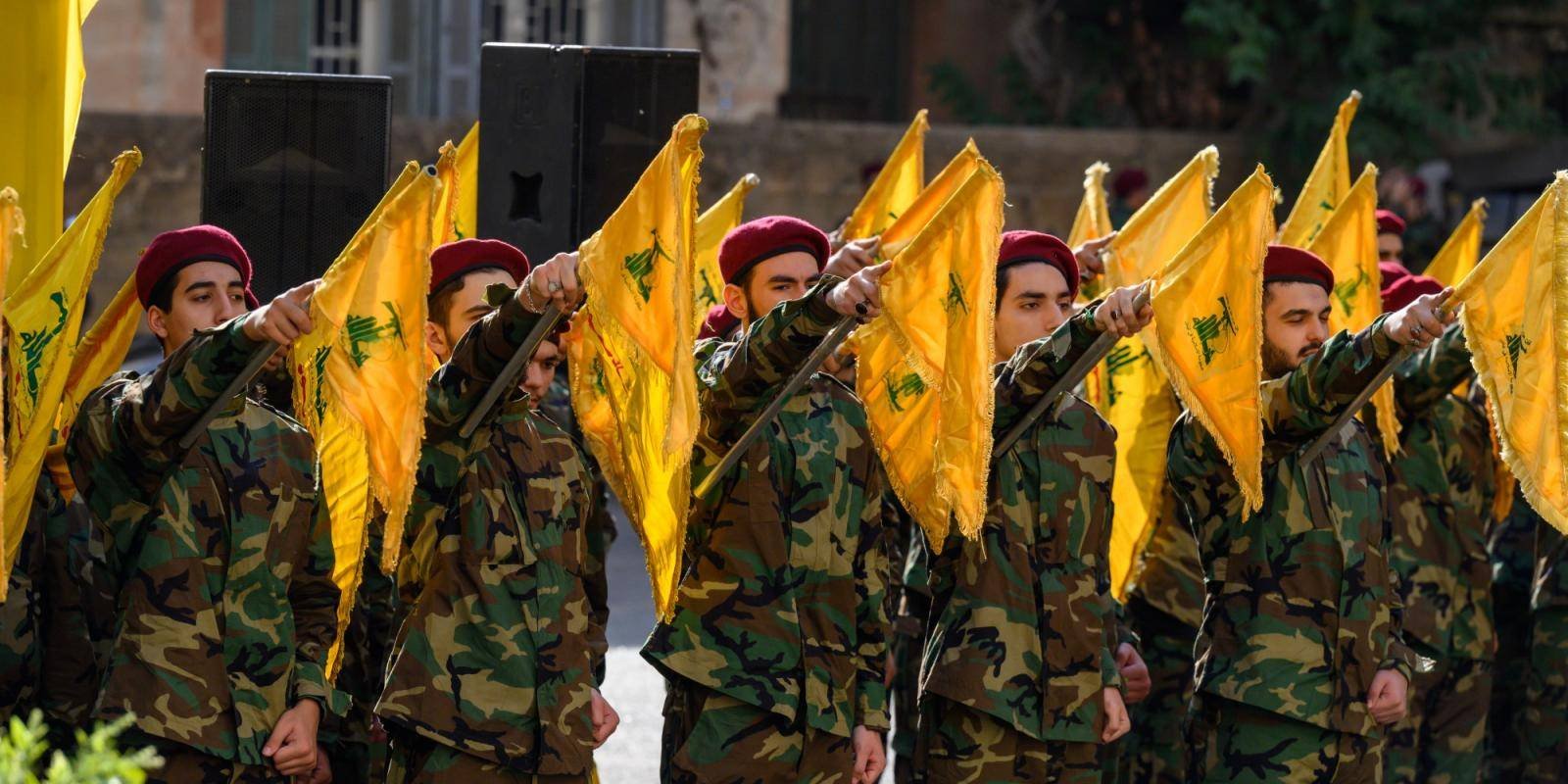
Weapons underpin the group’s alliance with Tehran and its political power in Lebanon. Any new US–Iran nuclear deal must require Tehran to compel Hezbollah to disarm.
In a recent interview with the Saudi news outlet Al Arabiya, Lebanon’s Foreign Minister Youssef Rajji said that ‘Hezbollah won’t hand over its weapons without an Iranian decision’. For a diplomat, it was an unusually blunt statement, but that didn’t make it any less true.
Many in Lebanon share that conviction. Otherwise, why would Hezbollah chief Naim Qassem insist on preserving his party’s arms despite the obvious consequences?
Hezbollah is well aware that most Lebanese want to see it disarmed, as a recent Gallup poll showed. And disarmament was a key part of the US-brokered ceasefire agreement with Israel reached in November 2024. But Hezbollah insists that disarmament only applies to a part of Lebanon’s south, the area south of the Litani River.
Because of its obstinance, Hezbollah has lost much of its political standing in Beirut and most of its domestic political alliances. That has facilitated the formation of a new government whose president and prime minister are committed to the goal of the Lebanese state regaining its monopoly over the use of force, exercised via the country’s army. The Lebanese army is carrying out disarmament operations in the southern Litani sector, but is being far more cautious about disarmament in the northern part of that sector, in addition to the Bekaa and elsewhere.
Hezbollah knows that by keeping its arms, it risks another major war with Israel, which is eager to remove the military threat the group poses to its northern region. Israel has launched attacks on Lebanon on numerous occasions this year, targeting what it says are Hezbollah positions and assassinating Haytham Ali Tabatabai, one of the group’s most senior military commanders, last month.
Yet, despite the mortal danger of a new war, and a dramatically deteriorating strategic environment following the loss of the Assad regime in Syria (previously a major source of military supplies), Hezbollah still chooses to reject any compromise. Why? The decision seems irrational.
That supports the theory that Hezbollah, as Mr. Rajji suspects, has no agency over the fundamental issue of its arms.
An Iranian decision
Since its formation in the early 1980s, facilitated by Iran’s Islamic Revolutionary Guard Corps, Hezbollah has enjoyed certain freedoms: it can field any candidate it wants to run for Lebanese elections. It can decide how to spend the money it makes and receives from Iran. And it can make friends or foes of any Lebanese political actors, all without having to consult with Tehran.
But it cannot give up its arms or even use them against Israel in any significant way, without the explicit authorization of its masters in Tehran. Indeed, it cannot decide to do so independently as the moment it disarms, Iran will lose every interest in the organization.
The sense of brotherhood and sectarian solidarity between Iran, a predominantly Shi’ite nation, and Hezbollah, a Shi’ite group, is real. But the primary reason why Tehran provides Hezbollah with hundreds of millions of dollars every year, long-range weapons, intelligence, and military training is because it wants the group to serve as an extension of its military power in the region. More specifically, an armed Hezbollah is still thought of as a way to deter an all-out Israeli attack against Iran and if that fails, to fight in the event of a major war.
Of course, that deterrent didn’t work so well this summer. Israel attacked Iran, and Hezbollah failed to deter or do anything in response. Perhaps Iran didn’t need its Lebanese ally’s help at the time and decided to save it for a more dire set of circumstances. Or maybe Hezbollah’s significance as part of Iran’s extended deterrent was always inflated or overstated.
Nevertheless, it is clear that Iran still sees value in an armed Hezbollah. In November, US officials stated that Tehran has managed to funnel as much as $1 billion to Hezbollah this year to fund its activities and help it rebuild its arsenal. For Tehran, forcing Israel to account for and worry about a significant threat on its northern border is worth the investment. Half the battle is psychological.
An unarmed Hezbollah whose influence is limited to a tiny Lebanese political scene is simply not an attractive investment for Iran. Look at all of Iran’s sizeable investments in the region: the Houthis in Yemen; the militias in Iraq; Hamas and the Palestinian Islamic Jihad in the Palestinian Territories: all possess Iranian arms for a reason.
And it’s not like Hezbollah doesn’t benefit from Iran’s largesse. Iranian arms and funding allow the group to maintain its claim to be the only force capable of defending Lebanon from Israel (although hardly anybody buys that beyond its hardcore supporters).
Weapons also allow Hezbollah to bully and physically eliminate anyone in Lebanon who has dared to challenge it. And Iranian funds are channelled by Hezbollah into jobs, schools, healthcare, and other services for its Shi’ite constituents. Remove Iranian support and Hezbollah becomes irrelevant in Lebanon’s politics as much as in regional security. So, asking Hezbollah to disarm is like asking it to commit suicide.
Qassem himself said it in his latest speech on Saturday, accusing those who want to take away his group’s arms of seeking ‘execution’.
A new US–Iran deal
Needless to say, this doesn’t bode well for Lebanon, which again raises Rajji’s point: if Iran controls Hezbollah’s military decision-making, under what circumstances might it be willing to give up whatever is left of the group’s guns? Would it require a deal between the United States and Iran?
In October, US President Donald Trump stated that he’s willing to bargain with Iran. Hezbollah’s future, not just Iran’s nuclear program, should be part of the conversation. This time, the outcome must be contrary to what the Obama administration achieved when it negotiated the 2015 Joint Comprehensive Plan of Action with Tehran. Any new agreement requires a disarmed Hezbollah and a dramatically reduced nefarious Iranian influence in the region.
The alternative is Israel stepping up its existing military activity and once again ‘dropping the hammer’ with a full-scale war on Hezbollah – with a US green light and wide Arab and international acceptance. This could prove even more devastating than before. Israel may not be able to fully disarm Hezbollah, but through brute force it can make it virtually impossible for Iran to rebuild the group’s capabilities.
For now, Israel is seeking to further weaken Hezbollah and push for normalization talks with the Lebanese government. That is something Hezbollah strongly opposes – and something that Iran will fear.
Lebanese Prime Minister Nawaf Salam has said that the US–Israel–Lebanon mechanism overseeing the Lebanese army’s mandate to disarm Hezbollah is a separate issue to normalization with Israel – and that Lebanon is ‘far from’ normalization. But Israel might force the issue, and Washington might apply various forms of increased diplomatic pressure against Lebanon, if only to address once and for all the military challenge of Hezbollah.