
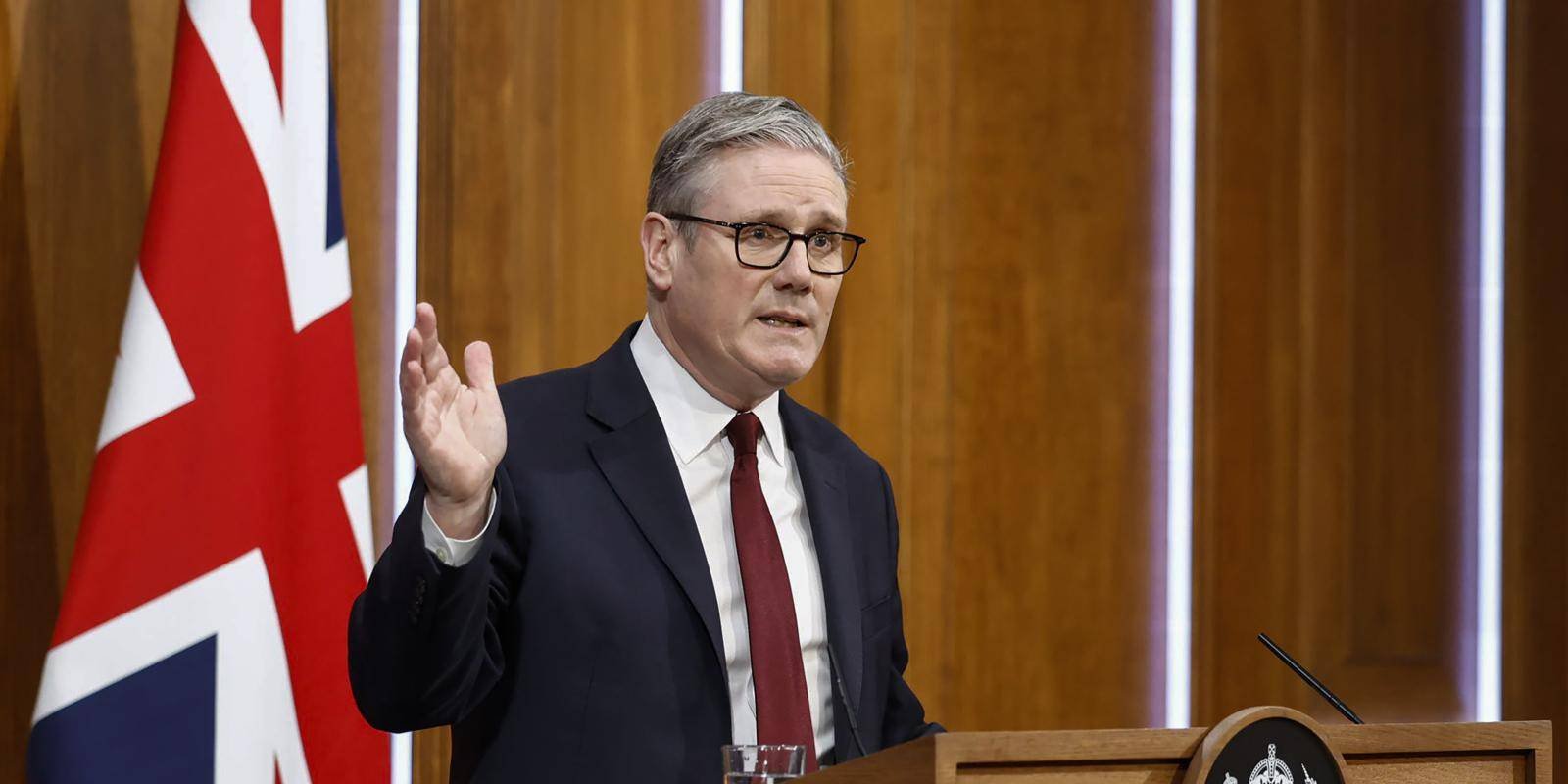
Starmer navigates Iran war cautiously, reflecting UK public opposition but straining ties with Trump. Economic hopes falter. Military credibility wavers. Britain faces tough choices between alliance obligations and national interest.
The war threatens the UK prime minister’s hopes for economic recovery and heaps pressure on US relations he has worked hard to maintain. A long war will see his problems mount.
UK Prime Minister Keir Starmer has navigated the early weeks of the Iran war relatively well. 47 per cent of all UK voters believe he has managed the response to the war badly, according to recent polls. But a majority of Labour and Liberal Democrat voters believe he is doing well.
And with 59 per cent of all UK voters opposing the Iran conflict, Starmer’s decision to deny the US military access to British bases for their initial attacks seems to have reflected wider public opinion. Starmer also had the satisfaction of seeing domestic political rivals like Kemi Badenoch and Nigel Farage having to rapidly U-turn on their initial enthusiasm after seeing the war’s unpopularity.
Internationally, the picture has been more mixed. The prime minister’s position aligned with European and other Western allies. But it prompted anger and repeated insults from US President Donald Trump.
Beyond the US, the war has frayed the UK’s relations with Cyprus, whose president has called for a ‘frank discussion’, about the future of British bases on the island after it was targeted by Iranian drones. The slow deployment of a Royal Navy destroyer, HMS Dragon, to help protect Cyprus has raised further concerns about Britain’s military credibility.
Similarly, while UK forces have helped defend allies from Iranian attacks, some Gulf officials have expressed frustration at their limited nature. The UK’s decision to remove its only mine-hunting ship from Bahrain for maintenance in the weeks before the war, despite the US’s obvious build up, fed into these criticisms.
The longer the war drags on, the more challenges emerge. President Trump’s capriciousness means it would be equally unsurprising if he declared the war over tomorrow or dramatically escalated it, through an action like occupying Kharg Island or attacking Iran’s power infrastructure. But the Iranian regime has also proven itself unpredictable and may expand and/or prolong the conflict whatever actions the US and Israel take. Yemen’s Houthis may also decide to intervene, threatening trade routes in the Red Sea.
Two big problems for the prime minister
None of this is good for Starmer, as the continuing conflict threatens to undermine two of his core goals. The first is economic recovery. Starmer and his chancellor, Rachel Reeves, have bet their political fortunes on achieving sufficient growth to repair public finances and reduce the cost of living.
The war may have already shattered those hopes for 2026. The Bank of England did not cut interests rates in March, as it had been expected to do, citing the effects of the conflict. Energy bills, mortgage costs, petrol prices and food bills are all rising. The fear for Starmer and the chancellor is that things will get even worse as the war continues – a situation beyond their control dealing a significant blow to their electoral hopes.
A second goal for Starmer – and one of his few achievements in office so far – has been to maintain strong ties with Trump. Cracks were appearing before the war, as London stood by Denmark over the White House’s public threats to seize Greenland.
But Iran has worsened relations. Starmer has tried to tread carefully, seeking to fulfil Britain’s alliance obligations as much as possible without being sucked into the conflict. This has meant gradual concessions: initially denying the US access to British bases but then later permitting their use to defend allies against Iran’s retaliations.
Similarly, the UK belatedly allowed Washington to use the joint airbase on Diego Garcia in ‘limited and defensive’ Iran operations, having initially refused. But London has been slow to commit to protect shipping through the Strait of Hormuz as Trump has publicly demanded, creating a significant row.
Starmer may hope that, just as the ‘special relationship’ survived Harold Wilson’s unwillingness to send forces to Vietnam, it can also endure his refusal to engage in Iran – if he simply ignores Trump’s insults. Donald Trump though, is not Lyndon B. Johnson. He may forgive Starmer and other allies should the war end well for him. But if things go wrong, Britain may have to deal with a humiliated, vengeful and unpredictable president.
Bigger questions for Britain
These are not Starmer’s only concerns. Another is to support key Gulf allies like Bahrain, Oman, and the UAE, and to ensure the safety of the UK citizens living there. The UK has done a good job of getting its people out of harm’s way rapidly, with over 100,000 evacuated within days.
But the UK armed forces have not projected reassuring power in the region as they once could. Small numbers of RAF Typhoon and F35 aircraft are intercepting Iranian attacks in the region. And the UK is reportedly considering deploying assets to help secure the Strait of Hormuz once the war is de-escalated. But the absence of minesweeping assets at the outbreak of war highlighted significant reductions to Royal Navy capability, according to some Gulf observers.
Beyond this, the war could affect the UK in ways currently unforeseen. Regime collapse or civil war in Iran could lead to migration crises or increased international terrorism, as did the Syria conflict a decade earlier.
But even the foreseeable challenges pose difficult questions. Might the need to limit the economic impact of the war force Britain into a more active role? And might this result in more British assets being targeted by Iran, as Cyprus and Diego Garcia have already been?
The war also raises bigger, long term strategic questions for British foreign policy. When the US begins a war that the prime minister judges not to be in the national interest, is it better to remain distant and try to manage the fallout or stay close in the hope of shaping decisions?
Former Prime Minister Tony Blair reportedly argued that Starmer should have ‘backed America from the very beginning’ and supported the use of UK bases for attacks on Iran. Though this criticism, from a figure whose legacy in the region is the source of significant unpopularity, may lead Starmer to conclude he is pursuing the right course.
Calls for the UK to make serious plans for greater strategic autonomy, as recently argued by the UK’s Liberal Democrat party, may look increasingly convincing.
Britain’s future in the Gulf and wider Middle East also looks uncertain. Will the economic shockwaves of the war mean Britain tries to insulate itself better from future shocks, by decreasing its dependence on fossil fuels? Or should it reverse its recent distance from the region and play a fuller role securing price and supply?