
RAND experts analyze the war’s multifaceted dimensions: Mojtaba’s succession signals IRGC consolidation; public sentiment is divided but fearful; Iran’s proxy network degrades; regional realignments are possible; and energy markets face prolonged risk. The outcome remains deeply uncertain.
The U.S.-Israeli military strikes on Iran that began February 28 have sent shockwaves across the region and beyond. Supreme Leader Ayatollah Ali Khamenei and dozens of senior Iranian officials are dead, throwing the country into political uncertainty. The fighting has spilled over into other parts of the Middle East, rattling the region. And airspace closures and threats to key shipping lanes have raised concerns about broader economic fallout.
To help put these developments into context, we asked nine RAND experts to discuss the dynamics within Iran, regional and global implications, the prospects for diplomacy, and more. The Dynastic Succession of Mojtaba Khamenei
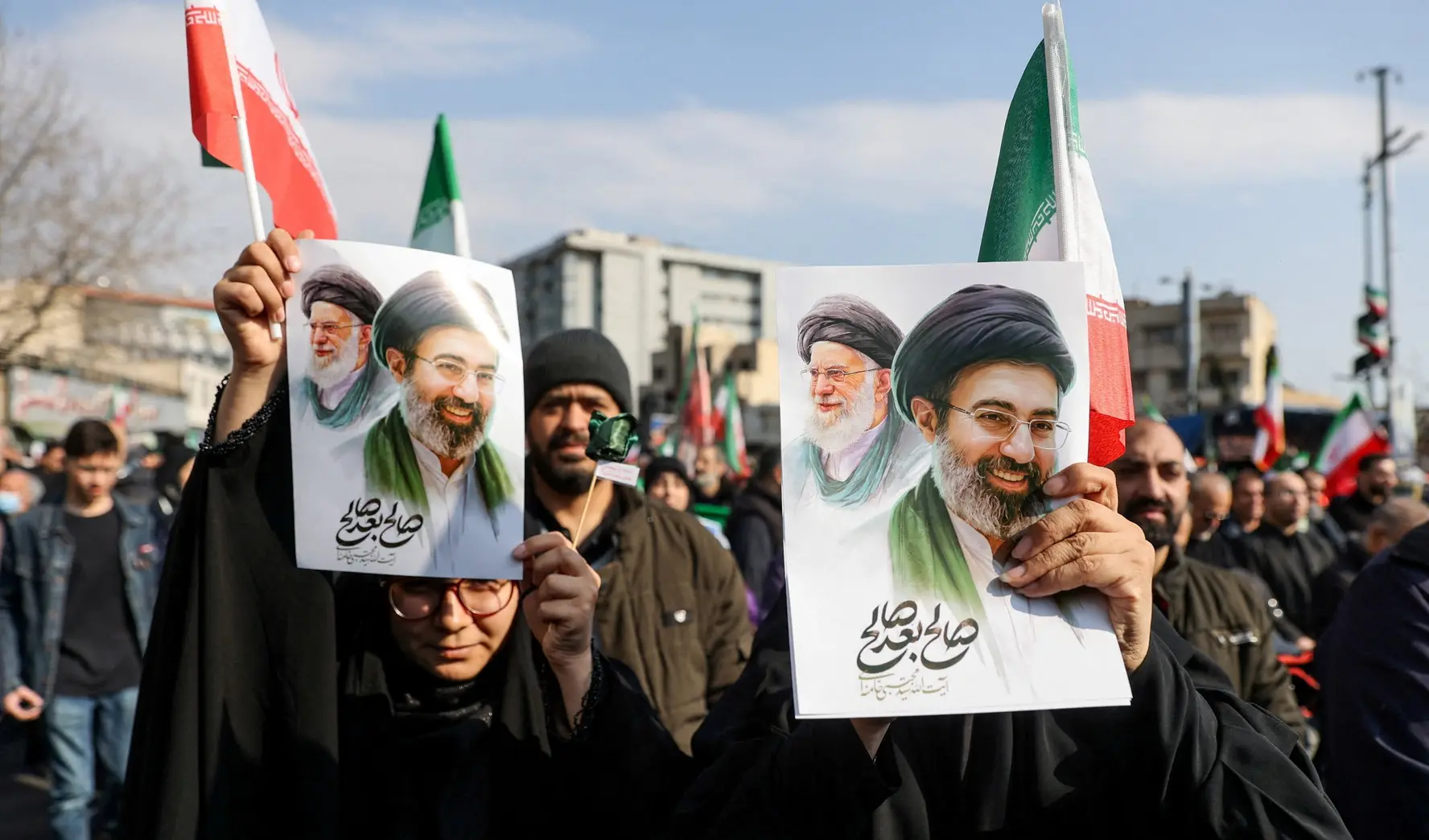
Over the weekend, a committee of Iran’s top clerics selected Mojtaba Khamenei, son of the slain ayatollah, as the country’s next supreme leader. What might this choice signal about how factions within Iran are maneuvering and about the country’s direction more broadly?
Heather Williams The selection of Mojtaba is, honestly, surprising to me. His name has been floated for several years as a possible successor to his father, so in that sense it should not have been surprising, but given the dynastic undertones and Mojtaba’s lack of political credentials, I did not see him as a serious candidate. This choice could signal how clearly there are few options available for the role or that the Islamic Revolutionary Guard Corps sees Mojtaba as a type of regent it can control. My instinct is to doubt that Mojtaba is up to the role, but he could rise to the position and prove more capable than many realize—much like his father before him, who was chronically underestimated.
Michelle Grisé Mojtaba Khamenei’s selection as supreme leader represents a direct contradiction to one of the founding principles of the Islamic Republic: the rejection of the Pahlavi dynasty and the system of hereditary succession. But with the regime facing an existential threat, the Assembly of Experts appears to have decided that the benefits of continuity and the sense of stability offered by an insider with deep ties to the country’s security establishment outweigh the risks of a transfer of power from father to son. With that said, the decision is likely to be unpopular with many in Iran.
Karen Sudkamp Mojtaba Khamenei’s election signifies the Islamic Republic projecting stability, strength, and endurance. Internally, it shows Iranians that the government continues to function while facing an existential threat to the regime. This should reassure regime supporters and the security services and encourage them to continue supporting the war. To the global community, it illustrates the resilience of the system, able to survive Ali Khamenei’s death. Moreover, this communicates Tehran’s commitment to continue fighting.
This selection also consolidates the influence of the Islamic Revolutionary Guard Corps (IRGC) at a watershed moment. Ali Larijani (leader of the Supreme Council for National Security), Mohammad Bagher Ghalibaf (speaker of the Majles, Iran’s parliament), and Mojtaba all served in the IRGC and maintain close ties with the organization. The IRGC’s primary responsibility is to safeguard the revolution, which each man has done consistently through his career. Considering Mojtaba’s religious credentials and IRGC experience, his election represents a triumph for the IRGC and its dedication to the regime.
Public Sentiment and the Organized Security Apparatus
The strikes were preceded by widespread antigovernment protests in Iran, and U.S. President Donald Trump has urged Iranians to seize power once the operation concludes. What are the early signs of public sentiment inside Iran—both among regime supporters and ordinary citizens?
Grisé The death of Ali Khamenei has highlighted the deep divisions within Iranian society. While opponents of the regime, who had already taken to the streets during the January protests, have celebrated his death, regime supporters have publicly mourned him. Across the political spectrum, however, there appears to be a common thread: uncertainty about what comes next for Iran and fears of instability during this transitional period.
Williams Only a small fraction of the Iranian population supports the regime today, so at what point is the playing field leveled enough that the Iranian public can be equal to the violent resistance they face from their government? Iranians have demonstrated their courage again and again, especially in January, when thousands or tens of thousands paid for it with their lives. But they face an organized security apparatus with a high tolerance for bloodshed. Some of the recent strikes have included targets that would weaken the security forces’ internal control mechanisms, but this has not been the focus of U.S. and Israeli attacks, and the United States could agree to a ceasefire before this apparatus has been sufficiently degraded.
Fragmentation and Survival of the Proxy Network
What does the war mean for Iran’s proxy network, including Hezbollah in Lebanon, Hamas in Gaza, and its militias in Iraq and Syria?
Kyle A. Kilian The war continues to weaken and fragment Iran’s proxy network, degrading its capacity to execute coherent operations on behalf of Tehran. This is only a continuation and escalation of the multi-year campaign to degrade these proxy groups, with Hezbollah losing the majority of its senior leadership prior to the current conflict. Israel has prioritized the removal of Hezbollah (Party of God), Iran’s most capable proxy in its “Axis of Resistance,” given the group’s geographic proximity, deep bench of expertise, and weapons stockpiles.
While Hezbollah remains the most powerful player, the geometry of this “Axis” could shift in favor of groups that are under less pressure from the United States and Israel. Shia militia groups in Iraq (e.g., Kataib Hezbollah or Asa’ib Ahl al-Haq) or the Houthis in Yemen (Ansar Allah) could present a viable threat but lack the capacity and organization to present a united front without direct support from their Iranian sponsor). However, given the resilient, multi-headed structure that has helped Hezbollah survive decades of conflict with Israel, it is prudent to remain cautious and consider the group a viable threat.
Marzia Giambertoni Iran’s proxies are fighting different wars, united by Tehran’s patronage but diverging in capability and autonomy. Hezbollah escalated sharply on March 2, launching a coordinated rocket and drone attack against Israel, significant enough that Israeli and U.S. officials treat Hezbollah as an active party to the conflict. Hamas is fighting a different war—organizational survival and disarmament bargaining—with Iran’s role reducible to historic enablement rather than real-time command. Iraq’s militias are fractured between ideologically driven cells that continue attacks in Tehran’s name and power brokers embedded in the Iraqi state who increasingly see confrontation as bad for business. Syrian militias now contribute mostly at the margins since the Assad regime’s collapse.
Iran’s “forward defense” doctrine, predicated on proxy depth absorbing threats before they reach Persian soil, is reaching its limits. The financial architecture sustaining this network is becoming harder to reconstitute, and the network’s coherence, coordination, and strategic depth are degrading faster than Tehran can adapt.
Sudkamp The defensive and deterrence role of Iran’s proxies has collapsed under consistent, yearslong pressure. Since the October 7 attacks, Israel has prioritized degrading the military and terrorist capabilities of Lebanese Hezbollah and Hamas. The fractionalization of the Iraqi Shia militias underscores their limited response capabilities in this moment.
While the primary proxies are fighting for their survival and poorly supporting Iran’s key objectives for them, Tehran could still have covert cells around the globe waiting for the signal to launch terrorist attacks or conduct sabotage. Qatari officials arrested members of an Iranian sleeper cell in early March. Moreover, the Houthis in Yemen appear waiting to contribute to any response against shipping in the Red Sea. Tehran could be adapting its “forward defense” strategy to fit the current war. However, we should remember that Tehran’s priority has been defense of Iranian territory. The “Axis of Resistance” was effective in distracting Iran’s adversaries—until it wasn’t. Iranian leadership and security officials may also be disregarding the proxies and prioritizing defense of Iranian territory and resources.
Israel’s Security Gains and Regional Relationships
What are the implications for Israel’s security environment and its relationships in the region? How have its neighbors responded so far?
Shira Efron Although Israel’s goal is to topple the Iranian regime and ensure that a less hostile Iranian leadership emerges, the military gains thus far in themselves are seen as delivering a remarkable improvement in the country’s security situation. For Israelis, Iran has represented the ultimate threat: a threshold nuclear state with thousands of ballistic missiles that has repeatedly called for Israel’s destruction and built a network of proxies on Israel’s borders, killing more than 3,500 Israelis since 2000. Iran has supported proxy groups, including Hezbollah and Hamas, with billions of dollars, arms, and training for the purpose of killing Israelis. Undermining Iran could provide Israelis a reprieve, both from Tehran as well as from the terror groups on its borders. And even if this reprieve is temporary, this operation will buy several years of quiet. With that said, Lebanon could turn into a primary front. And Israel still occupies half of the Gaza Strip, while Hamas controls the other half where the population is, illustrating that military gains alone would not pull Israel out of its constant state of regional war.
When it comes to Israel’s regional partners, Iran’s escalation against its Arab neighbors and more distant countries has aligned these countries more closely with Israel, mostly on a covert basis. There is ample reason to believe that this campaign would strengthen ongoing intelligence and security cooperation between Israel and its neighbors and increase Israeli defense exports to Gulf countries. At the same time, the prevailing assumption in Israel that a shared threat perception of Iran would lead to normalization of ties between Israel, Saudi Arabia, and additional Arab countries without stabilizing Gaza and making progress on the West Bank is exaggerated. This thinking underestimates the importance of the Palestinian issue in the Arab world post–October 7 and ignores the fact that Arab countries obtain the security benefits of cooperation with Israel as is, without assuming the political risk of normalizing ties.
Raphael S. Cohen The current war against Iran could be a watershed moment for Israel’s security in two respects.
First, Israel’s security establishment has long seen Iran as the “head of the snake,” with its proxies as the tail. It’s possible to take that analogy too far. Even if the United States and Israel succeeded in changing the regime in Iran or decapitating the proverbial snake, Iran’s proxies still exist. All in all, groups like Hezbollah, Hamas, and the Houthis are deeply rooted in their respective societies. Nonetheless, if the regime fell, Iran’s proxies would be stripped of their principal backer and might become less virulent.
Second, this war will almost certainly have major implications for the politics of the region. Iran chose not only to retaliate against Israel and the United States but to strike countries throughout the region—including some that hitherto were at least neutral, if not overtly friendly with the Iranian regime, such as Oman, Qatar, and Turkey. At the same time, some Arab states may blame Israel for being thrust into a war they didn’t choose. The geopolitical landscape of the Middle East—at least insofar as which countries are on Israel’s side—may look very different once the dust settles.
Conditional Partnerships of Russia and China
The United States isn’t the only great power with interests in the Middle East. What do responses by Russia and China—or the lack thereof—tell us about the shifting balance in the region?
Howard J. Shatz Both China and Russia are showing that any partnerships they have are highly conditional. China and Iran signed a 25-year comprehensive strategic partnership agreement in 2021, while Russia and Iran signed a 20-year comprehensive strategic partnership treaty in 2025. And in January, the three countries signed a trilateral strategic pact. Yet both China and Russia have interests in maintaining good relations with the Gulf Arab countries as well; China receives a large share of its oil and gas imports from the Gulf, and Russia is part of the OPEC+ group of oil producers.
China has always been reluctant to get involved, militarily or even diplomatically, in conflicts. Instead, it focuses on China’s interests, such as when it cut a separate deal with the Houthis when the group was disrupting Red Sea shipping. Russia has gotten involved in the Middle East, as exemplified by its entry into Syria in 2015. But at this point, Russia is stuck in the morass of its four-year full-scale war against Ukraine and has limited capabilities for influence. Russia may try to cause trouble for the United States, and China may try to place itself as a peacemaker once the shooting has stopped, but the United States has definitively demonstrated that it is the only great power willing to make significant sacrifices for its partners when interests align.
Grisé While Russia and Iran have deepened their partnership in recent years, the ongoing conflict is a good reminder that the relationship has its limits. This weekend, after Mojtaba was selected as the new supreme leader, Russian President Vladimir Putin offered his congratulations and emphasized Russia’s continued support for Iran, a sign that Moscow does not intend for the leadership transition in Iran to undermine the bilateral relationship. Russia has also reportedly shared intelligence with Iran, but it has stopped short of intervening militarily in the expanding conflict. Given Russia’s continued war in Ukraine, moreover, it likely lacks the capacity or inclination to do so.
Oil Markets and the Strait of Hormuz
How might the fighting affect oil markets, energy prices, and global trade?
Shatz The fighting might have dire effects on the global economy, or it might not. As frustrating as that answer is, it is too soon to tell. Instead, it is more important to consider the factors that might tilt the balance either way. About one-quarter of global oil trade and one-fifth of consumption pass through the Strait of Hormuz, which is effectively closed as of March 8. Likewise, a considerable amount of liquefied natural gas passes through. And producers dependent on it have started to shut down production. Oil and gas prices have risen dramatically.
So what should we watch? If the strait stays closed for a considerable period of time, then prices will stay elevated, global production and trade will slow, and the world might enter a recession. However, if the United States and Israel succeed at degrading Iran’s ability to attack shipping, if the new U.S. insurance mechanism is successful, and if the United States is able to provide protection, then oil could start flowing. Other mitigating circumstances include a Saudi pipeline to the Red Sea, an Iraqi pipeline through Turkey, considerable amounts of unsold oil floating offshore, an enormous amount of oil held by China in a strategic reserve, and whether China will cut a separate deal to get oil and gas through the strait, somewhat mitigating global supply concerns.
None of this is enough to make up for a long-term closure of the strait. But prices during a surprise event usually overshoot on the upside and then come down, as they did following Russia’s full-scale invasion of Ukraine. When and how much they come down this time will depend entirely on the course of the war and the ability of the United States, Israel, and perhaps the Gulf Arab states to stop Iran from threatening shipping.
The Elusive Diplomatic Off-Ramp
Do you see any diplomatic off-ramps that might de-escalate the conflict? And if not, then what conditions would need to change for one to emerge?
Julia Masterson Iran’s nuclear program could still offer a path to de-escalation if the interim leadership agrees to grant international access to the Esfahan facility, where Iran’s stockpile of highly enriched uranium (HEU) is believed to be entombed since the Twelve-Day War last June. Iran’s HEU stockpile does not pose an immediate weaponization risk because it is stored as a gas and would need to be further enriched and converted into metal to be used in a nuclear weapon. Iran’s enrichment and uranium metal production facilities were significantly damaged in the June 2025 strikes. However, Iran may still be able to access the site and could remove the stored material to undertake these steps at a reconstituted or covert facility.
For now, it remains possible that the HEU could be safely and securely transported out of Esfahan, and out of Iran, by a team of international inspectors—potentially as part of a diplomatic agreement to end the ongoing conflict. Much will depend on whether Iran’s interim leaders see diplomacy as a viable off-ramp or as a sign of weakness.
Sudkamp Currently, historical diplomatic off-ramps that de-escalated tensions or potential conflict appear to be nonexistent. Both Israel and Iran believe they are fighting against existential threats. As a result, Israel and the United States have been targeting Iran’s power projection capabilities: ballistic missiles, proxy networks, and the nuclear program. For its part, Iran has expanded the conflict to increase the costs for Gulf Arab nations and the global economic system to test the resolve and attrit the military capabilities of the United States and Israel.
For diplomacy to work, all three countries must be willing to come to the table and trust that each would adhere to any agreement. More than a week into the war, each country appears uninterested in attempting to find a diplomatic solution, likely influenced by each government’s perception of failed diplomatic efforts to prevent the current conflict.
Grisé Because the United States has called for Iran’s unconditional surrender, it will be politically difficult for Iran’s leaders to come to the table without appearing to capitulate to U.S. and Israeli pressure. There are few signs that Iran is open to a diplomatic settlement of the current conflict. Indeed, Mojtaba Khamenei’s selection as supreme leader can be read as a rejection of potential off-ramps, suggesting that Iran has chosen instead to double down on its commitment to a sustained campaign.
Historical Parallels and Their Limits
Are there historical parallels that might help illuminate what’s happening in the Middle East right now?
Cohen There isn’t a perfect historical analogy here, but there are some parallels to previous Middle Eastern wars.
The natural example is the 2003 Iraq War. The United States viewed Iraq as a state sponsor of terrorism and a long-term threat to regional stability. The United States was also openly talking about regime change. But there are notable differences between these conflicts. The Iraq War was primarily a ground campaign, whereas this conflict at least so far is an air campaign. And the Iraq War involved a much larger international coalition.
You can also draw some parallels to the 2011 Libyan war. That campaign was also primarily an air war and one in which U.S. allies (in that case the Europeans) were focused on removing an authoritarian regime from power after it slaughtered its own people. The difference is that the Libyan intervention played out on the backdrop of an ongoing civil war. That is not the case in Iran, at least not at the moment.
Finally, you can analogize parts of this conflict to the 1973 Arab-Israeli war. That conflict was a proxy conflict between the United States and the Soviet Union. There is a great-power proxy dimension to this current conflict, too, with Iran backed by Russia and China. After the 1973 war, Egypt shifted sides from the Soviet to the American camp. And depending on the outcome of this current war, we could potentially see similar realignment in the region.
Efron There are no exact historical parallels, however, while much of the discussion focuses on the wars in Afghanistan in 2001 and Iraq in 2003, I see lessons from the 1991 Gulf War. Indeed, aside from similarities in the operational dimensions of the campaigns (relying on aerial strikes), there are clear differences between the two. In 1991, a broad coalition backed by a strong UN mandate and benefiting from strong regional support—neither element exists today—hit Iraq after it invaded Kuwait. However, the outcome of these two conflicts could be similar. Iran may resemble Saddam Hussein’s Iraq post–Gulf War: militarily weaker, economically and diplomatically isolated, yet governed by an emboldened dictator who sees himself victorious for merely surviving an assault by the strongest global and regional militaries. Like Iraq under Hussein, Iran could be ruled by an autocrat who intensifies his brutally defiant posture, violently suppresses opposition, evades UN inspectors, and maintains power while surviving economic sanctions.
Indicators for the Long-Term Trajectory
What indicator are you watching most closely to assess the long-term trajectory of the conflict? What do you think it could signal about how the situation might evolve?
Grisé The tempo of Iranian missile strikes—on Israel, the Gulf States, and U.S. military targets in the region—provides an important indicator of how long Iran can sustain the conflict at its current level of intensity. A slowdown in Iranian missile strikes could signal depleted inventories, but it could also indicate a deliberate effort on the part of Iranian decisionmakers to conserve key systems in preparation for an extended campaign.
Sudkamp Since the war began, I’ve been thinking through possible trajectories the conflict could take. With the situation changing by the hour, this has been an impossible task. However, there are two elements I’m certain of, regardless of the length of the conflict. First, this conflict represents a watershed moment for the Middle East, both among regional countries and for the role of the United States in the region. Second, the Iranian population will continue to suffer from violence and instability.
Williams Even with the selection of another Khamenei as supreme leader, I do not believe that the Islamic Republic shaped by Ali Khamenei over the last 36 years can exist without him. This does not mean the Islamic Republic is over, but it will be fundamentally altered. I’m watching the conflict to see how much it degrades Iran’s means of power projection through missile and sea power. But over the long term, I’ll be looking to see what legitimacy the regime can muster, if any, and reexamining many of our traditional assumptions about how Iranian policymaking happens.