
Kurdish forces suffered a major setback as the Damascus government seized northeast Syria and cemented its partnership with Washington — yet Kurdish cross-border solidarity has been renewed.
Dramatic changes in Syria in recent weeks have resulted in a major setback for Kurdish aspirations for self-rule. A rapid military offensive by the Damascus government seized northeast Syria from the Kurdish-led Syrian Democratic Forces (SDF), ending the autonomy Kurds had forged there during the civil war.
Having previously supported the SDF, the US did not intervene, reflecting its embrace of President Ahmed al-Sharaa’s Syrian Transitional Government (STG) in Damascus as its main partner in Syria.
From the Kurdish perspective, these developments mark a consequential defeat that will be hard to bear. However, there are several silver linings that could shape the future, although much depends on whether agreements between the two sides are implemented.
A rapid offensive
Months of talks between Damascus and the SDF failed to resolve key issues, including how to integrate SDF and Kurdish internal security units into government institutions and protect the civil rights of Kurds.
Sporadic fighting between the two sides escalated in early January when government forces captured two Kurdish neighbourhoods in Aleppo. The offensive quickly turned east and pushed the SDF beyond the Euphrates river. Arab and tribal elements of the SDF defected to Damascus, adding to the rout.
The hastily agreed integration protocol of 18 January laid the way for a ceasefire, with the SDF capitulating on some of its previous demands, in particular to integrate into the Syrian military as a unit rather than as individuals.
Two days later, US Syria envoy Tom Barrack provided a rhetorical body blow when he publicly declared that ‘the original purpose of the SDF… has largely expired.’ He argued that Kurds in Syria should integrate into the Syrian state, cementing Washington’s backing of al-Sharaa’s centralizing vision for the country.
By the time a ceasefire was announced on 20 January, Damascus controlled wide swathes of new territory in eastern and northeastern Syria. Only the Kurdish heartlands around Qamishli and Hasakah and the symbolically important border town of Kobani remained in SDF hands.
However, a subsequent agreement between al-Sharaa and SDF commander Mazloum Abdi on 30 January made some concessions to the Kurdish position.
In addition to establishing a permanent ceasefire, this second agreement established protocols for integrating Kurdish units into government institutions that reflect a compromise, with a military division consisting of three brigades of SDF fighters, plus a Kobani-specific brigade in the Aleppo division. While less than what the SDF wanted originally, it was better from their perspective than the 18 January version.
The agreement also called for the appointment of Kurdish officials in local and central government posts, including governor of Hasakah, and recognized Kurdish educational certificates. However, the control of oil fields, border crossings and Qamishli airport was handed to Damascus.
Outcomes
As the dust settles and both sides work to implement the 30 January agreement, there are four main outcomes for Kurds in Syria: two clearly negative and two potentially positive.
First, hopes to establish a federal constitution or a system of decentralization that would enshrine their hard-fought autonomy in the northeast lie in tatters. Instead, the push for a unified centralized state promoted by Damascus and embraced by its foreign backers has prevailed.
However, there are several elements of the agreement that allow for continued local control of institutions, albeit in a de facto manner. For example, institutions like the internal security forces will answer to Damascus but will likely be staffed by local Kurds. This will provide recognition and a measure of control, but not to the point of autonomy.
Supporters of the Damascus government, including Barrack, have argued that Kurdish rights will be protected, pointing to previous announcements about Kurdish language education and the official recognition of Newroz, the Kurdish new year. But some observers have argued that these moves fall short or that rights should be embedded into Syria’s national constitution.
They also rely on the agreement being upheld. Trust between the two sides is fragile. Kurdish officials will likely continue to seek maximum local authority under the new framework while Damascus will likely seek to limit it. This could cause friction.
The ill-feeling and fallout from the recent military offensive will also last long in popular memory. Policymakers should anticipate this factor given the remarkable depth of feeling that many Kurds experienced over the past few weeks.
Second, the events confirmed a decisive shift in the geopolitics of Syria in favour of Damascus. In particular, they highlighted that Damascus is now Washington’s primary partner. The SDF’s role and sacrifice as the most important local partner in the fight against the Islamic State (ISIS) fell on deaf ears in Washington when it mattered most. There may still be some support for the Kurds in Syria in CENTCOM and Congress, but the White House has made its position clear.
Damascus also retains the backing of Ankara and the Gulf states. While the Kurds in Syria have some friends, like France, they lack a patron that can decisively shift the situation in their favour.
Silver linings?
From a Kurdish nationalist perspective, these two developments are bleak, but recent events have also yielded two potentially positive outcomes. Most importantly, there has been a surge of Kurdish cross-border grassroots solidarity.
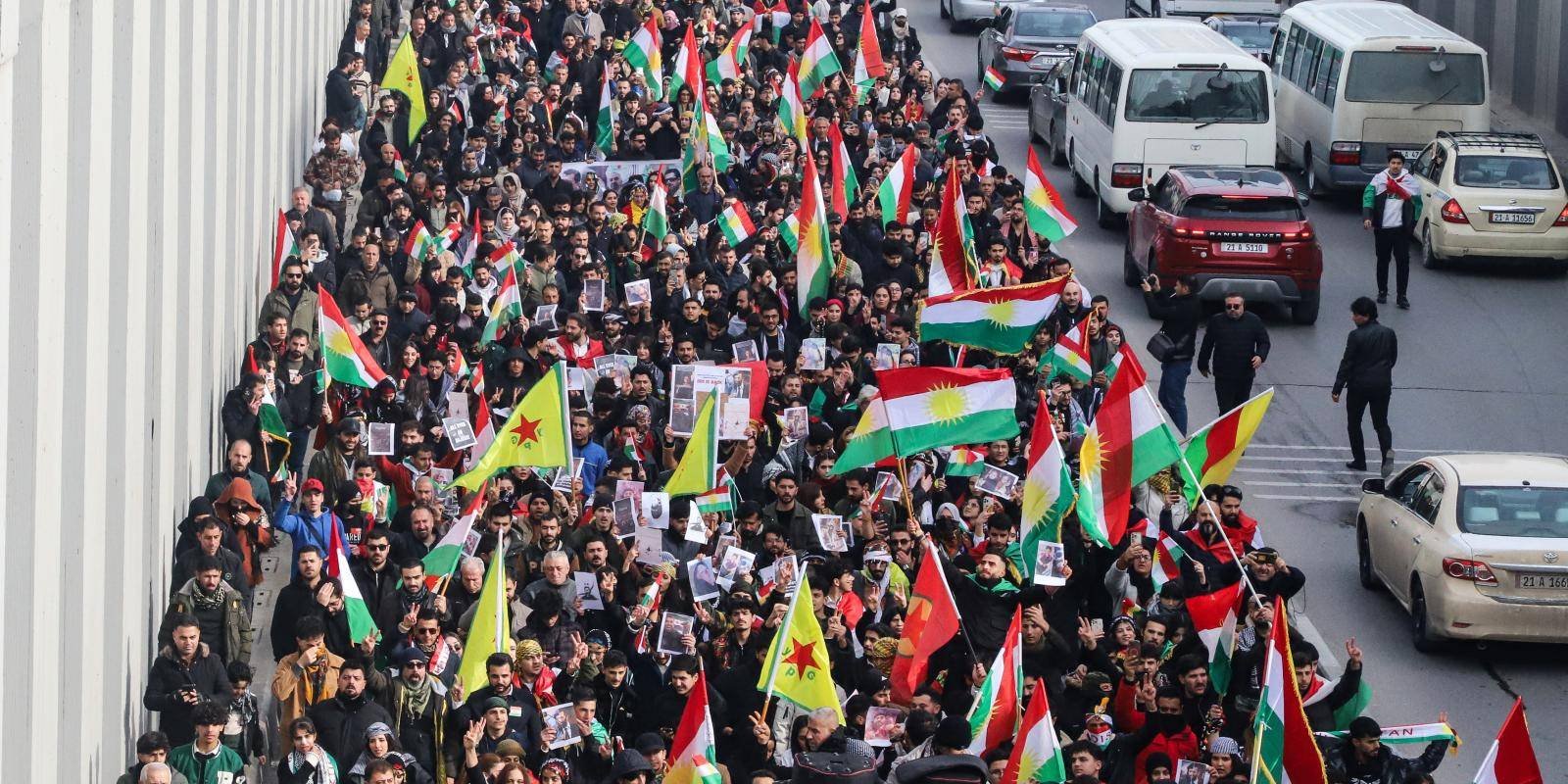
Ordinary Kurds across the world rallied in response to the offensive in Syria, with large rallies in Iraq’s Kurdistan Region and smaller but persistent demonstrations in Turkey, Europe and the US. Aid drives organized by charities and media outlets raised funds and delivered supplies into Syria.
These demonstrations of Kurdish solidarity may have provided an important psychological boost at a dark moment. While this nationalist feeling may ebb over time, some have argued that the outpouring of support has been unprecedented and could be harnessed into a tangible change.