
Brief by Jon B. Alterman
This brief is part of a larger project on the Global South, led by the Brzezinski Chair in Global Security and Geostrategy. It includes an edited volume entitled Fulcrums of Order: Rising States and the Struggle for the Future. You can find more about the project here.
Introduction
Vladimir Putin bounded down two dozen steps from his presidential plane on the morning of December 6, 2023. It must have felt good to be on the road again. An International Criminal Court indictment following his invasion of Ukraine had limited his international travel to former Soviet states, China, and Iran—but now, he seemed free.
While world leaders were focused on the COP28 conference in Dubai, Putin—escorted by four Su-35 fighter jets—arrived in Abu Dhabi to a hero’s welcome. Lampposts were draped with Russian and Emirati flags. His limousine rolled past Bedouin guards and their camels lining the right side of the road, while mounted cavalry bearing Russian flags lined the left. The seven jets of the UAE Air Force’s acrobatic team streaked overhead, their colored smoke painting the Russian tricolor across the skies of the Emirati capital. The onward trip to Saudi Arabia for a few hours that evening almost felt like an anticlimax.
For nearly two decades, the leadership of the United Arab Emirates (UAE) has spared no effort in portraying itself as an essential Middle East partner to the United States, a beacon of moderation, and a catalyst for regional transformation. The push had its origins in crisis: two of the 9/11 hijackers were Emirati, leaving behind distrust among some in Congress and the American security establishment. The Emirati leadership confronted those perceptions head-on, skillfully courting U.S. government officials, senior military officers, and opinion leaders over the years. They judged that success in Washington was impossible if Israel and the UAE were at loggerheads, so outreach extended to the American Jewish community and included many years of quiet conversations with Israeli officials, culminating in U.S.-brokered diplomatic recognition in 2020. The Emirati goal with each successive U.S. president, it seemed, was to be considered America’s favorite Arab state. That effort was largely a success. For many in Washington and across the United States, the UAE became a model for the Middle East.
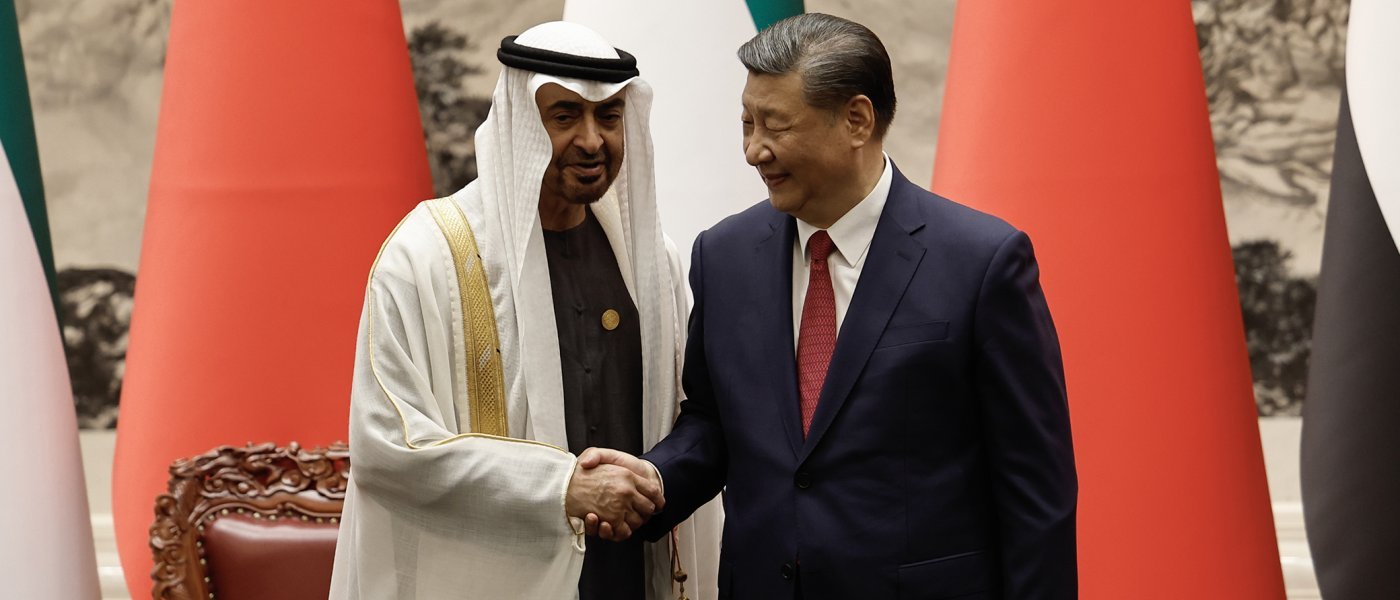
And yet, as the Biden administration sought to rally the world after February 2022 to defend Ukraine and isolate Russia, the UAE remained circumspect. Distrustful of ideology in all its forms, the Emirati leadership viewed their country as a global entrepôt that had earned the right to flourish outside of political blocs. They saw no contradiction between being a close friend of the United States and entering into a “comprehensive strategic partnership” with China in 2018. When Russian capital (and capitalists) sought a place to land after Ukraine-related sanctions slammed Russia in 2022, Emiratis welcomed both. Emirati officials touted their success in negotiating the exchange of hundreds of Russian and Ukrainian prisoners of war. They simultaneously deepened economic ties with both Ukraine and Russia. The UAE, they argued, was a more valuable friend when it maintained relationships with all. They would not choose—in part, because they judged they did not have to.
History, Grievances, and Aspirations
Unlike many colonized countries, the UAE emerged reluctantly from the colonial period and almost seemed to rue its end. Colonialism began in 1820, when British rulers in India brought peace to the Persian Gulf, making treaties with the tribes of the lower Gulf to secure Britain’s regional trade and end the piracy and looting that had become endemic. For more than a century, the British footprint was light but effective. In the 1920s, when the Al Saud swept out of the Najdi plain and sought to unite the Arabian Peninsula under its rule, British ties protected the eastern tip of the Arabian Peninsula, known as the Trucial States, from absorption into the future Saudi Arabia. Throughout the period, British troops remained to keep Persia’s—and then Iran’s—periodic regional ambitions in check.
If the emirs of the Trucial States strained under British rule, it was barely visible, in part because the British exercised minimal direct rule. Britain was a security guarantor and an occasional referee, but it neither invested nor extracted much from what it considered a backwater. The British provided basic medical care and education, but those costs were low. Dubai’s population was only 20,000 in 1950, and Abu Dhabi’s just 4,000. Limited amounts of oil were discovered in the late 1950s and early 1960s, but they produced little wealth.
Over time, Britain scaled back its regional efforts more broadly, and the foothold in the Trucial States made less and less sense. As post–World War I mandates in the Middle East expired, India gained independence, and Britain evacuated the Suez Canal zone, British outposts in places such as the lower Gulf became less strategically important. In 1968, Prime Minister Harold Wilson announced that by the end of 1971, Britain would scale back the “east of Suez” as a cost-cutting measure. The withdrawal spurred the rulers of the lower Gulf’s small coastal emirates—originally including Qatar and Bahrain—to seek a union. In December 1971, protection treaties between the United Kingdom and the Trucial States were terminated, command of the Trucial Oman Scouts, a parliamentary force under British control from 1951 to 1971, passed from the British political resident to the new UAE president. The British political agent in Abu Dhabi became ambassador, and the British political agent in Dubai became consul general.
By then, the UAE economy had begun to grow. When Sheikh Rashid bin Saeed Al Maktoum took power in Dubai in 1958, he swiftly found funds to dredge Dubai Creek and maintain Dubai’s status as the Gulf’s leading entrepôt, which it had held for the better part of a century. By the mid-1960s, oil wealth began fueling the Trucial States’ economic development, and the windfall grew as prices and production levels soared after independence in the 1970s. Still, development was relatively slow. Not only was the UAE a new nation in need of almost everything, but it was created decades after its counterparts, including Saudi Arabia and Kuwait.
Its leader, Sheikh Zayed bin Sultan Al Nahyan, was quietly ambitious. He made it a practice to take less than he could and let others save face, but always did so in service of larger goals. The structure of the country reflected this approach. At least symbolically, power was shared among the rulers of all seven emirates, even as Abu Dhabi’s oil wealth grew.
While the UAE played an active role in Arab politics, not least as a vocal advocate of Palestinian rights, it had not played much of a global role prior to 2000. Then, two things happened: First, Dubai grew from a regional hub to an international one. This was due in part to the spectacular growth of Emirates airline and the logistics hub that grew around Jebel Ali Port; it was also a product of Dubai’s investment in free-trade zones and the Dubai International Financial Centre. Dubai not only became the preferred Middle Eastern headquarters for multinational corporations, but it also became a base for Asian companies trading with the Middle East, Africa, and Europe.
Second, Abu Dhabi became more active, thanks to the vision of then–Abu Dhabi Crown Prince Mohammed bin Zayed Al Nahyan, also known as MBZ. Whereas his father, Sheikh Zayed, had only a rudimentary education and stressed his Bedouin roots, Sheikh Mohammed was an air force pilot and Royal Military Academy Sandhurst graduate. After Sheikh Zayed died in 2004, his eldest son, Khalifa, became president of the UAE, but Khalifa’s half-brother Mohammed was the one to watch. MBZ grew his portfolio steadily, bolstered by the support of his seven full siblings (the Bani Fatima), who constitute the most powerful bloc among Zayed’s approximately 30 children. In 2006, Mohammed set about building a sophisticated organization of cosmopolitan, Western-educated Emiratis called the Executive Affairs Authority (EAA). The authority was not only his base for operations but also a tool to spot and develop talent for leadership.
From early on, MBZ had a penchant for disruption, and he used the EAA as an incubator for new ideas. Some were economic, such as his upstart sovereign wealth fund, Mubadala, and his initiative to develop a domestic civilian nuclear industry. Some were military, including recruiting a retired Australian Special Air Service Regiment (SASR) general to create a world-class special forces capability. The EAA has long maintained a small political risk function, canvassing the world for assessments of risks and opportunities. Over time, MBZ and the team around him became the center of gravity for much of the UAE’s decisionmaking.
National Debate
The UAE has little open debate about foreign policy and security issues. In part, these issues are widely understood as a prerogative of the country’s leadership, and any challenge or scrutiny can be taken as a sign of disloyalty. In part, too, the nation has what one Emirati political scientist has described as a “deep reservoir of goodwill” that the leadership has developed over more than five decades of maintaining security amidst startling economic development. Abu Dhabi’s first paved road came to be in 1961 (within living memory of at least some Emiratis), and the country’s leaders—not least the country’s founder, Sheikh Zayed—are credited with wisdom and foresight that have redounded to the people’s benefit. In a regional survey of attitudes published in 2020, a full 100 percent of young Emiratis approved of the government’s handling of the Covid-19 pandemic. It remains unclear, though, how much of that reflects government performance and how much reflects reluctance to criticize government performance.
Even so, Emiratis pay attention to the world, and they have views about what is happening around them. According to some polls, about a third supported the UAE’s normalization of relations with Israel, a third were neutral, and a third were quietly opposed. Since the outbreak of war in Gaza in October 2023, opinion has reportedly shifted to be sharply more critical of Israel and sympathetic toward Palestinians. Perhaps unsurprisingly, there seems to be no widely published public opinion polling on the issue; one must glean this sense through social media posts and a clearly expanded set of boundaries for public debate. In addition, the UAE government has been among the most active Arab governments providing humanitarian relief for Palestinians in Gaza, and it used its final months on the UN Security Council to call for an immediate ceasefire. The government has been clear, however, that it will not reverse normalization with Israel; therefore, few Emiratis are willing to call for it.
Economics
Unlike many of its oil-rich neighbors, the UAE has two economic engines rather than just one. Oil fuels much of Abu Dhabi’s wealth, and Abu Dhabi is by far the largest energy producer of the country’s seven emirates. With proven reserves of about 100 billion barrels, the UAE exported $95 billion worth of petroleum in 2022 based on a production of just over three million barrels per day. While those numbers are not the highest in the world, they are among the highest per capita. For example, Saudi Arabia’s production capacity is about four times that of the UAE, but Saudi Arabia’s oil wealth is spread to about 25 million citizens, compared to the UAE’s 1 million. Abu Dhabi led the creation of the UAE in 1971 with a promise to share its oil wealth with other members of the confederation, and it has. Still, Abu Dhabi and its ruling family sit on a remarkable concentration of wealth, and they deploy it domestically and around the world in a strategic fashion.
The ruling family has deployed its wealth to a considerable degree in Dubai, just 100 kilometers up the coast. Dubai was an entrepôt when Abu Dhabi was a backwater, and financing from Abu Dhabi helped supercharge Dubai’s growth into a global trading hub. Dubai began attracting international investment in the 1950s, and it began aggressively developing infrastructure in the 1960s. Still, Abu Dhabi’s spectacular economic growth, beginning in the 1970s, combined with Sheikh Zayed’s interest in using largesse to cement ties between the individual emirates, meant Dubai enjoyed privileged access to capital for decades. This access was sometimes acute, such as when Abu Dhabi executed a $10 billion rescue of a Dubai real estate developer during the 2008 financial crisis. More often, though, Dubai represented a consistently attractive target for domestic investment at a time when Abu Dhabi had tremendous excess capital.
The business of Dubai has been more than mere trade, however. Dubai’s real value was exposed when the emirate emerged as a regional services hub in the 1990s and 2000s and fortunes were made developing real estate for commercial enterprises and housing. More than 3.5 million people now live in Dubai, perhaps 3.4 million of whom are expatriates. Emirati companies control land, construction, and imports, not to mention the logistics that link Dubai to the world. As Dubai’s growth has exploded, so too has the wealth of its rulers and Emiratis more broadly. While some wealthier expatriates live in Dubai and commute to jobs in other emirates, moderate-income expatriates live in adjoining emirates and commute to Dubai, spreading the benefits of Dubai’s economic activity further.
The Dubai model has helped ensure the UAE economy is more diversified than other energy-producing neighbors. Instead of government sinecures serving as the principal driver of employment and economic security, trade and business have provided attractive opportunities for many Emiratis. In addition, Dubai’s success has inspired imitation in Abu Dhabi and other Emirates, as they have aggressively sought to provide an attractive business environment for international investors. The result has been that less than one-third of the UAE’s GDP comes from hydrocarbons, compared to about half of GDP in Saudi Arabia and Kuwait.
The UAE’s growing interest in being a global hub has led it to pursue ever-widening sets of diplomatic relationships.
The leadership’s educational and cultural orientation has been toward the anglophone world for more than a century, while the country has simultaneously sought to highlight its Arab identity since independence, creating an ever-deepening web of ties around the world, some of which appear contradictory.
For example, the UAE drew especially close to the United States in the mid-2000s, in part due to 9/11 and in part in reaction to U.S. concern that a Dubai company might soon manage six major U.S. ports. As Saudi Arabia came under criticism for tacitly supporting extremism, UAE leadership sought to differentiate itself from Saudi Arabia and dispel concerns that it was anything less than a full partner to the United States.
UAE special forces were deployed alongside U.S. counterparts in Afghanistan, and the UAE worked closely with the United States to combat terrorist financing. At the same time, however, as U.S. concern over Iran’s proliferation activities accelerated, Dubai’s trade with Iran blossomed to more than $15 billion per year. The Iranian government claims that about 800,000 Iranians now live in the UAE, both providing a lifeline to a country the United States is trying to pressure through sanctions and an escape valve for Iranians seeking to escape economic despair and political repression.
China’s ties with the UAE grew even more sharply, partly due to rising UAE oil sales to China and partly due to a growing interest in turning Dubai into a showroom for Chinese manufacturers selling to Africa, the Middle East, and Europe.
That trade not only led to the creation of Dragon Mart—initially a mile-long mall crammed with Chinese wholesalers selling everything from consumer goods to industrial tools to heavy equipment, and now an even larger network of showrooms, hotels, and more—but it also bolstered Dubai’s container trade and helped drive traffic on Emirates, one of the two UAE national air carriers. Now, more than 400,000 Chinese live in the UAE, and a robust set of businesses provide services to the Chinese expatriate community while paying Emirati landlords. China struck a “comprehensive strategic partnership” with the UAE in 2018, putting the UAE in China’s first rank of international relationships, and trade exploded at a compound annual growth rate of almost 90 percent between 2017 and 2022.
For many years, Russia played a marginal role in the UAE’s worldview. With relatively little trade, a modest security relationship, and differences over approaches to Iran, there was little cause for intimacy. The two sides shared common interests in places like Libya and Syria, where the Emiratis helped bankroll opposition to forces they identified as Islamist, and Russia’s Wagner Group fought them as well. The two leaderships were united in their hostility to any form of political Islam but not much else.
The Ukraine war and the subsequent efforts by Russians to find a haven for their assets drove a sharp rise in Russian immigration and investment. The UAE resolutely did not join U.S.-led efforts to isolate the Russian economy after the Ukraine invasion, and two years after the war began, Western countries were reportedly pressing the UAE to end the transshipment of dual-use materials that supported Russia’s war effort.
Ties with India are also growing markedly closer. The UAE is home to about 4.3 million Indian expatriates, who outnumber the 1 million or so Emirati citizens in their own country. In addition, the UAE is closer to parts of India than it is to Kuwait, a fellow member of the GCC. But economic ties have been bursting, as trade and investment shoot up.
As its economy and trade relationships have grown, the UAE has come to see itself as a genuinely global enterprise, connected not only to its traditional protectors in Europe, its new protector in North America, its former economic hubs in South Asia, and its growing customers in East Asia, but also to Africa, Australia, and beyond. The country does not fit into an East-West paradigm or a North-South paradigm. Instead, it links them, hosting large expatriate communities and even larger hordes of tourists in a post-nationalist, post-civilizational melting pot of coexistence and profit.
Great Power Competition
In the years immediately after its founding, the UAE did not think much about great power competition. Britain had been its traditional protector, and the United States filled the vacuum when Britain withdrew. Neither China nor the Soviet Union had much to offer. The UAE was serious about its Arab identity and advanced itself as a protector of Palestinian rights in a world that seemed to neglect them, but it did not seek to lead.
In the early twenty-first century, the UAE began to emerge from second-rank status. The two 9/11 hijackers from the UAE put additional scrutiny on the country.
Many in the U.S. Congress objected on security grounds to Dubai Ports World acquiring the British shipping and logistics company P&O in 2006. The Emiratis concluded two things: First, they needed to be much more energetic in courting U.S. government support.
To do this, they dispatched Yousef Al Otaiba, the key foreign policy aide to the then–Abu Dhabi crown prince (now the UAE president), as ambassador to Washington in 2008, where he has used his intimate connections to the UAE leadership to build trust with senior U.S. officials of both political parties ever since. In addition to fighting alongside U.S. troops in Afghanistan, the UAE has been deeply involved in counterterrorism efforts, including its efforts to be a regional hub for countering violent extremism.
The UAE also became an important hub for U.S. military operations in Southwest Asia, hosting thousands of U.S. troops at Abu Dhabi’s Al Dhafra Air Base and hosting more U.S. Navy sailors’ visits at Dubai’s Jebel Ali than any other port outside the United States. Otaiba also played a key role in building UAE-Israel relations in the late 2010s, helping the UAE become a vital partner to the Trump administration and the catalyst for one of its signature foreign policy achievements, the Abraham Accords.
The second conclusion reached by the UAE was that it needed to broaden its strategic relationships to avoid overreliance on any one great power. While the UAE hews closely to the United States, it also has assiduously built its ties to China and Russia. One might argue that those ties represent a hedge against U.S. strategic abandonment, which UAE officials saw as a potential outcome after the Obama administration announced its strategic rebalancing toward Asia in 2012.
These concerns intensified during U.S. negotiations over the Iranian nuclear agreement, known as the Joint Comprehensive Plan of Action. Feeling that cleaving only to an increasingly distracted United States would be reckless, the UAE leadership sought to preserve its options.
But there were more reasons to widen the aperture of UAE ties: The Chinese expatriate community, mostly in Dubai, has been growing steadily, and UAE-China trade—now almost $100 billion per year—has been growing at an average of almost 25 percent per year since 2020. Dubai has emerged as a major logistics hub for Chinese trade to Africa, West Asia, and Europe, and Abu Dhabi has courted closer Chinese ties since the UAE was declared a comprehensive strategic partner in 2018. During the Covid-19 pandemic, Dubai aggressively sought to immunize its residents with the Pfizer-BioNTech vaccine, and Abu Dhabi created a deep partnership with the Chinese firm Sinopharm through clinical trials and manufacturing. Abu Dhabi also enlisted a Chinese firm for Covid-19 testing, which U.S. officials were concerned would leak DNA information to Chinese officials.
Indeed, U.S. security concerns over Chinese involvement in the UAE have been rising. In 2021, U.S.-UAE talks over the sale of F-35 fighter jets stalled after the United States objected to the UAE’s purchase of a Huawei-built 5G telecommunications network, for fear that China would derive helpful signals intelligence about the plane’s electronic countermeasures.
The jet sales were a principal driver of the Abraham Accords, so the UAE’s unwillingness to eschew a Huawei telecommunications system to obtain them indicates its commitment to strategic dynamism. Similarly, the United States objected vigorously to what it claimed was a Chinese effort to build a military facility at Khalifa Port in Abu Dhabi in late 2021, and leaked U.S. government documents in the spring of 2023 assessed that construction had recently resumed.
Although the UAE has more recently claimed to be “decoupling” from Chinese technology firms, there are still questions regarding the depth of this shift. Emirati AI development company Group 42 (G42) has reportedly removed $1.7–$2.0 billion worth of Huawei hardware from its data centers as part of efforts to comply with U.S. export controls and court U.S. technology partners like Microsoft.
Yet some observers note that Chinese authorities have remained unusually silent in response to these removals, which suggests that they might have an agreement in place. Moreover, other Emirati entities such as the state-owned telecommunications company e& (formerly Etisalat) continue to collaborate openly with Huawei on 5G and cloud infrastructure while simultaneously partnering with Microsoft and Amazon Web Services.
This strategy is further complicated by revelations that G42’s divested Chinese holdings may have simply been transferred to another Abu Dhabi-based investment fund, Lunate, which remains under the supervision of the UAE’s national security adviser and retains major investments in Chinese tech firms. The UAE seeks to assure Washington of its commitment to AI-related decoupling, but ultimately, Huawei’s lingering footprint in Emirati infrastructure will continue to be a cause for U.S. concern.
While UAE-Russia ties do not match those between the UAE and China, they are robust and growing. The two major oil producers share an interest in managing global energy markets, and while Saudi-Russian ties (and tensions) have garnered most of the headlines, Abu Dhabi maintains a strong dialogue with Moscow on energy issues. The UAE has been a major purchaser of Russian weapons systems since the 1990s, and the UAE and Russia found themselves similarly aligned on a range of regional security issues, including their hostility to the strains of political Islam unleashed by the Arab Spring. Russian investments—which some experts have argued represent mere money laundering—have flooded into Dubai, and the influx only increased after Western powers imposed sanctions on Russia after the 2022 invasion of Ukraine.
Rather than join in solidarity with Western powers to isolate Russia, MBZ has put himself forward as a mediator between Russia and Ukraine, helping negotiate at least six prisoner swaps between the two sides.
The UAE has an advantage in demonstrating that it has alternatives to the United States, and calling out what it sees as onerous conditions in agreements, in order to drive better bargains. Yet, as the UAE has witnessed in some of its agreements over technology and weapons sales, the United States limits its crown jewels to its closest partners. The UAE must constantly balance the costs and benefits of being a close partner with the United States against the benefits that Russia and China offer for creating more distance with the United States.
Emirati officials profess an interest in building ties in every direction rather than joining one bloc instead of another. Anwar Gargash, former UAE minister of state for foreign affairs and current adviser to the UAE president, argued in 2021, “We’re all worried, very much, by a looming Cold War. . . . The idea of choosing is problematic in the international system, and I think this is not going to be an easy ride.” He expressed similar sentiments in 2023, arguing at a conference in St. Petersburg, Russia, “This polarization has to be broken.”
Yet the UAE is also keen to emphasize the centrality of U.S. ties to its global posture, appealing for an “ironclad” written defense agreement with the United States. What the UAE would be willing to give the United States in exchange for such an agreement is unclear. In particular, it is unclear whether the UAE can float above great power competition, which has become more central to global affairs, while simultaneously deepening its U.S. ties. The UAE seems destined to make hard choices between its major partners.
At the same time, it sees itself reacting to, rather than shaping, such competition, and it is committed to maintaining its optionality. With a nimble government, deep coffers, and a unique flexibility that derives from the relative independence of Abu Dhabi and Dubai, it is likely to be able to enjoy its options for some time.
Visions of Global Order
As a small but wealthy country in a complex and dangerous world, the UAE is committed to the idea of global order while arguing that it has only a small role in contributing to it.
The Dubai International Financial Centre and, more recently, the competing Abu Dhabi Global Market are examples of sophisticated, world-class financial hubs that host hundreds of global businesses. The UAE recently completed a term on the UN Security Council, and UAE charities are significant contributors to humanitarian aid in Gaza. For a country with only 1 million citizens, the UAE enjoys success across multiple domains that countries a hundred times larger struggle to accomplish.
Yet the UAE sometimes seeks to operate under the radar. It has denied persistent reports of involvement in civil wars in Libya, Somalia, and Sudan, which, if true, is in violation of UN sanctions. The UAE is reportedly a market for conflict minerals, and some argue it is a global hub for money laundering by criminal networks, some of which reportedly operate out of a UAE base. As the UAE seeks to play a global role as a base for cryptocurrency, it inherits global concerns that crypto markets conceal vast amounts of illegal activity.
Conclusion
In a remarkably short period, the UAE has grown from a footnote in global security, diplomacy, and economics to a significant partner. Its ties extend well beyond the Middle East into Europe, Africa, and Asia. More importantly, its growth seems to be far from over. The UAE’s commitment to playing a sustained role in global energy markets well beyond the hydrocarbon age and its deep financial resources are likely to give it sway in international affairs for years to come.
The UAE’s challenge will be managing its role as a stakeholder in an international order that seems to be fragmenting.
The UAE’s perspective is often that of a marginal player whose actions do not affect the whole. Yet, increasingly, the UAE punches above its weight, and its actions redound far beyond its borders. It is hard to imagine circumstances in which the UAE seeks to abandon its core stake in a relationship with the United States, given that it wants to integrate more deeply with the economic and cultural world in which the United States has such a dominant position.
Yet it is also hard to imagine that the UAE would turn its back on Russia and China, which occupy important places in global energy markets. Further, China is an important trading partner.
Seen broadly, the UAE operates in the diplomatic world like a sophisticated investor. It maintains core positions in key holdings, taking some high-risk positions that promise outsize returns and hedging against a sharp downturn. It anticipates that conditions will change, and its positions will change correspondingly. The goal is not near-term consistency so much as long-term returns, and it draws confidence in having played the last two decades exceptionally well.
https://www.csis.org/analysis/united-arab-emirates-footnote-sophisticated-global-partner