
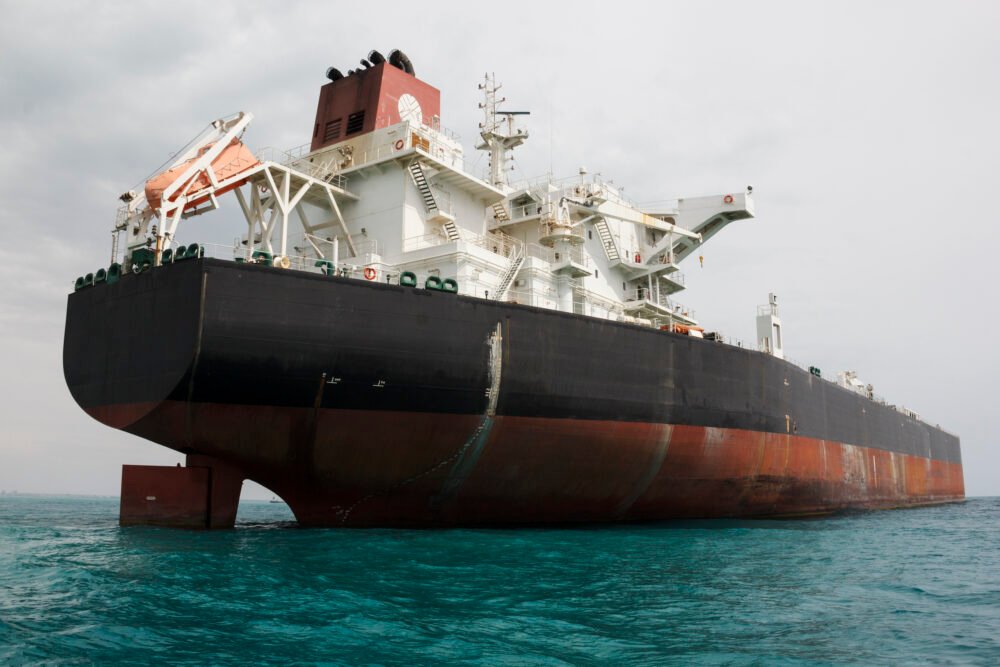
Crude oil legally sanctioned by the United States and its allies today makes up an estimated 18% of global tanker capacity, or 6-7% of total unrefined petroleum flows — shares that have been growing. Increased pressure on Russian exports and US intervention in Venezuela have further constrained Russian flows and temporarily removed Venezuela, the smallest sanctioned producer, from the market. Iranian exports, however, remain largely untouched. The key enabler of illicit oil trade is the dramatic growth of “shadow” tanker fleets, which operate at the margins of maritime regulation to obscure cargo origins, evade sanctions and price caps, and bypass safety, tax, and insurance requirements. These practices exploit enforcement gaps and compromise the effectiveness of sanctions and maritime safety.
Why It Matters for the US
Erosion of US sanctions power. Sanctioned crude represents almost a fifth of global tanker capacity, signaling that US-led sanctions are increasingly circumvented at scale. Shadow fleets allow adversaries — primarily Russia and Iran — to sustain revenues despite US pressure, undermining the credibility and deterrent value of sanctions as a foreign policy tool.
National security and terror finance risks. Shadow fleet networks intersect with illicit finance, criminal activity, and Iranian proxy groups, including Hizballah. Venezuela has served as a logistical and financial hub linking sanctioned oil trade to terrorist financing, arms trafficking, and influence operations.
Strategic advantage China. China and India are the primary buyers of sanctioned oil, benefiting from discounted supply while shielding adversaries from American pressure. India, faced with US tariffs, has reduced its purchases of Russian oil. China continues to import the majority of Iranian oil and has recently resumed the import of (sanctioned) Venezuelan oil.
Limits of US military enforcement. Interdicting shadow vessels is resource intensive, risks harm to US personnel, and stretches the US Navy. The difficulties of enforcing an embargo on Venezuela reveal that aggressive enforcement yields marginal impact.
Policy Considerations
Shifting focus. The seizure of at least 10 tankers since December 2025 as part of “Operation Southern Spear” has sent a deterrent signal but with limited impact. Russian and Iranian sanctioned trade relies on carefully built networks of insurers, flag registries, port access, ship managers, financiers, and traders. Targeting these enablers — through secondary sanctions, tariffs, compliance pressure, and coordinated allied action — instead of the ships would likely prove more effective by raising operating costs and slowing flows without requiring sustained large-scale naval deployments.
Balancing enforcement with price shocks. Around 300 million barrels remain unsold on shadow tankers at sea, suggesting the threat of sanctions enforcement is working. The more “oil on water,” the more sensitive to price spikes oil becomes. Past administrations have implicitly tolerated significant sanctioned flows, especially to China, to avoid sparking a trade war. The risk of price spikes from intensified enforcement can be mitigated by maintaining ample supply.
Pivoting to the Middle East. Temporarily removing sanctioned Venezuelan oil from the international market has had marginal impact given its small share of total volumes. Continued disproportionate focus on Venezuela risks overstating US leverage while leaving larger Russian and Iranian sanctions-circumvention networks in place. Redirecting resources toward the Gulf of Oman and Eastern Mediterranean — key shadow fleet corridors — could deliver greater strategic returns. The ongoing US military buildup in the Gulf could be employed toward enforcing an embargo on Iran.
Leveraging allies. Effective enforcement requires deeper coordination with G7 partners to apply pressure on enablers and manage relations with OPEC+ and China — the principal buyer of sanctioned oil. A sustained cross-administration strategy, focused on the Middle East and Eastern Mediterranean and bolstered by European and regional partners, affords the best path to reducing the shadow fleet.