
The ram bow, battleship doctrine, and kamikaze attacks demonstrate that sweeping claims about drones, tanks, and aircraft carriers rest on narrow scenarios and incomplete kill chains rather than lasting shifts in warfare.
War Lessons from Naval History
For the 30 years following the 1866 Austro-Italian Battle of Lissa in the Adriatic Sea, navies placed ram bows on nearly all newly designed capital ships. The only significant warship sunk during the battle was sunk by ramming, and no other major fleet engagement occurred until the Sino–Japanese War of 1894–95; naval architects therefore assumed the ram bow would be the principal weapon of future naval warfare.
Of course, the ram bow did not portend the future of naval warfare. Rather, as the age of steam surpassed that of sail, navies around the world competed for advantage by experimenting with various hull designs, armor thickness, and guns. The history of warfare is littered with similar examples of technology or doctrine that, at one point, experts uniformly assumed signaled the dawn of a new, unprecedented age in military affairs but proved to be little more than an aberration.
Why Analysts Misread New Weapons
At the same time, analysts often overlook obscure platforms with immense potential in favor of systems they are familiar with. Before World War II, students at the US Naval War College assumed a future conflict between the United States and Japan would end in a single, decisive engagement between fleets of battleships. (The Japanese came to the same conclusion.) The role of carrier aviation and submarines, both of which would dominate the coming war in the Pacific, received little attention. The neglect of submarines’ offensive potential was particularly bewildering given their devastating use by the Germans in World War I.
The wars in Ukraine and Iran—the two most significant conflicts in the post–Cold War period—are particularly ripe for both identifying lasting shifts in the changing character of war and, more likely, faddish misanalysis. Indeed, a number of apparently inevitable yet conflicting trends that will supposedly dominate the future of warfare have emerged from the two wars.
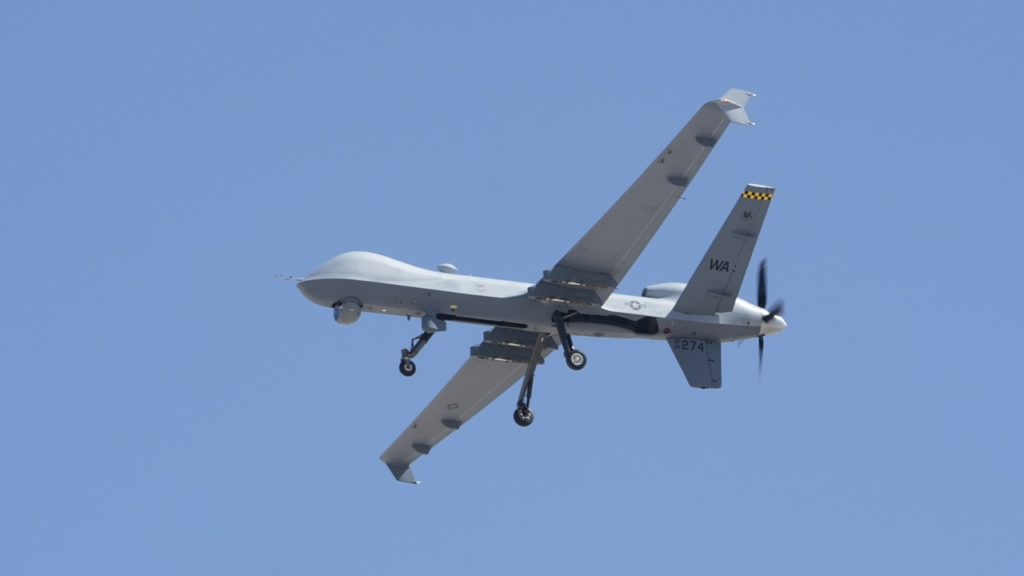
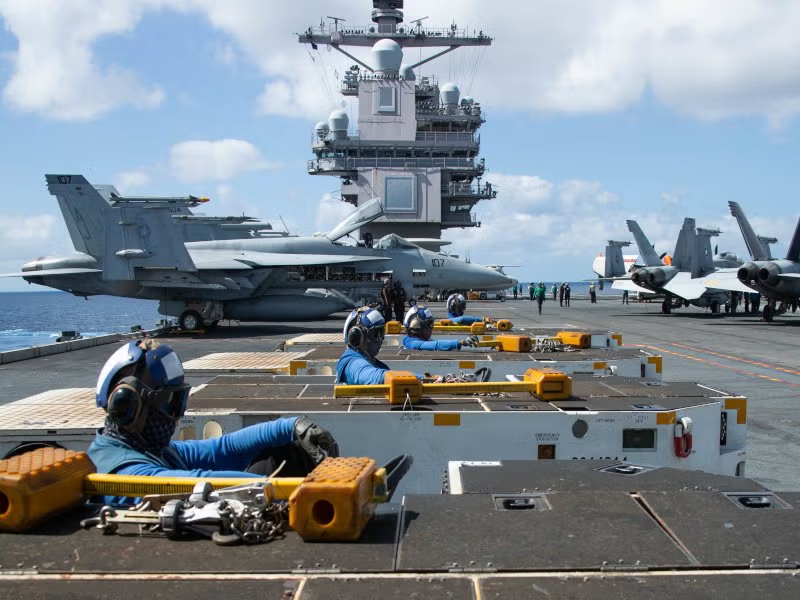
The tank is dead; no, maneuver warfare is only possible with armor. Long live the drone; actually, most drones have already been effectively countered. Large surface ships no longer have any utility if in range of adversary anti-ship missiles; on the contrary, the United States could not have struck Iran as swiftly as it did without aircraft carriers, demonstrating that the United States needs more carriers, not less.
Sorting Right from Wrong Lessons
In this context, military staffs around the world are trying to sort through the “right” and “wrong” lessons from each war’s available evidence. Many of these “lessons” may not become clear until after the next war breaks out and, even then, only after significant trial and error.
Despite the interwar experimentation in fleet formation, naval tactics during World War II were, according to the naval historian and tactician Wayne P. Hughes, “still unresolved in 1941, even after two years of fighting in the North Sea, the Atlantic, and the Mediterranean.”
Be Cautious About Sweeping Claims
While no single model can adjudicate between the “right” and “wrong” lessons, four broad analytical principles can help.
First, be cautious. Sweeping claims prompted by recent developments in warfare rarely hold up over time. For example, in future naval surface warfare, a dominant assumption is that if a surface ship is within range of an adversary’s precision-strike system, it is an assumed mission kill. Yet that vastly oversimplifies the complexity of completing a kill chain over thousands of nautical miles against a moving target and understates the sophistication of modern, layered fleet defense. Just because a surface ship is “in range” does not mean it will be spotted; just because it is spotted does not mean it can be targeted; just because it is targeted does not mean it can be sunk.
Do Carriers Still Matter in War?
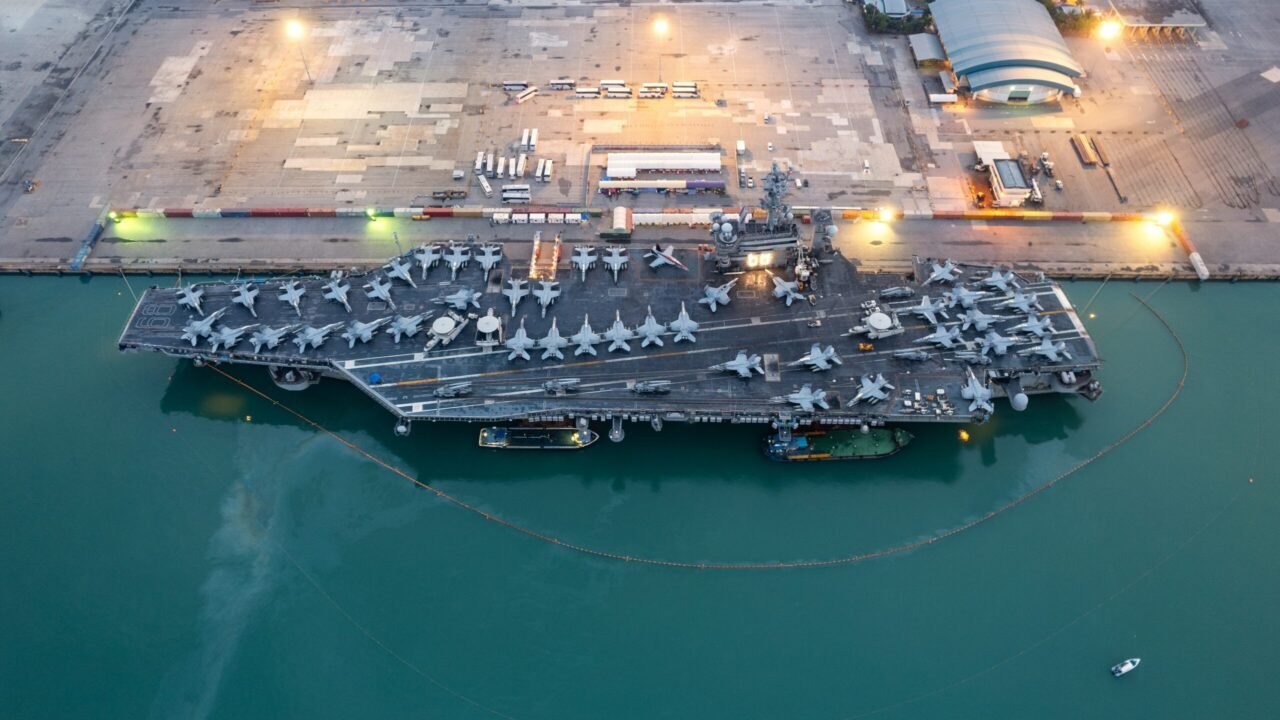
That has not stopped commentators from proclaiming the death of aircraft carriers, among other large surface ships. Yet the apparent inutility of carriers rests principally on a single, dominant scenario: using naval aviation to blunt a Chinese amphibious invasion of Taiwan. That employment of US aircraft carriers, however, is not the only possible application of naval aviation, and it is not even the most likely in a future US-China war.
Instead, in a conflict over Taiwan, China will likely deploy its carriers—it currently has three and is seeking to build nine—into and beyond the Second Island Chain to contest US sea control. The People’s Liberation Army Navy has already demonstrated this capacity; China recently conducted two-carrier exercises 500 nautical miles east-southeast of Iwo Jima and also operated its carriers from both sides of Guam. Therefore, a future US-China war could herald the return of the great carrier battles witnessed in the Pacific from 1942–44. “A ship has always been a fool to fight a fort” has long been a maxim of naval warfare, yet doing so is apparently the principal, and presumed future, purpose of US carriers.
War Lessons Require Historical Context
Second, context matters. A clear lesson in one war may yield insight that, when applied to a different context, no longer holds. Less than two weeks ago, Foreign Affairs offered an examination of “How Iran Changed War,” assessing its use of “precise mass” in particular. The analysis is in line with numerous other commentaries arguing that low-cost, precision-strike weapons have reshaped warfare, using Iran’s apparent success as evidence. Iran’s deployment of missiles and drones was relatively effective, leading to, for example, significant damage at US bases throughout the Middle East. Yet they did not prevent the United States from conducting offensive operations, and Iran has yet to translate its denial campaign into strategic victory.
More fundamentally, Iran was extraordinarily fortunate that the war’s center of gravity fell on the Strait of Hormuz. Drones and missiles worked so well for Iran in executing a campaign of sea denial precisely because of Iran’s terrain and proximity to the strait, which was perfect for hiding and hardening land-based sensors and missiles.
It is true that the growth and proliferation of low-cost, precision-strike weaponry has made it easier than ever to conduct sea denial (in two years of fighting in the Red Sea, for example, the Houthis launched more attacks against the US Navy than all other adversaries had combined since the end of World War II). Yet using drones and missiles alone does not inherently translate into tactical advantage, operational success, or strategic victory. Where, when, and how those systems are employed matters.
Third, remember that war cannot be separated from politics. Technology is critical in shaping the character of war, but government intervention and regulation matter, too. The Japanese and American navies were the principal proponents of developing and experimenting with the role of carrier aviation in the interwar period.
This was partly a result of foresight but also owed to the fact that the Washington Naval Treaty—signed in 1922 in light of the well-intentioned but ultimately inaccurate perception that the Anglo-German naval arms race was a key contributing factor in the outbreak of World War I—limited battleship tonnage while allowing for considerable carrier tonnage. Thus, the treaty “did not impose a constraint on airpower, but rather provided an incentive for expanding it.”
Study History to Avoid Misanalysis
Fourth, recognize what came before. What is truly novel and what is not? Most “revolutions” in military affairs are neither revolutionary nor unique; somewhere, at some time, something similar likely came before it. Many analysts, however, suffer from a recency bias, assuming that the model of warfare they are most familiar with—typically that which has been employed during their lifetime (see the discussion of aircraft carriers in littoral warfare above)—is the norm. When analysts encounter a deviation from that model, they tend to ascribe novelty and originality to unencountered variations.
The threat that Chinese missiles pose to US surface ships is one such example. While the speed, range, maneuverability, and destructive power of these systems have increased over the years, anti-ship missiles and the threat that they pose are not new problems. The Soviet Navy, for instance, did not build a symmetrical fleet centered on carrier aviation as the United States did; instead, it built its fleet around the anti-ship missile. Soviet anti-ship missiles, moreover, were designed specifically to kill US carriers and prevent American power projection in its littorals; the US Navy spent considerable time creating a sufficient fleet defense throughout the Cold War as a result.
Going back even further, Japanese kamikaze attacks at the end of World War II were, in effect, naval warfare’s first widely deployed anti-ship missiles. On a single day during the Battle of Okinawa—April 6, 1945—793 Japanese planes attacked the US Fifth Fleet with an agility “often superior to modern anti-ship missiles.” Iran is reported to have fired 650 missiles at Israel in the initial 40 days of the 2026 war.
During the Okinawa campaign as a whole, US naval forces sat off the coast of Okinawa for three months and defended against 1,900 kamikaze sorties; “Of the 793 kamikazes that actually found targets, 181 hit ships, and another 95 crashed close enough to cause damage.” Saturation attacks using long-range, low- and high-end precision weapons are not unprecedented in naval warfare, but they have a rich, detailed literature of insight.
Warfare is, unfortunately, as old as humanity itself. Given its central importance, no topic is more discussed, analyzed, and debated than the changing character of war. This attention, however, yields as much misanalysis as valuable insight. Applying the four principles outlined above can help lift the academic fog around war. Those principles, in turn, are a reflection of Winston Churchill’s simple but sage advice: “Study history! Study history! In history lies all the secrets of statecraft.”