
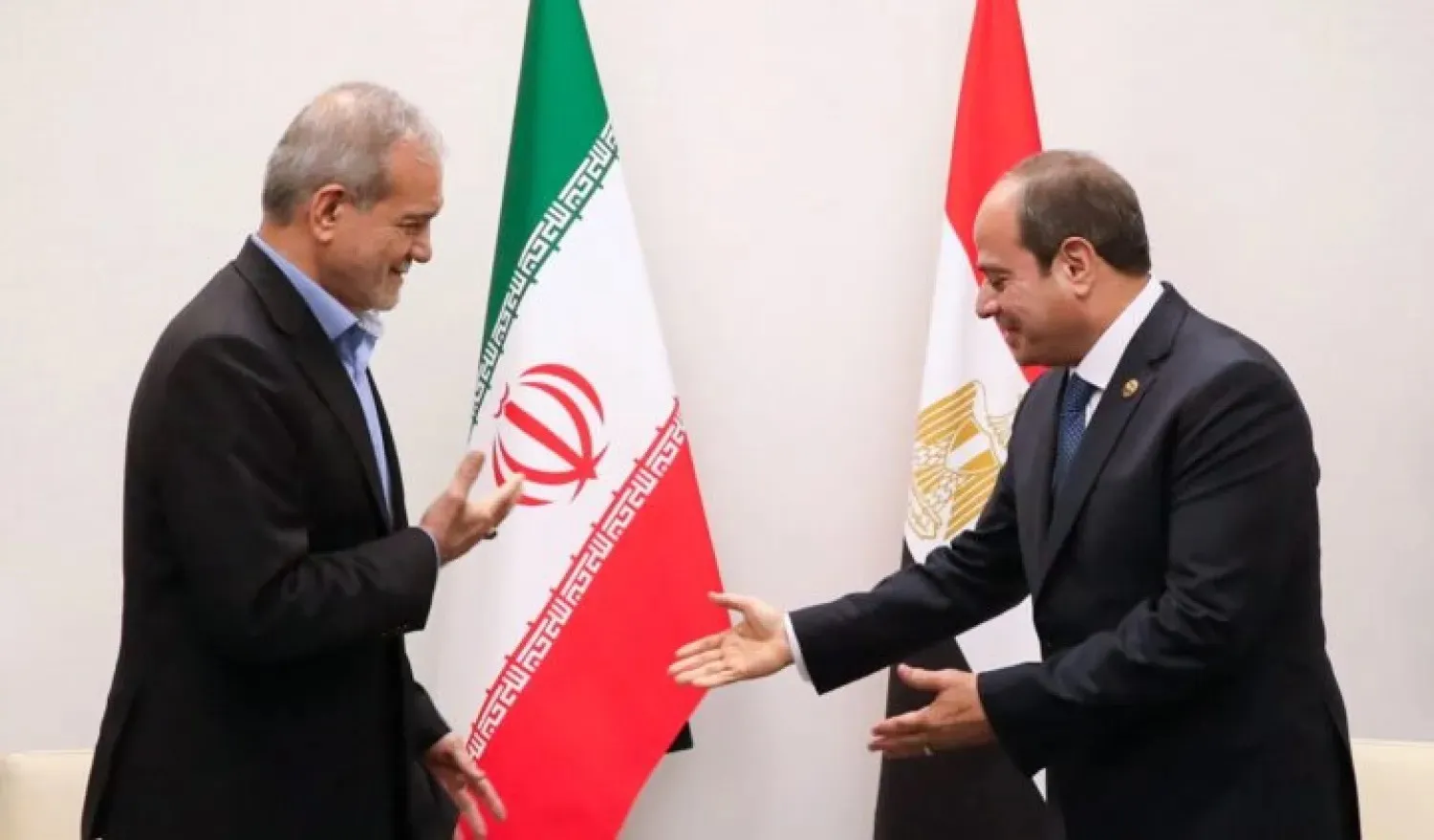
With talks over Iran’s nuclear programme unresolved and military mobilisation gathering pace, Egypt has stepped up its international and regional diplomatic efforts to avert a new US-Israeli war with Iran.
In recent days, Egyptian Foreign Minister Badr Abdelatty has held a series of intensive phone consultations and personal meetings with counterparts from Iran, Qatar, Oman, Saudi Arabia, the UAE, and the US special envoy, Steve Witkoff.
These talks have focused on de-escalation and creating favourable conditions for resuming US-Iran negotiations in order to build a coordinated regional push towards diplomatic solutions.
This flurry of activities followed a key phone conversation on 31 January between Egyptian President Abdel Fattah al-Sisi and Iranian President Masoud Pezeshkian.
During the call, Sisi said his country rejected military options to resolve the standoff between Washington and Tehran, urging dialogue and peaceful solutions to prevent further regional instability.
Egypt’s proactive diplomacy, analysts say, is rooted in Cairo’s deep concerns about the regional situation unravelling further.
Ambassador Rakha Ahmed, a former assistant to the Egyptian foreign minister, said Egypt and other Arab states are exerting intense diplomatic efforts to prevent the outbreak of a new war.
“They do this because they know that this war will have devastating consequences for the region,” Ambassador Ahmed told The New Arab.
He added that Arab capitals have directly conveyed these concerns to US President Donald Trump, underscoring the shared regional alarm over the risks of military escalation.
There are fears that any US military action against Iran would trigger a dramatic surge in global oil prices, inflicting severe economic damage on energy-dependent regional economies.
Egypt fears that any direct clash would compound its severe economic, security, and geostrategic challenges, which have all worsened since Israel’s war on Gaza and major shifts in the broader regional order.
This is why the current deadlock over Iran’s nuclear programme has become a priority issue in talks between Egyptian officials and other regional states.
Ongoing US-Iran tensions featured prominently in talks between Sisi and visiting Turkish President Recep Tayyip Erdogan on 4 February.
Two days later, the Egyptian Foreign Ministry issued a statement in which it supported the Oman-mediated resumption of talks between Tehran and Washington in Muscat.
While Egypt aligns with most regional states in expressing alarm that a US-Iran showdown would only deepen the chaos triggered by Israel’s multi-front conflicts since Hamas’s 7 October attacks in 2023, its priorities are overwhelmingly driven by national self-interest, analysts say.
Economic devastation
The Iran-backed Houthis in Yemen have explicitly threatened to resume attacks on international commercial shipping in the Red Sea should the US launch military action against Iran.
The Houthis suspended their campaign against vessels off Yemen’s coast following the Gaza ceasefire that took effect in mid-October 2025. Before that pause, Houthi attacks, launched in solidarity with Palestinians, had severely disrupted global trade routes.
The economic toll on Egypt has been devastating, with Suez Canal revenues plummeting by over 60% in peak periods of disruption.
This critical foreign-currency earner was hit hard at a moment when the economy was already grappling with the lingering effects of the Covid-19 pandemic, the Russia-Ukraine war’s commodity shocks, and debt pressures.
This revenue collapse also compounded the broader fallout from the Gaza war and widening regional violence.
In response, Egypt has pursued aggressive stabilisation measures, including intensified negotiations with international creditors and the accelerated implementation of the State Ownership Policy Document, a framework for government withdrawal from key economic sectors.
Before the Gaza ceasefire, Egypt had actively engaged Iran diplomatically, partly to urge Tehran to use its influence to halt Houthi attacks in the Red Sea.
However, Iranian officials have maintained that the group operates autonomously and that Tehran lacks direct control over its decisions.
Iranian observers now widely anticipate any renewed US or Israeli strike on Iran to provoke a broader regional response, energising Iran’s network of allied proxies, including the Houthis in Yemen, Hezbollah in Lebanon, and various militias in Iraq, in coordinated actions.
Iranian political analyst Mokhtar Haddad warned that any US attacks on Iran would inevitably escalate into a full-scale regional war, primarily because such operations would rely on American military bases across the Middle East.
In comments to TNA, he explained that Iran would respond decisively to the origins of aggression, targeting the launch points, regardless of their location.
This logic, he argued, makes broader conflict unavoidable, as retaliatory strikes would draw in host nations and expand the theatre of operations.
Haddad attributed intense diplomatic efforts by Arab countries to avert a new war to their deep conviction that such a confrontation would harm the whole region.
He described the Houthis as an independent “resistance force”, one that is not under any direct Iranian control.
“This Yemeni group’s actions are a legitimate stand against Israel in defence of the Palestinian people,” Haddad said. “They are aimed at preserving regional security and countering Israeli massacres in Gaza and beyond.”
Maritime traffic through the Suez Canal has begun a gradual recovery since the suspension of Houthi attacks, with partial returns by major shipping lines signalling optimism for Egypt’s economic outlook.
Specialists warn, however, that any resumption of such attacks would reverse these gains overnight, plunging revenues back into sharp decline, intensifying economic strains, and undermining Cairo’s fragile stabilisation efforts.
Regional balance
The same specialists warn that any escalation would not remain contained, directly threatening the security of multiple Arab states. If Iranian-aligned groups opt to target US or Israeli assets, military bases, or interests within their territories, it could create a ripple effect of heightened risks across the region.
For Egypt, the stakes extend far beyond the Suez Canal’s vulnerability. Tourism, which ranks as the country’s third-largest source of foreign currency after exports and remittances from Egyptians abroad, has shown promising recovery in recent months.
This rebound has been fuelled by restored internal stability, improved security perceptions, and major new investments, most notably the Grand Egyptian Museum near the Giza Pyramids.
This world-class facility, housing tens of thousands of ancient artefacts, has emerged as a powerful new driver of cultural tourism, drawing record crowds and encouraging longer visitor stays since its full operational phase began.
These intertwined economic and security vulnerabilities compound Egypt’s deeper geostrategic anxieties.
Furthermore, analysts warn that a decisive Iranian setback in any war, or removal from the regional power equation, could dramatically reshape the regional order, potentially empowering an unrestrained Israel to act with greater impunity.
This concern gained traction after Israel’s 9 September 2025 airstrike on Qatar, which marked the first direct Israeli military action against a Gulf Cooperation Council (GCC) member state.
The attack underscored fears that no Arab capital is immune from such operations.
This shared apprehension helps explain the evolving map of alliances, with nations like Saudi Arabia, Egypt, and Turkey, despite past rivalries, converging around common security and geostrategic priorities to counter perceived existential risks and preserve a multipolar regional order.
Ambassador Ahmed, the former assistant to the Egyptian foreign minister, said Israel’s repeated disregard for international law has generated deep fear and uncertainty across the Middle East.
“Israel’s actions have instilled widespread apprehension in the region due to its flagrant violations of international norms and legal obligations,” he told TNA.
“These attacks have sent the clear message that no country in the region is immune from Israeli military operations,” Ambassador Ahmed emphasised.
Israeli military operations have also shattered longstanding assumptions about red lines and deterrence. As a direct consequence, Ahmed noted, regional states are fundamentally reassessing their strategic positions.
“The same incidents have compelled Arab governments to rethink their security calculations entirely, away from the US,” he said.