
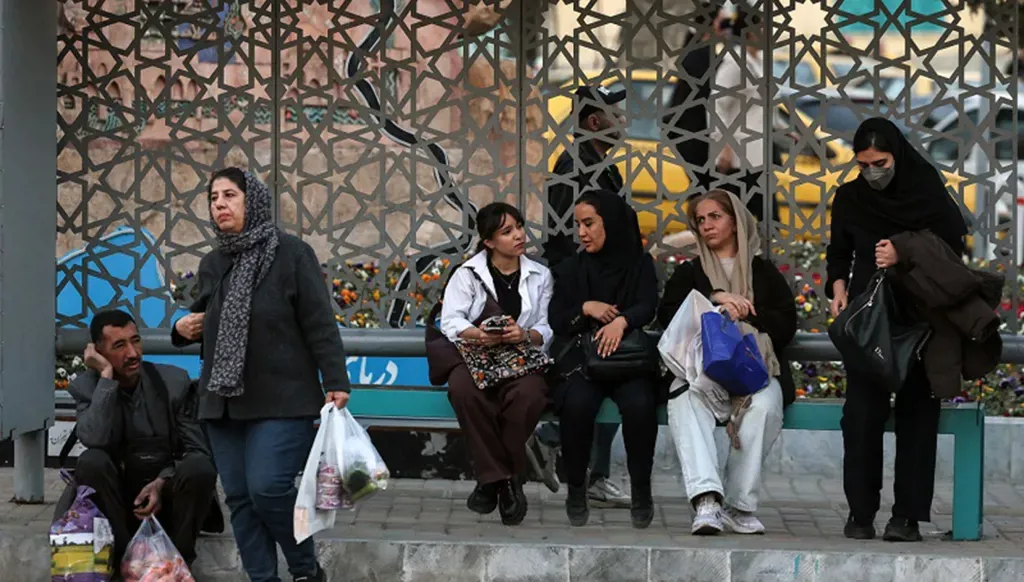
The new wave of student protests at Iranian universities has spread to major cities, including Tehran, Mashhad, and Isfahan.
Amid the presence of large US military forces and upcoming nuclear negotiations, Iranian universities are witnessing a new wave of student protests that break the barrier of fear after a bloody crackdown. This domestic movement coincides with external pressure led by Washington and reopens the debate over the legitimacy crisis and the limits of public influence on the regime’s calculations amid regional escalation.
Over the weekend, universities across Iran saw anti-government student protests, with clashes reported between demonstrators and members of the Basij forces. Some students carried banners supporting the exiled crown prince Reza Pahlavi, while others chanted slogans calling for the overthrow of Supreme Leader Ali Khamenei.
The protests follow a violent crackdown in January that, according to human rights organizations, left thousands dead and tens of thousands arrested, though authorities downplay the number of casualties. At the same time, US President Donald Trump intensified his rhetoric, hinting at military options ahead of anticipated indirect talks in Geneva, and warned of severe consequences if an agreement is not reached.
The new wave of student protests has spread to eight universities in Tehran, Mashhad, and Isfahan.
The protests erupted after universities reopened following a closure earlier last month. Authorities said the shutdown was due to the weather, while critics argued it was meant to prevent demonstrations. Students took to the streets chanting anti-regime slogans such as “Woman, Life, Freedom” and waving the Lion and Sun flag, the symbol of Iran before the 1979 Islamic Revolution.
Footage showed clashes inside university campuses between students and Basij forces, while official media acknowledged only “limited gatherings.” The unrest also spread to the western city of Abadan after the arrest of academic and activist Yaghoub Mohammadi, who was later released.
Signs of a legitimacy crisis within the regime are also increasing, with Kurdish parties forming a coalition against the government and reformists being barred from running in Tehran’s city council elections. According to The Guardian, this is the first time such political interference—common in parliamentary and presidential politics—has extended to the local authorities level.
Political science and international relations professor Dr. Nabil Khoury, speaking to Annahar, sees Iran’s student protests as a form of real pressure on the regime, though insufficient on their own to bring about political change. In his view, real impact would require turning these movements into a lever to build an internal balance of power, by uniting opposition factions around a clear political project and expanding protests to include multiple social sectors and regions, giving them an almost comprehensive character.
He notes that even in their limited form, the protests “weaken the regime and deepen its crisis, especially as they coincide with external US pressure,” which aims to extract political concessions and possibly push toward a settlement. He emphasizes that “the continuation of demonstrations, despite repression, reflects the worsening internal legitimacy crisis of the regime, yet the future of this movement remains open to multiple possibilities, given the divisions within the regime itself and among opposition forces that have so far been unable to unite around a single project.”
Despite the ongoing student protests in Iran and increasing external pressure, the movement’s impact remains limited amid divisions within the regime and opposition. The question remains: can the Iranian street, with outside support, truly shift the balance of power?