
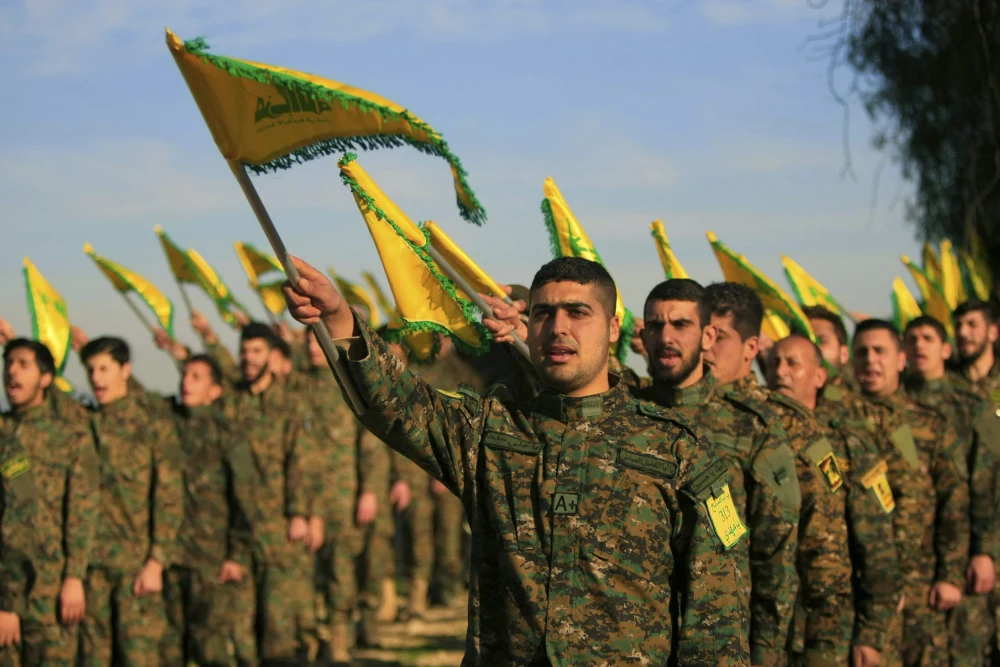
Lebanon’s top general came to Washington last week to try to persuade US military officials, policymakers, and lawmakers that his country was getting serious about Hezbollah. Gen. Rodolphe Haykal’s pitch was simple: despite its “limited capabilities,” the Lebanese Armed Forces (LAF) have raided Hezbollah weapons depots south of the Litani River, established “operational control” over southern Lebanon, and are largely completing the first phase of Lebanon’s “weapons consolidation plan,” which is a euphemism for disarming the Iran-backed militia.
The reality, as I recently saw firsthand standing on the Israel-Lebanon border, is that the LAF is working hard, but still falling far short of disarming Hezbollah. Israeli operations targeting Hezbollah decimated the group in the fall of 2024, with exploding pagers, airstrikes that targeted key Hezbollah personnel and weapons systems, and ground forces that swept the Lebanese side of the border for tunnels and underground bunkers. Now, however, the LAF’s disarmament of Hezbollah—required under the November 2024 ceasefire with Israel—is being outpaced by the militia’s determined rearmament. Assessing the LAF’s disarmament efforts requires taking a hard look not at the measures of the LAF’s performance that Gen. Haykal touted—the number of patrols, raids, or seized weapons—but rather at metrics of overall effectiveness seizing weapons stored on private property, targeting underground weapons storage and production facilities, stopping Hezbollah from smuggling weapons sent by Iran across the Lebanese-Syrian border, and transparently disposing of seized weapons.
A ‘Grave Sin’: Hezbollah’s Post-October 7 Fall from Power
Standing in the visitor’s center in Misgav Am, an Israeli kibbutz along the border with Lebanon, the view looking out through large plate glass windows at the Lebanese village of al-Aadayssah is very different from the view I saw from the same spot not long before October 7, 2023. Nearly every structure in the Shia Lebanese village has since been destroyed, and the village is largely abandoned. Israeli military briefers say that Hezbollah stashed weapons within each of the targeted homes—some of which were used to target Misgav Am and other civilian Israeli communities in northern Israel starting on October 8, 2023, the day after the massive Hamas attack from Gaza.
The Misgav Am visitor center only recently reopened; the windows have been replaced and the roof repaired, but the interior ceiling is still in tatters. A tall Hezbollah watchtower that long peered into Israeli homes from just across the border is gone. With Hezbollah no longer openly operating along the border, just outside their living room windows, Israeli civilians are only beginning to trickle back to communities evacuated under fire from Hezbollah, many of them to homes destroyed by Hezbollah rockets.
Yet residents of these border towns say they feel a bit of optimism. Israeli forces severely degraded Hezbollah’s fighting capabilities in September 2024 during “Operation Northern Arrows,” targeting Hezbollah’s command structure, missile and weapons caches, and underground bunkers and tunnels running along and under the UN-demarcated Blue Line marking the Israeli-Lebanese border. Israel and Lebanon agreed to a ceasefire in November 2024 that, despite fits and starts, has mostly held for more than a year. A month after the ceasefire, the Assad regime fell in Syria, denying Iran easy access to the land bridge it used for years to send weapons and cash to Hezbollah via Syria. The new post-Assad Syrian regime has even seized Iranian weapons shipments bound for Hezbollah, further cutting into the group’s rearmament.
Israel says its forces regularly carry out airstrikes targeting Hezbollah in response to ceasefire violations, such as when Hezbollah operatives move weapons or rebuild infrastructure south of the Litani River. LAF activity in south Lebanon is facilitated by a US-led International Monitoring and Implementation Mechanism that efficiently transmits information between the Israeli and Lebanese militaries and monitors the LAF’s progress toward disarming Hezbollah. Moreover, for the first time in recent memory, Lebanon has a government led by a president and a prime minister who are both vigorously committed to disarming Hezbollah and placing all of its weapons under government control—even as Hezbollah warns that doing so would be a “grave sin.”
The campaign to disarm Hezbollah has not been without cost. Last August, six LAF soldiers were killed in an explosion at a Hezbollah arms depot near Tyre during an operation to seize and destroy Hezbollah weapons. Some reports, citing US intelligence, indicate that Hezbollah may have led the unit into a trap. Even if this was just a case of unstable explosive ordinance going off prematurely, the incident underscored the dangers of securing Hezbollah weaponry. Either way, the LAF has persisted in its mission to dismantle Hezbollah weapons and infrastructure south of the Litani river. In fact, only a few weeks after the explosion, the LAF reported that it had blown up so many Hezbollah arms depots that the militia was running out of explosives. The Trump administration responded by approving a military aid package for Lebanon valued at $14.2 million, including explosives for building up the LAF’s “capability and capacity” to uproot the weapons caches and “military infrastructure of non-state actors, including Hezbollah.”
However, despite this US aid and the efforts of the LAF deployment in south Lebanon, Hezbollah is outpacing the LAF’s efforts to disarm it. Hezbollah has evaded LAF inspections at many sites in the south; it has ratcheted up domestic production of weapons in facilities north of the Litani; and it still manages to smuggle weapons into Lebanon. The LAF and international observers need better measures of effectiveness to truly assess the LAF’s progress in seizing the weapons Hezbollah still holds (largely on private property), targeting the group’s domestic production capacity (primarily in underground facilities), and disrupting Iranian weapons smuggling across the Syrian border into Lebanon.
Hezbollah Hides Its Arms on Private Property
As of November 2025, the LAF was still rejecting Israeli and American calls for Lebanese soldiers to inspect locations where Hezbollah was believed to have stored weapons on private property, such as in people’s homes or buried on their land.
Hezbollah’s documented track record of storing weapons in private homes is no secret; it was long reported by UN peacekeeping forces and confirmed when Israeli ground forces went into Lebanon and found weapons stored in private homes in Lebanese villages all along the Blue Line. At an Israeli Defense Forces (IDF) base not far from the border, I toured a collection of Hezbollah weapons seized from the militia’s weapons stores in private homes and underground storage facilities along the border. To mark where the weapons were found, Israeli soldiers also grabbed town signs, one reading “Welcome to Adayseh.”
Another sign marks the entrance to the “Martyrs of Return Garden,” adorned with a map of Israel/Palestine with a skeleton key—of the kind many Palestinian refugees still hold—running the length of the country. Jerusalem, the sign aspiringly indicates, is just 173 kilometers (107.5 miles) away.
As Gen. Haykal prepared to visit Washington last November, Israeli and officials pressed the LAF to follow up on information shared through the US-led mechanism and inspect private property where Hezbollah was suspected of storing weapons, but LAF commanders refused. “They’re demanding that we do house-to-house searches, and we won’t do that,” a Lebanese security official told Reuters. Israeli airstrikes then targeted locations that the LAF declined to investigate, and Gen. Haykal’s planned visit to Washington was abruptly cancelled.
The general seems to have got the message, and over the next few weeks, the LAF began inspecting certain private properties looking for weapons. For example, on December 20, 2025, the LAF announced that it had conducted a raid inside an apartment outside the Hezbollah-dominated south that had been rented “by a wanted individual,” seizing rockets, ammunition, and other arms. But such raids were still far and few between, and often took place only after informing Hezbollah of coming inspections, allowing the group to move out its most valuable equipment.
More incidents went poorly than smoothly. On December 13, the IDF provided the LAF with information about a Hezbollah weapons storage site on private property in the southern Lebanese village of Yanouh. Instead of inspecting the facility, the LAF reported to Abu Ali Salameh, a local Hezbollah liaison officer, that Lebanese forces would soon be visiting. When the LAF forces arrived, they encountered a gathering of female Hezbollah supporters who prevented them from entering—and gave Hezbollah a chance to remove the weapons. According to the IDF, when the incident concluded, the Hezbollah officer coordinated with the LAF to falsely document that there were no weapons at the property. In fact, the IDF reported, suspicious crates were removed from the rear door of the property. But the LAF announced that after conducting a thorough search of the property, it had found no weapons inside.
On January 20, just days before my visit to the Israeli-Lebanese border, Israeli officials said IDF airstrikes killed ten Hezbollah operatives who served as liaison officers between Hezbollah and residents of villages in southern Lebanon. Yet intelligence is not always perfect, and as we stood along the border, an Israeli official conceded to me that some of the intelligence Israel had provided the LAF through the US-led mechanism may have been outdated or inaccurate. The official insisted that Israel has documented multiple occasions when LAF soldiers took pictures of homes or facilities only after Hezbollah weapons were removed or, in other cases, photographed empty rooms but not those where weapons were stored.
Looking out at the Lebanese houses destroyed in and around al-Aadayssa, the Israeli official stressed that each structure that was hit housed weapons for Hezbollah. Given Hezbollah’s long history of storing weapons in private homes along the border and throughout southern Lebanon, the official concluded, until the LAF starts inspecting private homes where Hezbollah is suspected of storing weapons, the LAF cannot honestly claim to have established “operational control” in the south. That is especially true given the many underground weapons facilities Hezbollah still maintains in the south and across Lebanon.
Hezbollah’s Underground Weapons Facilities Are a Major Problem
In late December 2025, LAF forces raided a site near the Lebanese village of Kafra—where Hezbollah reportedly maintained heavy weapons, including Grad rockets—and dismantled makeshift cruise missiles including Russian DR-3s, presumably taken from Syrian stockpiles under the Assad regime. The DR-3 is a reconnaissance drone repurposed as an armed cruise missile. Israel said that Hezbollah kept DR-3 cruise missiles in specially designed facilities in the south more than a year earlier, so it was no small matter when the LAF found and dismantled several. Lebanese media carried photos of the weapons, timed to air two days before Gen. Haykal was set to announce the completion of phase one of the disarmament plan in the south.
Though this raid was portrayed as a major success by the LAF, it was the exception that proved the rule: the LAF does not systematically inspect underground Hezbollah weapons storage and production sites. Moreover, the discovery of cruise missiles has only heightened Israel’s concerns over the dangerous long-range weapons Hezbollah manages to maintain a year into the ceasefire.
Hezbollah has bragged about its arsenal for years. In September 2024, the group released a propaganda video with Hebrew and English subtitles entitled “Our Mountains, Our Warehouses,” with footage of a large underground facility for producing and storing rockets. The LAF recognizes that such sites exist, and in November even took journalists on a tour of abandoned underground facilities in areas cleared by IDF ground forces prior to the ceasefire. Clearly, declaring LAF “operational control” over the south is a far cry from actually disarming Hezbollah there.
As in the case of private property, the IDF says it has notified the LAF about Hezbollah underground weapons storage and production facilities through the US-led mechanism. But more often than not, Israeli officials say, the LAF either did not inspect the site, visited without dismantling weapons, or gave Hezbollah a heads-up ahead of time. For example, just days into the new year, the IDF provided its Lebanese counterparts with information about an active underground Hezbollah weapons storage facility. The LAF inspected the site, but Israeli officials say they found intelligence that Hezbollah was still storing weapons there and later hit it with an airstrike.
Over a six-week period from December 25 to February 6, the IDF struck at least eight underground weapons storage and production facilities, both in southern Lebanon and elsewhere across the country, according to IDF press releases. Typically, these target access shafts—and are followed by secondary explosions indicating the presence of weapons and exploding ordinance. The IDF hits moving targets, either Hezbollah operatives or weapons, in time-sensitive operations, but IDF strikes targeting underground facilities come in the wake of IDF notifications that the LAF has failed to act upon, Israeli officials explained.
This issue is especially sensitive for Israeli officials, who say that finding and destroying Hezbollah’s current weapons-production facilities—most of which are below ground—are even more important than efforts to seize Hezbollah’s older weapons stored on private property. Moreover, underground facilities are very difficult to target from the air. Access shafts can be destroyed, but the underground facilities often remain intact, meaning that Hezbollah can simply dig a new access tunnel and continue.
Israel counts hundreds of private structures to be searched for Hezbollah arms, but Israel says that the number of underground facilities is much more manageable. Israeli authorities say that dozens of underground Hezbollah facilities—in the south and elsewhere in Lebanon—must be inspected and destroyed. The number rises, however, when one includes the many cases in which Hezbollah operatives return to areas hit by Israeli airstrikes to rebuild targeted infrastructure using large engineering vehicles.
In early February, the commander of US Central Command, Admiral Brad Cooper, praised the LAF and the US-led mechanism and congratulated the LAF for finding and dismantling a Hezbollah tunnel—the second time Lebanon had done so in as many months. He might have qualified his praise by noting that Israel has provided information on far more than these two underground facilities.
Israel Must Also Watch the Syria-Lebanon Border
These underground facilities are Hezbollah’s preferred destination for weapons and weapons components that it continues to receive from Iran. Tehran lost a key component of its “axis of resistance” when the Assad regime in Syria fell, but Iran continues to send weapons to Hezbollah through Syria. Syria’s new leaders are no friends of Hezbollah and are working hard to counter Iranian activity inside their country, but they do not control the entire country and are being pulled in multiple directions. Damascus has seized multiple weapons shipments to the group, but certainly cannot intercept them all.
The Syrians see both Hezbollah and Iran as domestic security threats, pointing to examples like the arrest earlier this month of a group accused of attacking the Mezzeh military airport using weapons traced back to Hezbollah. By all accounts, Iran remains committed to reconstituting its weapons-smuggling routes through Syria to rearm Hezbollah in Lebanon. The Hezbollah unit that smuggles weapons and technology from Syria to Lebanon uses these routes to move weapons it procures through other channels as well, such as a Moscow-based Russian national recently designated by the Treasury Department.
But while Syrian authorities have been targeting Hezbollah arms smuggling along the Lebanon-Syria border, the LAF has not. The LAF patrols the border and even reported sending reinforcements to the Syrian border as part of the ceasefire with Israel. From time to time, the LAF has reported coming under fire during counter-smuggling operations. Yet these efforts have failed to stop Hezbollah weapons smuggling. Over the past two years, Israeli officials assess, Iran smuggled a significant amount of weapons overland through Syria to Hezbollah in Lebanon, despite the sporadically successful efforts of the new regime in Syria.
In late January, Israel targeted a notorious Hezbollah smuggler in the coastal Lebanese city of Sidon and hit four border crossings through which Hezbollah allegedly smuggled weapons into Lebanon from Syria. The smuggled materials included weapons that were reportedly procured in Iraq and shipped overland across Syria, as well as other prohibited goods ordered through a Hezbollah front company and collected in Iraq, Syria, and the Gulf states.
The LAF’s Hezbollah Dilemma: Disarmament or Deconfliction?
Even as Israeli officials highlighted the LAF’s shortcomings, they also stressed that they are keen to see the LAF succeed—and implicitly understand its concerns that pushing too hard and too fast could lead Hezbollah to retaliate.
Israeli security officials told me that they tended to disagree with the assumption that a concerted LAF effort against Hezbollah would lead to civil war in Lebanon, but they understand their Lebanese counterparts’ concerns. The issue, they argue, is that senior Lebanese officials from President Aoun to Gen. Haykal have yet to make the decision to take on Hezbollah in earnest. Indeed, Gen. Haykal reportedly told US officials during his visit to Washington that the LAF seeks to avert any open clash with Hezbollah.
The problem runs much deeper. The LAF seeks to avoid clashes with Hezbollah at almost any cost, leading senior Lebanese officials to prioritize deconfliction with Hezbollah over disarmament of Hezbollah. Not only do local LAF commanders often inform Hezbollah of pending patrols and inspections, Israeli officials say, but senior LAF commanders are sometimes directly in touch with senior Hezbollah officials themselves. The LAF might describe this as deconfliction; frustrated Israeli and American officials rightly regard it as collaboration.
Washington has long expressed concern about “Hezbollah influence” within the LAF, leading the United States to suspend a hundred million dollars in military aid to the LAF over the past several years. More recently, the 2026 National Defense Authorization Act includes language classifying aid to the LAF as counterterrorism support and specifying that aid to the LAF may only be used to counter the threats posed by Hezbollah and other terrorist groups. US aid is conditioned on disarming Hezbollah as a counterterrorism priority. But as former State Department Assistant Secretary for the Near East and longtime Lebanon watcher David Schenker recently lamented in congressional testimony, “Unfortunately, notwithstanding its relatively good performance to date, incidents of LAF collusion, collaboration, and deconfliction with Hezbollah persist.”
Such incidents create a sharp trust deficit that hurts other aspects of the ceasefire. LAF officials are keen to avoid all-out war with Hezbollah while slowly establishing a monopoly over weapons within the country. But Israelis worry that the LAF has neither destroyed nor taken possession of all the weapons it has seized from Hezbollah. Some unaccounted-for weapons may have ended up back in Hezbollah’s hands through a revolving door, Israeli officials say, leading them to ask whether the US-led mechanism could verify the disposition of seized weapons.
The Hezbollah Disarmament Process Needs Better Metrics
On the ground, a senior Israeli official told me, the LAF has been more active over the past three months, sending out more patrols, assigning more manpower to its Homeland Shield operation in the south, and working in more geographic sectors. These efforts have periodically earned praise and congratulations from senior US military officials. But as soon as Lebanese officials said that they had established “operational control” over the south, the number and pace of the LAF inspections dropped off, presumably calculating that finding more weapons in the south would undercut their declared completion of phase one of the ceasefire plan.
Meanwhile, Hezbollah is steaming ahead with its plans to reassert its presence in southern Lebanon and rebuild its weapons stockpile. Though most of the houses in the village have been damaged, Israeli forces continue to enter al-Aadayssah almost every other day. By December 2024, Israel says, its forces had mapped out the massive amount of weaponry they found stored in border villages, including al-Aadayssah. But today, local Hezbollah liaison officers again work to reestablish the group’s presence in villages between the Litani River and the Israeli border. By October 2025, Hezbollah had launched a “Returning to al-Aadayssah” campaign, with volunteers reaching out to the few remaining residents and encouraging others to join them. This January, when Israeli airstrikes targeted ten Hezbollah liaison officers, one of those killed was Hassan Muhammad Sayyid, who served this role in al-Aadayssah.
Nobody should be surprised by Hezbollah’s actions. The group’s secretary general, Naim Qassem, said last March that Aoun’s remarks about the Lebanese state establishing a monopoly on weapons did not apply to Hezbollah. “If anyone thinks the president’s words were directed at us,” Qassem stated, “we don’t see it that way.” He went on to invite the Lebanese government to negotiate with Hezbollah, rather than try to disarm it. That is largely what the LAF has done, which made Gen. Haykal’s visit to Washington somewhat contentious. (In a moment of political theater, Republican Senator Lindsey Graham asked Haykal whether he believed that Hezbollah is a terrorist group and then walked out of the meeting when the general replied, “No, not in the context of Lebanon.”)
Lebanese officials are acutely aware of Hezbollah leader Naim Qassem’s threats of a civil war if the LAF tries to forcibly disarm it. Qassem has declared that Hezbollah “will not surrender” if the Lebanese government tries to take its weapons—and, if needed, will fight until there is “no life” left in Lebanon. And yet, in the wake of Hezbollah’s decision to attack Israel and then Israel’s devastating strikes against the group, the new government in Beirut has a chance to establish a monopoly over the use of force and end the ability of unelected Hezbollah officials to make decisions of war and peace for all Lebanese.
In other meetings in Washington, Haykal made a pitch for increased military aid to the LAF to purchase equipment and pay soldiers’ salaries. The former is only necessary if the LAF will actually take on Hezbollah, but the latter is badly needed in any event. At any given time, about half the 8,000 or so Lebanese soldiers assigned to the south are out of uniform, working second jobs to put food on the table for their families. Even today, Hezbollah operatives earn multiple times the salary of an LAF soldier.
Shortly after his return to Lebanon, Gen. Haykal hosted French Foreign Minister Jean-Noel Barrot in Beirut. Barrot said that Lebanon stood “at a crossroads.” He urged Gen. Haykal: “You have a unique window of opportunity. Seize it.”
The next test of Lebanese commitment to disarming Hezbollah and preserving the ceasefire will come within weeks, as the LAF is about to release its plan to disarm Hezbollah north of the Litani river under phase two of the ceasefire. Then, in early March, France is scheduled to host a donor conference to support the LAF, “but only if reforms continue, legislation is passed, and decisions are implemented,” according to a report of Barrot’s meetings in Beirut. Those decisions include LAF plans for disarming Hezbollah beyond the south.
Ultimately, it remains in the US interest to provide aid to the LAF, especially funds to pay soldiers’ salaries. But this must be strictly conditioned on measures of effectiveness, meaning results, not measures of performance. The number of patrols and sites inspected is far less important than the amount of confiscated and verifiably disposed weapons. Hezbollah’s single-minded rearmament drive is still outpacing the LAF’s half-hearted disarmament operations. Lebanon still has the opportunity to flip this equation, but time is running out. The alternative to disarming Hezbollah is a return to open hostilities. In the words of Lebanese Foreign Minister Youssef Rajji, “As long as weapons are not fully monopolized by the state, Israel unfortunately retains the right to continue its attacks in accordance with this [ceasefire] agreement.”