
The launch of large-scale US and Israeli strikes against Iran starting on February 28 — framed by President Donald Trump’s objectives of degrading Tehran’s military capabilities and potentially precipitating regime change — places Beijing in a strategically uncomfortable position. This campaign is the most significant US military operation since the Iraq War, unfolding across a region central to China’s energy security and commercial ambitions.
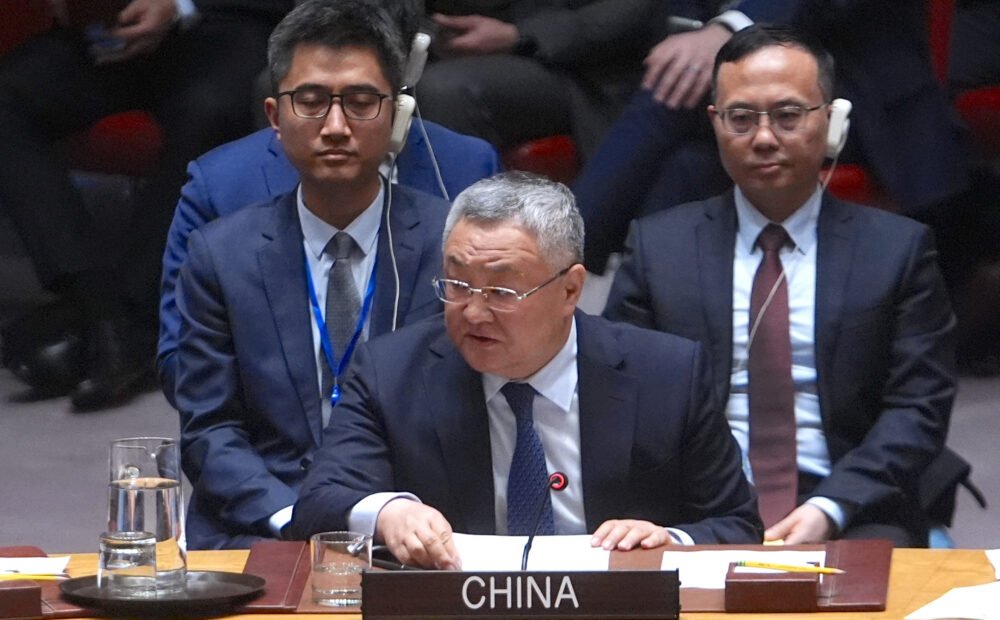
China formally opposes regime change and externally engineered political transitions as a matter of doctrine, viewing them as contrary to principles it treats as protective of both Iranian sovereignty and its own domestic and territorial sensitivities. That doctrinal stance shaped Beijing’s early response, as it joined Moscow in requesting an emergency United Nations Security Council session, put out a statement saying it is “highly concerned,” and urged respect for Iran’s territorial integrity and a cessation of hostilities. On March 4, China called for protecting shipping through the Straits of Hormuz and announced plans to dispatch a special envoy to mediate — a move that may enhance its diplomatic profile but is unlikely to gain traction in Washington absent a search for an off-ramp.
Beijing paired diplomatic protest with precautionary measures. While pressing its legal‑diplomatic case, Chinese authorities moved to limit exposure, urging nationals in Iran to evacuate and warning citizens in Israel to strengthen emergency preparedness. This combination of public condemnation and rapid risk mitigation suggests China was preparing for escalation rather than seeking to halt it.
Yet rhetoric has seldom, if ever, translated into robust support. China has provided Tehran with selective military and dual‑use technologies — including air defense systems, drones, and surveillance assistance — while avoiding formal security guarantees.
With US forces concentrated around Iran, Chinese satellite and other intelligence platforms have been actively observing US and allied deployments near the Gulf of Oman, indicating an emphasis on operational awareness. Such intelligence is arguably more useful for China’s longer‑term Indo‑Pacific planning than for influencing the current conflict’s battlefield dynamics. The pattern is consistent: enable selectively, avoid entanglement. While Beijing may incur some reputational cost among partners by allowing a perceived ally to falter, it has historically prioritized strategic insulation over symbolic solidarity, making anything beyond diplomatic protest unlikely.
Despite rhetoric about “comprehensive partnership,” China has never made a decisive strategic bet on Iran. Bilateral trade remains modest relative to China’s global portfolio, oil imports from Iran are useful but replaceable, and Belt and Road investment flows more heavily toward Gulf states such as Saudi Arabia and the UAE — economies now exposed to Iranian retaliation. The asymmetry is evident, as Iran has long needed China far more than China has needed Iran.
This hierarchy of interests becomes more consequential as China’s broader strategic environment tightens. Russia remains mired in a grinding war of attrition in Ukraine. Pakistan and Afghanistan face escalating instability. In the Western Hemisphere, the Trump administration has intensified its interventionist posture. On January 3, US forces launched Operation Absolute Resolve, a raid in Caracas that captured Venezuelan President Nicolás Maduro and his wife, removing him from power and transporting them to New York to face federal charges. Within weeks, Washington declared a national emergency with respect to Cuba, authorizing additional tariffs on imports from countries that supply oil to the island, as part of broader pressure linked to Havana’s alignment with governments Washington deems hostile.
Now Iran — another partner often framed as part of a counterbalancing axis — is absorbing sustained US-Israeli strikes, prompting it to retaliate by shuttering the Straits of Hormuz and carrying out attacks across Gulf states central to China’s trade, energy flows, and expatriate presence. What emerges is not a consolidated bloc, but a network under strain. Although some might speculate that US focus on Iran could create an opening for action against Taiwan, the risks of triggering a wider conflict with an already mobilized United States likely outweigh any short-term advantage.
For Beijing, the combination of Iranian escalation and expansive US objectives underscores hard limits. China lacks meaningful force projection in the region, offers no defense commitments, and has consistently avoided the burdens of a security guarantor.
Non‑intervention is not merely tactical caution; it has become a defining feature of China’s diplomatic identity. If the Iranian regime survives in weakened form, Beijing will likely calibrate limited, deniable support while avoiding overcommitment. If it falls, China would probably pursue pragmatic engagement with whatever authority emerges, safeguarding its economic interests in transactional fashion.
It is against this backdrop that the anticipated US-China meeting takes on greater significance. The Trump administration has indicated that talks would focus on trade, but whether the meeting proceeds — and under what atmosphere — is far from certain. Only weeks ago, Trump appeared politically weakened by a Supreme Court decision striking down many of his tariffs. Now the optics are more complicated. Chinese President Xi Jinping would enter any discussion under the shadow of a large-scale US military campaign and at a moment when several of China’s strategic partners are struggling across multiple theaters.
Beijing’s public denunciations of US actions as “unacceptable” and calls for restraint highlight its discomfort, but the measured response ultimately underscores both its limited leverage over American military action and the increasingly transactional — and fragile — nature of its diplomatic partnerships. China is neither Iran’s patron nor a passive bystander; it is a cautious opportunist operating within clear constraints, preserving flexibility while avoiding entanglement in a conflict it cannot control.