
The final days of 2025 marked a turning point in the Middle East, as competition between Saudi Arabia and the United Arab Emirates in Yemen spilled out into the open. Tensions between the two coalition partners, which jointly launched a military intervention in Yemen in 2015, have simmered for years and are now rapidly escalating, with far-reaching implications for both Yemen and regional security more broadly. The situation came to a head when Saudi Arabia carried out airstrikes on the Mukalla seaport on December 30, targeting weapons and military equipment it said had been delivered from the UAE to the Southern Transitional Council (STC), an Emirati-backed group that seeks the independence of southern Yemen.
In a remarkably blunt statement, the Saudi foreign ministry accused the UAE of pressuring the STC to conduct military operations along the kingdom’s southern borders, describing the move as a direct threat to Saudi national security and a “red line” for Riyadh that it would not hesitate to confront. Hours later, the president of Yemen’s Presidential Leadership Council (PLC), Rashad al-Alimi — who is backed by Saudi Arabia — issued a decree canceling the joint defense agreement with the UAE and demanding the withdrawal of Emirati forces from Yemen within 24 hours. Abu Dhabi strongly rejected Riyadh’s accusations and said its presence was linked to counterterrorism efforts, while four UAE-backed members of the eight-member PLC publicly rebuffed Alimi’s move. Yet the UAE announced it would end its mission in Yemen, and said it had completed the withdrawal of the remainder of its forces on January 3.
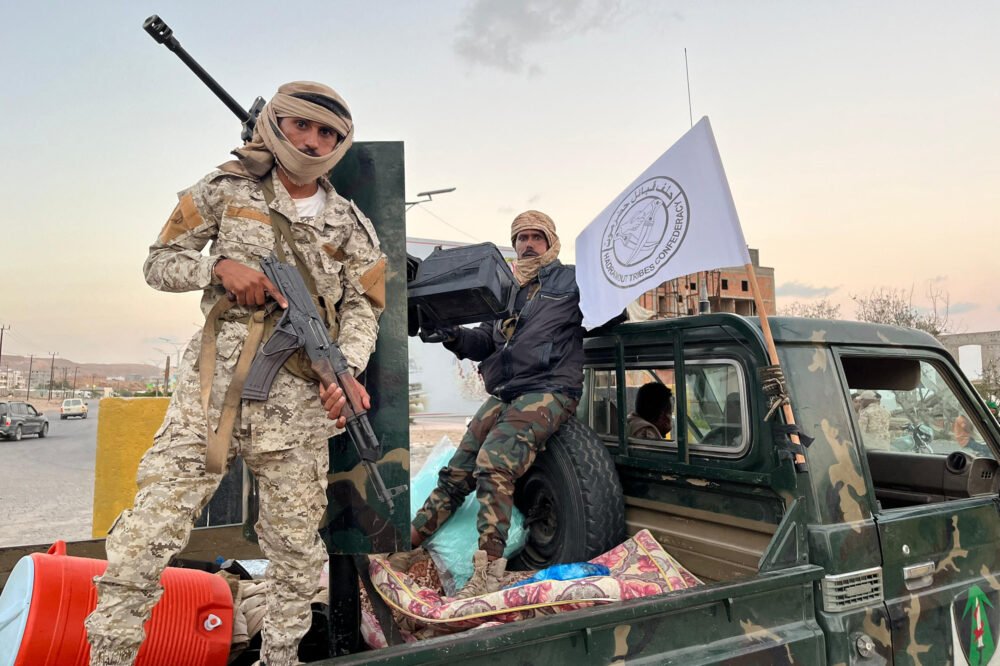
This sudden series of developments was sparked by the STC’s swift campaign to consolidate control over the eastern governorates of Hadramawt and al-Mahra in early December 2025. Hadramawt shares a roughly 700-kilometer-long border with the kingdom and is considered Saudi Arabia’s strategic depth in eastern Yemen. Al-Mahra, meanwhile, offers Riyadh direct access to the Indian Ocean. Saudi Arabia has for years sought to develop an oil pipeline from its Eastern Province through al-Mahra to the coast, a project that would reduce its dependence on the Strait of Hormuz, a key maritime chokepoint for the global oil trade, and limit Iran’s ability to exert leverage over Saudi energy exports.
Tensions escalated after the STC rejected Saudi demands to withdraw from Hadramawt and al-Mahra and hand over its positions to the Saudi-backed National Shield Forces (NSF). The standoff deepened further when the STC refused to receive a Saudi delegation sent to negotiate de-escalation and ordered the shutdown of Aden International Airport in protest of the Yemeni government’s directive to restrict flights to the UAE. Saudi Arabia’s ambassador to Yemen described the airport closure as a serious escalation. The next day, the NSF advanced into Hadramawt under Saudi air cover, marking Riyadh’s first direct military move to dislodge the STC from eastern Yemen.
In the days that followed, the political military fallout was swift. The NSF moved quickly to reassert control over Hadramawt and al-Mahra, retaking them from the STC with little resistance. Three UAE-backed members of the PLC, who had initially rejected President Alimi’s decision to expel Abu Dhabi from the country, later welcomed Saudi Arabia’s call for a southern-southern dialogue in Riyadh. The STC itself, along with STC-affiliated governors and ministers in areas under the group’s control, also endorsed the initiative. Riyadh’s assertive intervention, coupled with the pragmatic nature of Yemeni political actors in response to shifting power dynamics, is reshaping the political landscape in the south with remarkable speed.
These developments also point to a significant Emirati miscalculation. By backing the STC’s advance into eastern Yemen along the coast, Abu Dhabi has sought to build leverage over Saudi Arabia and Oman while consolidating its influence across the Arabian Sea and the Horn of Africa. The Emiratis, however, underestimated both Riyadh’s willingness to assert itself directly in its immediate neighborhood and its enduring leverage over Yemen’s political and military actors. The episode emphasizes a central reality of the conflict: While the UAE has built deep influence through local partners, Saudi Arabia remains the decisive external actor in Yemen.
Background
In March 2015, Saudi Arabia and the UAE launched a military intervention in Yemen, in what became known as the Saudi-led coalition, to reverse the September 2014 takeover of Sanaa by the Houthis, an armed Zaydi Shi’a movement that emerged from Saada governorate in north Yemen, and restore the internationally recognized government of President Abd Rabbo Mansour Hadi. Their approaches, however, quickly diverged. Saudi Arabia focused primarily on providing political support to the Yemeni government through diplomatic backing. Militarily, it relied on airpower and maintained a limited and indirect footprint on the ground while prioritizing border security and countering Houthi missile threats. The UAE, by contrast, viewed the Yemeni government as dominated by the Islah party, which it perceived as affiliated with the Muslim Brotherhood. Abu Dhabi designated the Brotherhood as a terrorist organization in 2014 following an attempt to seize power in the country. Instead, the UAE concentrated its efforts on southern Yemen, where it was able to mobilize long-standing southern grievances and strong secessionist sentiment. It focused on building, training, and equipping southern forces, including the Giants Brigades, Security Belt, and various other elite forces, which later aligned with the STC. Emirati officials have publicly claimed to have trained 200,000 Yemeni fighters, underscoring the size of the UAE’s security footprint in the country.
Although the UAE scaled back its direct military presence in Yemen in 2019, it shifted toward indirect engagement. The UAE has backed the STC, which seeks to restore the independence of South Yemen that existed prior to its unification with the North in 1990, since the group’s formation in 2017. Operating outside the government’s chain of command, UAE-backed forces have systematically displaced the Saudi-backed Yemeni government across the south since 2019, culminating in the recent takeover of Hadramawt and al-Mahra.
The UAE’s support for southern forces and the STC, however, was not merely ideological or tactical. It was integral to the Gulf country’s broader strategic vision. Over the past decade, Abu Dhabi has pursued an expansive maritime footprint across the Red Sea and the Horn of Africa, securing ports and logistics nodes to control critical trade routes and position itself as a global commercial hub and security actor along the maritime corridor linking the Gulf to the Red Sea and beyond. In Yemen, the UAE established control over key seaports and strategic islands, developing airstrips and logistics infrastructure in the Red Sea and Gulf of Aden. Abu Dhabi was able to make these advances in part because Riyadh had taken a step back from Yemen in recent years.
Saudi Arabia’s gradual disengagement was the result of converging security, economic, and political pressures. First, growing international pressure on Riyadh to end its war in Yemen culminated in the Stockholm Agreement in 2018, a cease-fire deal that enabled the Houthis to retain control of the key Hodeida seaport and forced the Yemeni government into a defensive posture. Second, sustained Houthi missile and drone attacks on Saudi territory between 2015 and 2022, numbering nearly 1,000 missile strikes and 350 drone attacks, compelled Riyadh to reassess its priorities. Third, the Yemen conflict has become a costly distraction from Crown Prince Mohammed bin Salman’s Vision 2030 agenda, the kingdom’s long-term economic development and diversification strategy, and a liability to Riyadh’s effort to rebrand itself as an agent of diplomacy and peace in the region.
As Saudi Arabia embraced this shift, it moved from confrontation to de-escalation and containment, relying increasingly on mediation to manage tensions. In July 2020, it brokered the Riyadh Agreement between the Yemeni government and the STC, which included forming a power-sharing government on a 50:50 basis between northern and southern governorates and restructuring military and security forces to bring them under Yemen’s Ministry of Defense and Ministry of Interior. Although the agreement allowed members of the Yemeni government’s cabinet to return to Aden, the military aspect of the agreement never materialized and the government’s presence remained limited while the STC’s influence continued to expand.
By 2022, Saudi Arabia had moved from managing the conflict to actively engineering an exit from Yemen. It initiated direct talks with the Houthis and, in April 2022, pressed former President Hadi to transfer power to the eight-member PLC. These steps were intended to prepare for a political settlement that would allow Riyadh to disengage from the conflict in an orderly manner.
In October 2025, negotiations between the Houthis and the Yemeni government resumed in Muscat, focused on prisoner exchanges. In mid-November 2025, UN Special Envoy Hans Grundberg held high-level meetings in the Omani capital amid renewed international efforts to revive negotiations that had stalled in 2023 following Houthi escalation in the Red Sea in response to the Israel-Hamas war. Against this backdrop and amid regional recalibration, the STC’s recent military push appears designed to strengthen its bargaining position and, by extension, the UAE’s influence over the outcome of any future negotiations.
Institutionalizing fragmentation
Rather than unifying Yemeni forces, the creation of the PLC in April 2022 institutionalized competing Saudi and Emirati spheres of influence, deepening fragmentation within the anti-Houthi camp. Emirati influence expanded following the council’s formation. Four of its eight members — three of whom are affiliated with the STC — are backed by the UAE and collectively command the bulk of the anti-Houthi armed forces. Over the past three and a half years, the STC extended its control across southern Yemen, effectively ending the Yemeni government’s presence in the south.
Instead of strengthening the Yemeni government forces, Saudi Arabia increasingly relied on parallel security structures under its own control, further eroding the Yemeni government’s position. According to a 2020 United Nations report, the Saudi-led coalition’s support for Yemeni government military forces remained inadequate, limiting the government’s ability to conduct sustained or large-scale military operations. In January 2023, it sponsored the creation of the NSF, a force composed of 45,000 fighters, largely recruited from southern governorates. In parallel, it also supported the formation of the Yemeni Emergency Forces, estimated at around 30,000 fighters drawn mainly from northern governorates, and placed them along the Saada and al-Jawf border with southern Saudi Arabia to protect the kingdom from potential Houthi incursions. These forces were formally placed under the authority of PLC President Alimi. In practice, however, they operate outside the Yemeni defense ministry’s command structure and are under direct Saudi oversight, command, and control.
Saudi re-engagement and regional realignment
The Saudi-UAE escalation in Yemen reflects a recent shift in Saudi Arabia’s regional approach, as Riyadh is increasingly seeking to reassert influence across the Gulf, the Red Sea, and the Horn of Africa after years of cautious retrenchment.
Since 2021, Riyadh has recalibrated its regional alliances in line with Vision 2030, deepening ties with Oman, restoring relations with Qatar, and normalizing relations with Turkey. In 2023, Saudi Arabia pursued a strategic de-escalation with Iran, formalized through the March 2023 China-brokered deal, and has increasingly relied on Muscat’s diplomatic channels to facilitate engagement with the Houthis and manage de-escalation in Yemen. This shift reflects a broader Saudi effort to move away from confrontational regional politics and toward pragmatic partnerships centered on economic integration, trade, investment, and diplomatic flexibility.
Like Saudi Arabia, Oman views the STC’s control of al-Mahra, with which it shares a long border, as a serious national security concern. The STC’s expansion revived Muscat’s anxieties, rooted in historical memory, over the sponsorship by South Yemen’s Marxist regime of a decade-long insurgency in Oman in the mid-20th century. More broadly, several regional states, including Qatar, Oman, Egypt, and Turkey, along with countries in the Horn of Africa such as Sudan, Eritrea, and Djibouti, issued statements reaffirming their support for Yemen’s unity and territorial integrity. This convergence reinforced Saudi Arabia’s position among regional partners and underscored Riyadh’s ability to mobilize diplomatic backing in contrast to the UAE, which is the only supporter of the STC in the region.
Following the STC’s takeover of Hadramawt and al-Mahra, Saudi Arabia moved quickly to engage Qatar and Oman at the highest levels. After the UAE announced its withdrawal from Yemen on December 30, 2025, the Saudi and Omani foreign ministers met in Riyadh to discuss the situation in Yemen as well as pathways toward de-escalation and a political solution. These engagements indicate a regional realignment and coalition-building effort beyond the UAE. In parallel, Saudi Arabia, Iran, and China convened a trilateral meeting in which they expressed support for an “inclusive” political solution in Yemen.
Across the Red Sea, the Saudi-Emirati rift in Yemen reflects a broader contest for influence in the Horn of Africa and along critical maritime corridors. Riyadh is increasingly asserting itself through diplomacy, financial leverage, and regional engagement. Crown Prince Mohammed bin Salman has framed Saudi power around conflict de-escalation and coalition-building, with the Red Sea integral to implementing Riyadh’s ambitious Vision 2030 agenda. By contrast, the UAE has combined economic investments in ports and logistics hubs with a more securitized approach, relying on armed networks, control of strategic seaports, and local proxies to shape outcomes on the ground. This model, which often bypasses central state authorities, has increasingly collided with Saudi priorities focused on working through central governments and diplomatic alignment.
The divergence between the two Gulf powers is now playing out on multiple fronts, including Sudan. While the UAE has backed the Rapid Support Forces (RSF) against the Sudanese Armed Forces (SAF) in the Sudanese civil war that began in April 2023, Saudi Arabia has recently stepped-up diplomatic efforts to shape the conflict’s outcome. During his meetings in Washington in November 2025, Crown Prince Mohammed bin Salman urged President Donald Trump to push for a peace deal in Sudan and suggested that the expansion of US sanctions on the RSF might be needed. Two weeks later, the UAE-backed STC launched its push to take control of Hadramawt and al-Mahra, an escalation that some observers view as an Emirati response to Saudi Arabia’s moves on Sudan.
Israel’s recognition of Somaliland at the end of December 2025 may have been the final straw that prompted Riyadh to suddenly take a harder line against the UAE in Yemen. The UAE was the first Arab state to normalize relations with Israel under the Abraham Accords and was also the only Arab League member not to vote against Israel’s recognition of Somaliland. Saudi Arabia’s strongly worded statement rejecting the normalization of “parallel entities” that undermine state sovereignty and unity reflects its concern that such a precedent could embolden similar secessionist movements, including along its own southern border.
As the Yemeni government moved to reclaim al-Mahra and Hadramawt from the STC, Saudi Arabia stepped up engagement with key Horn of Africa actors, suggesting a parallel effort to shore up its regional position vis-à-vis the UAE. In December 2025, the Saudi leadership held separate meetings with Eritrean President Isaias Afwerki and SAF commander Abdel Fattah al-Burhan in Riyadh. Both leaders have been critical of the UAE’s intervention in the Horn of Africa. This outreach has since expanded into broader regional diplomacy. On January 5, Saudi Foreign Minister Faisal bin Farhan met with his Egyptian counterpart to discuss Yemen, Sudan, and Somalia, while the Saudi crown prince held talks with Turkish President Recep Tayyip Erdoğan, who affirmed his support for the territorial integrity of both Yemen and Somalia.
Implications for Yemen and regional security
The Saudi-UAE rivalry in Yemen has weakened the Yemeni government’s position and complicated efforts to end the war. The UAE’s withdrawal from the country could reduce polarization and help align political and military forces against the Houthis. However, any de-escalatory effect will depend on Riyadh’s ability to diplomatically engage and integrate the STC and other southern actors into a political arrangement. The proposed southern-southern dialogue in Riyadh presents an opportunity to advance this process and address long-standing southern grievances that have destabilized Yemen for decades. Absent this, southern Yemen risks sliding into more conflict, which will deepen fragmentation and create security vacuums that both the Houthis and extremist groups could exploit.
More fundamentally, any stabilization will require Saudi Arabia to strengthen the Yemeni government through sustained political and economic support to restore basic services and shore up the economy. The erosion of government authority and the deterioration of humanitarian conditions have fueled political polarization and social tensions, contributing to the dynamics that culminated in the recent escalation.
Crucially, political arrangements will not hold without a parallel security reset. Riyadh will need to provide credible and consistent military backing to the Yemeni government by facilitating the consolidation of fragmented armed forces under a unified Ministry of Defense chain of command and ensuring these forces are adequately resourced and operationally coherent. Without a unified security architecture capable of exerting pressure on the Houthis, political agreements risk remaining symbolic while armed actors continue to dictate realities on the ground.
At the regional level, the recent alignment between Saudi Arabia, Oman, Qatar, and Iran — states that have maintained channels with the Houthis, and in the latter case supported the group — could facilitate progress toward a political settlement under the Saudi-backed roadmap. Yet without meaningful constraints on Houthi military capabilities and their continued threat to the rest of Yemen and the wider region, any such settlement risks further emboldening the group and undermining efforts to end the war.
There are early signs of an emerging regional axis developing in the Horn of Africa, bringing together Egypt, Turkey, Sudan, and Somalia around a shared interest in reinforcing state sovereignty and countering secessionist and proxy-driven dynamics. While this grouping falls short of a formal alliance, it reflects converging concerns over fragmentation, external interference, and the erosion of central authority across the Red Sea and the Horn of Africa. Whether this alignment matures into sustained coordination will depend on Riyadh’s ability to translate diplomatic signaling into consistent political, economic, and security support for national institutions. Absent such follow-through, competition —particularly between Saudi Arabia and the UAE — risks exacerbating ongoing conflicts, deepening instability across an already volatile strategic maritime corridor.