
As the Middle East is once again drawn into major conflict, attention naturally focuses on escalation and military balance. Yet wars reveal more than battlefield outcomes. They expose the strengths and weaknesses of the economic and logistical foundations that enable countries and regions to function during a crisis and recover afterwards. Those foundations, more than military developments alone, often shape what kinds of regional cooperation remain possible once the fighting subsides.
The current confrontation with Iran has made this visible in real time. Airspace closures, elevated maritime risk, and uncertainty around key chokepoints have disrupted energy flows and trade routes across the region. These disruptions extend far beyond the Middle East itself. For economies in Asia and Europe, they appear in the form of shipping delays, rising insurance costs, and renewed vulnerability along supply chains that underpin both energy security and industrial production.
In this sense, the conflict is testing something deeper than military deterrence. It is testing whether the region’s economic infrastructure and logistical networks can continue to function under pressure. Can ports remain operational? Can goods continue to move even when routes are constrained? Can financial and regulatory systems maintain a degree of predictability despite instability? On questions like these, the performance of regional hubs matters as much as political declarations.
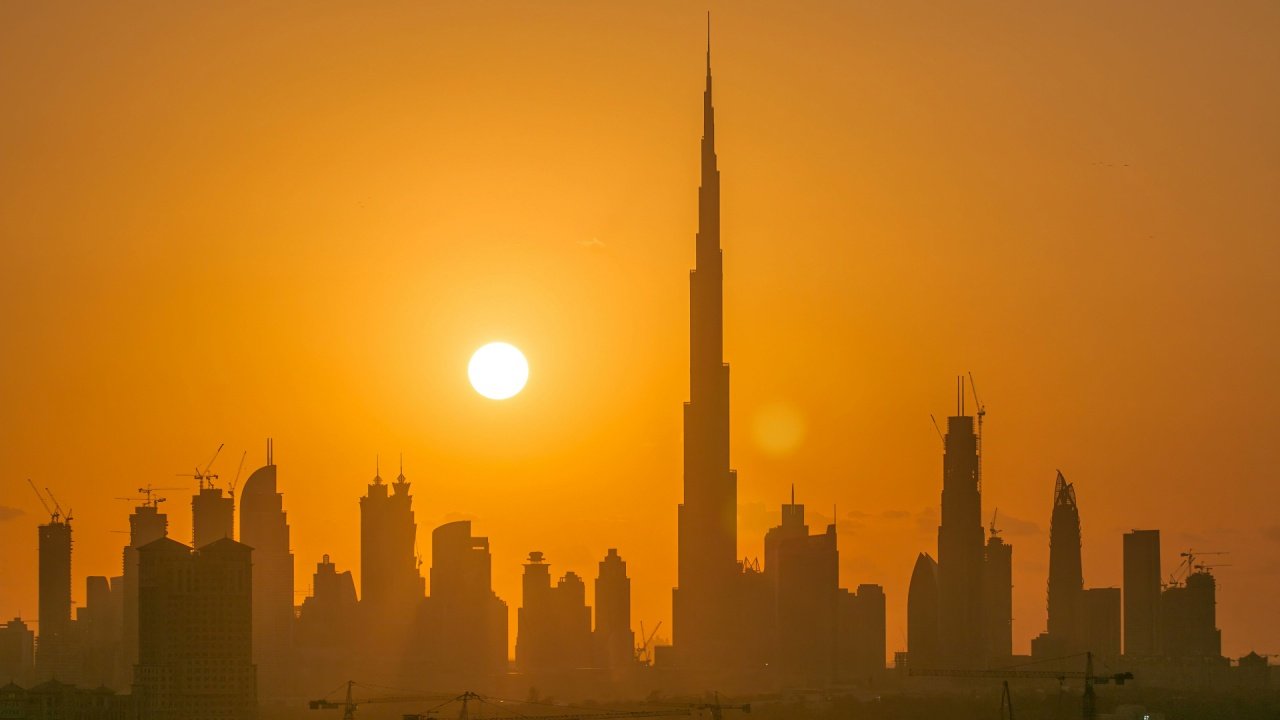
The United Arab Emirates illustrates this dynamic clearly. Even as regular air traffic remains suspended across Gulf airspace and major airports face disruption, the UAE has worked to preserve the functioning of its economic infrastructure. Port operations, briefly paused for safety checks, resumed where conditions allowed, while logistics zones and regulatory authorities redirected flows and adjusted procedures to manage disruption.
This resilience also reflects the UAE’s broader strategic role in the region. As one of Washington’s most dependable partners in the Gulf and a central logistical and economic hub linking the Middle East with Asia and Europe, the UAE has become a key platform for sustaining regional connectivity during a crisis and rebuilding cooperation once the conflict subsides.
This is precisely where the war intersects with the region’s emerging economic and strategic architecture. Initiatives linking Asia, the Persian Gulf, and Europe—such as Pax Silica or the India-Middle East-Europe Economic Corridor (IMEC)—were never built on the assumption of permanent stability. They assume shocks will recur. Their purpose is not to eliminate risk but to distribute it and preserve connectivity across multiple routes and partners.
Seen from outside the region, this dynamic carries important strategic implications. As the global and regional order shifts, new cross-regional networks are emerging, linking the Middle East more closely to Asia and Europe. Indian Prime Minister Narendra Modi’s recent visit to Israel reflects this broader trend. Beyond defense cooperation and political signaling, the visit reaffirmed India’s interest in deeper economic and infrastructural engagement across the region. For New Delhi, the objective is not to choose sides in regional rivalries but to ensure that the systems supporting trade, energy access, and industrial cooperation remain functional even in times of crisis.
For the United States and its partners, this raises a broader strategic question. Military developments will shape the immediate trajectory of the conflict. But the longer-term regional order will depend on which economic networks and partnerships prove resilient enough to sustain cooperation once the war subsides. What emerges after the fighting will depend less on battlefield outcomes than on which regional systems and relationships prove capable of functioning through crisis.
In this regard, several regional actors have already demonstrated an ability to operate under pressure. The UAE stands out in this respect, but it is not alone. Israel is another important example. After more than two years of conflict, including the current war, Israel’s regional position combines significant military strength with political uncertainty and lingering regional skepticism.
This constrains large diplomatic initiatives but does not rule out more incremental forms of cooperation. Economic stabilization efforts, reconstruction frameworks, and participation in broader regional connectivity initiatives could gradually contribute to a more functional regional environment.
The broader lesson of the current crisis is that military power can disrupt regional realities but cannot determine what follows. That depends on whether the economic connections that link the region to the wider world hold or fracture under pressure. The future of the Middle East will be shaped not only by the outcome of the war but also by whether the region’s economic infrastructure and partnerships remain intact in the weeks and months that follow.
The first days of the conflict already suggest that resilient countries in the region will play a decisive role in shaping what comes next.