
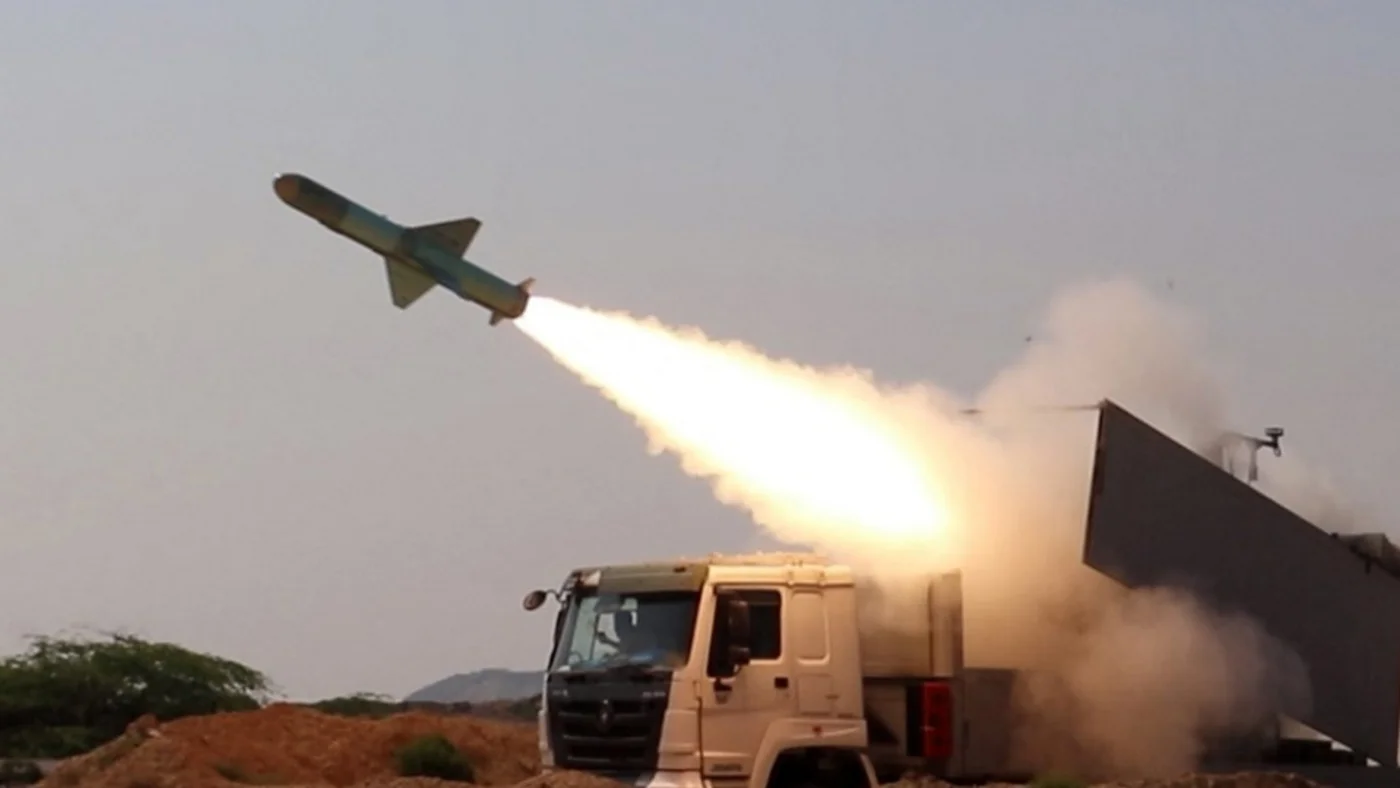
Following Khamenei’s assassination, Iran shifts to a long attrition war targeting Gulf states hosting US bases. Its strategy: inflict economic pain through energy disruption, exploiting Western divisions and betting that time favors the deprived Islamic Republic over impatient adversaries.
Amassive Israeli strike last weekend, reportedly aided by US intelligence tracking, flattened the compound housing Iranian Supreme Leader Ayatollah Ali Khamenei and many of his closest aides.
It was the opening salvo in the long-awaited US-Israeli war on Iran, even though the latter had just put forward a significant proposal during negotiations in Geneva.
While the Trump administration has presented this onslaught as a preventive measure, what it was supposed to prevent remains unclear; US intelligence has confirmed that there was no indication of an imminent attack from Iran.
Indeed, this is yet another US war of choice.
An Orwellian explanation of the “preventive” strike was swiftly provided by US Secretary of State Marco Rubio, who indirectly acknowledged that his country was dragged into the conflict by Israel. Rubio said the US attacked Iran because it knew Israel was planning to do so, and Washington was not prepared to absorb the inevitable blowback against the US that would follow from the Iranian side.
But why the highest Iranian religious and political authority, who was on the US-Israeli target list, would have been staying in his usual residence at such a critical moment has many observers scratching their heads.
According to my sources, the old and ill leader expressed that he did not wish to change his habits. It thus sounds like this was a deliberate choice by Khamenei to be martyred if that was his destiny, although it is not clear whether the aides who perished with him made the same choice.
Original sin
One week into the war, it is hazardous to assess its ultimate outcome, but some preliminary analysis is possible.
There was nothing that Iran could have done to avoid this war, beyond full capitulation to US and Israeli demands. Iran’s original sin was neither its alleged military nuclear programme (a notion denied by the International Atomic Energy Agency), nor its ballistic missiles and regional proxies.
Rather, the original sin has always been Iran’s refusal to abandon the Palestinian cause.
Negotiations carried out in recent weeks appear to have been a smokescreen for the impending attack, just as we saw before the 12-day war last June. This time, however, the Iranian leadership was fully aware of such duplicitous behaviour – and it was prepared for a long conflict with serious regional implications.
Reliable sources told me that Khamenei had anticipated his departure from this world and had selected three names of clerics who were fit to replace him (apparently, his son, Mojtaba, was not among them). Whether they, too, have been killed remains unclear. Israel and the US, leaving no stone unturned, destroyed the premises of the Assembly of Experts, which was tasked with electing a new supreme leader.
Yet no matter how many bombastic claims US President Donald Trump issues about a swift end to the Iranian regime, what is left of it has denied him such success.
The killing of Khamenei erased all of Iran’s red lines. Any regional state hosting American military bases is now considered a legitimate target.
This is a game-changer for Gulf monarchies. Their previous strategy of sitting on the fence, while hosting American bases used to launch attacks against Iran and being spared Tehran’s wrath has ended.
As for regime change in Iran, it is easy to claim, but much harder to achieve. The US-Israeli goals are unclear and constantly shifting, while the Iranian ones remain the same: endure and survive. If the mullahs continue to rule Iran in the future, Israel and the US cannot declare victory (although they may do so anyway, as in the case of Gaza).
Shifting narrative
After last June’s joint US-Israeli attack on Iran, total victory was declared by both Trump and Israeli Prime Minister Benjamin Netanyahu. Claiming the strikes had destroyed Iran’s nuclear and ballistic missile programmes, Netanyahu said: “At the decisive moment, we rose like a lion and stood tall, and our roar shook Tehran.”
Israeli commentator Gideon Levy subsequently remarked: “The lion’s roar quickly turned out to be the squeak of a mouse. The ‘historic victory’ … lasted as long as the life of a butterfly.”
Trump boasted of the “obliteration” of the Iranian nuclear programme. Had that been the case, why did his envoys rush into unsuccessful negotiations again just a few months later? Was it simply the smokescreen mentioned earlier?
It is quite odd to declare total victory against Iran every eight months. It is similarly unsustainable for Netanyahu to announce with such frequency the elimination of existential threats against his country.
Sooner or later, the different notions held by the US and Israel about what victory against Iran entails will emerge. In Washington, the war aims have changed so frequently that it precludes any meaningful analysis.
While internal political “opposition” is not a problem for Netanyahu, Trump faces a different situation. Turmoil, disappointment and disaffection are growing within Maga ranks, and the economic impacts of the war on energy prices, inflation and stock markets could hurt Trump in November’s midterm elections.
One day, Israel may experience blowback from Washington for having dragged it into another Middle Eastern war. For now, the best hope to swiftly end the war rests on the depletion of weapons stocks. Who will run out first remains unknown. There are reports that Iran has now started to use its hypersonic missiles; their number and accuracy might be another game changer.
Risky game
Iran’s calculus seems to be built upon its regret over having accepted a halt to the conflict last June, just to be attacked again eight months later. In this framework, there is no apparent room for a ceasefire.
The Islamic Republic does not want to be fooled again, and its strategy of attrition warfare seems likely to drive the economic costs of this war ever higher – an unbearable reality for people around the world, amid soaring oil and gas prices, shipping deadlock in the Strait of Hormuz, and stock exchanges on a rollercoaster.
Yet the first tragicomic effects of the conflict are already on full display. US Treasury Secretary Scott Bessent issued a temporary waiver to allow Indian refiners to purchase Russian oil; in other words, he eased sanctions on Russia.
At the same time, Gulf states may start reviewing overseas investments in an effort to alleviate the current financial strain – a move that could massively affect the US, while oil and gas shortages could dramatically impact energy supplies for next winter. We are all lucky that this war erupted as the current winter is winding down.
In essence, Iran is aiming to inflict “death by 1,000 cuts”.
Not only are there no more red lines containing Tehran’s response after the assassination of Khamenei, but there is also a calculated, slow and subtle strategy to exploit the blind spots of Washington and its allies, aiming to drive multiple wedges among them. Iran and its people, on the other end, have become highly accustomed to deprivation over the past 47 years.
As has been observed in other similar situations, the West might have the watch, but Iran has the time.
Of course, this is a risky and uncertain game. Iran’s chances would improve if Russia, and especially China, joined this strategy. Whether they are ready or willing to do so remains unclear; Trump’s forthcoming visit to Beijing at the end of the month could shed more light on that.
But the real question remains: can the Middle East – and the rest of the world – continue to endure such security uncertainty and economic volatility in the meantime?