
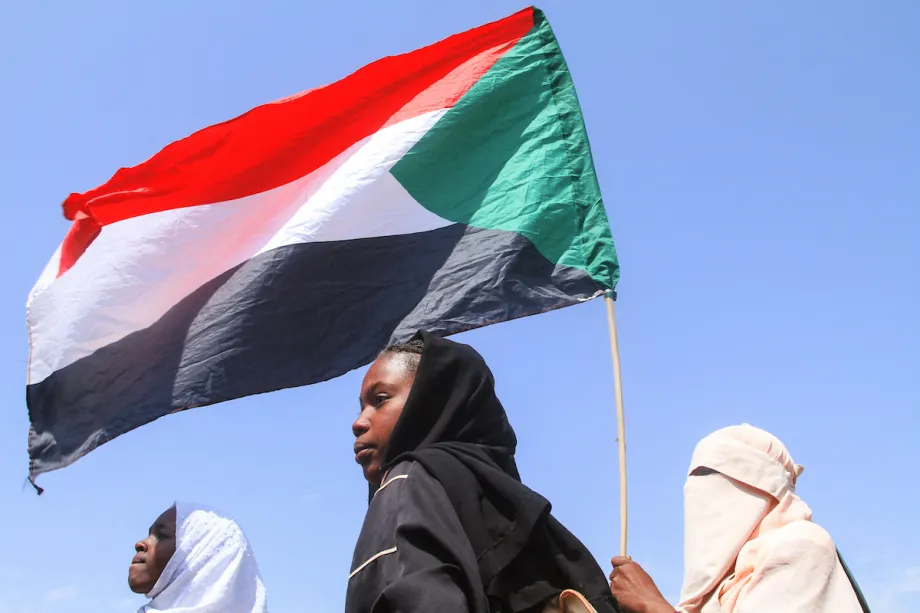
In Geneva last October, Saudi Arabia did something rare in the long agony of Sudan’s war. It spoke plainly. Before diplomats and humanitarian officials, Riyadh’s envoy condemned the Rapid Support Forces’ assault on El Fasher as ‘grave’, demanding immediate humanitarian access and denouncing attacks on civilians, aid workers and infrastructure.
The language echoed warnings from the UN High Commissioner for Human Rights, Volker Türk, who had already pleaded for urgent action to prevent mass atrocities after more than 500 days of siege in North Darfur. Markets bombed. Mosques struck. Camps for the displaced were raided. Tens of thousands uprooted again in a land long scarred by militia violence.
For Sudan, it was another chapter in a familiar tragedy. For Saudi Arabia, it was a strategic inflection point
The RSF is no ordinary militia. Born of the Janjaweed militias unleashed in Darfur under Omar al-Bashir, it has evolved into something far more complex: part paramilitary, part commercial empire, part shadow state. Under Mohamed ‘Hemedti’ Dagalo, the group entrenched itself in Sudan’s gold sector, controlling dozens of companies in mining and infrastructure. By 2024, Sudan’s pre-export gold revenues exceeded US$1.6 billion, according to C4ADS investigations. Chatham House has described gold as the most significant source of income for the main conflict parties.
That gold does not sit idle in desert vaults. It travels through Chad, Libya and Egypt — and often lands in Gulf markets. Investigations suggest roughly 29 tonnes of Sudanese gold entered Dubai in 2024 alone, a 70 per cent year-on-year increase, even as sanctions multiplied. It’s Bullion for bullets.
This is why the war has proven so stubborn. The RSF is not merely fighting for territory; it is protecting a revenue stream. Military stalemate becomes tolerable when the books balance. War becomes an economic model.
Saudi Arabia’s Geneva rebuke therefore, signalled more than moral outrage. It reflected a dawning calculation that instability in Sudan is no longer containable. A failing state across the Red Sea threatens trade routes, fuels refugee flows and invites militant safe havens. Saudi Arabia has pledged US$10 million via UNHCR to restore water infrastructure in war-torn Sudan, where millions lack safe drinking water. For a kingdom investing heavily in Vision 2030 and positioning itself as a diplomatic heavyweight, a permanently fractured Sudan is a strategic liability.
Yet the regional landscape is fractured. Egypt has openly backed the Sudanese Armed Forces. The United Arab Emirates has been widely reported as maintaining links with the RSF, particularly through gold trading networks. Turkey, Qatar and Russia have each courted Sudanese actors at various moments. Sudan has become a theatre for competing Middle Eastern ambitions.
In this fractured environment, Saudi Arabia occupies a rare position. It retains channels to both generals. It is not seen as wholly aligned with Cairo or Abu Dhabi. That ambiguity, once a diplomatic hedge, may now be leveraged.
History offers sobering lessons. Post-conflict ‘neotrusteeship’ experiments in Kosovo and East Timor demonstrate that divided international authority breeds paralysis and corruption. East Timor’s relative success stemmed from unified command and clear benchmarks; Kosovo’s fragmentation left blurred accountability. Sudan cannot afford a patchwork of external overseers pursuing rival agendas. Any stabilisation effort must be regionally coherent and time-bound, ideally anchored through the African Union to preserve Sudanese ownership.
African disarmament, demobilisation and reintegration (DDR) experiences also illuminate the path. Sierra Leone disarmed some 72,000 combatants after its civil war, yet community-level reintegration proved uneven when livelihoods lagged. Liberia linked disarmament to education and vocational training, blending security guarantees with economic opportunity. The lesson is plain: guns are surrendered only when a credible civilian future beckons.
For Sudan, dismantling the RSF’s war economy is indispensable. Financial choke points matter more than battlefield victories. Gulf financial centres, particularly those involved in gold refining and trade, hold the keys to enforcement. Enhanced anti–money laundering measures, transparent supply chains and coordinated sanctions could constrict revenue flows that currently lubricate violence. Partial enforcement will not suffice; as long as gold finds a buyer, the calculus of war endures.
At the same time, pressure without a political horizon risks entrenchment. Fighters who see only prison or annihilation will cling to arms. A sequenced pathway — conditional ceasefire, monitored withdrawals, reintegration packages for rank-and-file, and accountability mechanisms for atrocity crimes — must accompany financial isolation.
International justice, including cooperation with UN investigations, would signal that impunity is not the price of peace. Yet justice must be calibrated to avoid collapsing negotiations entirely.
Saudi Arabia’s diplomatic weight could also convene a broader regional compact. Egypt, the UAE, the African Union, the European Union and the United States share an interest in preventing state collapse. A limited, neutral stabilisation presence — clearly subordinate to a civilian Sudanese authority and with a defined exit strategy — might reassure communities wary of security vacuums. Bosnia’s post-Dayton peace endured partly because NATO held lines while institutions matured. Sudan will require similar breathing space.
The stakes stretch beyond Sudan’s borders. The Red Sea corridor carries a significant share of global trade. Refugee flows from Sudan have already strained Chad, South Sudan and Egypt. Prolonged conflict risks drawing in transnational armed groups. Conversely, a stabilised Sudan — rich in agricultural land and mineral wealth — could anchor regional food security and economic integration.
There is also a moral ledger. Darfur’s ghosts haunt international diplomacy. The language of ‘never again’ rings hollow when markets and mosques burn in El Fasher. If regional powers cannot marshal coherence to end a war so entwined with their own economic systems, faith in regional solutions erodes.
Saudi Arabia’s Geneva statement was a beginning, not a culmination. Words must now crystallise into strategy: choking illicit gold flows, aligning Gulf policies, conditioning reconstruction on verifiable ceasefires, and investing in community-centred reintegration. Peace will not emerge from denunciation alone. It will require aligning incentives so that stability becomes more profitable than violence.
Sudan’s tragedy has long been narrated as inevitable — a cycle of coups, militias and missed transitions. That fatalism obscures agency. Regional actors helped shape this conflict; regional actors can help end it. A better future for Sudan would reverberate across the Horn of Africa and the Middle East, demonstrating that strategic interest and moral responsibility are not opposing poles but converging imperatives.
In Geneva, a door opened. Whether it leads to a negotiated peace or another closed communiqué depends on what follows. The gold routes, the diplomatic channels and the reconstruction pledges all lie within reach. History will judge whether they were used to finance war or to build a state worthy of its people and its place in the region.