
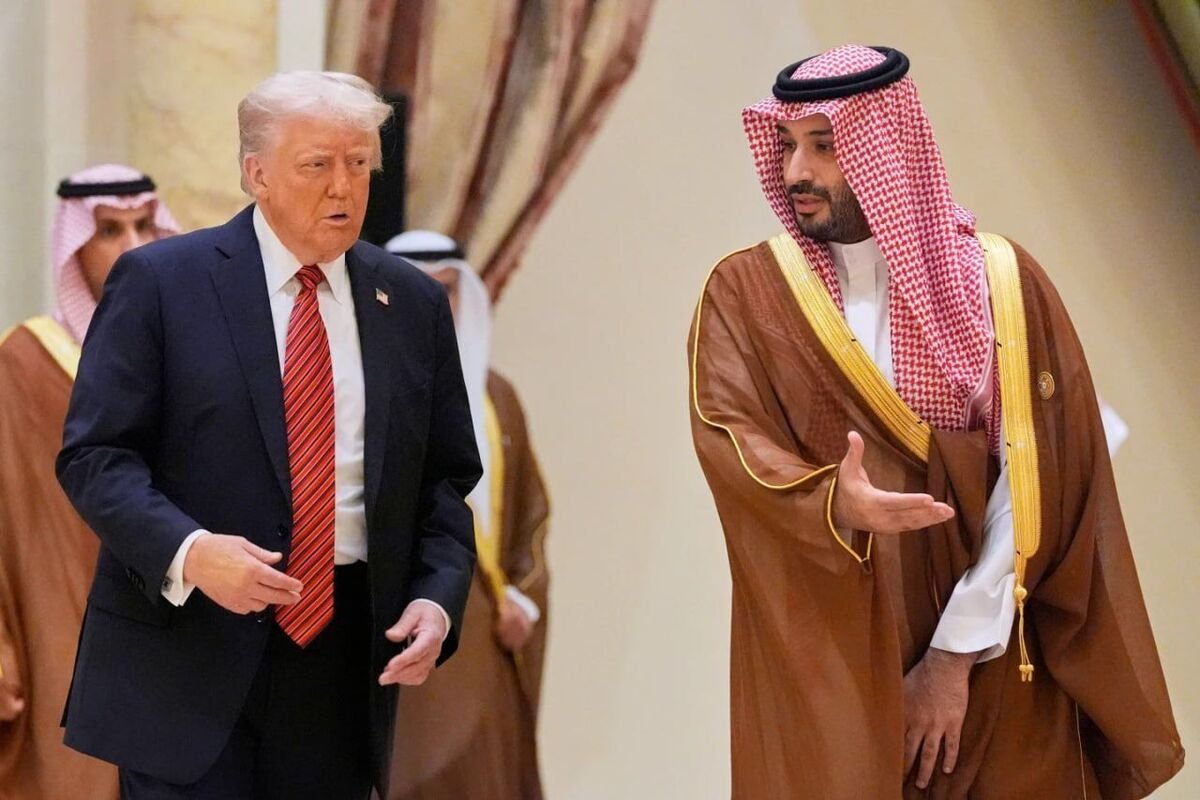
Introduction: Why This Visit Matters
Mona Yacoubian: What does Mohammed bin Salman’s trip to Washington tell us about the current state of U.S.-Saudi relations? What are both sides hoping to achieve, from investment and security guarantees to energy and nuclear cooperation? And how do broader regional dynamics shape Saudi Arabia’s growing regional ambitions?
Amb. Ratney: The crown prince’s visit marks a remarkable turnabout. The last time he visited was seven years ago. After the Khashoggi killing and other issues, a visit seemed off the table. So President Trump inviting him now signals that “he’s back, and the U.S.-Saudi relationship is back.”
Part 1: The Core Agenda – A Defense Pact and AI Ambitions
Yacoubian: What are the key deliverables each side wants?
Amb. Ratney: The Saudi priority centers on two main areas:
- A Durable Defense Agreement: Given regional uncertainty, the Saudis want a lasting gesture of U.S. support. A formal treaty requiring Senate ratification isn’t possible now. Instead, they seek a bilateral defense agreement that cements military cooperation and endures beyond one U.S. administration.
- AI and Advanced Technology: AI is central to Saudi’s Vision 2030 for diversifying beyond oil. They seek predictable U.S. cooperation on exporting advanced chip technologies and assurances of partnership as they build their own AI industry and data centers.
Part 2: Human Rights – A Nuanced Reality
Yacoubian: How should we understand Saudi’s human rights situation?
Amb. Ratney: It’s a mixed picture often oversimplified. There’s been remarkable progress:
* Women’s Rights: Guardianship laws are mostly gone. Women can now travel, work, and live independently without a male guardian’s permission.
* Migrant Workers: Considerable progress has been made on human trafficking and improving conditions, though problems persist (e.g., at the southern border with Ethiopian migrants).
* Religious Tolerance: Private worship for non-Muslims is now tolerated, though opening churches is not imminent.
Key Shortcoming: The opaque judiciary, still heavily based on Sharia law, lags behind the country’s rapid modernization. A modern criminal code for transparency is still being developed.
Part 3: The Stalled Normalization with Israel
Yacoubian: What’s the status of Saudi-Israeli normalization?
Amb. Ratney: The logic of a grand bargain (U.S. defense treaty in exchange for Saudi normalization with Israel) remains valid, but the timing is wrong due to Gaza. Saudi requirements are clear: Israeli forces must withdraw from Gaza, and there must be a credible pathway to Palestinian statehood. Until these are met, normalization is on hold, despite President Trump’s enthusiasm.
Yacoubian: Could Saudi Arabia play a role in Gaza’s “day after”?
Amb. Ratney: They might help with reconstruction, but only as part of a broader regional and international effort tied to a political pathway. They won’t join a stabilization force or get “saddled with the bill” alone.
Part 4: Regional Hedging and Pragmatic Diplomacy
Yacoubian: How did Israel’s strikes on Doha affect regional trust?
Amb. Ratney: The strikes shocked Gulf partners and shook their faith in U.S. reliability. The subsequent Saudi-Pakistan defense agreement was a clear signal of hedging—Gulf states want a primary U.S. partnership but will diversify their security options when they feel uncertain.
Yacoubian: What about Saudi Arabia’s detente with Iran?
Amb. Ratney: They’ve reestablished diplomatic relations, but this is pragmatism, not trust. It’s an “imperfect tool” to de-escalate tensions while they focus on domestic transformation, not a belief that Iran has changed its behavior.
Yacoubian: And Saudi Arabia’s surprising new role in Syria?
Amb. Ratney: With Assad gone, the Saudis are pursuing “imperfect solutions.” They’ve invested in the new leadership and convinced the U.S. to lift sanctions, arguing that Syria needs economic oxygen to stabilize. They see an opportunity to nudge the country toward a better trajectory.
Part 5: The Big Picture – “Becoming a Normal Country”
Yacoubian: How should we interpret Saudi’s massive investments in sports and entertainment?
Amb. Ratney: It’s not “sportswashing.” It’s about becoming a normal country for its young population. They want the recreation and culture the rest of the world enjoys. Denying them that because of human rights criticisms makes no sense to Saudis. This is part of the profound societal transformation underway.
Conclusion:
The visit underscores a kingdom in the midst of a historic domestic transformation, seeking a more permanent and clear security partnership with Washington. While ambitious deals like normalization with Israel are frozen by regional conflict, Riyadh is actively pursuing pragmatic, if imperfect, diplomacy across the Middle East to secure the stability it needs for its future.
https://www.csis.org/analysis/mbs-washington-whats-next-us-saudi-relations