
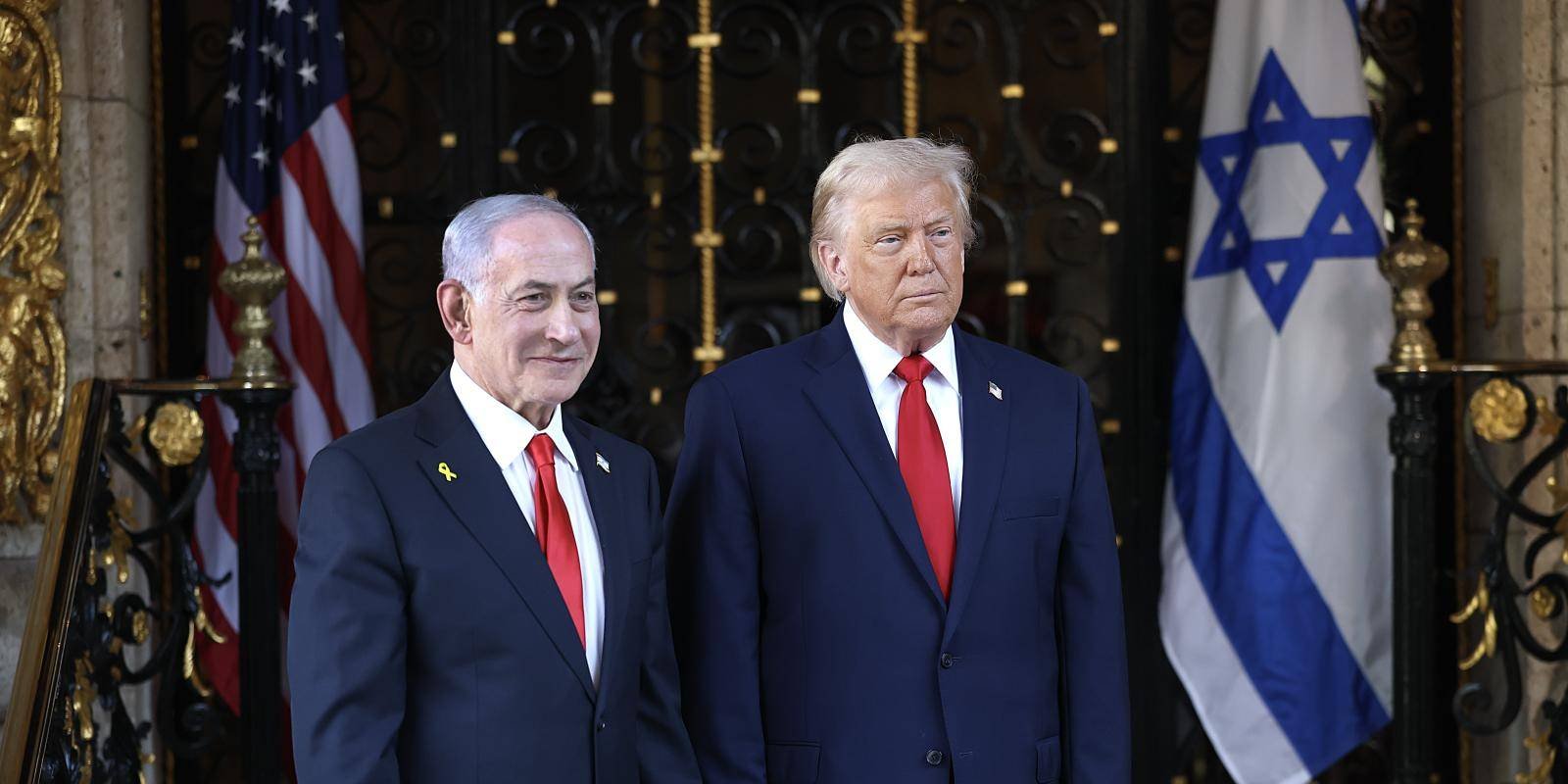
This analysis examines Netanyahu’s high-stakes gamble. With elections looming, he seeks regime change in Iran to secure victory, leveraging Trump’s support. But risks abound: Gulf states may blame Israel; Trump could declare premature victory; Democratic skepticism grows.
Regime change in Iran could secure election victory. But much depends on President Trump. And the risks for Israel’s diplomatic position – and even its US alliance – are high.
If there is an issue that unites the vast majority of Israelis, it is that Iran poses an existential threat to the Jewish state. Moreover, most believe there is only a military solution to this danger, not a diplomatic one. Hence the joint US-Israeli military campaign against the Islamic Republic is not only a response to recent developments. It has been brewing for more than two decades and has its roots in the 1979 Iranian Revolution.
What is somewhat novel on this occasion is the candour with which the leadership of Israel has stated that the war’s objective extends beyond eliminating Iran’s military threat to pursuing regime change in Tehran. That position was immediately and unequivocally endorsed by opposition leader Yair Lapid, along with the rest of the Zionist opposition parties.
Over the past few weeks, there has been a growing sense of inevitability about an imminent US-Israeli attack on Iran. The suspicion was that negotiations in Geneva, and reports about progress made, were a mere smoke screen, part of a deception and psychological war to lull the Iranian leadership into a false sense of security.
It largely worked, at least for the open gambit of this war, which saw Iranian leadership, as was the case in the 12-day war last June, caught by surprise – with Supreme Leader Ayatollah Ali Khamenei killed in the first wave of Israeli strikes.
Israel’s position
Israel entered this war in a complex geopolitical position. Since the disaster of 7 October 2023, it has regained much of its military credibility but equally lost political and moral ground.
It has considerably weakened the military capabilities of most of Iran’s proxies, the so-called Axis of Resistance, whether Hamas in Gaza, Hezbollah in Lebanon or the Houthis in Yemen. And unlike his predecessor, Syrian President Ahmed al-Sharaa is no friend of the regime in Tehran. Moreover, following the 12-day war with Iran, the Israeli air force has gained complete supremacy in the air, if at a heavy price on the home front: Israel’s vulnerabilities have been exposed, due to its geography and high population concentration in a relatively small area.
However, Israel’s political position has been badly undermined. Its use of excessive force, with little regard for civilian lives, especially in Gaza, has put a strain on relations with much of the region, including those countries with which it has normalized relations. Close allies in Europe and beyond have grown increasingly critical of its operations.
A major feature of Israel’s conduct under Netanyahu is its inability (one suspects also unwillingness due to domestic political pressure) to translate military successes into diplomatic achievements. All the fronts it opened over the last two and a half years remain unresolved as the Israeli government constantly repeats the need for ‘absolute’ or ‘total’ victory. Such objectives are bound to result in never-ending wars, yet similar terminology is again surfacing regarding Iran in the current campaign. This causes deep concern among the Gulf countries now under Iranian attack.
Rather surprisingly, the administration of President Donald Trump, which prides itself on rapidly settling conflicts rather than starting them seems, when it comes to Israel, to subscribe to the Netanyahu version of events on most fronts.
In the case of Iran, US negotiators insisted that all demands regarding uranium enrichment, limits on ballistic missile development, and an end to support for proxy groups be accepted in full.
Chief negotiator Steve Witkoff, speaking to Fox News about the negotiations, said that Trump had wondered why the Iranians didn’t simply capitulate to his demands – revealing that from the start, there was no room for compromise, only a military option. This approach was naïve at best, demonstrating inexperience and a lack of understanding of how the Iranian leadership thinks and operates. It would definitely not have led to a deal.
The triumphalist statements by both Trump and Netanyahu at the end of the first day of the war encouraged Iranians to topple their regime. That is likely to make countries in the region, especially in the Gulf, extremely concerned, regardless of what they think about the regime, as it might end in Tehran intensifying attacks on them, and the nightmare scenario of chaos spreading across the region.
Iran’s almost instant response to the US-Israeli airstrikes was to attack Gulf states, which now find themselves caught in a war they tried hard to prevent and paying a heavy price. In the long run, they are very likely to ask themselves whether close relations with Israel are more of a liability than an asset.
If the war – which is already expected to last for weeks – drags on with no resolution, with the Strait of Hormuz and much of the Gulf’s airspace closed, both the US, but mainly Israel, will be held responsible. The fallout will be even worse should the conflict fuel radicalism and further animosity between Sunni and Shia, as concerns some analysts.
Many Iranians and much of the international community would not mourn the brutal regime in Tehran, if it falls. But Israel, already extending its operations to Lebanon, again finds itself in the spotlight for acting under US protection with disregard for international law and lacking any legal basis for its military adventure.
Netanyahu’s bet
Netanyahu has taken a bet that embarking on this war will boost his chances of political survival. More concerning, he is also gambling with his country’s long-term security and international standing.
It is an election year in Israel, and Netanyahu is desperate to stay in power. For the gamble to pay off there must be minimum casualties at home. Both Israel and the US are operating, thus far, on such a best-case scenario.
Netanyahu is also betting that Trump’s support will last until Iran’s nuclear programme and military threat are removed and regime change is delivered. That is risky.
It is not beyond President Trump to declare a victory while there is neither a military nor a political resolution. Furthermore, if this war goes wrong and it costs the Republicans the mid-term elections in the US, the blame will be put on Israel’s doorstep, with long-term implications for the alliance between the two countries. This is at a time when there is also growing scepticism among Democrats about associating the US with Israel’s policies in the region.
By the end of last year’s June war with Iran, the Israeli prime minister declared that the Iranian existential threat of ‘annihilating’ Israel had been removed. In his words, this ‘historic victory’ would prevail for generations. Only 8 months later, the country is embroiled in another, and even more intense war with its main nemesis in the region. And the reason given is exactly the same as back then.