
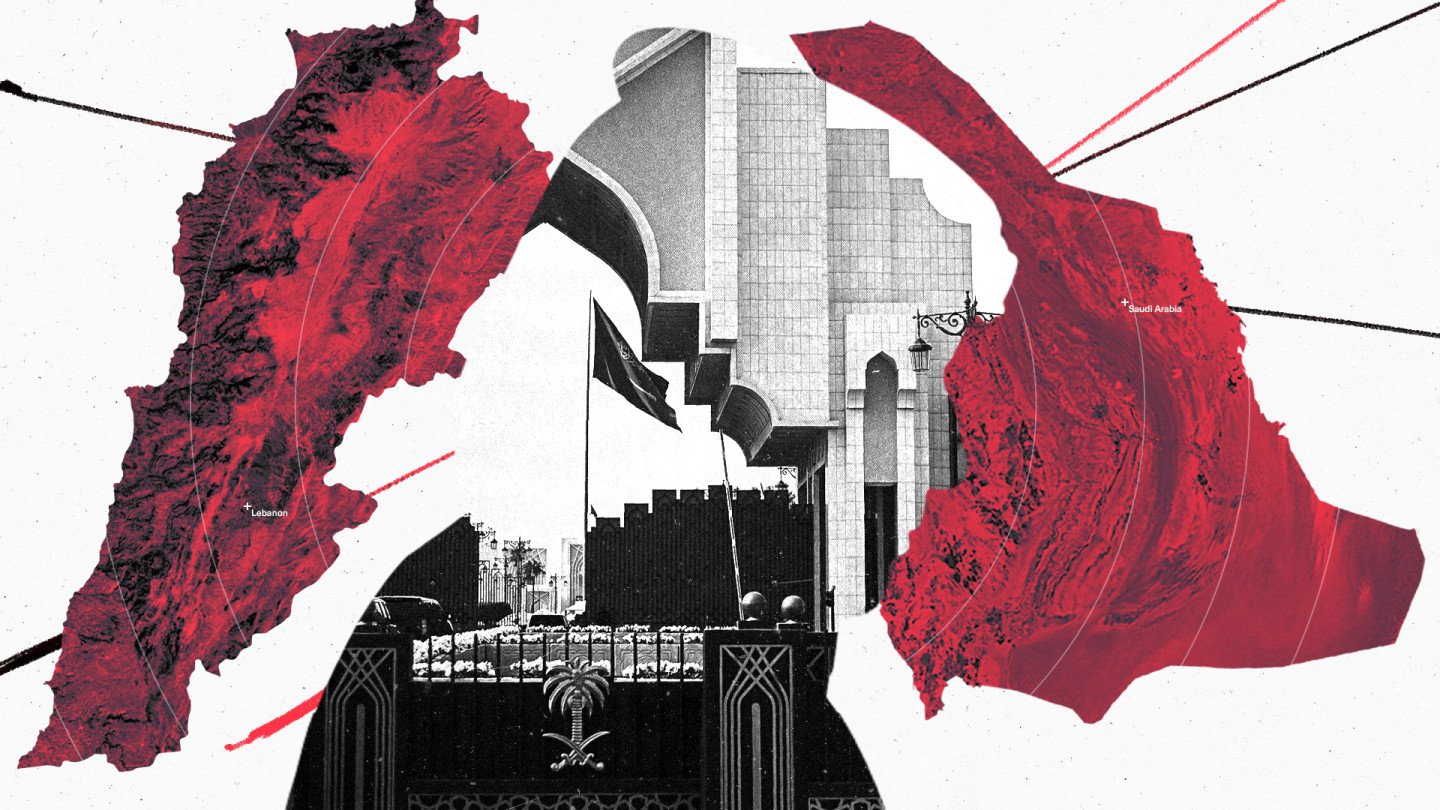
A mobile phone, a fake Gulf accent, and an impoverished plumber posing as a prince were all it allegedly took to dupe some of the biggest names in Lebanese politics.
For years, possibly as far back as 2015, Mustafa al-Hessian was known to his targets only as “Abu Omar”. He claimed to be an influential member of the Saudi royal court with access to senior decision makers in Riyadh.
Hessian was reportedly introduced to potential targets by Sheikh Khaldoun Oraymet, a respected Lebanese Sunni cleric, who is alleged to have helped coordinate the scheme.
In a cash-for-access exchange, Abu Omar promised Saudi backing to Lebanese politicians and business figures looking to advance their careers or secure foreign funding.
Penetrating the Political Elite
The rudimentary scam has been a source of national embarrassment in recent weeks. It emerged that Abu Omar had penetrated the highest levels of government, including an attempt last year to influence the nomination of Lebanon’s prime minister.
The plot unravelled in October, when Hessian was abducted by men linked to businessman Ahmad Haddara, who accused Oraymet of defrauding him. Hessian was beaten and left with a broken jaw before he confessed on camera. But the case became public knowledge only in mid-December, when Hessian was formally arrested.
Hessian was handed over to Army Intelligence, where he was placed under investigation before the case was referred to the public prosecutor. He reportedly told investigators that Oraymet was his handler, and listed the names of those he had defrauded or had contact with.
Among them were former Prime Minister Fouad Siniora, the leader of the Lebanese Forces party, Samir Geagea, and other high-profile figures, Lebanese media reported. All of those mentioned have issued statements denying any involvement.
Public Mockery, Deeper Disillusionment
Public reaction to the Abu Omar affair has been marked by mockery and disdain, but little surprise. It is the latest in a long list of political scandals to rock the small Mediterranean country that is still trying to recover from a devastating economic crisis and the aftermath of a 14-month war between Hezbollah and Israel.
For many Lebanese the episode has struck a deeper nerve: it has exposed the frailties of Lebanon’s sectarian political system and the country’s chronic dependence on foreign states.
“I feel disgusted, honestly,” Paula Yacoubian, a reformist member of parliament, told The New Arab. “It’s a shame to realise that so many Lebanese politicians are willing to pay even a fake Saudi prince just to get to the premiership or to be an MP or minister or whatever.”
Yacoubian said she first heard of Abu Omar in January 2025 while parliament was preparing to nominate a new prime minister. An ex-minister, whom she did not name, urged her not to support former ICJ judge Nawaf Salam because a “Saudi prince” wanted MP Fouad Makhzoumi to become prime minister instead.
Though such levels of infiltration are troubling, Yacoubian and other analysts agree that Abu Omar is unlikely to have swayed the vote. Nawaf Salam, who won the nomination, had overwhelming support from MPs, as well as Saudi Arabia and France.
Clerical Trust and Political Leverage
“It was all about the money and influence,” Yacoubian said, adding that Oraymet benefited from the trust he commanded when introducing Abu Omar to his targets, a character she suspects he invented to gain leverage among Lebanon’s Sunni elite, where Saudi influence has long held sway.
“So, everyone is saying now that they [the victims] are stupid. No, they are not. When it comes to Khaldoun Oraymet you would believe it. The clergy are very respected in Lebanon. Everyone thinks that they are, you know, the good guys. But they are part of the system.”
Lebanese media reported that Oraymet’s son obtained a government contract to process scrap metal at Beirut’s port after the bid supposedly received approval from Riyadh.
Yacoubian said she found it unimaginable that anyone could have believed that Saudi Arabia would be interested in such minor transactions.
Oraymet, who was detained in early January pending further investigation, has also denied all allegations made against him, describing the accusations as a “big lie” and an attack on the Sunni community.
Unsurprisingly, the scandal has received muted response from Riyadh. “I don’t know if the Saudis were aware of the extent of his activities, or if they just didn’t care,” said Yacoubian.
Foreign Influence and a Pattern of Tutelage
However, suspicions around the true identity of Abu Omar were first raised in 2024 when Bahia Hariri, sister of assassinated former Prime Minister Rafic Hariri, was told that a Saudi prince was offering condolences following her husband’s death. Hariri then informed Saudi Ambassador Walid Bukhari, who told her no such person existed.
Analysts say the Abu Omar affair has exposed the reality of foreign meddling in Lebanese politics.“It is striking to see that in 2026 Lebanon is still a country under external tutelage,” Karim Bitar, professor of International Relations at Saint Joseph University in Beirut, told The New Arab.
“And what is particularly depressing is that the Lebanese political class, including the elites, tend to succumb extraordinarily easily to all sorts of pressure.”Since the Ottoman era, this small country with powerful neighbours has rarely experienced true independence. After more than two decades of French rule ending in 1946, Lebanon was later occupied by Israel for 22 years and Syria for 29 years, while Hezbollah, the powerful militia and political organisation formed in the 1980s, is backed by Iran.
“Today we live under some sort of condominium where you have America, Saudi Arabia, France, the Quintet [which also includes Qatar and Egypt], everyone playing a role,” Bitar added. “It is a perfect illustration of the tragic state of Lebanon as a buffer state.”
Observers have suggested that Saudi Arabia’s limited role in Lebanon in recent years left Sunni leaders – who have typically looked to Riyadh for guidance – more vulnerable to exploitation.
A Test for Transparency and Reform
Details of the case remain hard to come by as most of those allegedly involved are unwilling to discuss the matter. For now, the case of the fake Saudi prince is ongoing, but whether the judiciary will make any details public is unclear. Many will see this as a test for institutional transparency.
Although it has mainly affected the Sunni community, analysts say the scandal is a symptom of Lebanon’s sectarian political system, which is divided along religious lines and is heavily reliant on patronage networks.
Yacoubian is not optimistic that such scandals will be avoided in future. At least, not until there are sweeping political reforms to rid the country of its political “mafia”.
“It’s so entrenched in the psyche of the Lebanese that there’s nothing we can do. That we need to surrender. We need to lose hope. Losing hope is the worst thing because this is where they really win big time.”