
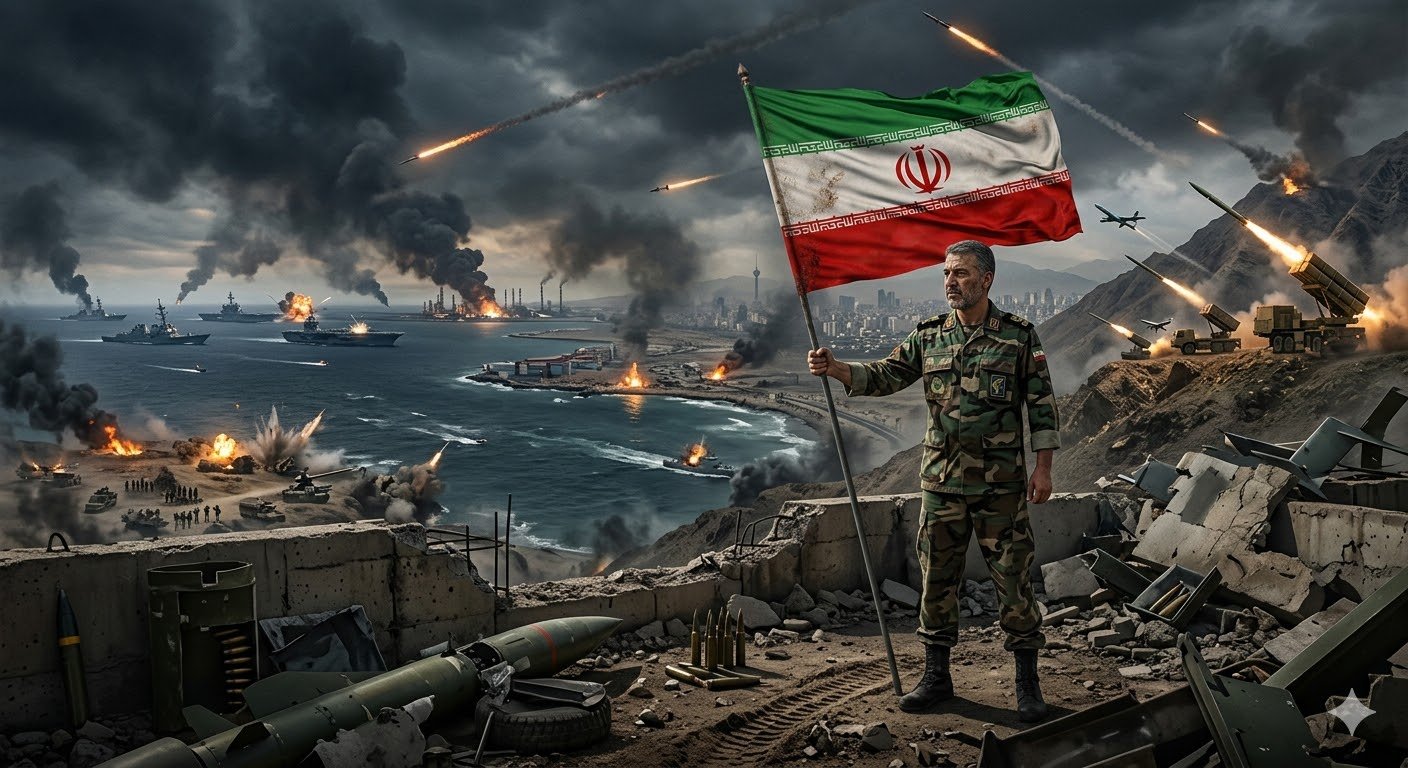
The 2026 Iran war redefines the Middle East’s balance of power. It transformed from a limited strike into a war of attrition, exposing Iran’s resilience, Gulf vulnerability, and global energy dependence. Victory is now about managing costs and shaping a new regional order.
Mero:The military confrontation between the United States and Israel and Iran, which began in late February 2026, was not merely a military clash between several regional actors; it quickly evolved into a multilayered crisis at both the regional and global levels. This war emerged at a time when the Middle East was already facing a range of geopolitical tensions, strategic rivalries, and economic crises. In such an environment, the outbreak of a direct conflict between Iran and two of the principal actors of the Western security system in the region affected not only military calculations but also the overall structure of the regional order.
Understanding this war solely from a military perspective provides an incomplete picture of reality. In fact, this crisis represents the intersection of several major trends that can be summarized as the rivalry among great powers, the transformation in the nature of modern warfare, shifts in the balance of deterrence in the Middle East, the vulnerability of the global economy to disruptions in energy markets, and the emergence of new patterns of protracted and multi-front wars. For this reason, analyzing this conflict requires a multidimensional approach that simultaneously considers its military, political, economic, and strategic dimensions.
What gradually became apparent in the first weeks of the war was the significant gap between the declared objectives of the military operation and its actual consequences on the battlefield. The initial perception of a limited operation capable of rapidly altering the balance of power gave way to a more complex reality in which none of the actors could quickly achieve their ultimate objectives. Under such circumstances, the Iran war has become an example of modern conflicts in which classical military victory has given way to a prolonged competition to manage costs, maintain domestic resilience, and shape new regional balances.
The Strategic Logic Behind the Outbreak of War
The roots of this war must be sought in a combination of several strategic factors. First, the growing concern over Iran’s missile, drone, and nuclear capabilities, which in recent years had become one of the most significant security issues in the Middle East. Second, the geopolitical rivalry between Iran and the axis of Western allies in the region, stretching from Syria to Yemen and resulting in a complex network of proxy conflicts. Third, the shift in strategic calculations in certain regional capitals that believed the conditions were favorable for delivering a serious blow to Iran’s military capabilities and regional influence.
In this context, the military operation against Iran was designed with the aim of weakening its military capabilities and limiting its regional capacity. However, even in the early stages it was clear that such an operation faced a set of structural constraints. Iran is a country with a vast geographic territory, a significant population, and a network of asymmetric military capabilities that have been developed over many years precisely to confront the scenario of a foreign attack. Consequently, any military operation against such a country inevitably carries the risk of turning into a prolonged war.
Transformation in the Nature of the Conflict
One of the most important characteristics of this war is the transformation of the conflict from a rapid military operation into a multi-layered war of attrition. In the early days, the focus was on precision strikes against military infrastructure, naval bases, missile systems, and command centers. The aim of these attacks was to create a strategic shock and quickly reduce Iran’s capacity to respond.
However, Iran’s reaction demonstrated that the country’s defense structure is based on the geographical dispersion of military capabilities, the extensive use of mobile systems, and reliance on asymmetric warfare tools. Such a structure significantly limits the possibility of rapidly eliminating military capabilities. As a result, the battlefield quickly shifted from a short-term confrontation to an attritional competition in which each side attempts to increase the costs of war for the other.
This shift in the nature of the conflict means that the war has entered a stage in which economic, cyber, intelligence, and energy tools become as important as military operations. In such a war, victory does not simply mean destroying enemy forces; rather, it depends on a country’s ability to continue fighting under conditions of economic and political pressure.
Iran’s Structural Resilience
One of the key factors in the evolution of this war has been the level of Iran’s structural resilience. Contrary to the initial assumptions of some analyses that suggested the possibility of a rapid collapse of the political structure, Iran’s political system was able to adapt itself to the new conditions within a relatively short period of time. The structure of power in Iran is based on a network of political, military, and security institutions that have taken shape over decades and possess the capacity to manage major crises.
Within such a structure, the removal of a leader or a strike against certain centers of power does not necessarily mean the collapse of the entire system. In fact, the historical experience of many political systems shows that external pressure often leads to stronger internal cohesion and an expanded role for security institutions. In the case of Iran, signs of this trend have also been observed.
In addition, Iran has attempted in recent years to reduce its strategic dependence on vulnerable structures. The development of indigenous military industries, the expansion of missile and drone capabilities, and the creation of a network of allied forces in the region have all been part of this strategy. Such capacity allows Iran to retain multiple instruments for response even under conditions of intense military pressure.
Strategic Constraints of the Gulf States
Another important dimension of this war is the difficult position of the Arab countries of the Persian Gulf. Economically, these countries are highly dependent on regional stability and the security of energy routes, yet militarily they remain significantly vulnerable to direct Iranian attacks. Their vital infrastructure—from refineries and oil ports to coastal cities and industrial facilities—is located at a relatively short distance from Iranian territory.
Iran’s missile and drone capabilities make it possible, in the event of escalation, for a significant portion of the region’s energy infrastructure to become a target. Previous attacks on oil facilities in the Persian Gulf have shown that even limited strikes can have a considerable impact on the global energy market.
For this reason, the Gulf states face a complex equation. On the one hand, they require security cooperation with the United States and in some cases host American military bases. On the other hand, direct involvement in a war with Iran could expose their critical infrastructure to serious danger. The result of this situation has been the adoption of a cautious policy aimed at maintaining a balance between security cooperation and avoiding escalation.
The Potential Expansion of the War Across Regional Fronts
The Iran war also has considerable potential for geographic expansion. The network of forces allied with Iran across the region could open new fronts in different parts of the Middle East. In Lebanon, Iraq, and Yemen there are armed actors capable of conducting operations against the interests of the United States and its allies.
In Lebanon, following Hezbollah’s full entry into the war, Israel was confronted with one of the most complex military scenarios in its history. In Iraq, the activities of armed groups were able to place U.S. military bases under threat of attack. In Yemen as well, the ability of Houthi forces to target maritime routes or regional energy infrastructure represents an important factor in the security equation.
However, these actors also have their own calculations, and their full entry into the war depends on a range of factors, including the level of military pressure on Iran, the internal situation in the countries where they are based, and broader regional strategic considerations.
Global Consequences and the Energy Crisis
One of the most significant global consequences of this war has been its impact on the energy market. The Persian Gulf remains one of the most important centers of oil production and export in the world, and any disruption in this region can have wide-ranging consequences for the global economy.
The Strait of Hormuz, as one of the most vital energy transit routes in the world, plays a key role in this equation. Any disruption in this route can lead to a sharp increase in oil prices. Such an increase affects not only the economies of industrialized countries but also those of developing nations.
At a time when the global economy is still struggling with the consequences of recent economic and inflationary crises, an escalation of war in the Middle East could significantly intensify economic pressures.
The Behavior of the Great Powers
The behavior of the great powers in relation to this war also reflects the complexity of geopolitical calculations. Russia and China both maintain important relations with Iran, yet neither has any desire to enter into a direct war with the United States. Both countries have attempted, on the one hand, to prevent excessive escalation of the crisis and, on the other, to take advantage of the geopolitical opportunities created by it.
For Russia, increased tension in the Middle East can divert Western attention from the war in Ukraine and potentially shift the energy market in its favor. For China, the crisis may present an opportunity to strengthen its economic and political influence in the region, especially at a time when the United States has concentrated a significant portion of its military resources in the Middle East.
Nuclear Risks and Future Scenarios
One of the most dangerous dimensions of this war is the possibility that it could affect Iran’s nuclear program. External military pressure could increase Iran’s incentive to move toward nuclear deterrence. Under such circumstances, the risk of the spread of nuclear competition in the Middle East would also increase.
If countries in the region come to the conclusion that the only way to guarantee national security is to obtain nuclear capability, the Middle East could enter a new phase of arms competition whose consequences for global security would be extremely dangerous.
The Iran war of 2026 should be regarded as a turning point in the geopolitical developments of the Middle East. This war has demonstrated that the equations of power in the region are undergoing profound change and that traditional instruments of military power alone are no longer capable of determining the outcome of conflicts.
Iran’s structural resilience, the vulnerability of the Gulf states, the complexity of regional proxy networks, the role of the energy economy in global politics, and the cautious behavior of the great powers all indicate that this war is not merely a military confrontation but part of a broader competition to shape the future order of the Middle East.
Under such circumstances, the future of this crisis will depend not only on developments on the battlefield but also on the ability of the actors to manage its economic, political, and security consequences. What is clearer than anything else is that this war, even if it ends on the military battlefield, will leave its effects on the security and political structure of the region for years to come.