
This piece argues the 1979 revolution was a “bait-and-switch”—Khomeini promised democracy but imposed clerical rule. After 47 years of repression, Iranians are secular and ready for genuine change. With Khamenei dead, the counterrevolution is begetting revolution.
To help understand how the Iranian people will react after the American and Israeli attacks end, it is important to realize that the 1979 Iranian revolution was no revolution at all. It was a cunning bait-and-switch game cleverly played by Ayatollah Ruhollah Khomeini, who put himself at the head of the movement.
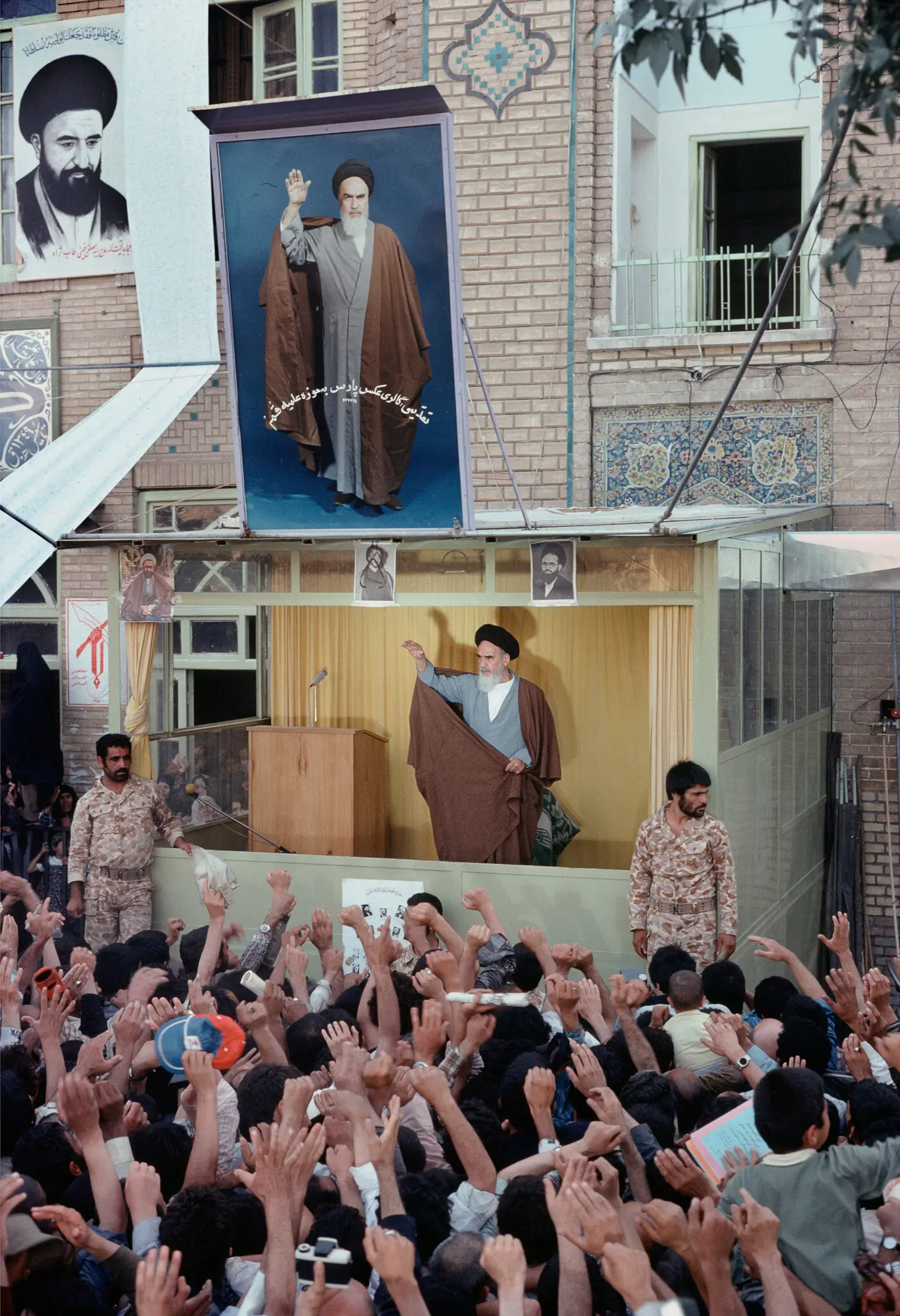
The people of Iran wanted a revolution based on the idea of modern citizenship and a social contract, to bring democracy, freedom, independence and a republic, even an Islamic one but without clerical rule. Ayatollah Khomeini promised those ideas, giving Iranians and the Western powers what they were desperate to hear. In the end, what he orchestrated was a counterrevolution.
Deception in Paris and the Clerical Agenda
In a suburb of Paris, in the months before the overthrow of the shah, the ayatollah gave scores of interviews. He concealed his political ambition and suggested he would ultimately step back from governance, though in past writings he often espoused rule by the clergy. He even wrote a letter to President Jimmy Carter, asking him to defang the Iranian military and promising to keep Iran free of Soviet domination and the country’s oil on the markets. But all along, he was keen on clerical despotism and, as it soon became apparent, harbored deep resentments against the United States.
In another indication of his counterrevolutionary mode, many people in predominantly Shiite Iran believed that a reformed conception of Shiism was needed to make it amenable to modernity. But Ayatollah Khomeini, from his first major book in the 1940s and later as the supreme Shiite religious authority, insisted on keeping traditional rituals and dogmas, thus quashing the idea of modernizing Shiite Islam.
The Brief Illusion and Swift Betrayal
The romance of revolution, ignorance about Ayatollah Khomeini’s past writings and his pose as a defender of a liberal democratic polity in the months before the shah’s overthrow made the bait and switch work, albeit briefly. Iranians from all walks of life, Western leaders and many prominent intellectuals saw him as the flag bearer of Iran’s democratic aspirations.
Shortly after he came to power, a new Constitution came into force that was modeled on Ayatollah Khomeini’s 1970 magnum opus, “Islamic Government: Guardianship of the Jurist,” about the nature of an Islamic state. It posited that people are ontologically like sheep in a flock, unable to manage their own affairs and needful of a guardian — an idea reminiscent of Plato’s theory of a philosopher-king required to manage the affairs of the common people.
For Ayatollah Khomeini, it was not a philosopher that was needed but an expert in Shariah. As he assumed power, Islamic revolutionary courts led by an infamous hanging judge killed members of the old regime and then regime opponents in summary trials. The ayatollah imposed strict social constraints such as mandatory hijab for women. Not surprisingly, women, secular democrats, people on the left and ethnic minorities felt betrayed and began to fight back.
Five Decades of Incremental Revolution
The history of Iran over the past 47 years has been, partly, the tale of the people trying to regain the rights they lost in that bait and switch. One recent scholarly study at the program in Iranian studies at Stanford shows, with granular detail, that from 2009 to 2024 there was one credible, located demonstration every three days, on average, in Tehran alone.
In other words, the real revolution in Iran has been fought, battle by battle, over these nearly five decades. The Green Movement of 2009-10; the Woman, Life, Freedom uprising of 2022-23; and the defiance of over a million people who went to the streets less than two months ago and were murdered in the thousands by the regime are all fronts in this incremental revolution.
Secularization Through Despotic Rule
Iranian politicians and intellectuals — from Reza Shah Pahlavi, who ruled Iran from 1925 to 1941, to Ahmad Kasravi, a defiant and erudite intellectual who wrote, more than 80 years ago, a radical critique of Shiism — could never have made Iranian society as secular, as disdainful of dogma, as untrusting of the Shiite clergy as it is today.
This paradigmatic shift in public opinion is not just the result of the gradual grind of more than a century’s fight for democracy but also — even more crucially and perhaps paradoxically — the consequence of 47 years of despotic, dogmatic and misogynist clerical rule. Ayatollah Khomeini’s successor, Ayatollah Ali Khamenei, came to embody the apparently immovable power of divine dogma, particularly when fueled by petrodollars and propped up by brute force.
Overwhelming Rejection of the Status Quo
The most reliable polling on public opinion in Iran, by the Netherlands-based Group for Analyzing and Measuring Attitudes in Iran, indicates that fewer than 12 percent of Iranians support the Islamic republic’s status quo. The data was collected even before the government’s mass murder of citizens in January.
Now, with the deaths of Ayatollah Khamenei and about 40 other top political or military members, change is at hand, and the dominant question is who will rule Iran next. Given the history of the past few decades, this is the wrong question.
The Right Question: Uniting Around Democratic Ideas
Despite Ayatollah Khomeini’s charisma and because of Ayatollah Khamenei’s brutality, most people in Iran are now convinced that what they bought in 1979 as panacea for a corrupt, repressive monarchy was no better than snake oil. The right question today is: What are the ideas for democratic governance, for fixing the economy, for keeping centrifugal forces at bay and for maintaining sovereignty and good relations with the world around which Iranians (inside the country and out) can unite, and how can they do so in a way that will deliver Iran out of political paralysis and economic morass?
Uncertain Leadership and the Coming Transformation
As the regime now tries to put its badly shaken structure back in order, some had hoped that it would use this opportunity to create a democratic opening, accepting the people’s political and human rights, and normalize relations with the world, particularly the United States.
The first major appointment, of Ahmad Vahidi as the commander of the Islamic Revolutionary Guards Corps, is not promising. It is not clear whether the appointment was ordained by Ayatollah Khamenei or imposed by the corps. Mr. Vahidi has served in many posts, including ministerial portfolios, and is directly implicated in the mass murder of demonstrators in 2022.
It’s not clear what role, if any, the new interim trio of officials in charge of Iran since the attacks had in the appointment. The trio is made up of President Masoud Pezeshkian; Gholam-Hossein Mohseni-Ejei, the head of the judiciary; and Ayatollah Alireza Arafi, a member of the powerful 12-man Guardian Council. Ayatollah Arafi is among those often named as a possible successor to Ayatollah Khamenei, who had handpicked him to lead a global university network to promote Ayatollah Khamenei’s vision of Shiism.
The policies of the new leadership and the identity of the next supreme leader are unknown. The appointment of a hard-liner like Mr. Vahidi does not necessarily mean that the regime will choose the path of widening or prolonging the current war or even continuing in its practices of brutality or sponsoring terrorism. Even if the Revolutionary Guards and the regime try to continue the rigid and failed policies of Ayatollah Khamenei, the population is not likely to be satisfied with their continuation — politically, socially and, especially now, economically.
Ayatollah Khomeini dismissed the idea that there were economic roots for the 1979 revolution; the economy is for “donkeys,” he infamously said. The purpose of the revolution, he opined, was to create an Islamic Iran and pious Muslim men and women. Ayatollah Khamenei doubled down on the idea, making culture wars a key component of his strategy of control and repression.
But the economy is a clear source of constant threat to the regime, and the new secular women and men of Iran are unwilling to accept anything less than what they were initially promised before being deceived nearly half a century ago. The machinery of the regime may survive today. But the counterrevolution of yesteryear is begetting the revolution of tomorrow.