
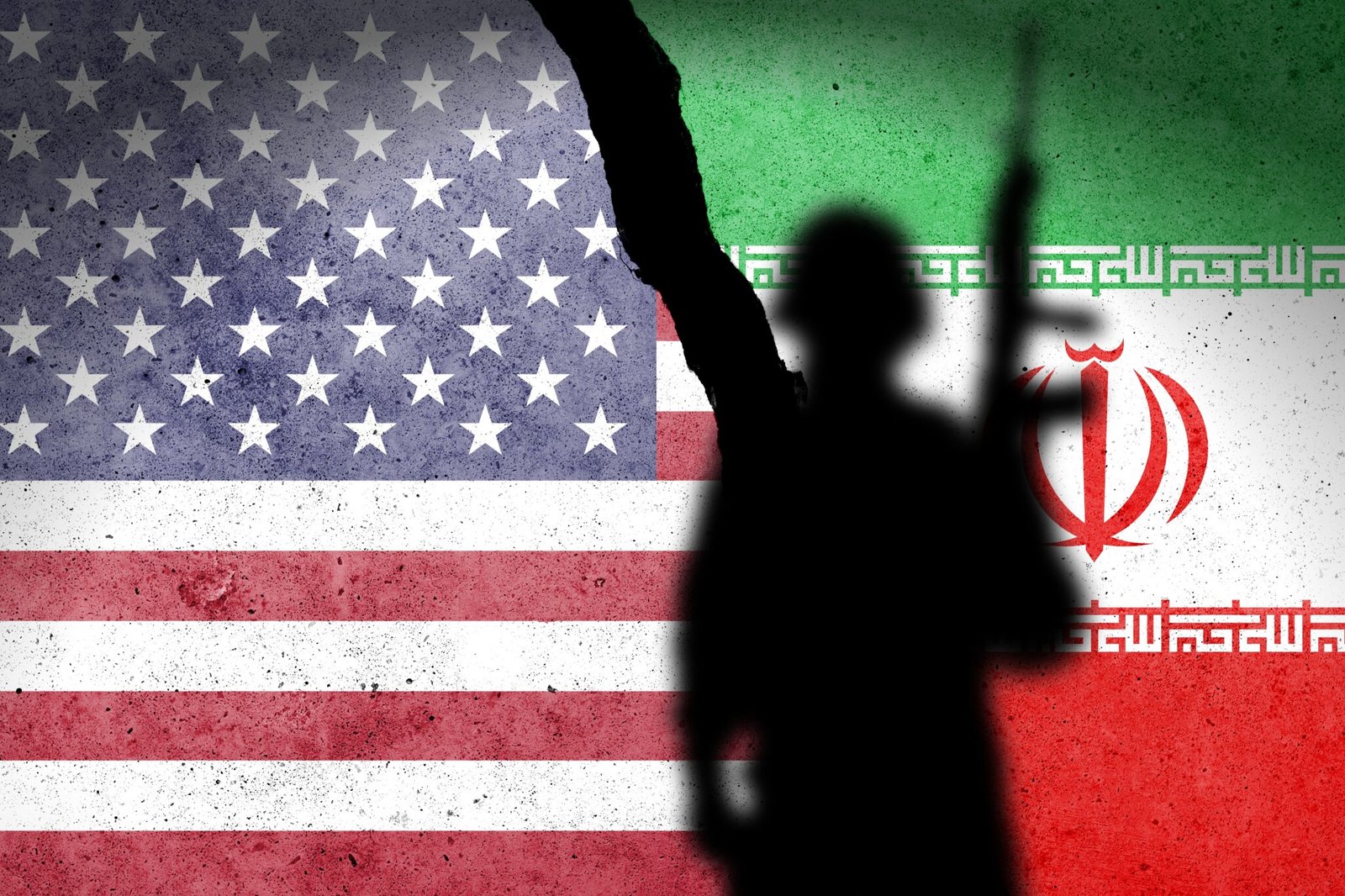
A US strike on Iran aligns with MAGA priorities by weakening the China-Russia-Iran axis, securing energy dynamics, and bolstering America’s position ahead of a potential conflict with China, potentially averting a larger global war.
A US strike on Iran, even one that does not result in regime change, represents a strategic opportunity that aligns well with MAGA priorities. Weakening Iran would curb the China-Russia-Iran axis, secure energy dynamics, strengthen America’s position ahead of potential conflict with China, and reduce the long-term risk of a larger global war.
As the Trump administration deliberates over how to manage the Iran crisis, countries across the region and around the world are watching closely. Alongside the moral considerations supporting a strike on Iran — after all, it was the president himself who promised the Iranian protesters facing massacre that help was on the way — there are also hard-nosed practical considerations. The conditions for striking Iran today are more favorable than they have ever been or are likely to ever be again.
Iran’s Moment of Maximum Weakness
The Iranian regime has been severely weakened by the runaway hyperinflation gripping the country and its brutal suppression of protests in early January. Senior regime figures are reported to be smuggling their wealth abroad, and there have even been defections by high-ranking diplomats — all indications of cracks in the regime’s foundations. Beyond the regime itself, Iran’s air defense system has yet to recover from the 12-day war last June. The urgency with which Iran is now reportedly importing Chinese air defense systems underscores its operational distress and raises serious doubts about its ability to integrate these acquisitions into a meaningful, cohesive defensive capability.
The Gulf’s Quiet Calculation
The Gulf states, terrified by Iran’s bullying threats against them and their oil exports through the Strait of Hormuz, have rallied around efforts to de-escalate. But their true interests should not be misunderstood. Saudi Arabia, the United Arab Emirates, and the majority of Iraq’s Shiite population would welcome liberation from Iran’s suffocating grip. Claims that Riyadh and other regional capitals prefer a weakened but familiar Iranian regime over instability are unrealistic. An Iranian regime that survives the current crisis would emerge stronger and more aggressive, both domestically and regionally. The threat it poses is likely to grow, not diminish.
More importantly, assuming Iran will eventually need to be restrained by force, the potential damage to regional states today is far lower than it was in the past and far lower than it is likely to be in the future. The 100-200 missile launchers that remain in Iran’s arsenal after a similar number were destroyed in the June 2025 war could cause serious damage, but only if their effort is concentrated. Iran is threatening to target all US bases and allied facilities across the region — but if it disperses its missile attacks in line with those threats, the targeted states’ individual missile defense efforts are likely to be far more effective. Israel, the most likely target of a concentrated Iranian attack, is the one partner willing to carry that burden.
MAGA’s Case for War
The core of Washington’s dilemma appears to lie in the tension between entering another distant war and satisfying the isolationist element of the MAGA agenda. The real question, therefore, is not whether striking Iran is morally justified, whether doing so would be the right move for the Middle East, or whether the fleeting military window of opportunity that currently prevails should be taken. No matter what the Trump administration decides to do, its decision should be grounded in a direct and clearly defined American interest.
That interest can be framed along two axes: strengthening the US economy and preparing for the looming prospect of a possible, and potentially imminent, war with China.
These two dimensions are closely linked. It is no coincidence that the current Trump administration began its term with a trade war and the imposition of protective tariffs. Even more than the Chinese threat to Taiwan, it is the trade imbalance with China and global competition over rare minerals and control of supply chains that are placing the US and China on a collision course.
What senior MAGA voices should now be considering is not whether a new regional war is a good idea. The more relevant questions are how a limited war against Iran could spare the US a third world war that could plausibly erupt during the current administration’s tenure, and how America’s chances of winning such a war can be improved should it nonetheless break out.
China’s Achilles’ Heel
Framed this way, the answer is fairly clear. The US would struggle to fight a war in the South China Sea while leaving a strengthened, rearmed and revenge-hungry Iran on its flank in the Persian Gulf. An Iran in that condition would also guarantee the steady flow of oil that would be critical to China’s wartime production and overall war effort. It is no accident that China is now urgently arming Iran.
In the alternative scenario — that is, an Iran whose regime has been either replaced or effectively subordinated through the destruction of its defensive capabilities — the US secures a safe Middle Eastern flank and denies China the energy security it so desperately requires in both peacetime and wartime.
Iran is not the only factor. The destruction of Iran’s military capabilities and absorption into the American sphere of influence would reverberate powerfully across the region, sharply limiting the ability of regional states to continue hedging between Washington and Beijing as they do today. Would China dare confront the US if its only remaining friendly energy supplier is Russia? How would global competition over critical minerals look under such circumstances?
The Ghost of the 1930s
We have invoked the prospect of World War III, and this merits some explanation. China is not the only power seeking what it views as its rightful place in the world. Vladimir Putin’s war in Ukraine stems from precisely the same motivation.
Despite the administration’s hopes, Putin appears unimpressed by Washington’s negotiating skills. Not only is peace in Ukraine nowhere in sight, but analysts point to Russian preparations for an expanded war in Europe. Russian provocations, particularly in the Baltic region, reinforce these assessments. The destruction of Iran’s air defense systems, navy, and missile forces, even if this does not trigger the internal collapse of the ayatollahs’ regime, would likely have a chilling effect on Russian ambitions as well.
The world is now in the midst of an accelerated arms race among powers seeking hegemony, intertwined with aggressive competition over spheres of influence, trade routes, rare earths, and international standing. The international norms established after the last world war have been hollowed out. Yet the comparison to the pre-WWII period is misleading. There is nothing deterministic about the path toward a global conflict. We do not know what alternative history might be taught in high schools today had Britain, France, and the US intervened against Japanese actions in China, Italian aggression in Ethiopia, or German involvement in Spain in the 1930s.
Strike Now or Pay Later
Returning to the MAGA movement, 1930s American isolationism did not spare the nation WWII. Making America great again depends on maneuvering circumstances to the country’s advantage, in terms of both trade and resource competition and improving the odds of avoiding entanglement in a large and devastating war. For all these reasons, weakening the China-Russia-Iran axis is a sound strategic calculation. Striking Iran, stripping it of its military capabilities, and giving its citizens another opportunity to free themselves is the correct course of action from this perspective.This calculation is not without risk. Any military operation carries dangers, and casualties are to be expected. But the potential gains are substantial even under scenarios of only partial success. This may well be our last chance to draw a line in the sand before the great war arrives.