
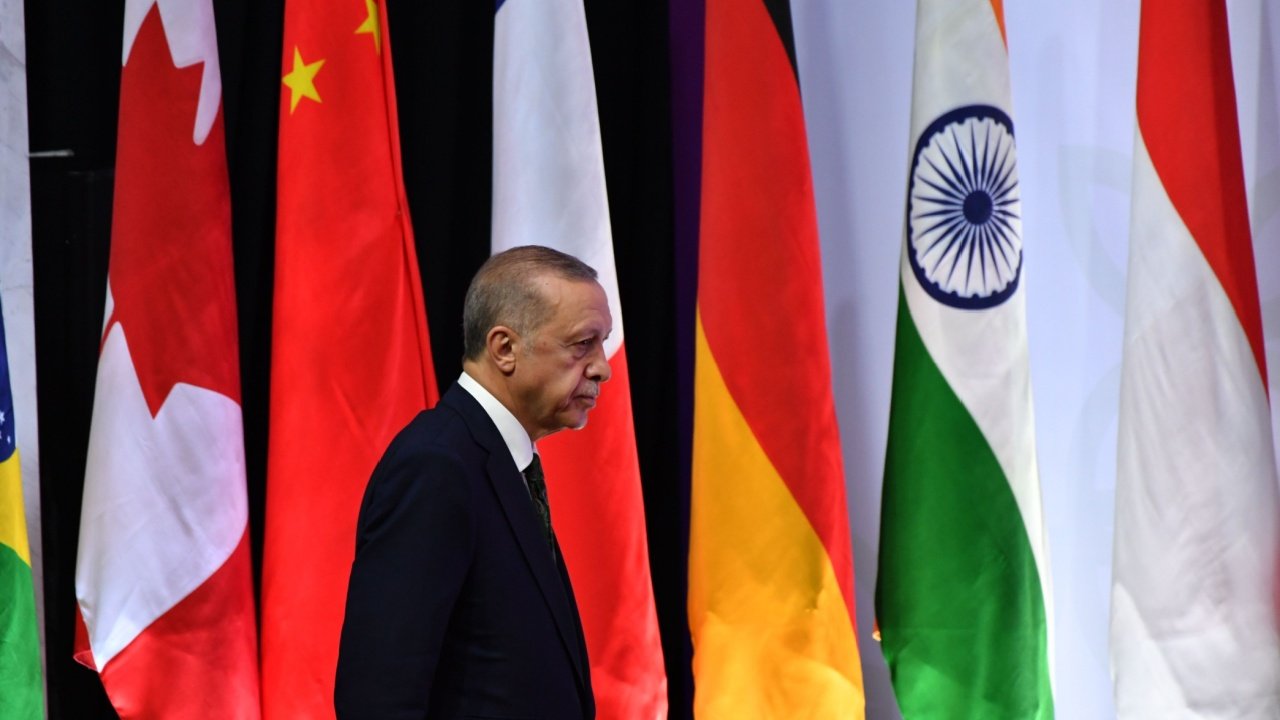
Since he was elected mayor of Istanbul in 1994, Erdogan has had “a grand plan” to overturn Turkey’s secular constitution and replace it with one in keeping with Islamic values. By that time, he had planned for a strong presidency, which would concentrate all power in the hands of one person. By 2017, Erdogan had achieved this constitutional vision via amendment.
Infrastructure, Development and the AKP Model
Erdogan’s tenure as mayor was marked by reforms to Istanbul’s infrastructure, waste management, water supply, and traffic congestion. This has become the hallmark of AKP rule, with massive investments in road networks, airports, bridges, and dams, as well as in schools, hospitals, and health care. The development of Turkey’s defense industry is not only a source of export income but also a reflection of Turkey’s strategic importance.
Following Turkey’s economic collapse in 2001, economy minister Ali Babacan, who resigned in 2015, is credited with overseeing Turkey’s economic recovery. The early years of AKP rule are marked by growth, and in 2008, the EU recognized that Turkey had a functioning market economy, a criterion for membership. In 2013, Turkey discharged its debt to the IMF.
Economic Fragility and the Albayrak Era
However, American economist Jesse Colombo warned that Turkey’s explosive growth, predicated on foreign “hot money” inflows and ultra-low interest rates, was heading for a bust. The appointment of Erdogan’s son-in-law, Berat Albayrak, as finance minister in 2018 only made matters worse.
Social Base and the Rise of the “Anatolian Tigers”
The AKP’s electoral base consists mainly of its pious supporters in the Anatolian heartland, and the removal of the headscarf ban, which later applied to the military, was a significant step in integrating this major segment into Turkish public life.
AKP rule also reflected a transfer of power in Turkey from the old, Kemalist middle class to a new, conservative and Islamic middle class, the so-called “Anatolian Tigers,” who are responsible for industrial production in cities such as Konya, Kayseri, and Gaziantep in Anatolia.
Confronting the Kemalists and the Gülen Movement
Two major elements of Erdogan’s rule have been the showdown with the Kemalist (secular) opposition, which has been the main stumbling block in his attempt to impose Islamic rule on Turkey. The other is the showdown with his erstwhile ally, the Turkish imam Fethullah Gülen, whose movement provided the educated cadres Erdogan needed.
The “Ergenekon terrorist organization” was a catch-all concept, which in 2013 led to the conviction of 242 out of 275 defendants accused of plotting to overthrow the government. Erdogan declared he was glad to be called the prosecutor of the case, “because prosecutors are there for the people. Our main concern is to defend the rights of people.”
In the Sledgehammer case, concluded in 2012, 330 serving and retired members of the Turkish military were convicted of plotting to stage a coup in 2003 and sentenced to lengthy jail terms. The evidence was demonstrably fabricated and, together with the Ergenekon case, was intended to cripple the opposition.
However, in June 2014, Turkey’s Constitutional Court ruled that the defendants’ rights had been violated due to flawed evidence and ordered their release. The previous December, a corruption scandal erupted, involving Erdogan’s family, government ministers, and leading bureaucrats. Erdogan called this “a judicial coup” instigated by the Gülen movement, and needing the support of the military, had called for a retrial.
The showdown between Erdogan and Fethullah Gülen followed in July 2016, when officers who feared dismissal as Gülenists at a meeting of the Supreme Military Council in August attempted a coup. Whether the MIT (National Intelligence Organization) had received prior information remains unclear, but the ensuing purge has dismantled the Gülen movement.
The Judiciary as an Instrument of Power
Nevertheless, a precedent has been established. The Turkish judiciary has proven an effective instrument in suppressing opposition to Erdogan’s rule. Following the imprisonment of Kurdish leader Selahattin Demirtas in 2016 and that of civic leader Osman Kavala in 2017, Erdogan considers the rulings of the European Court of Human Rights calling for their release “null and void” for Turkey.
Last March, the turn came to Istanbul’s mayor, Ekrem Imamoglu, who is considered Erdogan’s most likely successor if there were an even playing field. Now the leader of the CHP (Republican People’s Party), Özgür Özel, and the party’s elected mayors have come into the AKP’s crosshairs. Özel and other CHP deputies face the removal of their parliamentary immunity as a prelude to prosecution.
The ultimate aim is to dismantle the CHP, established in 1923 by the founder of modern Turkey, Mustafa Kemal Atatürk.
Electoral Defeat, Crackdown and Public Disillusionment
In October, the CHP published a comprehensive account of the AKP government’s assault against the party: “The Judiciary Against the Ballot Box: The Anatomy of a Coup.” It deals not only with the 16 CHP mayors as well as municipal officials who have been imprisoned, but also with journalists and media figures, as well as satire and entertainment figures who have been arrested. It lists the criminal charges against them, including membership in an armed terrorist organization, bribery, corruption, attempting to overthrow the government, and insulting the president.
In March 2024, the AKP suffered a landslide defeat in the local elections, and the present crackdown on the CHP and pro-Kurdish DEM (Peoples’ Equality and Democracy Party) reflects the AKP’s fear of the outcome of the next general election.
Already one year later, 13 municipalities with CHP and DEM mayors were replaced by government-appointed trustees. This means residents no longer feel they are governed by someone who understands their local and cultural needs, but by a centralized state power. This results in either political apathy or increased participation in protests. It should be noted that a significant proportion of voters in the affected municipalities are young people.
Turkey’s foreign minister, Hakan Fidan, who is among the contenders to replace Erdogan, has said Turkey’s bid for EU membership will remain out of reach unless there is a fundamental shift in the bloc’s mindset. The European Parliament’s rapporteur for Turkey, Nacho Sánchez Amor, who has called the rule of law in Turkey “a complete disaster,” retorted, “The problem with Turkey is not religion. The problem with Turkey is democracy.”
In December, Metropoll, a leading Turkish polling and social research center, surveyed the prevailing mood in Turkey, “Societal burnout, trust and expectations for 2026,” and the conclusion is not encouraging. Turkey falls within the high burnout range, in which two-thirds of the population live under the combined pressures of overwhelming anxiety about the future and a pervasive sense of helplessness.
Violence and crime, together with politics and the economy, are the primary sources of stress, and there is a very low level of trust in religious officials and spiritual support providers—instead, 70 percent turn to the family and almost 9 percent to friends.
Three years ago, President Erdogan declared, “We are walking towards the Century of Türkiye hand in hand with our youth.” He may be disappointed. Consistent with similar findings, Metropoll reports that more than 40 percent of 18- to 34-year-olds would prefer to live in another country. Almost 47 percent of respondents expect Turkey’s overall situation this year to be worse.
A forum for Turkish public sector employees has noted that there are enforcement files for non-payment of debts against 25 million people. The fact that one in three people in Turkey, with a population of 86 million, face foreclosure indicates the extent of the economic crisis.