
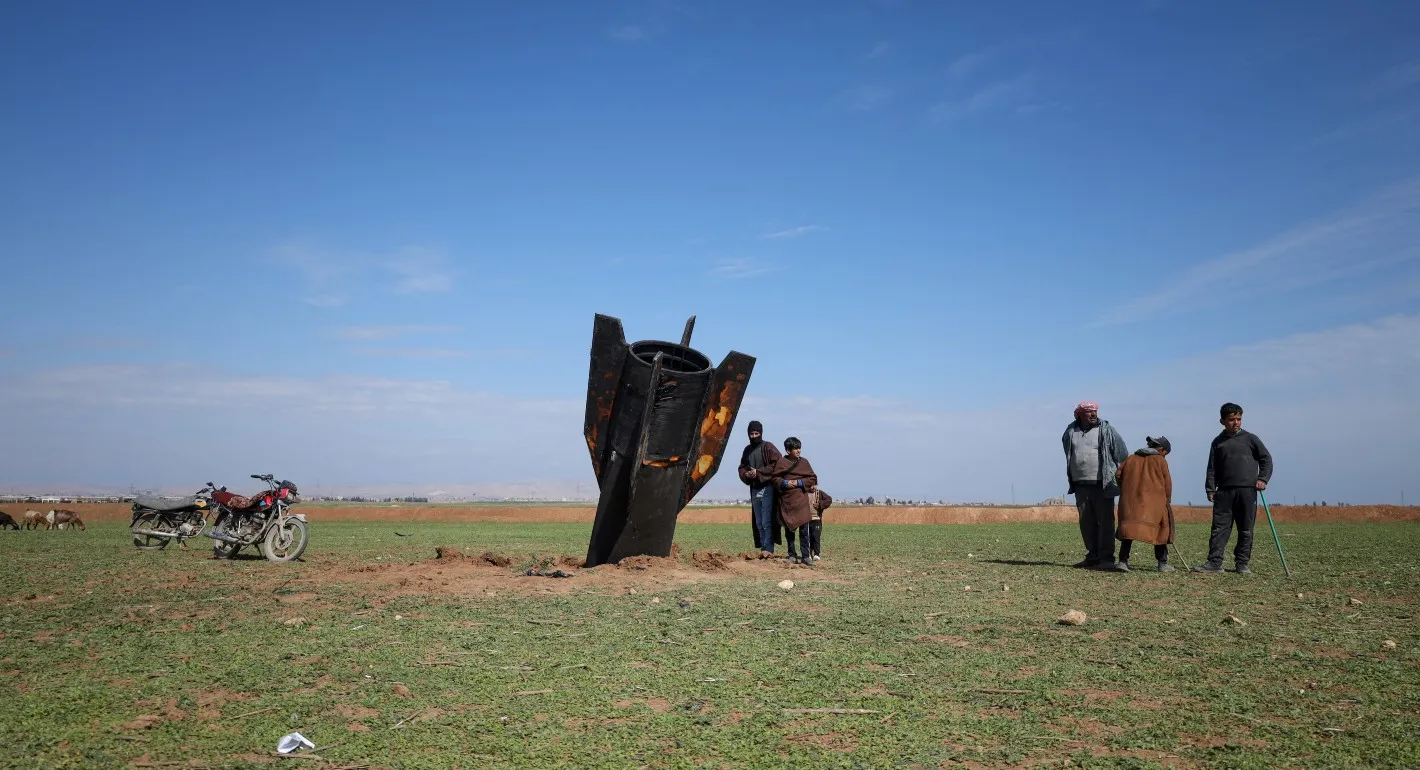
Turkey fears the US-Iran war could destabilize its region, particularly if Washington uses Kurdish groups hostile to Ankara. It urges US restraint, warning that ignoring Turkish concerns over spillover and proxies could fracture the fragile NATO relationship.
Turkey is on edge.
The risk of the U.S.-Israeli war against Iran widening with direct national security consequences has become more acute for Ankara after the interception of an Iranian missile ostensibly bound for Turkey. Meanwhile, Turkish leaders are also concerned with news reports that Washington is discussing possible engagement with Iranian opposition groups, including Kurdish actors, and considering arming them to spark an internal uprising against the Iranian regime. Although Turkey’s Kurdish party rejected the idea and some analysts are skeptical it would even work, such discussions revive still-fresh memories of a similar disruptive experience in Syria, where U.S. cooperation with offshoots of the Kurdistan Workers’ Party (PKK) generated lasting tensions between the NATO allies.
Ankara does not view externally driven regime change in Tehran, particularly through large-scale military action or the use of proxies, as a stabilizing solution. How Washington proceeds, and the extent to which it supports Israel’s more ambitious objectives in the war against Iran and its regional designs, will have a direct bearing on Turkish interests. This, in turn, could make the Iran war the next stress test in U.S.-Turkish relations. Unless Washington and Ankara navigate this moment with care, the fragile momentum that has emerged in their relationship could unravel. Tensions could emerge particularly if Washington pursues regime change strategies in Iran through expanded cooperation with Kurdish actors that are hostile to Turkey, or if it supports regional policies that Ankara believes could destabilize its immediate neighborhood and undermine its interests.
Under the ruling Justice and Development Party (AKP), Turkey has experimented with the idea of meddling in the domestic affairs of some of its neighbors and pursuing more assertive policies. Yet, despite an enduring culture of competition with Iran, Ankara rejects external designs on its rival. It remains essentially a status-quo-oriented actor. This position reflects a long-standing belief that externally driven attempts to reorder the Middle East have historically produced instability rather than durable political outcomes. Limiting such external interventions, at the same time, opens more room for Turkey to maneuver strategically, which is presumably another main consideration in this approach.
Ankara’s recent attempts to prevent the current escalation were also broadly informed by this logic. According to Turkish Foreign Minister Hakan Fidan, Turkey’s prewar diplomatic efforts between the parties ultimately failed because of Tehran’s own miscalculations. Now, amid often confusing explanations from Washington about its war aims, Ankara is increasingly concerned about the aftermath. Once again, Turkey finds itself bracing for regional disruption with serious security implications, and the United States is at the center of events. In this context, Turkish policymakers are evaluating how a widening confrontation could reshape the broader regional order.
From Ankara’s perspective, an escalation that destabilizes Iran while further polarizing the Middle East would be detrimental to regional interests. While serving Israel’s strategic preference of regional fragmentation, it would undermine Turkey’s strategy of regional consolidation through a patchwork of alliances and rings of collaboration around shared economic, political, and security interests. Under the concept of regional ownership, Ankara hopes to work with countries in the region to assume a greater share of the responsibility for regional security, stability, and peace. This, it believes, aligns with U.S. expectations for its own limited role in the region and would allow Washington to shift its attention to different priorities. A fragmented landscape marked by persistent confrontation, in contrast, would presumably require Washington’s continued attention. This reinforces Ankara’s view that Washington should weigh Turkish concerns carefully when considering Israel’s counsel on regional security.
In trying to make sense of American objectives in Iran, Ankara detects a key difference from Israeli motivations and remains optimistic it can influence Washington’s thinking. President Donald Trump’s approach is largely perceived as tactical and shaped by a diverse set of factors, including domestic ones. His commitment to a decisive conflict or regime change is not considered to be absolute or irreversible. Israel’s motivations, by contrast, are viewed as more structural and long term, aimed at reshaping the regional balance of power in ways that marginalize others, most notably Turkey.
This belief is reinforced by increasingly sharp rhetoric regarding Turkey from Israeli officials, including Israeli Prime Minister Benjamin Netanyahu’s stated ambition of confronting emerging axes in the region. The escalating rivalry between Turkey and Israel is already visible across several theaters, from Syria and the Eastern Mediterranean to the Horn of Africa. The current crisis risks extending this competition into Iranian soil as well, especially amid signs of Israeli and U.S. support for Kurdish factions, including the PKK-affiliated Kurdistan Free Life Party. Turkish policymakers worry that Israel’s influence over Washington’s regional thinking could pull the United States toward a posture that overlooks Ankara’s immediate security interests and disregards wider implications for long term regional stability.
Ankara also believes that Iran’s choice to expand the confrontation by striking targets in the Gulf countries was a mistake. Beyond narrowing the diplomatic space for a quicker end to the current military confrontation, Tehran made it more difficult to move away from an endless cycle of tension between Iran and its Arab neighbors by entrenching some countries’ belief in the Iranian problem, rather than inviting a new, positive paradigm. In Turkey’s eyes, the attacks in Gulf countries lent credence to Israel’s assessments about the need to forcefully take down the Iranian regime, overshadowing the region’s previously shared concerns, namely the situation in Gaza and Israel’s muscular regional posture.
At this juncture, Ankara’s expectation from Washington is twofold. First, that it manages the confrontation with Iran without triggering direct security concerns for Turkey or any form of prolonged regional disruption. Second, that it restrains Israel, including its impulse to confront Turkey as a rival, just like last spring when Trump publicly advised Netanyahu to be reasonable when it comes to his disputes with Turkey.
If the confrontation with Iran deepens, particularly in ways that involve regime change with a spillover effect on Turkey or security implications as a result of expanded cooperation with hostile Kurdish militants, this war could quickly evolve into another fault line in U.S.-Turkish relations. Avoiding such an outcome will require careful management and sustained diplomatic engagement focused on ending the conflict soon and working toward a self-sustaining regional security architecture that brings a shared sense of security and stability to the wider region. Otherwise, Washington may fail the stress test.