
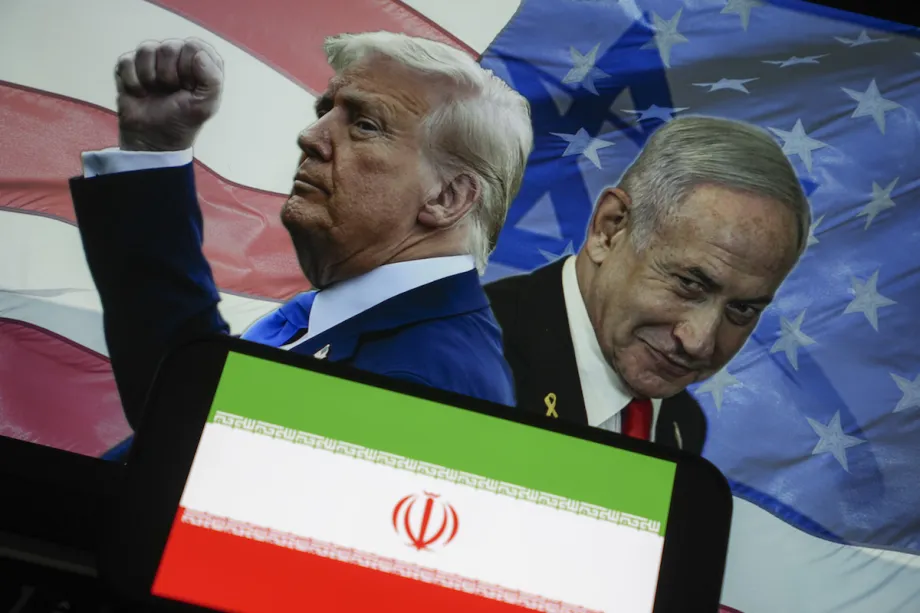
Today, Benjamin Netanyahu meets Donald Trump at the White House for the seventh time since Trump was reelected. Ostensibly, it is a reunion of old allies; in reality, it is a war council of desperate men. As they lean over maps spread across a large table, the atmosphere will be thick with the scent of gunpowder and political calculus. The primary agenda is not just a strike against Iran, but the preservation of their own legacies and possibly political lives.
Senior military and national security officers will provide an update on the latest buildup in the Persian Gulf. Trump, ever the sceptic of “forever wars”, will likely pierce the briefing with the same blunt interrogations that haunt the Pentagon.
Netanyahu is reported to be bringing with him “sensitive” military and security information to give to the Americans to help in the destruction of important targets. Netanyahu is determined to convince Trump that a second strike is in both their interests.
The shadow of 2025’s “Operation Midnight Hammer” looms large over this meeting. For Netanyahu, the June war failed to deliver the knockout blow that might have silenced his critics. The political dividends both leaders expected never materialized. Despite Trump’s boasts that the US “obliterated their nuclear program,” a recent Defense Intelligence Agency (DIA) assessment suggests the B-2 Spirit strikes only delayed enrichment by months, not years. This time, the stakes couldn’t be higher: it’s life or death for Netanyahu. Trump will demand to know:
The geopolitical reality is grimmer than the rhetoric. As Lt. Col. Jonathan Conricus of the Foundation for Defense of Democracies recently noted, while the US has the assets in place, the “tactical operational opportunity” is narrow. Iran is no longer just a permanent regional nuisance; it is a wounded animal with a formidable, overhauled arsenal.
Both men now confront political landscapes that have turned treacherous, unpredictable, and tricky to navigate. Their political destinies are inextricably intertwined to a great degree over what happens next vis-à-vis Iran; they are joined at the hip by a shared fear of the “gallows.” For Trump, the 2026 midterms are a referendum on his second term; should the GOP lose the House and Senate, impeachment, the ghost that never truly left him, will return with a vengeance. With his 80th birthday approaching in June and term limits foreclosing any political future beyond 2028, Trump teeters on the precipice of lame-duck irrelevance. Netanyahu’s predicament is even more visceral. Facing three corruption counts and a looming November election that polls suggest he could lose. Bibi needs a total victory to avoid spending years behind bars.
Trump and Netanyahu are like two riders galloping at full speed across a crumbling mountain bridge. Suddenly, a wide chasm opens in the road. They must summon all their cunning to leap across, or crash into the ravine of historical ignominy below.
Trump, the quintessential showman, thinks he can “wink” his way through domestic turmoil and escape impeachment. Yet his vocabulary remains a patchwork of superlatives that fail to mask his declining popularity. As a speaker, he is no Reagan, and certainly no Kennedy; he lacks the solid credibility to sell a long-term conflict to his MAGA base that he himself promised would see “no more wars.” As British essayist Samuel Johnson famously remarked, “Patriotism is the last refuge of a scoundrel,” and Trump is reaching for that flag with trembling hands.
Netanyahu, the “cat with seven lives,” plays a more dangerous game. He is a fox in a world of wolves. Will his legendary silver tongue save him when the “rain of missiles” starts crashing into the glass towers of Tel Aviv and the ports of Ashdod? If the IRGC’s “Khorramshahr-4” missiles bypass the Arrow-3 defense system, or if a lucky strike hits the Dimona reactor, the “Samson Option” won’t save his reputation. He will have brought the fire home.
The fundamental disconnect is time. Trump thinks in news cycles. The Mullahs think in decades. Tehran will reject the five tough-to-meet demands presented to the Iranian government, especially the dismantlement of missile production facilities. Foreign Minister Abbas Araghchi has been very clear: “The issue of missiles is off the table.” While the Mullahs can withstand the screams of their own people through brutal repression, Trump cannot withstand a spike in oil prices if Iran chokes the Strait of Hormuz. Despite the US Fifth Fleet’s presence, as Chatham House analysts warn, Iran doesn’t need to win a naval war; they need to sink one tanker to paralyse the global economy.
The “two peas in a pod” era of the Abraham Accords is over. When the heavy bill for this war arrives in Washington and Tel Aviv, the blame game will be spectacular and the verbal exchange colourful, thorny. Trump, ever ready to sacrifice a partner to save his neck, will turn his accusative cannons on Netanyahu.
History may record that their downfall was not the failure to strike Iran hard enough, but the success in binding their fates so tightly that neither could escape the other’s political gravity. In trying to save themselves through alliance, the two narcissists may have created the mechanism of their mutual demise.
In the end, as the regional conflagration grows and the political walls close in, the world will witness the final transformation of this duo: from two peas in a pod to two scorpions in a jar, each stinging the other as the water begins to boil.