
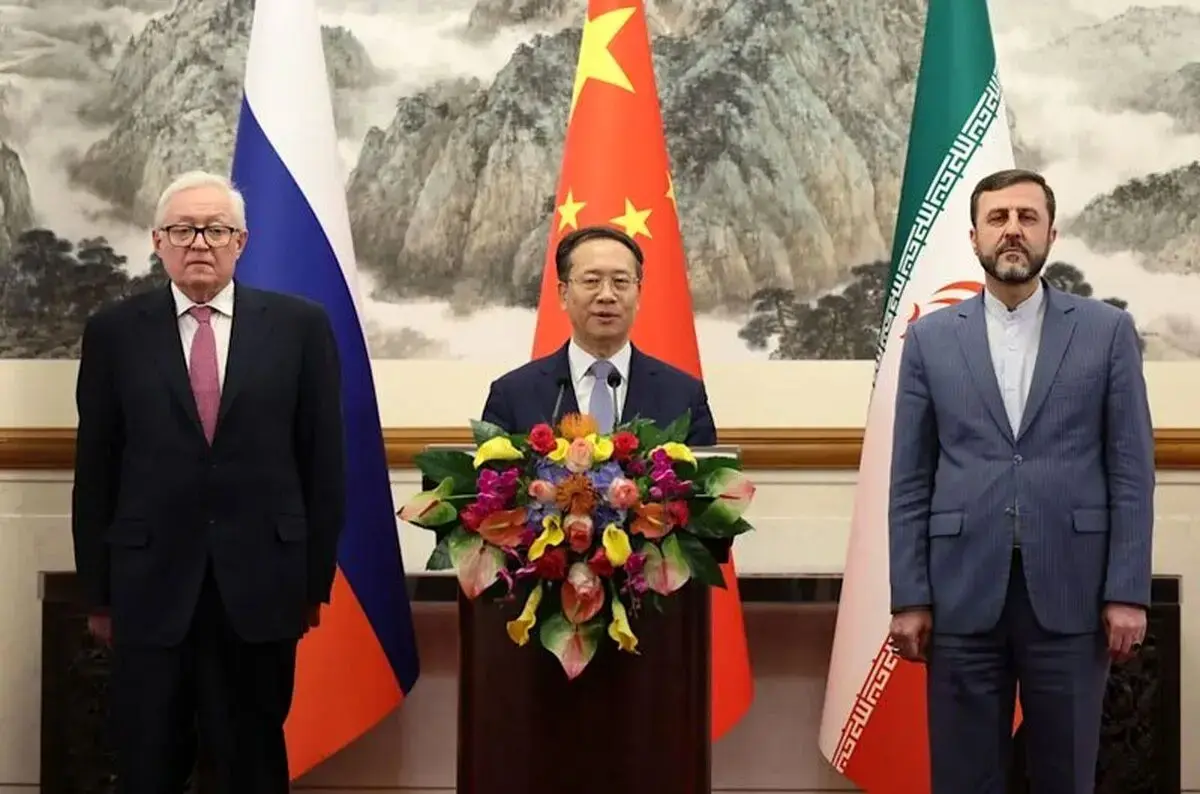
A CSIS Panel Discussion:
Host: Mona Yacoubian, Senior Adviser & Director of the Middle East Program, CSIS-Panelists:
Maria Snegovaya, Senior Fellow, Europe, Russia, and Eurasia Program, Brian Hart, Deputy Director & Fellow, China Power Project, Victor Cha, President of the Geopolitics and Foreign Policy Department & Korea Chair
Part 1: Foundations of the Relationships
Host: To understand the responses, we must first look at the foundations of Iran’s ties with each power.
Russia & Iran: A Partnership of Convenience
Maria Snegovaya: The relationship is driven by a shared sense of grievance against the West. Following the invasion of Ukraine, Russia leaned heavily on Iran for military support, including Shahed drones and missiles, and expertise in sanctions evasion. In return, Iran receives agricultural and industrial goods.
Key Limitation: Despite signing a strategic partnership in January 2025, the treaty notably lacks a mutual defense clause. A legacy of deep historical mistrust and espionage persists. Russia also balances its relationship with Iran against its ties to other Middle Eastern actors like Israel and Saudi Arabia.Conclusion: This is primarily a transactional, convenience-based partnership that could be disrupted.
China & Iran: Economic Bedrock, Strategic Caution
Brian Hart: The relationship is overwhelmingly economic and energy-based. China relies on Iran for a significant portion of its oil (13-14%), while Iran depends on China for about a third of its trade.
Key Limitation: There is strategic distrust, dating back to instances of technology theft. China has not supplied major weapons systems for decades but provides crucial dual-use goods (e.g., ballistic missile fuel components, drone parts) under the radar. The trade relationship is highly imbalanced in China’s favor.
North Korea & Iran: Four Decades of Missile Cooperation
Victor Cha: The relationship is the longest-standing and most tactical and transactional, centered on missile technology transfer for over 40 years. Iran’s Shahab missile series is based on North Korean designs (Scud-B/C, Hwasong/Nodong).
Contrast with Russia: While deep, this cooperation pales in scale compared to the recent, dramatic expansion of the North Korea-Russia relationship, which has evolved into a strategic partnership involving massive ammunition transfers, troops, and a mutual defense treaty, effectively shattering UN sanctions on North Korea.
Part 2: Crisis Response – Revealing True Priorities
Russia’s Response: Rhetoric Over Action
Maria Snegovaya: Iran received little more than “best wishes” and rhetorical support from Moscow. Russia is overstretched by the war in Ukraine and lacks spare military capacity. It also deliberately avoided defense commitments in its treaty with Iran, anticipating such a crisis.
Strategic Calculus: Russia seeks to maintain its role as a regional arbiter, preserving ties with Israel and Gulf states. It is careful not to provoke the Trump administration while benefiting from oil price uncertainty.
China’s Response: Risk Mitigation Over Leadership
Brian Hart: China’s primary focus was mitigating blowback and protecting its own interests, especially keeping the Strait of Hormuz open. It issued statements criticizing the U.S. but also quietly pressured Iran to avoid escalation.Strategic Calculus: The crisis exposed the limits of China’s peacetime diplomacy. While content to see the U.S. distracted, China is unwilling to intervene directly in a military conflict. Its long-term support for Iran may mirror its model for Russia: substantial economic and dual-use aid, stopping short of overt military alliance.
North Korea’s Response: The Unregulated Opportunist
Victor Cha: North Korea’s response has been muted but opportunistic. It has the most to gain and the least to lose. The CRINK framework provides an “unregulated play space” where North Korea can operate without fear of sanctions.Emerging Role: Evidence suggests Russia may now be directing Iranian requests for missile help toward North Korea. With China’s influence over Pyongyang diminished and Russia permissive, North Korea is empowered to become a “spoiler” and could provide missiles, air defense help, or even nuclear cooperation to Iran.
Part 3: Future Implications and Key Indicators
Global Norms and the “Play Space”
Victor Cha: The strikes contribute to the erosion of the post-war norm against the use of force, with global implications (e.g., Taiwan). However, they may also open diplomatic space for U.S.-North Korea talks, as Pyongyang seeks insurance against a similar attack.
What to Watch For: Indicators of Deepening Alignment
For China (Brian Hart): Will Beijing cross the Rubicon and provide overt military equipment to Iran, either directly or via a proxy like Pakistan? This would signal a major escalation in its willingness to challenge the international order.
For Russia (Maria Snegovaya): Watch for the transfer of sophisticated weaponry like air defense systems to Iran, or major investments in joint sanctions-circumvention infrastructure projects (e.g., INSTC corridor).
For the Coalition (Victor Cha): The greatest danger is Russia or China using North Korea as a proxy to provide sensitive assistance (advanced missiles, nuclear expertise) to Iran that they are unwilling to give directly. North Korea’s capacity to act as a “spoiler” in multiple theaters is now a critical variable.
Conclusion:
The crisis revealed that the “Axis of Upheaval” is not a monolithic alliance. It is a set of parallel, transactional partnerships riddled with distrust and competing interests. While Russia and China provided minimal direct support, the conflict may have empowered North Korea as a reckless wildcard and opened new pathways for destabilizing cooperation, making the geopolitical landscape more unpredictable.
https://www.csis.org/analysis/what-do-strikes-iran-mean-china-russia-and-north-korea