
This analysis argues Trump’s Iran strikes unhinge global order by normalizing war as policy, lacking legal justification—no imminent threat, failed diplomacy. Killing Khamenei sets dangerous precedents. Limited condemnation may encourage future aggression, eroding legal and moral authority.
The United States has taken a further, major step in unhinging the global order. The core principle of that order is that no state can go to war in pursuit of its own national policy. Where use of force is claimed as necessary in the global interest, this can only be done through a mandate from the UN Security Council.
After last year’s Israeli-US strikes against Iran, President Donald Trump’s threats of force against Greenland, the conflict in Gaza, Israel’s attack on Qatar and other cases, including most notably Russia’s invasion of Ukraine, it seems as if we are now moving to a world where deference to international law is no longer seen as decisive and the use of force is becoming the new normal.
The killing of Iran’s Supreme Leader, Ali Hosseini Khamenei, at the outset of the conflict has put this into even sharper focus.
Balancing national defence and the banning of war
The international system, as understood up to now, balances the need to safeguard the security of states with the aim of supressing war and its devastating consequences. The use of force is prohibited, although it remains available to countries as a last resort, when faced with an armed attack that cannot be averted or defeated by other means.
This rules out a preventative war, launched early against a potential enemy while the military balance still favours the attacker. There is also a prohibition on ‘pre-emptive war’ where both sides expect an armed conflict and striking first would offer an advantage. This would add greater instability as it would create an incentive for states to go to war first.
International law only allows ‘anticipatory’ self-defence when the other side has prepared its military hardware for an immediate attack and has taken a decision to launch hostilities. A state does not have to await a first blow once it is clear that a specific attack is inevitable and imminent. For instance, Israel’s first strike against Egypt in 1967 was justified by the imminent, large-scale attack Egypt was preparing.
US President Donald Trump has partly justified this latest attack by invoking a long list of hostile acts committed by Iran, starting with the Tehran hostage crisis of 1979, alleged involvement in terrorist attacks, and support for proxies hostile to the US.
However, international law does not permit the use of force in response to a hostile overall posture of another state short of an armed attack. Neither is the use of force permitted by way of armed retaliation in answer to past provocations. Force is only permissible as a means of last resort, where no other means is available to secure a state from an armed attack.
The president claims that Iran is developing intercontinental ballistic missiles that ‘could soon reach the American homeland.’ But Iran is not expected to achieve that capacity for another five to ten years.
There was also no indication of an imminent attack against US forces in the Middle East, within reach of Iran’s present medium-range missile force. Trump’s determination to ‘obliterate’ Iran’s military potential also appears to violate the requirement of proportionality which is part of the doctrine of self-defence.
Israel, which attacked Iran alongside the US, asserts that it faced an existential threat in the shape of Iran’s nuclear weapons programme and ballistic missile capacity, necessitating what it terms a ‘pre-emptive’ attack.
But Israel has confirmed that it has been planning and preparing for this operation with the US for many months. This suggests that this is indeed a war of choice – a preventative war – launched with due deliberation, while it was still relatively easy to remove Iran’s armed potential before it fully materialized.
Last June, some Western states did support ‘Operation Midnight Hammer’, when Washington joined Israel’s 12-day war to degrade Iran’s nuclear ambitions. But according to President Trump, that operation set back the Iranian nuclear programme by several years. That would undermine any claim of an imminent and overwhelming necessity to strike Iran now, as a last resort.
The progress made in the nuclear talks between the US and Iran in Geneva also diminishes such a claim. The Omani mediators have confirmed that Iran had agreed to important concessions concerning its nuclear enrichment programme – supposedly the principal focus of the talks.
Humanitarian objectives and regime change
Arguably, it is lawful to use force to save a population in another country from its own government. However, this doctrine is controversial. In any event, it applies only where a large segment of the population is threatened with extermination, enforced starvation or forced displacement. This would have been the case, for instance, in Rwanda in 1994, where some 800,000 civilians were massacred.
The Iranian government’s attacks on demonstrators in January were tragic. However, this probably did not yet reach the threshold justifying foreign military intervention. Moreover, a humanitarian intervention must aim to address an ongoing, overwhelming humanitarian emergency. The doctrine does not apply retroactively, after the emergency has passed. And the action taken must be strictly limited to its humanitarian motives, which may exclude an agenda of regime change.
It would also be difficult to justify intervention if the state doing the intervening is a principal agent that contributed to the emergency. In January, while the protests in Iran were underway, President Trump called on Iranians to ‘TAKE OVER YOUR INSTITUTIONS…HELP IS ON ITS WAY’. That could be argued to have contributed to the armed confrontation between the Iranian government and segments of the population that followed the unrest.
Now, the US president has again expressly called on the people of Iran to ‘take over your government’ perhaps provoking the next armed confrontation between government and population.
Assassinating the political leadership
Targeted assassinations of political leaders in peacetime is prohibited – but during armed conflict the situation is more complex. In principle, only those involved in the military campaign can be targeted.
It is also generally assumed to be wise to keep the governmental authority in place, if only to have someone who can negotiate peace at the end of hostilities. There is also a reluctance to turn leaders into martyrs in the eyes of their followers. National leaders also may be hesitant to target their counterparts in other states, in case it leads to their own targeting.
In this instance, it is clear that Iran’s top leadership, including the Supreme Leader, cannot be easily distinguished from those directing the war. It would seem inappropriate to extend a kind of immunity to those who have been involved in past atrocities, including threats or even assaults, directly or through surrogates, and who are directing the present attacks on other states.
An authoritarian head of state can be so closely connected to the war effort, and indeed in charge of it, that he or she might be classified as being directly involved in the hostilities.
While this is also politically sensitive, the status of Ali Hosseini Khamenei as a religious leader, along with other clerics at the head of state institutions, would not necessarily grant them protection from attack. There is also no prohibition on attacks against buildings frequented by high officials, such as presidential palaces or key ministries, if they are used to direct the war effort.
War as the new normal ?
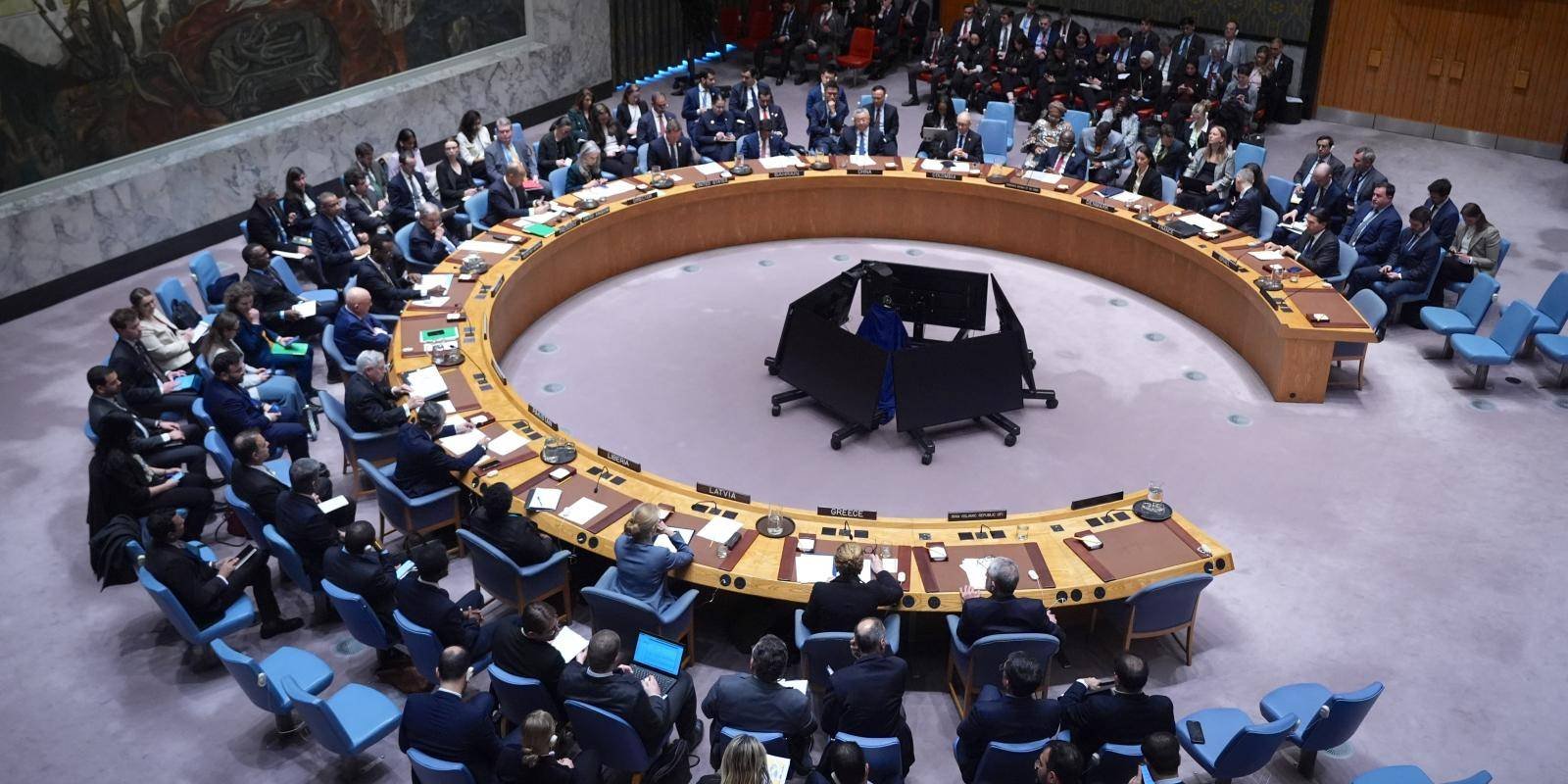
Although there is no available legal justification for the present, sustained attack on Iran, there has been only limited international condemnation. At an emergency session of the UN Security Council, other than the predictable attitude of Russia and China, only Columbia carefully framed its presentation in terms of international law and the evident violation of the prohibition of the use of force.
Iran’s record as a rogue state over the past decades dominated the debate, along with sharp criticism of its apparently indiscriminate, and indeed unlawful, counterattacks against other countries in the region.
As in the discussion of Trump’s Venezuela intervention, other states limited themselves to general exhortations that international law must be complied with, without drawing any conclusions concerning the attack on Iran. But such identifications of unlawful conduct by other states are essential if broader precedents upending the rule of law are to be avoided.
This reluctance to highlight unlawful conduct may encourage a broader sense that the use of force as a means of national policy is becoming acceptable again – at least to the most powerful countries.
It may seem inappropriate to insist on compliance with the law even where laudable objectives – such as nuclear non-proliferation and freedom from repression –are being claimed as the attackers’ objectives.
But with its actions, following its intervention in Venezuela and its threats against Greenland, the US has created multiple potential precedents which others may follow in different circumstances. Indeed, there are already cases where regional powers have acted in a similar way.
Moreover, it will not be easily possible to oppose further Russian aggression or potential Chinese expansionism if there are no clear principles left to rely on, without triggering objections of double standards and hypocrisy.
The US, and the states that have failed to identify its conduct as a violation of international law, may come to regret the loss of legal and moral authority this will bring.