
Ukraine and Iran have exposed insufficient US production capacity. Export controls and centralized prime contractor models limit scalability. Deeper co-production in manufacturing, repair, and sustainment—protecting only core design authority—would unlock European capacity, retain interoperability, and counter diversification toward Korean or European alternatives.
A more integrated US-European defense industrial base is necessary to sustain production to manage two interlocking military conflicts.
The transatlantic alliance is under strain—but not only for the reasons Washington has recently cited. In recent weeks, President Donald Trump has criticized NATO partners for insufficient support during the Iran conflict. But the problem is not only the lack of political will to step in alongside the United States. It is also a structural constraint in the transatlantic defense industrial base that is effectively limiting the allied ability to do so.
If the United States wants allies that can act, it must stop treating them as customers and more fully integrate their industrial potential to collectively rearm and sustain long-duration, high-intensity operations across multiple theaters.
The pressures of the Ukraine War and the Iran War have strained US stockpiles and exposed insufficient production capacity. Reports of dwindling domestic stockpiles, delayed weapons deliveries to European countries—and efforts to enlist civilian manufacturers to boost output—underscore a simple reality: the US defense industrial base is currently not configured for sustained, multi-theater engagement.
This creates a strategic paradox. The United States encourages European dependence on advanced US weapon systems, yet those same systems are now subject to delays precisely when demand peaks. This limits Europe’s ability to assume greater responsibility for its own defense and reduces the operational flexibility of the United States itself. The United States has become both indispensable and a bottleneck.
That constraint reflects the design of the current arms production system. For decades, American defense primes have operated under a model that emphasizes centralized production, tight control over intellectual property, and long-term sustainment revenue. Export controls such as the International Traffic in Arms Regulations (ITAR) reinforce this structure. While essential for protecting sensitive technologies, they effectively limit the depth of allied participation in arms production and sustainment.
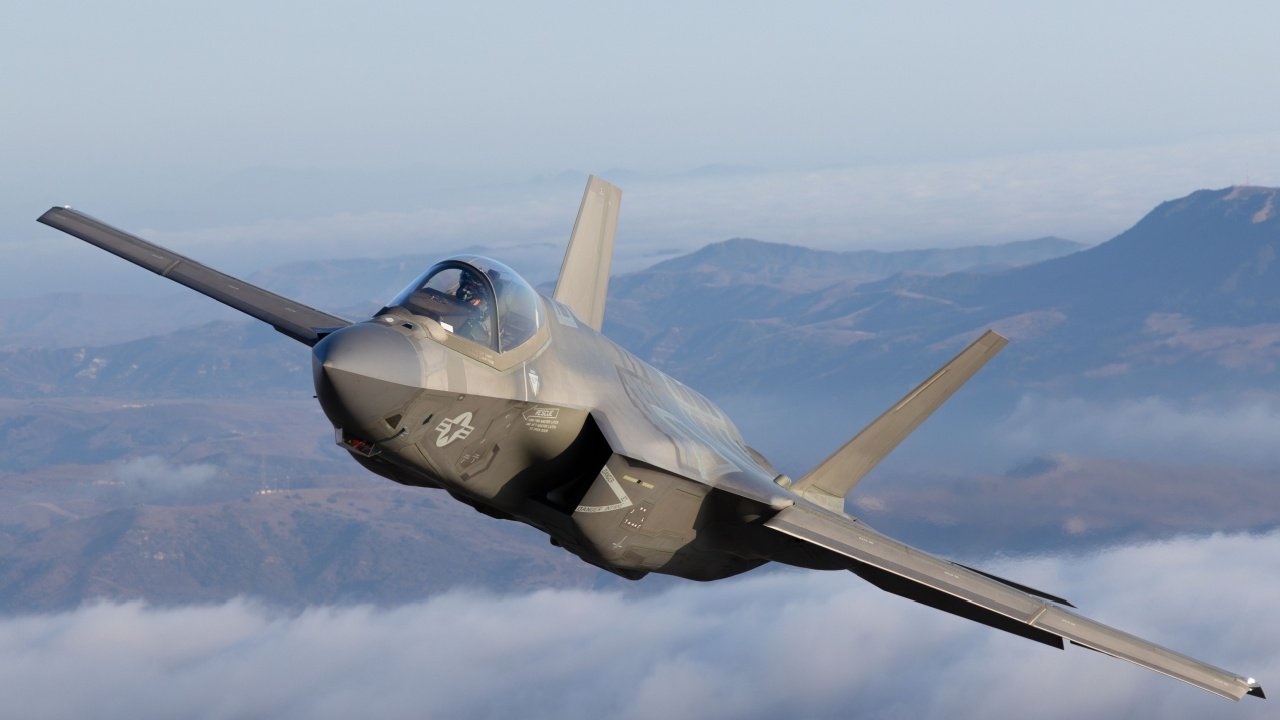
Co-production is not absent from this system, but it remains selective and tightly bound. Even in collaborative programs like the F-35, European firms contribute components, assembly, and maintenance, while core design authority, software, and system integration remain firmly under US control. This model is optimized for high-margin, low-volume production and technological control, rather than for sustained high-volume output under surge conditions.
That model is now colliding with a new geopolitical reality. The United States is no longer managing isolated contingencies but rather simultaneous, interrelated pressures across multiple theaters. At the same time, the character of warfare is changing. High air defense missile consumption rates, rapid technological iteration, and the growing importance of modular systems place a premium on speed, adaptability, and continuous production cycles.
Under these conditions, a defense industrial base built around limited scalability struggles to keep pace. The United States cannot sustain surging demand across multiple theaters on its own, and allies cannot reliably fill operational gaps if they remain dependent on constrained supply.
While transatlantic defense co-production is not new, it remains limited in scope. European firms already contribute across US-led programs—from component manufacturing and assembly of the F-35 in Italy to sustainment hubs for the AH-64 Apache in the UK.
Yet these arrangements are largely confined to discrete roles rather than scaled across the production and lifecycle of systems. Expanding this model—particularly in manufacturing, maintenance, and repair—would unlock additional capacity where it is most needed without requiring the transfer of sensitive design authority or software control. The opportunity is less about redefining ownership and more about building a broader, more responsive industrial network that can sustain a higher operational tempo on both sides of the Atlantic.
Expanding co-production would also position US-led programs to tap into growing EU-level defense financing, which increasingly conditions funding on meaningful European industry participation in production and sustainment. Without deeper integration on these terms, and amid delivery delays and uncertain timelines for American weapon systems, European governments will increasingly seek to diversify procurement. Some are already turning to alternative suppliers, including South Korea, that offer faster delivery and more flexible industrial arrangements, while others are investing in domestic and joint European programs to regain production control.
The shift towards deeper co-production, however, will not happen on its own. It requires deliberate changes in incentives and policy. US defense firms have valid concerns: expanding production abroad can dilute control over quality and configuration management, compress high-margin sustainment revenue, and introduce operational complexity across dispersed supply chains.
It can also create long-term competitive pressure if allied industrial capabilities expand into adjacent markets. Differing procurement systems add another layer of friction. US acquisition cycles, contracting structures, and requirements often diverge from those of European partners, complicating joint production at scale and slowing alignment even where interests converge.
None of these constraints is trivial, but they are manageable. The objective is not to abandon control over product development, but to apply it selectively, protecting the most sensitive technologies while expanding co-production in areas where capacity can be scaled without compromising security.
President Trump is right to demand more from European allies. But burden-sharing must extend beyond budgets and deployments. It must include the ability to produce and sustain the tools of defense—and the United States’ willingness to share that production.
Today, too much capacity remains concentrated in the United States, even as its limits become clear. Recent conflicts have demonstrated that no single national industrial base, however large, can meet the demands of sustained, high-intensity warfare alone.
Washington now faces a choice: maintain a system built on control and exclusivity, or embrace a more distributed model that treats allies not just as customers, but as co-producers—and as essential contributors to America’s own defense capacity. In an era of systemic competition and prolonged conflict, the latter is a strategic imperative.