
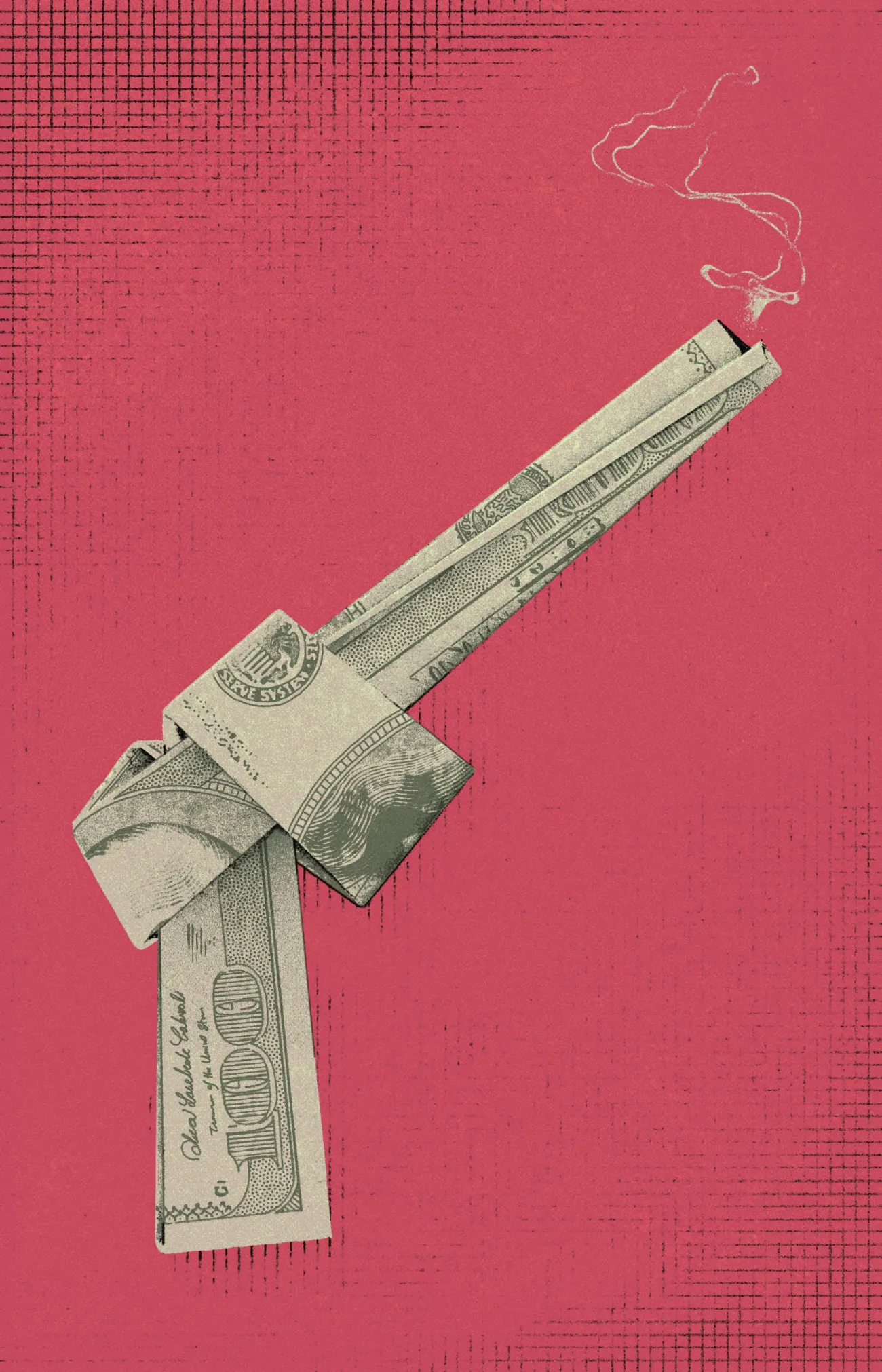
A U.S. war‑risk insurance scheme failed as crews refused to sail, Treasury‑market stress spiked, the Fed stayed sidelined, missile stocks dwindled, and Congress blocked funding. These converging constraints forced Washington into a ceasefire, exposing structural limits in sustaining economic and military pressure against Iran.
The World Economic Forum at Davos is rarely the site of geopolitical rupture. But this year, Canadian Prime Minister Mark Carney stood before the assembled executives and dignitaries to declare the end of an era. Globalization, with its promise of win-win cooperation, had given way to intensifying economic warfare. “Great powers have begun using economic integration as weapons, tariffs as leverage, financial infrastructure as coercion, supply chains as vulnerabilities to be exploited,” he said. “You cannot live within the lie of mutual benefit through integration, when integration becomes the source of your subordination.”
In Carney’s telling, the giants are on the march, leaving everyone else little choice but to band together in self-defense. Yet his narrative, however resonant, obscures a more volatile reality: in this age of economic warfare, even the great powers feel increasingly insecure. Nations big and small have awoken to their vulnerability to foreign economic coercion—and the fear this realization has unleashed is pushing policy in unexpected directions.
Two weeks after Carney’s speech, U.S. Vice President JD Vance rallied ministers from more than 50 countries at the first-ever Critical Minerals Ministerial, in a bid to break China’s monopoly over rare-earth elements. Days earlier, Qiushi, the Chinese Communist Party’s flagship journal, published a speech by Chinese leader Xi Jinping calling for the renminbi to “attain reserve currency status,” while Chinese regulators urged banks to curb purchases of U.S. Treasury bonds. The Trump administration hardly has an affinity for multilateralism, and Xi has long approached renminbi internationalization cautiously. But for both Washington and Beijing, protection from the other’s economic arsenal has become a strategic imperative.
Vance’s call to action and Xi’s speech exemplify the parallel processes remaking geoeconomics today: an economic arms race and a scramble for economic security. Governments are identifying their sources of leverage and crafting new tools to wield them against rivals—arming, in effect, for economic war. At the same time, they are building fortifications against the economic weapons others might use against them.
The United States lacks a field manual for this new environment. Over the past two decades, American officials developed strategies for economic warfare in a unipolar world. Accustomed to playing offense, Washington paid little heed to the risk of retaliation or surprise attacks. That world has passed. The new one is defined by mutual vulnerability, a constant search for leverage, and a constant fear of exposure. The United States and China possess the most formidable arsenals, but as the war in Iran has shown, smaller powers can also exact devastating costs on the global economy by weaponizing chokepoints. Tehran’s closure of the Strait of Hormuz in the opening days of the conflict sent energy prices soaring, forcing Washington to shift its war aims. It also demonstrated how adversaries can adapt the logic of economic warfare to kinetic conflict, using drones and missiles to shape the behavior of private firms much as the United States does with financial sanctions.
Waging economic war in this ruptured world will require Washington to overhaul its approach. It must learn to deploy its economic power without eroding its foundations. It must shore up its vulnerabilities without sacrificing growth and prosperity. It must manage escalation against adversaries and coordinate with allies. Otherwise, the United States, unprepared and ill equipped, will be stuck fighting the last war as a new economic order takes shape—an order far less hospitable to American interests than the old one.
ANATOMY OF A CHOKEPOINT
The first task is to map the chokepoints, the areas of the global economy most susceptible to weaponization. Geographic chokepoints like the Strait of Hormuz have always been fulcrums of power. Economic chokepoints rose to prominence more recently. Most formed during the heyday of globalization, as businesses embraced just-in-time supply chains and a dollar-centric financial system in pursuit of efficiency. The return of geopolitical competition has turned these well-intentioned features into glaring vulnerabilities as states have learned to cut off adversaries from the chokepoints they control.
But not every economic dependence represents a chokepoint. And if Washington treats each one as a national security threat, it will sacrifice growth and prosperity without materially improving its security. Likewise, attempts to weaponize an advantage that is not a chokepoint will fail, needlessly driving business away from U.S. firms and weakening U.S. influence.
True chokepoints share three characteristics. A single country or coalition of close allies possesses a dominant, concentrated market share. Substitutes are unavailable in the short term. And the country or coalition can weaponize its position in ways that impose asymmetric pressure, inflicting substantial pain on the target while suffering minimal self-harm.
Mere leadership is insufficient. To control a chokepoint, a country must hold a near monopoly over the relevant market. Consider the chokepoints that Washington and Beijing use most frequently. U.S. financial sanctions exploit the centrality of the dollar, which is used in nearly 90 percent of all foreign exchange transactions. American export controls on advanced semiconductors rely on a similar dynamic: a single Silicon Valley firm, Nvidia, accounts for more than 85 percent of the market for AI chips. China, for its part, refines roughly 90 percent of the world’s rare earths. In each case, the United States or China is not just a market leader; it is effectively a monopolist.
When a country lacks that degree of concentration, its leverage is more limited. Take American tariffs, which pressure foreign countries by reducing the competitiveness of their exports in the U.S. market. When U.S. President Donald Trump announced sweeping levies on nearly every other country last April, he claimed that they would bend to his will because the United States has “the biggest market in the world.” In terms of scale, Trump was correct: the United States is the world’s largest importer. But it accounts for only about 13 percent of global imports. Even if the average country were entirely barred from the U.S. market, it could still sell into nearly 90 percent of the world economy. In true chokepoints, the math is reversed. The controlling country typically holds close to 90 percent of the relevant market, leaving targets with access to barely ten percent.
This helps explain why Trump’s tariffs have often failed to coerce other countries. Last year, although U.S. tariffs sharply reduced Brazil’s and China’s exports to the United States, both countries were so successful in boosting sales elsewhere that they set annual records for total exports.
Even if a country holds a dominant share, a market will not function as a chokepoint unless substitutes are nearly impossible to find in the short term. At the start of the COVID-19 pandemic, in January 2020, for instance, the United States imported roughly three-quarters of its medical masks from China. Domestic producers supplied under ten percent of demand. As the virus spread rapidly in China, Beijing curbed exports to guarantee supplies for its own people. The result was empty shelves across the United States. Shortages were so acute that U.S. public health authorities discouraged Americans from wearing masks to ensure supplies for doctors and nurses.
But U.S. manufacturers quickly scaled up production. By the summer, masks were plentiful enough for state and local governments to issue widespread mask mandates. Within a year of the outbreak, American factories had quadrupled production of N95 masks. Although China dominated output at the start of 2020, masks were not a chokepoint because they proved easy to substitute. The same logic holds for other goods that are relatively simple and require little capital to produce, such as apparel and furniture. If a single country cornered the market for those products, it would still struggle to use them as effective economic weapons.
Capital-intensive products such as refined rare earths are much harder to substitute. A typical rare-earth mining project takes nine years to reach production. Even if U.S. Treasury Secretary Scott Bessent’s more optimistic projection that the United States can break China’s leverage over the rare-earth supply chain in two years proves accurate, that’s a long time to remain vulnerable to Chinese coercion.
For services, network effects—in which a product’s value increases with the number of users—can further reduce substitutability. That’s why U.S. financial services are such a potent chokepoint. The ubiquity of the dollar makes creating a viable alternative exceedingly difficult.
For a market to function as a chokepoint, the country that controls it must also be able to use it to inflict asymmetric harm. American tariffs on Canada illustrate what happens when the controlling country lacks that ability. Canada sends more than 75 percent of its exports to the United States, and owing to geography and the location of fixed infrastructure such as oil and gas pipelines, there is nothing it can do to rapidly diversify away from the U.S. market. Recognizing this fact, Trump has claimed that the United States holds essentially unlimited leverage over Canada. “We don’t need anything they have,” Trump said. “We don’t need their lumber, we don’t need their energy. We have more than they do. We don’t need anything . . . . But they need us.”
Although U.S. tariffs can substantially harm Canada, they cannot do so without also inflicting a great deal of pain on the United States. The economist David Henderson of the Hoover Institution has estimated that a 25 percent tariff on Canada would cost Americans about $700 per household. It would also disrupt auto manufacturing and spike prices for gasoline and electricity, since U.S. refineries and power grids depend on Canadian supply. It’s little wonder, then, that the vast majority of imports from Canada were exempted from the 25 percent tariff Trump instituted shortly after taking office. By December 2025, the effective overall U.S. tariff rate on Canada was just 3.1 percent, the lowest among Washington’s major trading partners.
Before the U.S.-Israeli war in Iran began in February, U.S. officials likely misread Tehran’s ability to use the Strait of Hormuz as an asymmetric weapon, giving them a false sense of security. The strait is the world’s most important geographic chokepoint: on any given day, about 20 percent of global oil and liquefied natural gas transits the waterway, and there are no alternative routes. Analysts assumed that Iran would not dare close it, since doing so would require laying scores of sea mines, and Iran also depends on the waterway to export its own oil. But Tehran demonstrated that it can disrupt the strait at far lower cost. By striking a small number of ships with relatively cheap drones and missiles, Iran changed the risk calculus of the global shipping industry. Tankers carrying Iranian oil sailed freely through the strait while those carrying oil from other Gulf states balked.
Chinese rare earths offer a more clear-cut case. In 2024, China earned approximately $3.4 billion from exporting rare-earth elements and magnets. Meanwhile, researchers at the U.S. Geological Survey estimate that a 30 percent disruption to the United States’ supply of the rare-earth element neodymium alone would reduce the country’s GDP by 2.2 percent—more than $600 billion. In other words, China would have to forgo no more than a couple of billion dollars in export revenue to inflict over half a trillion dollars of damage on the U.S. economy. This asymmetry is what gives Chinese export controls their power. It also highlights a broader reality about economic warfare. When they have a choice, states don’t weaponize interdependence—they weaponize dependence.
WHY WE FIGHT
The first rule of economic warfare is simple: don’t weaponize false chokepoints. But even if U.S. policymakers can follow it, they still confront a dangerous feedback loop. Every time Washington weaponizes a chokepoint, other countries take steps to insulate themselves from it. In any specific instance, the erosion of American power may be marginal. But over time, the cumulative effect could reduce confidence in the U.S. dollar and blunt demand for American technology, energy, and other products. The United States needs a plan for deploying its leverage effectively without destroying that leverage in the process.
The optimal design of sanctions, export controls, and other economic measures depends entirely on the goal they are meant to achieve. Broadly speaking, such policies serve three distinct purposes. The least ambitious is stigmatization—what U.S. officials call “naming and shaming.” No one expects sanctions to turn corrupt dictators and human rights abusers into saints, but Washington often targets them anyway to signal disapproval and satisfy political demands for action. Symbolic sanctions aren’t inherently bad, but they aren’t innocuous, either. They can discourage banks from operating in developing countries, reducing American influence and causing humanitarian harm. And when U.S. officials use them as a primary weapon during a crisis, they risk inadvertently signaling a lack of resolve by revealing little appetite for a wider economic confrontation that could hurt the American economy, too.
One step up are measures designed to weaken adversaries by denying their access to technology, capital, or markets, such as U.S. export controls on microchips destined for China. As former U.S. National Security Adviser Jake Sullivan put it, their objective was to maintain “as large of a lead as possible” for the United States in the race to develop advanced semiconductors and AI. Under both the Biden and the Trump administrations, export controls were a strategy of attrition, aimed not at changing Beijing’s behavior but at containing China’s technological capabilities.
The most ambitious objective is coercion—using economic pressure to alter another government’s policies. Coercive sanctions can take the form of deterrence (preventing a country from crossing a redline) or compellence (forcing it to change an existing policy). The Biden administration’s warnings in 2022 of “swift and severe consequences” if Russia invaded Ukraine were intended as deterrence, whereas the Trump administration’s “maximum pressure” strategy against Iran aimed to compel Tehran to rein in its nuclear program and support for proxies.
U.S. policymakers rarely articulate clear objectives when they wage economic warfare. But distinguishing between objectives at the outset of any economic pressure campaign should be a priority because they can pull strategy in opposite directions. Consider a potential Chinese invasion of Taiwan. If Washington intends to use economic warfare as a deterrent that would materialize only if Beijing crosses a tripwire, then the optimal strategy would be to accumulate leverage by increasing China’s dependence on American technology and hold it in reserve. That way, when Xi is mulling whether to act, the United States could threaten a severe economic punch to dissuade him. Conversely, if the aim is to degrade Chinese capabilities and thus make a successful invasion less likely, the best course of action is to use leverage now, choking off China’s access to American technology before war breaks out. Once hostilities have started, economic attrition is of little use unless the conflict is protracted.
The Trump administration’s vacillation on export controls encapsulates the danger of waging economic warfare without a well-defined goal. One camp in the administration, made up of more traditionally hawkish officials such as Secretary of State Marco Rubio, has pushed for tighter restrictions to impede China’s progress in AI. Another has advocated looser restrictions to get China “addicted” to American chips, as Commerce Secretary Howard Lutnick put it. Both perspectives have logic; the right choice depends on the objective.
Whatever the goal, it’s rarely wise to ratchet up restrictions incrementally. American policymakers tend to take this approach out of caution, preferring to wait and see the effect of measures before escalating. But economic pressure does not operate in a vacuum. As soon as a new sanction or export control is imposed, the target country begins adapting—developing workarounds, cultivating alternative suppliers, and investing in self-sufficiency. Countries under significant pressure are increasingly turning proficiency in these tactics into a profession. One of Russia’s most prestigious universities recently launched a master’s degree in sanctions evasion. For these reasons, strengthening measures step by step often yields diminishing returns. Pressure doesn’t increase proportionally; at best, it plateaus.
RECKLESS ABANDON
Just as important as deploying the right amount of leverage at the right time is preserving that leverage so it will be available when the United States needs it most. The more Washington weaponizes a chokepoint, the stronger the incentive for other countries to reduce their reliance on the United States, making that chokepoint less effective in the future.
This incentive often reaches beyond the immediate targets. After Russia annexed Crimea, in 2014, Washington imposed sanctions on Moscow that blocked Russian firms from parts of the U.S. financial system. Beijing drew a clear lesson: if Washington could treat Moscow that way, it could one day do the same to Beijing. The episode spurred China’s leaders to build homegrown payment systems to reduce the country’s exposure to U.S. financial sanctions. In 2015, China launched the Cross-Border Interbank Payment System (CIPS), designed to clear renminbi transactions without relying on Western intermediaries. Beijing has since expanded this effort, launching a central bank digital currency, the e-CNY, and mBridge, a digital payment platform that enables central banks to settle transactions directly with each other.
These initiatives do not pose a serious challenge to dollar dominance. But building a global rival to the dollar-clearing system is not China’s objective. Instead, Beijing seeks to build a parallel infrastructure that could scale up quickly in a crisis—a kind of insurance policy rather than an outright replacement. CIPS has grown rapidly and now counts roughly 1,700 participating institutions in more than 120 countries—much smaller than SWIFT, but large enough that if China were cut off from the dollar, it could support renminbi settlement on a meaningful scale. The e-CNY and mBridge are making similar progress. And despite the threat these efforts pose to U.S. leverage, Washington has paid scant attention. It should take the future of payments seriously, advancing policies that both slow China’s efforts when possible and modernize Western systems to ensure they remain faster, cheaper, and more attractive to use.
A more systemic challenge may come from a less obvious source. The internationalization of the renminbi is held back by Chinese capital controls and the uncertainty of conducting business in a country that lacks the rule of law. The euro, by contrast, is a convertible, liquid currency, backed by stable democratic governments. In the realm of payments, where ease and reliability matter most, it holds clear advantages. The euro is already the second most used currency in foreign exchange transactions, and central banks hold around 20 percent of their reserves in euros, second only to the dollar at 57 percent.
In advocating for a digital version of the euro, Christine Lagarde, the president of the European Central Bank, has stressed that the project is “a political statement concerning the sovereignty of Europe.” The same logic is driving long-delayed efforts to unify the EU’s fragmented capital market. As these initiatives advance, the euro could attract users beyond Europe, especially those who fear that the United States could turn the dollar into a weapon against them.
The upshot for U.S. policymakers is that, whenever possible, they should coordinate sanctions with the EU and other allies. Such coordination matters not because it’s necessary to make sanctions bite—thanks to U.S.-controlled chokepoints, unilateral measures are usually potent enough—but because it prevents the dollar from carrying a geopolitical risk premium relative to other reserve currencies. In the three years after the G-7 froze Russia’s central bank reserves in response to the invasion of Ukraine in February 2022, the dollar’s use in international payments increased, gaining share at the expense of other G-7 currencies, including the euro, the pound, and the yen, which were seen as just as susceptible to weaponization.
The bigger problem for the United States is that much of the world has come to believe that, after two decades of intensifying bipartisan economic warfare, Washington could eventually weaponize everything against everyone. “De-risking” from the United States, including in domains that Washington has not yet exploited, is increasingly seen as common sense, even among governments that have not yet been direct targets. Take cloud services, of which the U.S. tech giants Amazon, Microsoft, Google, and Oracle hold a combined global market share of over 70 percent. Concerns that Washington could weaponize this dominance have prompted European governments to fund domestic technology stacks (the layers of hardware and software that underpin digital services), replace American software in sensitive agencies, and build “sovereign clouds” shielded from U.S. reach.
At this point, there is little the Trump administration can do to allay these concerns. Ever since former U.S. Treasury Secretary Jack Lew first warned against the “overuse of sanctions” in 2016, U.S. officials on both sides of the aisle have been sounding the alarm about Washington’s reliance on economic leverage. Even Trump himself said on the campaign trail in 2024 that he hoped to use sanctions “as little as possible.” Yet none of this rhetoric has translated into restraint. Every American president in the twenty-first century has imposed sanctions at roughly twice the rate of his predecessor, and all signs indicate that this trend will continue.
The only viable solution is to erect legislative guardrails. Laws already on the books limit presidential authority to sanction food, medicine, and informational materials. But the president retains extraordinarily broad authority to impose sanctions for almost any reason. In just the past year, Trump has sanctioned the Brazilian supreme court justice Alexandre de Moraes and his wife for his prosecution of former Brazilian President Jair Bolsonaro; Colombian President Gustavo Petro, his wife, and his son for their alleged involvement in the international drug trade; and multiple International Criminal Court judges for investigating and issuing arrest warrants for Israeli officials involved in the war in Gaza. In March, he threatened to “cut off all trade” with Spain after its government denied the U.S. military access to its bases during the war with Iran. Unlike the tariffs Trump imposed under the International Emergency Economic Powers Act, which the Supreme Court struck down in February, most of these actions rest on solid legal footing.
To prevent the misuse of sanctions, lawmakers should create broader “sanctions free” zones, designating additional sectors off-limits to weaponization without congressional approval. A similar approach should constrain the president’s ability to levy sanctions on U.S. treaty allies. Such institutional checks would still allow Washington to wield leverage when necessary, but they would prevent capricious actions that erode the foundations of American economic power.
JUST ENOUGH IS ENOUGH
A few years before the outbreak of World War I, Alfred Harmsworth, the owner of the British newspaper The Daily Mail, toured Germany’s rapidly industrializing towns and was alarmed by what he saw. “Every one of these factory chimneys is a gun pointed at England,” he observed in a letter to one of his staff writers, “and in many cases a very powerful one.”
Many Americans visiting Chinese cities today feel a similar unease. “China is at parity or pulling ahead of the United States in a variety of technologies, notably at the A.I. frontier,” wrote the former Google CEO Eric Schmidt and his colleague Selina Xu after recent trips to the country. China’s manufacturing dominance and accelerating technological capabilities, together with Beijing’s quickly developing economic arsenal, pose a formidable strategic challenge for Washington.
In April 2025, China demonstrated the power of this combination by imposing stringent export controls on rare earths in a devastating counterpunch to Trump’s tariffs. Within weeks, U.S. supply chains began to buckle. Ford temporarily shuttered a factory that makes its Explorer SUV after running short of rare-earth magnets, and Raytheon scrambled to find alternative supplies of a mineral essential to its Tomahawk cruise missiles. The Trump administration rushed to the negotiating table and agreed to scale back tariffs in exchange for a suspension of the rare-earth restrictions.
A few months later, when the U.S. Commerce Department tightened its own export control regulations, Beijing unveiled a sweeping plan to restrict the global sale of products containing Chinese rare earths. This time, Washington not only withdrew the offending measures; it also began easing restrictions on the sale of Nvidia’s advanced AI chips. In a telling reflection of the shifting power dynamics, Trump started referring to the United States and China as the “G-2.”
The rare-earth crisis underscored the importance of prioritization in the defense of U.S. economic security. Rather than a scattershot policy aimed at onshoring production across a wide variety of industries, Washington should identify the areas in which China holds meaningful leverage over the United States and its allies, and mitigate them through collective action. Beyond rare earths, that list includes potent chokepoints in supply chains for pharmaceuticals and clean energy technologies, particularly batteries. When Beijing imposed sanctions on Skydio, the largest U.S. drone manufacturer, the company was forced to ration batteries, limiting customers to one per drone. Chinese automakers now account for more than three-quarters of global electric vehicle sales, with BYD surpassing its American competitor Tesla as the world’s top-selling EV company.
The Trump administration has downplayed this shift, emphasizing the abundance of U.S. fossil fuels. The United States may well be able to muddle through without a robust domestic clean energy industry. But the rest of the world is rapidly electrifying, a trend that the oil crunch caused by Iran’s disruption of the Strait of Hormuz will surely reinforce. If Washington cedes the global clean tech market to Beijing, it will hand China immense economic leverage over everyone else.
Yet the United States does not need to fully substitute Chinese products. Wholesale replacement would be prohibitively expensive, time-consuming, and ultimately superfluous. Instead, policymakers should aim to establish parallel sources of supply that can be scaled up quickly when necessary, much as China is attempting in finance. Washington can defang China’s rare-earth leverage, for example, by diversifying supplies just enough to break Beijing’s monopoly.
Here, allied coordination is indispensable. Research by the economists Christopher Clayton, Matteo Maggiori, and Jesse Schreger has shown that when countries seek to reduce vulnerabilities independently, they risk triggering a “fragmentation doom loop,” in which each country’s exit from a shared market lowers the value of that market to those who remain, encouraging others to withdraw in turn. Washington’s embrace of “Buy American” policies under both the Biden and the Trump administrations illustrates how unilateral efforts to shore up economic security can be contagious. In February, EU leaders advanced similar “Buy European” measures. Without coordination, allies risk sleepwalking into a quasi autarky that leaves everybody worse off.
The Trump administration’s proposed trade zone for critical minerals represents a more promising path. Under the initiative, the EU, Japan, and other U.S. allies would set price floors, coordinate financing for mining and processing projects, and agree to source minerals from one another at stable terms. If successful, it could serve as a template for other strategic sectors, too. Reducing dependence, however, is just one part of the equation. The other is how rivals respond—and whether the United States can deter escalation.
WHO BLINKS FIRST?
Last April, the economist Adam Posen argued in Foreign Affairs that China possesses “escalation dominance” over the United States in economic warfare, meaning that no matter which weapon Washington reaches for, Beijing can always wield a stronger one. Given China’s chokepoints in critical goods, Posen concluded, the United States should pursue détente until it can reduce its dependence on them. The logic of his argument—that the United States has no near-term answer to China’s rare-earth weapon—has since become conventional wisdom in Washington. Some Trump officials have even invoked the former Chinese leader Deng Xiaoping’s dictum “hide your strength, bide your time” to describe their rationale for avoiding confrontation with China.
Yet this perspective understates U.S. leverage. Washington’s most powerful chokepoints—including the dollar, advanced semiconductor technology, and jet engines—are far harder to overcome than China’s. Rare-earth processing is capital-intensive and environmentally destructive, but China’s advantage is not technologically insurmountable. And if the United States can sustain its lead in artificial intelligence, the models that Silicon Valley firms produce could become the backbone of global business, handing Washington another chokepoint of extraordinary reach. To preemptively accept the futility of waging all forms of economic war would be to grant Beijing a de facto veto over U.S. policy in what the scholar Rush Doshi calls the “decisive decade” of U.S.-Chinese competition.
Washington can regain control over its China policy by establishing deterrence, developing credible escalation options that could force Beijing to back down. A useful precedent is the 2018 U.S. export controls on ZTE, the Chinese telecom giant. By severing ZTE’s access to critical inputs, including Qualcomm chips, the first Trump administration pushed the company to the brink of collapse. Within weeks, ZTE declared that “the major operating activities of the company have ceased.” It survived only because Xi personally asked Trump for a reprieve, which Trump granted.
Today, as in 2018, the United States has ample leverage to face down China or any other country in an escalatory scenario. What Washington has lacked is the political will to absorb economic pain. In the wake of the wars in Afghanistan and Iraq, successive U.S. administrations have come to rely on economic warfare as an alternative to military force, which they judged to be too politically costly. Now, Washington seems to lack the stomach even for economic warfare. Trump’s second-term tariffs have followed a familiar pattern: the White House recoils as soon as markets dip or recession fears mount. The world has learned that Washington’s Achilles’ heel in economic conflicts is its low tolerance for pain.
Economic warfare is not just about which side can inflict the most damage on the other’s GDP; it’s about which side has the greater capacity to withstand it. Washington can improve its endurance by shoring up the domestic pressure points that frequently lead to political backlash. Fears of rising oil prices, for example, have hindered sanctions campaigns against Russia and Iran. In March, in an attempt to bring down oil prices after Iran closed the Strait of Hormuz, the Trump administration eased sanctions on Russian oil, delivering windfall profits to Moscow without extracting any concessions on Ukraine. It also lifted sanctions on some 140 million barrels of Iranian oil, effectively funding its adversary during wartime in pursuit of lower prices. Reducing the United States’ dependence on oil could prevent prices at the pump from dictating Washington’s strategy during geopolitical crises.
Most important, presidents should work harder to build public support when they wage economic war. Americans are far likelier to tolerate economic sacrifice when they believe the cause is just and the strategy is sound. Sometimes, presidents lag behind the public. After Russia’s full-scale invasion of Ukraine, in 2022, U.S. President Joe Biden refrained from aggressive sanctions on Russian oil even though polling indicated that most Americans were willing to pay higher fuel prices to punish Moscow. But more often, the public lags behind Washington, especially if an administration makes little effort at persuasion. Trump’s threats in January to impose tariffs on European allies unless Denmark sold Greenland to the United States ran headlong into broad public opposition, constraining the president’s ability to use economic pressure recklessly. With the war in Iran reminding Americans of the grim toll of military action, elected leaders may find it easier to convince the public that economic warfare is a better alternative, even when it comes with financial costs.
If Washington intends to threaten economic retaliation to help deter a Chinese attack on Taiwan, credibility will be paramount. Beijing will ask a simple question: Is the United States prepared to sustain the economic consequences of escalation? The past year has given Chinese leaders reason to doubt. Unless that perception changes, they may conclude that the United States’ economic arsenal is formidable on paper, but irrelevant in practice.
PAX ECONOMICA
The post–World War II economic order was built through international conferences and agreements—Bretton Woods, the General Agreement on Tariffs and Trade, the World Trade Organization. Today, a new architecture is rising in its place, but rather than following a coherent blueprint, it is being built through unilateral economic interventions, with every new sanction, tariff, export control, and industrial policy haphazardly adding another brick to the foundation.
Policymakers routinely worry about the economic fragmentation that could result. In these pages in 2023, Kristalina Georgieva, the managing director of the International Monetary Fund, warned that the world economy could split into rival blocs, reversing decades of integration. But history suggests that blocs are hardly the worst possible outcome. The greater danger is chaotic fragmentation—the kind of every-nation-for-itself scramble that shattered the world economy in the 1930s and led to World War II. By contrast, during the Cold War, the dense economic ties of the Western bloc enabled the fastest economic expansion in American history.
Economic security and prosperity are not incompatible. They clash only when countries pursue security unilaterally. Coordinated fragmentation, in which the United States and its allies build trusted supply chains and align sanctions and industrial policies, can preserve the scale modern economies require while neutralizing the coercive power of rivals such as China and Russia.
Just as it championed globalization during the 1990s, the United States needs a positive vision of the new economic order it seeks to build. An economic security alliance—focused on addressing shared vulnerabilities in sectors such as pharmaceuticals, critical minerals, clean energy technology, and others in which China controls chokepoints—would be a strong foundation. A bloc-based world economy could serve the interests of both the United States and its partners if their bloc is large and cohesive enough.
The United States ushered in the age of economic warfare by learning to weaponize chokepoints. Now, other countries have learned to do the same. Its advantages have eroded not only because others have built competing forms of leverage but also because Washington has too often used its own advantages carelessly. To thrive in this period of rupture and shape the order that emerges from it, Washington must wage economic warfare in a more disciplined, coordinated, and strategically sustainable way. The alternative is a slide into economic fragmentation that leaves the United States less prosperous and less secure.