
Prime Minister Ali al-Zaidi’s anti-corruption crackdown in Baghdad secures millions in stolen funds but triggers intense partisan suspicion. The sweep targets elite MPs and ministers, prompting sharp warnings of targeted political purges and potential regional escalation.
Baghdad’s sudden anti-corruption sweep signals an aggressive internal consolidation under Prime Minister Ali al-Zaidi. This high-stakes operation, widely known as Iraq’s arrest wave, marks a critical departure from routine political bargaining by directly targeting members of parliament and ministerial officials. While the administration frames the crackdown as a necessary institutional purge, local factions fear that Iraq’s arrest wave serves as a veiled mechanism for partisan score-settling ahead of coming elections.
Iraq’s arrest wave begins
As the region’s turbulence began to ease, Iraq found little time to catch its breath. A new political moment took shape with the appointment of Ali al-Zaidi as prime minister, backed by Chief Justice Faiq Zaidan. The moment was presented as a reset. Economic reform was part of it, along with talk of a stronger judiciary and a break from entrenched corruption. But doubts surfaced early and quickly hardened. Talk of selective targeting within the political class began to circulate, raising the risk of confrontation in a country still carrying the strain of recent regional tensions.
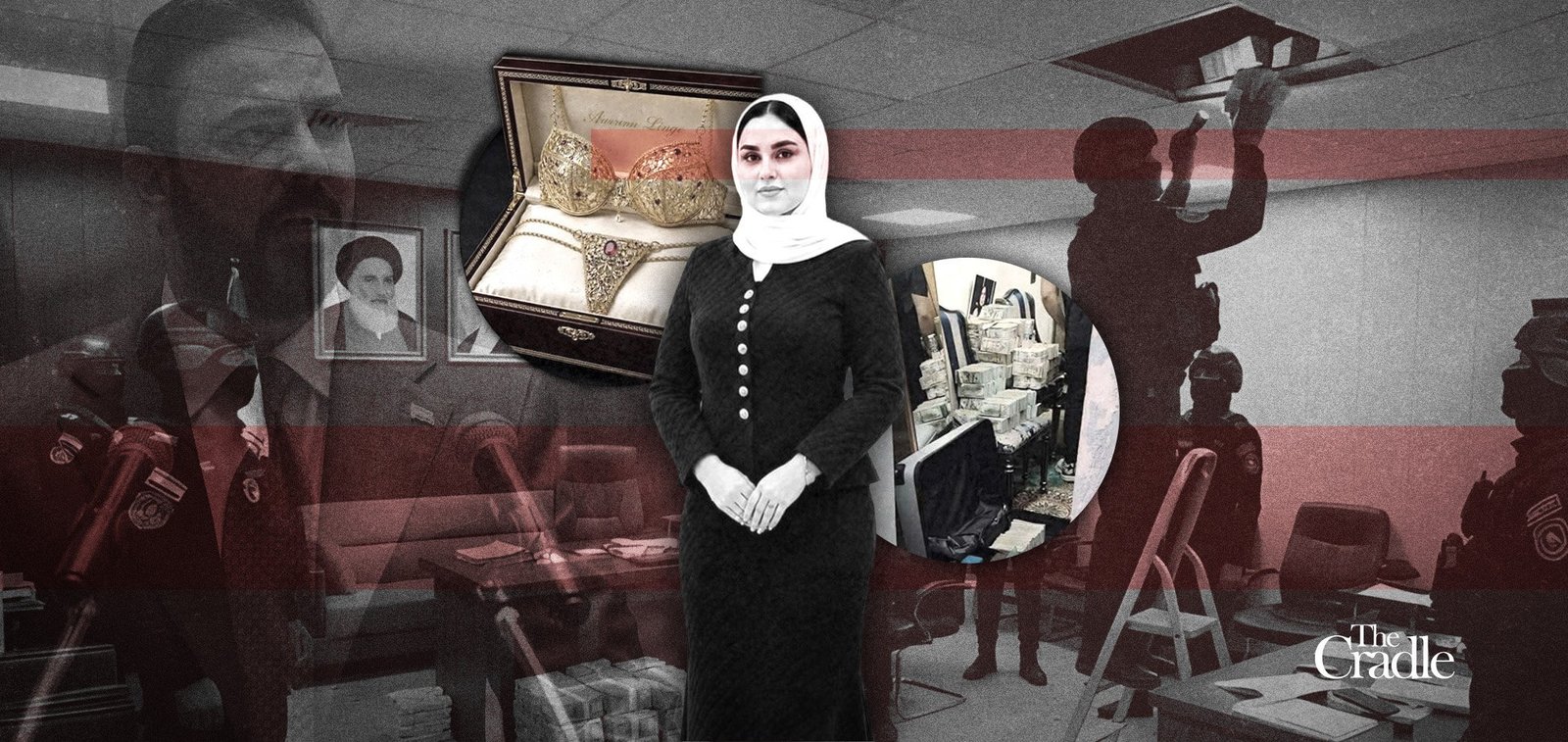
Arrests moved quickly overnight, sweeping up prominent figures, including MPs who had built their profiles on anti-corruption rhetoric and now found themselves among the accused. Reports of large cash seizures during raids on their homes deepened the sense that something more consequential was unfolding.
Across Iraq, reactions have largely converged. Few dismiss the recovery of looted funds, but the caution is just as clear. There is a growing sense the campaign may not stop here, and could move toward more sensitive areas, ones unlikely to be handled through routine measures in the current regional climate.
Inside Iraq’s arrest wave fallout
The operation, codenamed “Dawn,” mixed speed with a show of control as Iraqi forces from the Counter Terrorism Service (ICTS), the army, and specialized integrity agencies launched arrests early Sunday in Baghdad’s Green Zone. Among the locations targeted was the Baghdad Complex, home to officials and members of parliament.
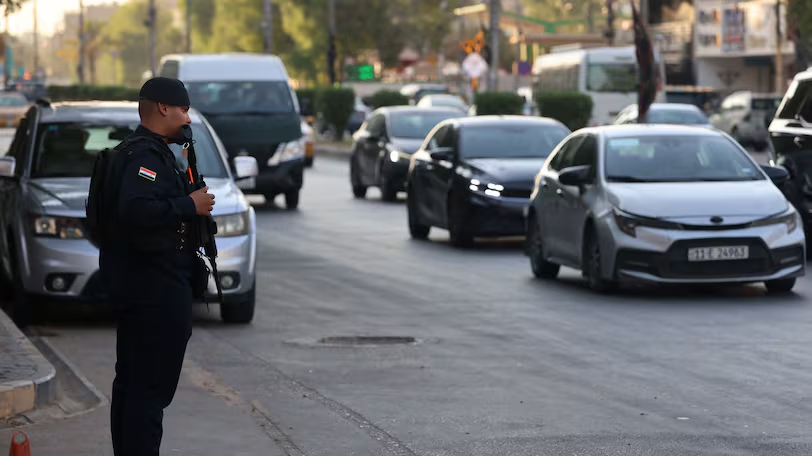
Within hours, it became clear that one of the largest anti-corruption campaigns since 2003 had begun, targeting more than 35 figures across several provinces. The operation was based on confessions by Deputy Oil Minister Adnan al-Jumaili. Security forces then tightened measures, closing several roads leading to the Green Zone, causing heavy traffic congestion before calm returned by midday. All of this took place under the direct supervision of Zaidi.
Authorities had previously arrested Jumaili on 30 May in the Ishaqi area of Salah al-Din province, shortly after a decision to dismiss him from his post as director of the North Refineries Company. He was found in possession of $11 million.
In a statement on 29 June, the Federal Integrity Commission said it had begun executing judicial arrest warrants against a number of suspects accused of misappropriating public funds, stressing that all measures were being carried out in accordance with the law.
Among the most prominent detainees are the leader of the Azm parliamentary bloc, Muthanna al-Samarrai, MP Alia Nassif, who has served in parliament since 2005 and is known for her anti-corruption stance, former prime ministerial advisor Ibrahim al-Sumaidaie, MP Mohammed al-Karbouli – whose brothers have faced corruption charges – and former deputy oil minister Ali Maarej al-Bahadli.
Analysing Iraq’s arrest wave
Speaking to The Cradle, Talib al-Ahmad, a former advisor to the Iraqi prime minister, describes the arrest campaign as the boldest step in this field by the new government. Corruption in Iraq, he says, has gone beyond individual cases to become a widespread phenomenon in a country suffering from significant economic and social problems. He suggests that this campaign may be more serious than previous efforts due to the high-profile names involved.
To dispel suspicions, Ahmad proposes that the public be informed as much as possible about the investigations and trials, in the interest of transparency and to avoid accusations of political motives. He also notes that the campaign targeted figures from different political backgrounds.
He does not rule out that some regional or international actors might have interests in what is happening, particularly in targeting corrupt networks in the oil sector whose activities extend beyond Iraq’s borders. At the same time, he warns that domestic political actors might attempt to distort the government’s anti-corruption campaign by linking it to regional and international agendas.
Iraq’s arrest wave expands
Doubts about the recent government efforts focus on whether they will pave the way for a prolonged process characterized by a security approach targeting sensitive files – most notably the weapons of factions that refuse to disarm. This could open the door to clashes that Iraq has previously experienced and that no one wishes to see return.
While cautiously optimistic about the recovery of large sums for the Iraqi people, political analyst and head of Horizon Center for Studies, Dr Jumaa al-Atwani, questions official statements suggesting that settlements could be reached if suspects agree to return stolen funds.
He tells The Cradle of an earlier episode, when then-prime minister Mohammed Shia al-Sudani publicly displayed bags of seized cash, only for it to end in settlements that kept those involved out of prison and stripped the process of any real accountability. For many Iraqis, the memory of the so-called “heist of the century” still hangs over such cases.
Atwani concludes that corruption in Iraq has reached such levels that parliament itself has at times been preoccupied with legislation that benefits those responsible for looting public funds.
He also traces the current situation back to the formation of the government, which he believes occurred under clear US pressure to exclude major political components. According to him, this trajectory is now being continued through targeting the Popular Mobilization Units (PMU) and various armed factions.
As an example, he notes that Zaidi appointed Iraqi army officers to head PMU brigades, but did not apply the same measure to factions that agreed to disarm.
For Atwani, if settlements are reached with corruption suspects while security measures continue against factions, it would reveal the government’s true intentions – turning a just cause into a false objective.
Some observers warn that anti-corruption efforts could escalate into a regional confrontation within Iraq, especially if Iran perceives that the presence of its allies in the country is under serious threat – particularly those who cooperated with it during the war with the US and launched rockets and drones against Israel or against groups accused of security cooperation with Washington.
These concerns are compounded by reports that the Iraqi government and judiciary received encouragement from US Ambassador to Turkiye Tom Barrack to move forward with judicial proceedings, accompanied by a list of specific names.
Observers note that certain figures – considered economic arms of Iran in Iraq – have not yet been targeted, raising the possibility that the current campaign is only the beginning of broader measures.
Understanding Iraq’s arrest wave future
Set against claims of anti-corruption and accusations of political targeting, another reading in Iraq sees the campaign in narrower terms.
Journalist Ali al-Rubaie interprets the developments as part of the personal ambitions of certain figures seeking to transition from the current phase into a long-term ruling position in the near future. This involves sidelining certain personalities, particularly those associated with the previous phase under Sudani, while appealing to American preferences, which deal with Iraq pragmatically.
Rubaie speaks to The Cradle of a shared American–Arab desire for a genuine anti-corruption campaign but expresses doubts about its realization. He points to unequal settlement offers made to suspects, which undermine the seriousness of government efforts.
He also raises concerns about the comfortable prison conditions that may be provided to some detainees if convicted, recalling past cases where prisoners were allowed to leave for home at certain times and return later, as well as the level of services inside prisons.
Iraq has lived through enough crises to know the cost of war. In recent years, it has tried to steer clear of that path. The question now is whether it holds to that instinct or slips back into familiar patterns.