
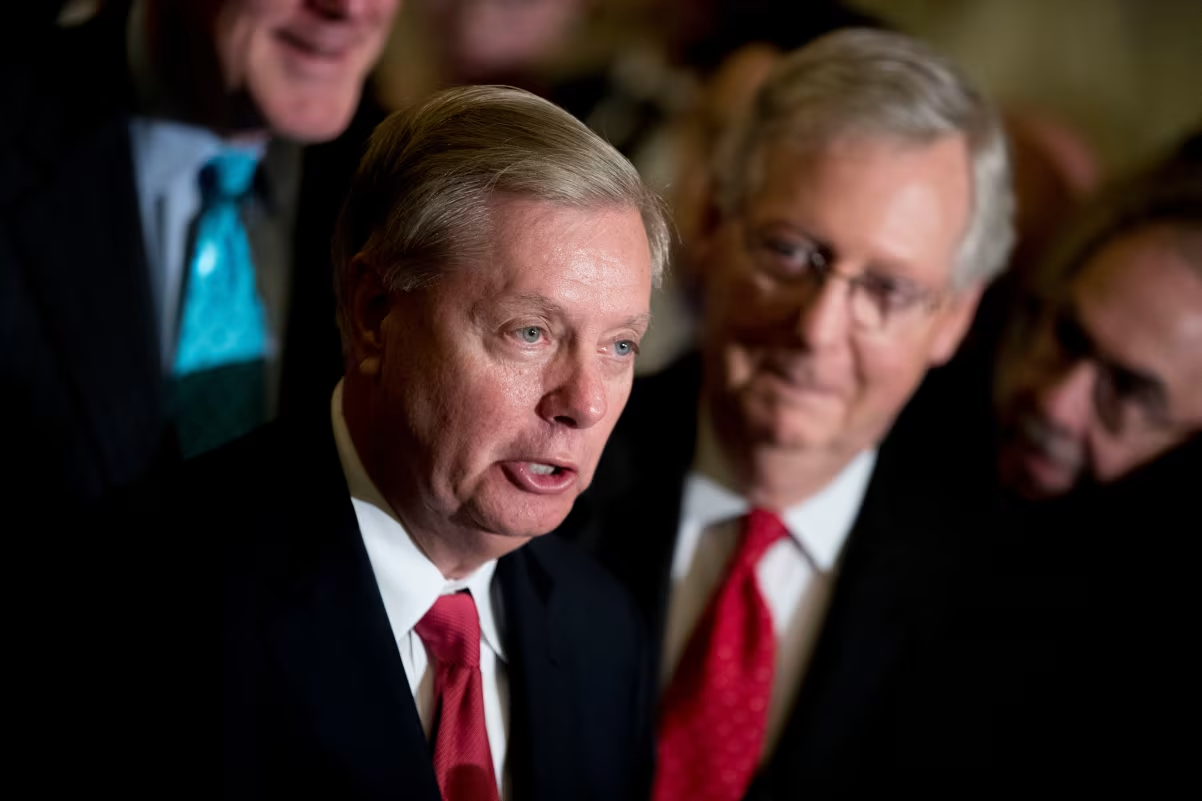
The sudden passing of Senator Lindsey Graham and the ongoing hospitalization of Mitch McConnell signal an abrupt generational transition within the Republican Party. Concurrently, both major parties face deep internal conflicts over their future ideological direction ahead of midterms.
A sudden strategic void is reshaping the American political landscape following the unexpected reality of Graham’s death. As long-serving leaders step aside, the shock of Graham’s death creates an unpredictable vacuum before the critical midterm elections.
Graham’s death alters Washington
The death of Sen. Lindsey Graham and the long hospitalization of Sen. Mitch McConnell, the former majority leader, are poignant reminders that time conquers even political careers marked by great power and ubiquity.
But a closing era in the Senate GOP is also one data point in a wider trend: The tectonic plates of US politics are shifting as postponed generational change beckons, battles rage over the ideological futures of both parties, and leaders struggle to ease voter anxiety over eroded economic security and war abroad.
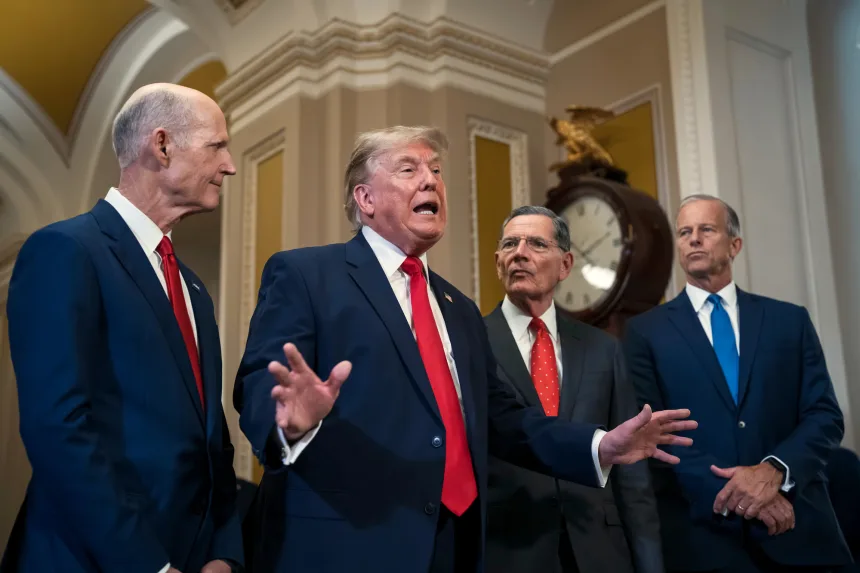
President Donald Trump is wielding power as relentlessly as ever to try to slow the political clock and to dispel the curse of the lame duck. But his fixation with physical monuments to his presidency also speaks to the mindset of an 80-year-old second-termer consumed by legacy.
Once votes are counted after the midterm election in November, the question of what follows his decadelong stranglehold on the GOP will become irresistible.
A parallel succession crisis is already stirring in the Democratic Party, as insurgent progressives challenge establishment power. The debacle over Graham Platner — forced to fold his campaign for the critical Maine Senate seat that could decide the chamber’s fate — suggests the internal and institutional failings that helped Trump win the White House in 2024 persist.
How Graham’s death unfolds
This sense that the old political order is crumbling is reinforced by the failure of either party to offer strong solutions to dispel an affordability crisis.
While Trump boasts of an economic “golden age” that doesn’t ring true for most voters, he’s escalating the war with Iran, which he’s warned could cause a new Great Depression. And he refused to sign a new bill tackling one of the most pressing issues for families — affordable housing — because GOP senators won’t pass a measure indulging his voter fraud falsehoods.
Democrats risk looking just as self-absorbed as they feud over the party’s soul. Democratic leaders are also being rattled with demands for a new, younger corps to take the helm, and democratic socialists are keying into economic angst by demanding a sharp left turn. The establishment, meanwhile, fears losing the political center.
There’s little sign in opinion polls that Democrats have restored the fractured trust of voters. And while Trump’s deep unpopularity might be enough to deliver a blue wave in November, there’s no sense that the party has even crystallized its midterm message yet, never mind broken through to voters.
The party’s internal schism was highlighted by one of its most high-profile candidates, progressive Michigan Senate primary contender Abdul El-Sayed, who sought to widen his appeal Sunday by insisting he’s not “a socialist.” He told CNN’s Manu Raju, “I believe in capitalism. I just believe that capitalism has to be regulated.”
Navigating Graham’s death
Democrat insurgents challenge the establishment — just like Trump did in 2016
In some ways, Democrats are navigating the kind of anti-establishment transformation ignited by Trump — against leaders like McConnell — in the GOP a decade ago.
The Republican’s Party revolution was epitomized by Graham’s ideological pliancy. Once he was a traditional hawk, a down-the-line neoconservative and remnant of Reagan-era foreign policy who stood for much that Trump despised. Yet he became a confidant of the president.
Trump, who spoke to Graham shortly before his sudden death after an aortic tear, said his friend had been full of “vim and vigor.” The president told Jake Tapper on CNN’s “State of the Union” that Graham’s passing was “a terrible loss” and added: “He was a great politician. He was a natural.”
Their closeness was all the more remarkable since Graham had been best friends with Sen. John McCain, one of the last Republican giants to stand up to Trump. Many in the political circle of McCain, who died in 2018, felt betrayed by Graham, given Trump’s incessant mockery of the longtime Arizona senator after his passing.
Graham’s death impacts elections
Critics also claimed Graham harbored a craven tendency to sidle up to power — no matter who held it. But there were some signs that the South Carolina senator bought some influence with Trump, especially after he indicated the president might finally embrace an attempt by Congress to tighten sanctions on Russia over the war in Ukraine. Graham visited the war-torn but defiant nation just before he died.
Graham’s role as a courtier to Trump gave him a measure of influence in the Senate. He could serve as an interlocutor with the president with the Republican Party on Capitol Hill. He operated at the fulcrum of the party’s ideological divides. And in warm tributes, several Democrats, while noting deep political differences with Graham, noted his good humor, friendships and increasingly rare willingness to work across party lines.
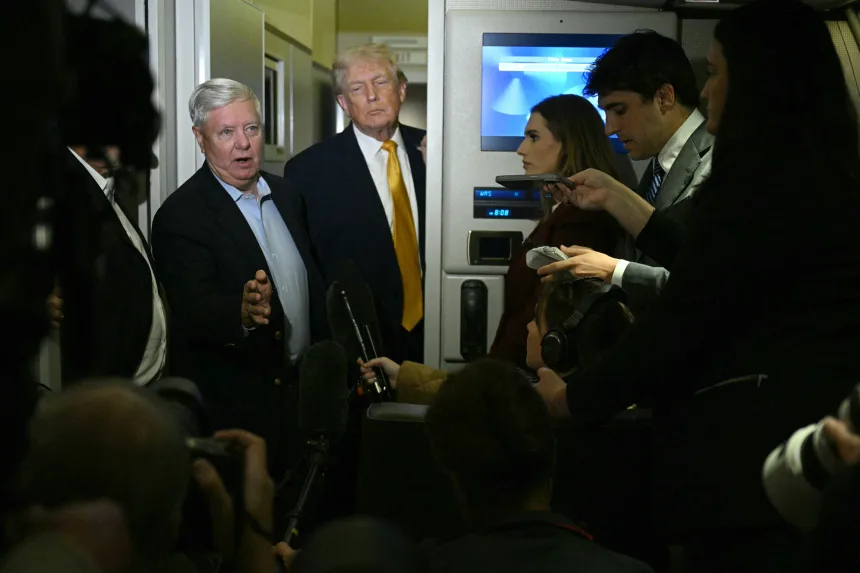
“Many of us consider him the Trump whisperer. If we wanted to know what the president’s thinking was, or how he might be moved on something, you would go to Lindsey to discuss,” Sen. Adam Schiff, a California Democrat, said on NBC’s “Meet the Press.”
Who will fill America’s growing political vacuum?
Graham’s unusual bridge across party lines is now history. And his death will cause other short-term complications for GOP leaders.
Managing Graham’s death consequences
Trump is certain to try to widen a campaign to cement his MAGA legacy by choosing his friend’s replacement in South Carolina in a sprint primary election. The president’s priority bill tightening election registration — which critics see as an attempt to sway the midterms — just lost a huge supporter. So did Ukraine and Israel, which loomed large in Graham’s hawkish worldview. Both nations valued him as a conduit to Trump and an influential voice in his own right.
Those two nations will also soon lose another staunch supporter as former Senate Majority Leader McConnell is due to retire in January. The veteran senator’s legacy will endure long after he’s returned to Kentucky, particularly given his role in delivering a robust conservative majority on the Supreme Court.
McConnell’s swan song has been tainted by his reluctance to provide details of a hospital stay. Last week, CNN exclusively reported that the senator, 84, was taken from his Washington home by ambulance in June.

On Sunday, McConnell told Kentuckians in a long-awaited statement that he hadn’t had a stroke or a heart attack, and that physicians found no tumors, but that he experienced a fall and then a mild case of pneumonia. The former GOP leader, now in a rehabilitation center, vowed to return to the Senate as soon as possible.
McConnell was first elected to the Senate in 1984. Like one of his chief adversaries, Democratic former House Speaker Nancy Pelosi, he can lay claim to one of the most consequential political careers of the early 21st century. And Graham had held his Senate seat since 2003.
The chamber will take some getting used to next year without either Republican titan, in the latest sign that a generation of leaders that dominated Washington politics — and in Graham’s case, political talk shows — is leaving the stage.
At a perilous national moment, when the political system seems unable to answer voters’ most basic needs and both parties face emerging fights over ideology and succession, it is not yet clear who will fill the vacuum.