
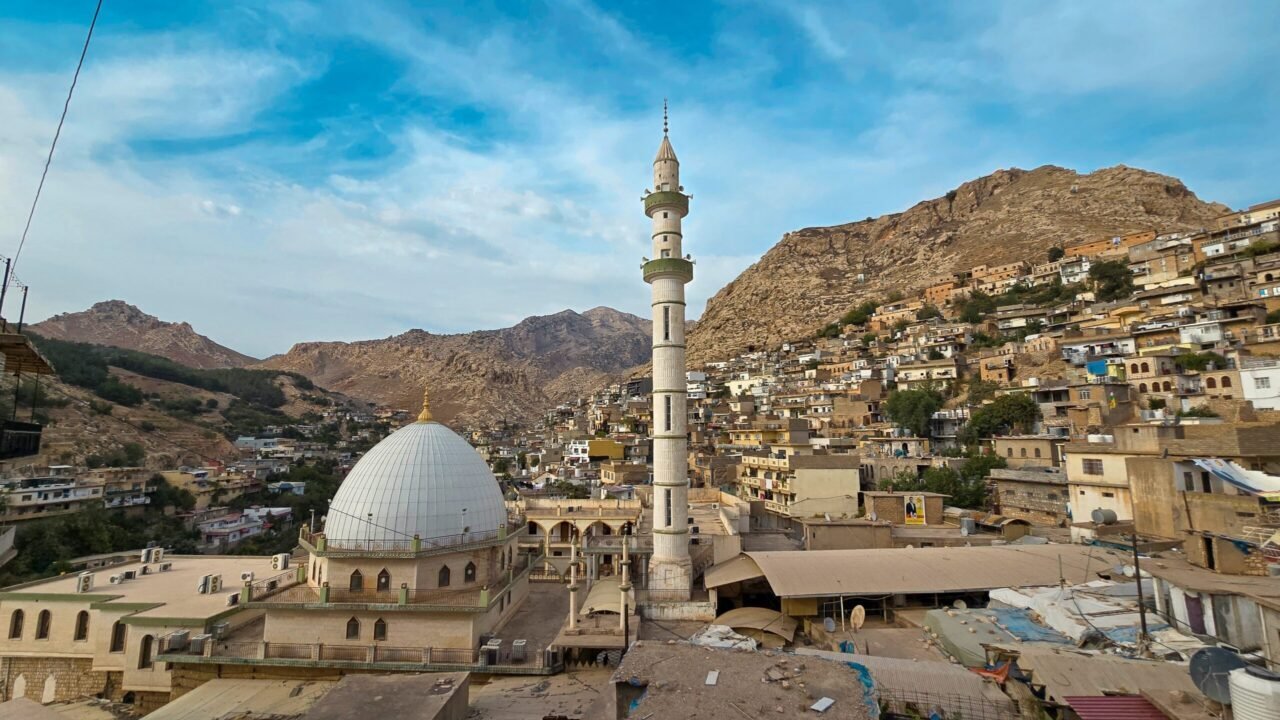
Global stability fractures as traditional rules fail. In Kurdistan, local leaders argue that informal networks, backchannel diplomacy, and virtual recognition offer regional actors a far more sustainable blueprint for survival than raw military coercion.
The rapid decay of global stability has exposed the critical limits of raw military force, demanding a realistic blueprint for sustainable peace. In an era where regional proxy networks and unchecked state rivalries threaten to escalate into broader conflicts, the geopolitical role of Kurdistan has shifted from a historical theater of war into a critical buffer zone. By acting as a quiet mediator between adversarial powers like Iran and the United States, Kurdistan offers the international community a vital model of survival through dialogue.
Kurdistan Reshapes Geopolitical Rules
What is “order” in the context of contemporary international relations? Former Turkish Prime Minister Ahmet Davutoğlu posed this question at a recent geopolitical forum in the Kurdistan Region of Iraq. It is a deceptively simple question. Order is not merely the absence of conflict but rather the existence of accepted rules, recognized institutions, and shared assumptions about the legitimate exercise of power. It is what transforms competition into coexistence and rivalry into a manageable condition rather than a permanent crisis.
For Davutoğlu, international order rests on three pillars: values, rules and institutions. Together they provide predictability and, with it, stability. Yet today, he argues, all three are under strain. “We are in the middle of a huge crisis,” he observed, pointing to a world in which confidence in international organizations has eroded, security guarantees appear increasingly uncertain, and Russia’s invasion of Ukraine has challenged the rules governing territorial integrity. At the same time, he sees a broader crisis of values reflected in the polarising regional consequences of Israel’s actions in the Middle East.
The Crisis of International Order The deeper concern, however, is not that wars are occurring. Wars have accompanied every international system in history. It is that an increasing number of states no longer agree on the principles that define legitimacy, sovereignty, and restraint. The crisis, therefore, is not merely one of security. It is a crisis of order itself.
In Slemani, Iraq, at the crossroads of historic trade routes and contemporary tensions surrounding politics, identity, energy and nationalism, the threat of a world being torn apart is less an abstraction than a lived reality. Here, the fault lines of the international system are not debated in theory but experienced in practice. It is a reminder of Leon Trotsky’s grim observation that “you may not be interested in war, but war is interested in you.”
The forces shaping today’s world are, in many respects, remarkably old. Geography has not disappeared; nor has history. Ancient rivalries, contested identities, and competing visions of political order continue to shape state conduct, even as new technologies and emerging forms of power amplify these dynamics. As Robert D. Kaplan has written, “while an understanding of world events begins with maps, it ends with Shakespeare.” International politics may begin with borders, resources and strategic geography, but its ultimate course is determined by human ambition, fear, pride and miscalculation. States fight wars, but the judgments and failings of individuals often decide them.
The challenge confronting the international community is that the instruments traditionally used to contain disorder increasingly appear inadequate to the scale of the crisis. In a dangerous paradox, the very forces destabilizing the international system are being reinforced by the erosion of the values, institutions and rules that once constrained them. Power remains abundant; consensus does not. The result is a world in which instability is no longer merely a symptom of disorder, but one of its principal causes.
Davutoğlu identified four interlocking issues which, if addressed together, could form the basis of a durable regional settlement: freedom of navigation through the Strait of Hormuz, Iran’s nuclear program, its missile capabilities, and the Palestinian question. Yet identifying the components of peace is considerably easier than constructing it. Statesmen throughout history have generally understood the conditions necessary for stability; far fewer have succeeded in reconciling the competing interests required to achieve it. The consequences of failure, however, extend well beyond diplomacy. They risk perpetuating a cycle of insecurity whose costs are measured not only in geopolitical terms, but in human lives.
The evidence of those costs lies close at hand. Not far from Erbil stands Halabja, where on March 16, 1988, Saddam Hussein’s regime carried out one of the most notorious chemical weapons attacks of the modern era. Mustard gas and nerve agents—produced with components sourced from abroad—killed and maimed thousands of Kurdish civilians. Halabja remains a stark reminder that the collapse of political order is never an abstract phenomenon. It ultimately reveals itself in human tragedy.
How Kurdistan Mediates
It is therefore one of history’s quieter ironies that Kurdistan, long associated with statelessness, conflict and survival, now seeks to position itself as a connector: between Iran and the United States, between rival regional actors, and between competing visions of the Middle East’s future. Having experienced the costs of instability more directly than most, it increasingly seeks to make the case for dialogue over confrontation. In this respect, Kurdistan’s ambitions reflect a broader truth: history’s most credible advocates for order are often those who have witnessed its absence.
Assuming such a role, Kurdistan also highlights a frequently overlooked reality of international politics: that personal relationships often succeed where formal mechanisms fail. At moments of heightened tension, channels of trust can prove as important as military capabilities, while dialogue can achieve outcomes that coercion alone cannot.
As Bafel Talabani, leader of the Patriotic Union of Kurdistan (PUK), observed: “You can’t bomb people into loving you.” His point extends beyond the immediate conflict. Military power can destroy infrastructure, degrade capabilities and alter strategic calculations, but it cannot manufacture legitimacy or political consent. Indeed, Talabani argues that the recent bombing campaign against Iran by the United States and Israel has had the opposite of its intended effect, strengthening public solidarity with the Iranian state as a natural human response to external attack, regardless of domestic grievances against the regime itself.
This, he suggests, reflects a broader strategic misunderstanding. Policymakers too often place greater weight on the views of politically active diaspora communities than on the perspectives of those who must live with the consequences of conflict on the ground. History offers repeated examples of this phenomenon. States frequently overestimate the ability of military action to reshape political realities, while underestimating the enduring power of identity, nationalism and collective memory. Coercion can alter behavior; it rarely alters belonging.
Pursuing peace without clear, realistic and attainable political objectives risks becoming an exercise in contradiction. It recalls the infamous observation associated with the Battle of Ben Tre during the Vietnam War: “It became necessary to destroy the town to save it.” The phrase has endured because it captures a recurring strategic error—the confusion of military activity with political success.
The same principle is reflected in the oft-cited observation attributed to Sun Tzu: “Strategy without tactics is the slowest route to victory. Tactics without strategy is the noise before defeat.” Whatever the source, the underlying lesson remains valid. Military operations can create opportunities, but they cannot by themselves define a political end state. Force is a means, not a strategy.
History repeatedly demonstrates that military power unaccompanied by a viable political vision rarely produces durable outcomes. A sustainable peace requires more than battlefield success. It demands clearly defined objectives and a coherent integration of diplomatic, military, and economic instruments. Order emerges not when wars are won, but when a political framework capable of outlasting them is established.
For Bafel Talabani, this is ultimately a matter of patience and strategic perspective. Like Ahmet Davutoğlu, he argues that stability cannot be achieved through isolated interventions or temporary arrangements. Rather, it requires a comprehensive regional settlement capable of addressing the underlying sources of tension, including the Palestinian question and the conflict in Lebanon. Lasting peace, in other words, demands confronting the causes of disorder rather than merely managing its symptoms.
Internal Cohesion of Kurdistan
To play the role of a regional connector or mediator, Kurdistan must first succeed on its own terms. Credibility abroad ultimately rests upon coherence at home. This requires managing the long-standing division between the region’s two principal centers of power, Erbil and Slemani, represented respectively by the Barzani and Talabani political traditions. Historically, this fragmentation has constrained not only Kurdish governance but also the region’s ability to project influence beyond its borders.
Success also demands building on Kurdistan’s existing strengths while addressing its structural vulnerabilities. Its strategic location, energy resources and ability to maintain working relationships across a deeply fractured region provide significant advantages. Yet these assets alone cannot guarantee long-term prosperity. Economic diversification is not merely a developmental objective; it is a strategic necessity in a world where resilience increasingly matters as much as growth.
The challenge is equally societal. Sustainable development requires a broader mobilization of human capital, including the full participation of women, who have too often been marginalized from educational, economic, and political opportunities. No society can realize its full potential while limiting the contribution of half its population.
As Qubad Talabani, the deputy prime minister of the Kurdistan Regional Government, observes: “Success is not just growth; it is sustainability.” The distinction is an important one. Growth measures performance in the present. Sustainability determines whether success can endure into the future.
Kurdistan Navigates Global Fractures
Yet there are limits to what local actors can achieve. The forces reshaping the international system extend far beyond Kurdistan or even the Middle East. The geopolitical foundations of the post-1945 order are being steadily transformed by shifts in power, changing strategic priorities, and growing uncertainty about the West’s willingness and ability to uphold the framework it once created.
This is not simply a question of military capability. The United States and its allies remain collectively stronger than any rival coalition. Rather, it is a question of credibility and political resolve. Deterrence ultimately depends not on power alone, but on the belief that power will be used when necessary. The experiences of Afghanistan, the prolonged war in Ukraine, and the growing paralysis of multilateral institutions have raised uncomfortable questions about the durability of that belief.
The United Nations reflects this dilemma. Designed for a world that emerged from World War II, it increasingly struggles to address the realities of the 21st century. Its shortcomings stem not only from institutional dysfunction, but from a deeper problem: the gradual divergence between the distribution of power in the contemporary world and the structures established to govern it. Yet while criticism of the existing order is widespread, consensus on a replacement remains elusive.
This uncertainty has encouraged growing discussion of a multipolar world and the emergence of alternative centers of influence, including the BRICS grouping. Yet multipolarity should not be confused with legitimacy. The question confronting the international system is not merely who exercises power, but to what end and according to which principles. While dissatisfaction with democratic governance is evident in many parts of the world, surveys consistently show that a substantial majority of citizens continue to prefer democratic government to available alternatives. The crisis of the current order, therefore, should not be mistaken for a rejection of the values upon which much of that order was built.
The world today finds itself in an increasingly familiar historical condition: the old order commands less confidence than before, but no new order has yet acquired sufficient legitimacy to replace it. It is in such intervals that uncertainty becomes most dangerous.
With rising political turmoil and an increasingly fragile consensus around values, rules and institutions, the present moment feels less like a post-war world than a pre-war one. The concern is not that conflict exists—conflict is a permanent feature of international affairs—but that many of the assumptions that once constrained it are steadily eroding. History’s greatest dangers often emerge not from the presence of rivalries, but from the absence of agreed mechanisms to manage them.
This is not someone else’s problem. The choices made today regarding defense, foreign policy, national resilience and public investment will shape the strategic environment of tomorrow. Order is not self-sustaining. It depends upon decisions, commitments and, ultimately, the willingness of societies to bear the costs of preserving it. For smaller states and those on the periphery of the global economy, the consequences of strategic complacency are often even greater, since they possess fewer resources with which to absorb the shocks of international disorder.
The war in Ukraine illustrates the stakes involved. Its significance extends beyond territory or national survival. It has become a test of whether sovereignty remains a meaningful principle of international conduct or merely a norm observed when convenient. A failure to support Ukraine would not simply alter the balance of power in Europe; it would further weaken confidence in the rules that underpin international stability.
Yet preserving order requires more than resisting aggression. It also demands the construction of a broader and more durable peace. Progress in Ukraine and progress in the Middle East should not be viewed as separate challenges, but as interconnected elements of a wider effort to restore strategic equilibrium. Such an undertaking cannot be approached transactionally, nor can it be reduced to commercial incentives or temporary arrangements. Durable orders are built over generations. They emerge when states are capable of thinking beyond immediate crises and begin instead to shape the political conditions under which future generations will live.
History’s greatest dangers often emerge not from the presence of rivalries, but from the absence of agreed mechanisms to manage them.
How Kurdistan Survives
One way of approaching these challenges is to think beyond the traditional constraints of geography and sovereignty. Conventional international relations assumes that power flows from recognized statehood, territorial control and access to strategic resources. Yet the Kurdish experience suggests that influence can sometimes be exercised through less conventional means.
“We are surrounded by Persians, Arabs and Turks,” notes Qubad Talabani, “and cut off from the sea. We do not enjoy international recognition as a state.” The failure of the 2017 independence referendum would appear, on the surface, to reinforce these limitations. Yet Talabani poses a more provocative question: “What more would that give us than what we enjoy today, since we have good relations with all our neighbours through ‘virtual recognition’?”
International politics has traditionally treated recognition as a legal condition. Yet in practice, influence often depends less on formal status than on relationships, credibility and utility. States are recognized on paper; political realities are recognized in practice. The history of diplomacy is filled with actors whose influence exceeded their formal position and with states whose formal sovereignty concealed strategic weakness.
Kurdistan’s experience points towards a broader lesson. In an increasingly interconnected world, legitimacy may derive as much from functionality as from formal recognition. The ability to facilitate dialogue, attract investment, provide security and maintain constructive relations with neighbors can, under certain circumstances, matter as much as the symbols of statehood themselves. Geography remains important, but it need not be destiny.
Whatever the outcome of today’s geopolitical twists and turns, a quote by Albert Einstein is written on the wall of the conference venue in Slemani: “We cannot solve our problems with the same thinking we used when we created them.”
The observation resonates far beyond Kurdistan. Much of the contemporary debate about international affairs remains trapped between nostalgia for a fading order and anxiety about one that has yet to emerge. Yet history rarely rewards those who simply defend the familiar. The architects of durable orders have generally been those capable of imagining political possibilities beyond the constraints of the moment.
In this respect, it is difficult not to think of Jalal Talabani, the late Kurdish leader and former president of Iraq. Throughout a life spent navigating revolutions, wars, betrayals and shifting alliances, Talabani acquired a reputation for speaking to everyone. Friends and adversaries alike were rarely treated as permanent categories. As one observer remarked, Talabani possessed a remarkable ability to pursue seemingly contradictory paths simultaneously—not because he lacked principles, but because he understood that politics is ultimately the art of preventing today’s adversary from becoming tomorrow’s catastrophe.
There is a lesson in that approach. Geography cannot be changed. Neighbors cannot be relocated. History cannot be undone. But relationships can be managed, interests can be aligned, and conflicts can be contained. In an era increasingly defined by fragmentation, this may prove to be the most valuable form of statecraft.
The challenge confronting the world today is therefore not simply how to preserve order, but how to reimagine it. And perhaps the first step is recognizing a truth that Jalal Talabani understood instinctively throughout his life: there are no permanent solutions in politics, but neither are there permanent enemies. There is only the continual task of building enough understanding to prevent disagreement from becoming disaster.