
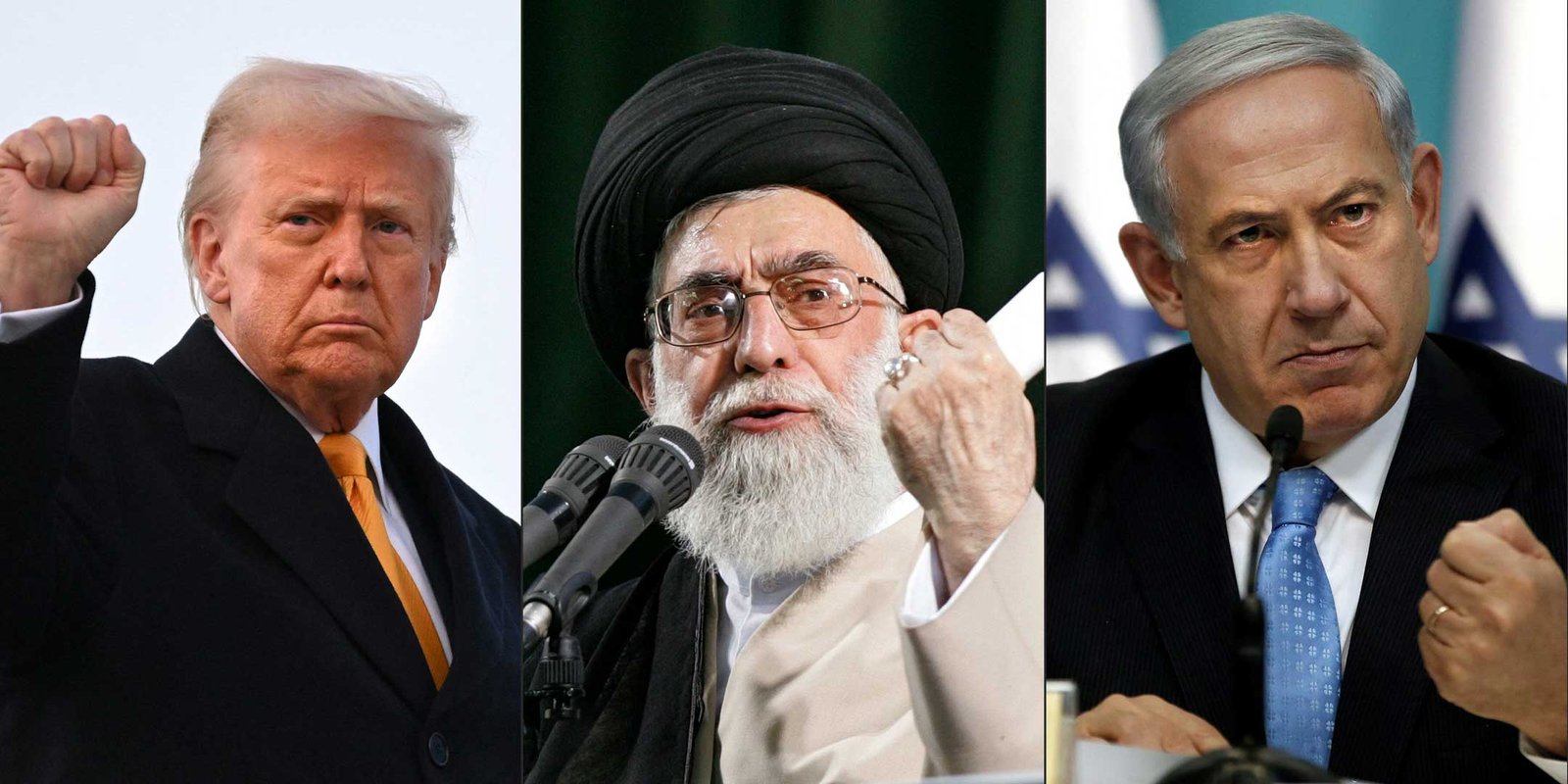
International Crisis Group, in an article, has warned of the risk of renewed conflict between Israel and Iran and called for the use of diplomacy to reduce tensions.
As Israel’s Operation Rising Lion pummels Iran, the U.S. is weighing direct involvement to attack nuclear sites in the country, which could lead to a disastrous escalation. Washington should instead look to diplomacy, while Tehran should offer meaningful incentives for it to do so.
Less than a week after Israel launched Operation Rising Lion, a military campaign aimed at severely degrading Iran’s nuclear program and removing the threat of its missiles, a decision point looms for the United States. Having spent months trying to persuade the Israeli government to slow its military plans while Washington tried to negotiate a new nuclear deal with Tehran, U.S. President Donald Trump is now showing possible interest in joining Israel in the fight. On 19 June, the White House said he will make a decision within two weeks.
Days of Israeli airstrikes and covert operations have decimated the senior ranks of the Iranian military, killed prominent nuclear scientists (and many other civilians) and damaged several nuclear facilities. Israel has destroyed air defences and offensive military assets, in addition to striking oil facilities and the state broadcasting service. It has cyber-attacked Iran’s financial system. Iran has exacted a cost, too – damaging Israel’s military headquarters in Tel Aviv and an oil refinery in Haifa, as well as killing at least two dozen civilians.
Yet in order for Israel to set back the Iranian nuclear program as much as it wishes, it will likely need, at the very least, U.S. help to penetrate the heavily fortified uranium enrichment facility at Fordow. From there, Israel’s objectives could continue to widen, with a push to go beyond crippling Iran’s nuclear and conventional capabilities to trying to topple the regime that has developed them. (Israel could cite the difficulty of verifying damage to the nuclear program without inserting ground forces as an argument for ratcheting up the war.)
On the morning of 19 June, following an Iranian missile’s direct hit on the Soroka hospital in southern Israel, Israeli Minister of Defence Israel Katz announced for the first time that Israel explicitly intends to target Iranian government offices. He seemed to suggest as well that the Islamic Republic’s supreme leader, Ayatollah Ali Khamenei, could himself be in Israel’s crosshairs.
Things did not have to come to this pass. During his first term in office, Trump withdrew the U.S. from a multilateral deal signed in 2015 that placed strict limits on Iran’s nuclear program and provided for international monitoring. The Trump administration’s own intelligence assessments cast doubt on Israel’s assertions that its campaign is necessary to stop the Islamic Republic from building a bomb imminently. But now that Israel has struck – and Iran has hit back – the options for avoiding a larger conflagration have dwindled.
With Israel reaching for a decisive strategic win, it is a time for extreme caution among all those whose actions could widen the war. While Trump appears to have given diplomacy a welcome two weeks, there remains a serious prospect that at some point soon he will jump into Israel’s war with Iran. Should he do so, he risks joining the bipartisan ranks of U.S. presidents who underestimated the risks of conflict in the Middle East at a huge cost to regional stability, U.S. power and their own legacies.
At the same time, if a defiant Iranian leadership overplays its increasingly weak hand, and fails to entice Washington into a deal, it could spell disaster for the Islamic Republic, the long-suffering people under its rule and surrounding countries. The window for stopping this conflict is narrowing by the minute, but there may still be an opportunity for eleventh-hour diplomacy to succeed if Iran comes to the table willing to make meaningful concessions and the U.S. comes with its eyes on reaching a deal.
Israel Gains and the U.S. Pivots
Israel’s operation against Iran caps its devastating campaigns against Tehran’s non-state allies in Gaza and Lebanon, following Hamas’s 7 October 2023 attacks. It also follows the collapse of Iran’s main state partner, Bashar al-Assad’s regime in Syria. Israel’s successes in degrading the “axis of resistance”, as the Islamic Republic calls its network of regional alliances, have eroded Iran’s retaliatory capacity and that of its allies. They have also emboldened Israeli military planners, who boast of aerial dominance over Iran.
The sense that Israel’s campaign in Iran is faring well now appears to be influencing U.S. decision-making. Prior to the first Israeli strikes on 13 June, President Trump indicated that he wanted to give nuclear talks with Iran another chance; indeed, a sixth round was slated for 15 June. When Rising Lion began, the U.S. briefly sought to distance itself, with Secretary of State Marco Rubio stating that “tonight, Israel took unilateral action against Iran. We are not involved in strikes against Iran and our top priority is protecting American forces in the region”. But as Israel’s successes have mounted, Trump’s public support for the campaign, and his touting of the U.S. role in making it happen, have increased.
Trump’s pivot on Israeli military action caught some administration watchers by surprise. U.S. non-interventionists on both sides of the political aisle have long worried that Israel would pursue a war with Iran in hopes of drawing U.S. forces into the melee.
Yet Trump seemed poised to push back against any such effort. In all three of his presidential campaigns, he caviled against failed U.S. interventions in the Middle East. Some of his closest political allies are vocal non-interventionists. He pointedly kept Iran hawks out of his administration and chose “restrainers” like Vice President JD Vance for key posts, though they were balanced by more hawkish appointees like Rubio – now double-hatted as secretary of state and national security advisor.
Although in March Trump greenlit U.S. bombardment of the Iran-aligned Houthi authorities in Yemen, he reversed that decision mere weeks later, in a ceasefire deal with the Houthis that did not include their missile strikes on Israel and was widely seen as a victory for the restrainers. He has taken a series of steps on other regional issues, such as announcing the intent to lift U.S. sanctions on post-Assad Syria, that suggest he is not wholly aligned with Israeli policy preferences.
So, why the pivot? In part it owes to tensions between interventionist and non-interventionist camps in Trump’s own administration. But it may also reflect his impression that he was being slow-walked by Iranian negotiators; worries about International Atomic Energy Agency (IAEA) reports that showed stonewalling on safeguards investigations and growing uranium stockpiles; and concerns about Israeli intelligence suggesting that Iran was seeking to covertly turbo-charge its pursuit of a nuclear weapon.
Israeli pressure also plays a role. Over decades, Netanyahu has personally and insistently lobbied for U.S. intervention against Iran, opposing measures that could restrain Iran’s nuclear program rather than end it entirely. Israeli officials now contend that only U.S. bombs can bring the war they started to a swift conclusion, an argument made more pressing with millions of Israelis huddling in shelters. Their statements are buttressed publicly and privately by Iran hawks in the U.S.
Against this backdrop, the White House seems to be moving closer to inserting itself into the conflict. For several days, Trump and his administration stuck to the message that the U.S. had assumed a defensive posture, which would shift only if Iran or its non-state allies were to target U.S. interests, assets or personnel. But then that line appeared to erode. On 17 June, Trump posted on his social media site, Truth Social, that the U.S. wants to see Iran’s “UNCONDITIONAL SURRENDER”.
Meanwhile, observers have noted unusual numbers of tanker aircraft and fighter jets in transit from the U.S. to Europe and the Middle East. Trump has been coy about whether or when the U.S. might enter the war, and he has not sought congressional approval to do so (a legal requirement that he would likely shrug off), but his rhetoric has certainly been ominous.
Perhaps Washington hopes that the combination of bluster and shows of force will push Tehran toward huge concessions in a nuclear deal more sweeping than the one concluded in 2015, while also deterring Iran from attacking U.S. assets in the region.
But the influx of U.S. personnel and weapons could also be preparation for U.S. military action if Iran refuses to offer terms that Washington finds acceptable or if Trump is overtaken by impatience. In that scenario, Israel would likely rely on the U.S. to try to finish the job it started by using bunker-busting bombs, delivered by U.S. bombers, reportedly requiring several sorties, to disable if not destroy the underground Fordow facility.
Already prominent hawks like Senator Lindsey Graham argue that the U.S. should give Israel the support it needs, so as to take advantage of seemingly depleted Iranian defences and retaliatory capacity. Much of the pro-war bombast seems intended to persuade Trump that a U.S. attack on Fordow would be a high-profile, low-risk use of force that would give him an enduring strategic “win” – though he appears to have doubts about the efficacy of such a strike.
He should. Since the war began, the IAEA has been unable to visit Fordow. Buried deep in a mountain, the enrichment plant may have a degree of protection from even the biggest bombs. As a practical matter, it could take weeks following the bombing of the facility to assess whether the highly enriched nuclear material there was destroyed or already moved away by Iranian personnel who anticipated the strike – and even then, uncertainty may remain. But when it comes to risks, that is just the tip of the iceberg.
Risks Every Which Way
An escalation of the Israel-Iran war poses risks for each of the current and potential conflict actors that should cause all three to exercise extreme caution in choosing their next moves.
As concerns the U.S., such a move would create formidable risks in three main categories. First, there is the danger of immediate escalation. A regime in Tehran that sees the choice before it as surrendering or fighting to the last might well opt for the latter, notwithstanding its diminished capabilities.
It could then expand the conflict by attacking U.S. personnel, assets and allies, as well as shipping lanes. Indeed, U.S. officials are already reportedly preparing for several retaliatory scenarios, including the targeting of U.S. bases in the region and increased naval threats either from Iran or the Houthis in Yemen.
On 18 June, U.S. Ambassador Mike Huckabee announced the voluntary evacuation of U.S. diplomats and citizens from Israel. While Trump may believe that he can win any tit-for-tat escalation with the overmatched Iranian military, no one knows what kind of damage a cornered, nothing-left-to-lose Iran might inflict – not just on U.S. and Israeli targets, but elsewhere in the region and (by way of surging oil prices) on the global economy. For this reason, U.S. security partners in the Gulf, while hardly friends of the Iranian regime, have generally worked behind the scenes to persuade the U.S. to keep its distance from the conflict.
Secondly, there is the risk of what happens after the conflict is over. Hawks in both Israel and the U.S. hint that a byproduct of an intensified war could be regime change in Iran. Historically, a military campaign reliant on airpower alone is unlikely to spark a revolution, though anti-regime sentiment could certainly fuel mass unrest. But whether or not the regime hangs on, attacking political leaders and state institutions could create a dangerous vacuum at the heart of a region critical to U.S. interests and partners.
The result might be state failure or protracted conflict – much like the U.S. has seen in the aftermath of its interventions in Afghanistan, Iraq and Libya. Here, Washington should consider that it and Israel may view such a potential end state differently. For Israel, a weak, messy Iran might be a desirable outcome. But the U.S. ought to know from bitter experience that the chaos of such destabilisation can harm U.S. interests and the U.S. president’s own legacy. (In Trump’s case, there is also a risk that a botched intervention broadens intra-party fissures between hawks and restrainers that have been prominent in recent days.)
Thirdly, there is a risk that the main objective – a denuclearised Iran – remains unachieved. Absent a root-and-branch rewiring of the country’s politics, it could be just a matter of time before the program is reconstituted. The regime might also sprint for a weapon while the current war is unfolding, in the hope of securing the ultimate deterrent. The chances of success may be minimal, but the risk cannot be discounted.
As for Iran, the longstanding insistence on domestic enrichment capacity has entailed decades of sanctions and now military consequences that stand to get much worse. The regime is loath to back down from a red line it has marked as a matter of national pride. But the consequences of sticking to its proverbial guns could be devastating for the Iranian people, as Iran winds up a failed state, with all the disorder, hardship and misery that entails.
Nor does Israel, for all the wind in its sails, have reason to be sanguine about widening the scope of the conflict without an exit strategy or off-ramp. It, too, could find itself in a protracted campaign of attrition, with a trickle of missiles every day forcing its ten million people to keep dashing into shelters and paralysing the economy as the cost of destroyed property and infrastructure mounts. An end to this conflict is something that everyone has reason to want.
Last-ditch Diplomacy at a Dangerous Moment
The diplomatic path is very narrow – but until the U.S. decides whether to go to war itself, it is not entirely closed. The key question now is how Washington and Tehran will use the two-week window that the White House has announced.
On the U.S. side, the Trump administration may believe that, with Israel’s recent gains and with war drums sounding in Washington, it is at a point of maximum leverage with Iran. But for that leverage to be meaningful, it will need to show patience, allow negotiations to proceed and invite an offer from Tehran.
For its part, Tehran needs to skip charades involving indirect negotiations and up its game. More important than the flurry of last-minute diplomatic initiatives is the question of what Iran is prepared to put on the table. It should proffer a concession capable of persuading President Trump to force an end to the war.
As for what that should entail, though few in Tehran will want to hear it, the best course of action – perhaps the only one on offer now that can stave off U.S. military involvement – is to concede that Iran will no longer enrich uranium on its sovereign soil. As an alternative, Iran could accept the principle of entering a multinational nuclear consortium with regional states, as discussed in theory during its negotiations with the Trump administration. The U.S. could be a stakeholder in such an initiative, with international monitoring complementing mutual inspections by regional parties.
As part of a cessation of hostilities, Iran’s government could also agree to what in essence would be a non-aggression pledge not to attack Israel, either directly or through proxies – yielding on an ideological animus that has served neither its people nor the Palestinian cause it purports to champion. Israel would have to reciprocate.
If Iran decides not to offer a deal of this nature, that does not mean the U.S. should jump into what could be a disastrous conflict. But under the circumstances, Tehran should not bank on cooler heads prevailing in Washington.
The deal sketched above is one that all three parties should be able to live with, particularly given the horrific alternative that seems all too close. Neither Trump nor Tehran wants an expanded war, and Israel stands to suffer from it as well. The White House should take the two-week pause it has announced to give last-ditch diplomacy a chance, Tehran should put this deal on the table and Trump should seize it.