

Unsanctioned Iranian flights into Sanaa provoke severe coalition responses, damaging airport infrastructure and exposing broader territorial breaches. Houthi alignment with Tehran continues to obstruct UN-backed political dialogue.
Iranian flight operations over Sanaa directly challenge Yemen’s sovereignty, forcing regional coalitions to take aggressive countermeasures. Unsanctioned air corridors established by Tehran undermine the country’s territorial authority, triggering runway strikes and escalating tensions across the southern Arabian Peninsula.
Air Corridors Threaten Yemen’s Sovereignty
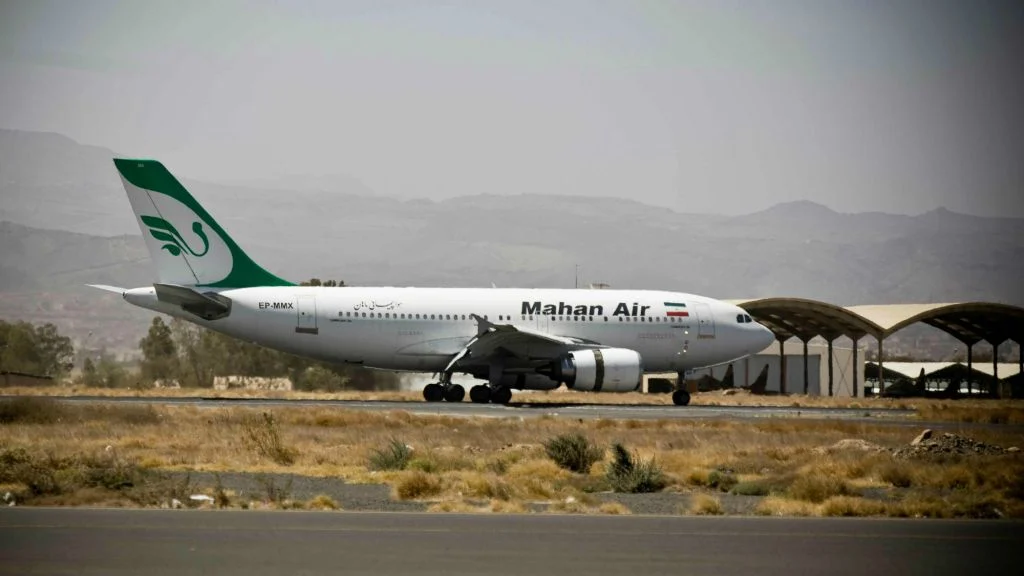
Iran has caused consternation after sending a civilian aircraft to collect and return Houthi officials for the funeral of Supreme Leader Ali Khamenei, who was killed on 28 February on the first day of the US-Israeli war again the Islamic Republic. The funeral ceremonies for Khamenei were on a scale unprecedented in the Shi’ite world. Through this, Iran aimed to send a message to the West, to demonstrate the greatest possible solidarity with Iran. The airlift occurred while Tehran continued to attack other countries in the region on the grounds that it was targeting interests in response to American aggression.
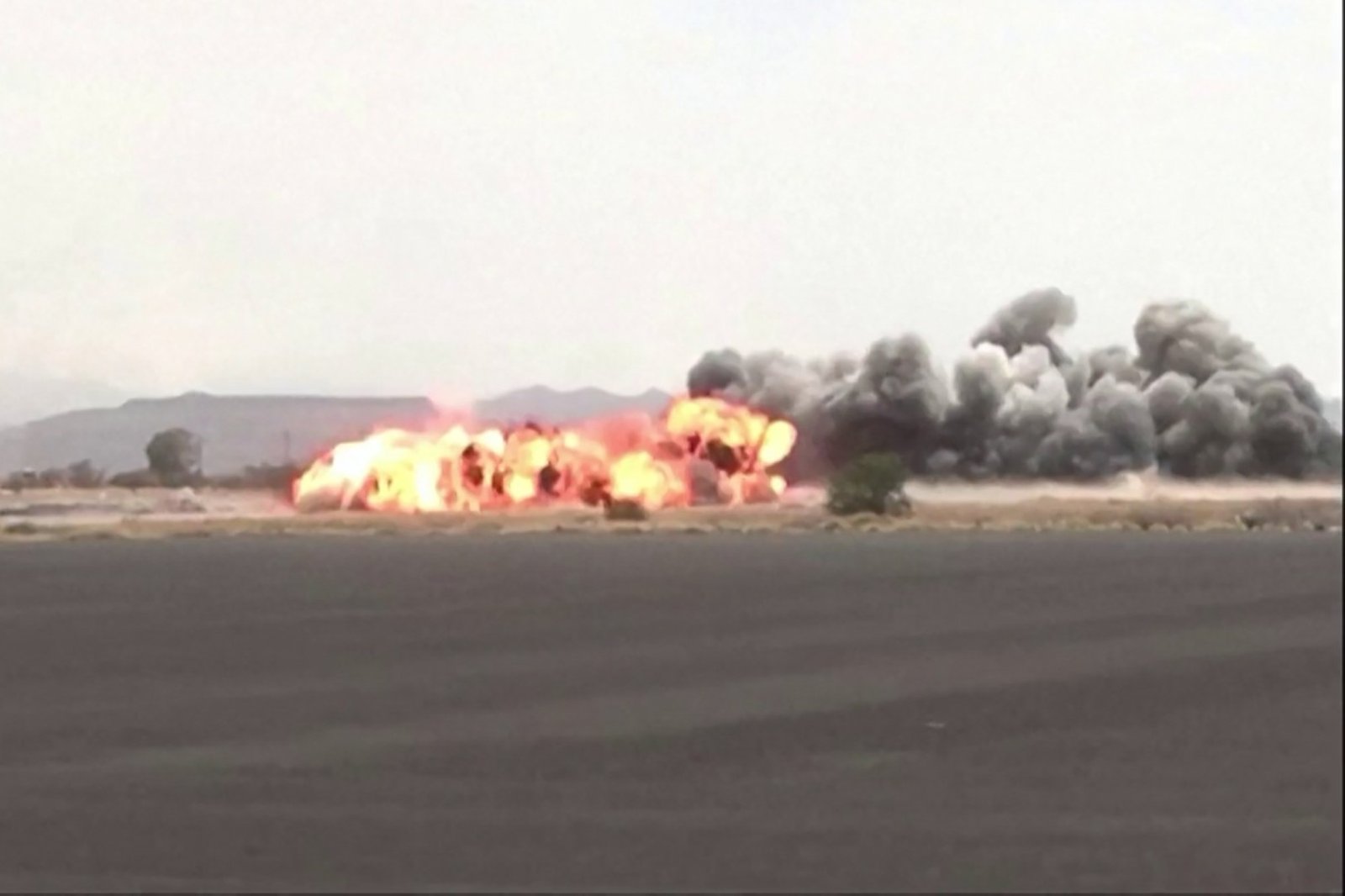
Yemen has no connection to the US-Israeli war against Iran, nor to Iran’s attacks on the interests of others in the region, so Iran’s actions add to a growing list of grievances, illustrating Tehran’s hostile posture by breaching Yemeni airspace. It coincided with military action by the coalition supporting Yemen’s internationally recognised government. According to the Houthis, the coalition destroyed the runways at Sanaa Airport to prevent the Iranian aircraft from returning, but the aircraft instead landed at Hodeidah Airport, on Yemen’s western coast. In response, the Houthis launched missiles at Saudi Arabia’s southern border, which were intercepted.
Unsanctioned Flights Challenge Yemen’s Sovereignty
Human rights activist Huda Luqman captured the prevailing sentiment among Yemenis of differing political backgrounds. The Iranian transport was about “more than a flight,” she said. “It was a message about sovereignty and regional power in the clearest possible terms. Disregarding official warnings and proceeding with the landing despite publicly stated objections went beyond a challenge to measures on the ground; it tested the limits of Yemeni sovereignty and sent a message to the region.”
Whether Iran intended to test the patience of the coalition supporting Yemen’s internationally recognised government, its actions can lead only to further escalation in a country that can ill afford it. Following an emergency meeting of the UN Security Council to discuss developments in Yemen, the United Nations said recent developments there were “a reminder that there is no alternative to an inclusive political process led by Yemenis” and that a negotiated settlement reached through dialogue under UN auspices “can provide a lasting and sustainable resolution”.
Defensive Actions Protect Yemen’s Sovereignty
In a briefing to the emergency meeting, Khaled Khiari, the UN Assistant Secretary-General for the Middle East, Asia and the Pacific, stressed that Yemen and the wider region “cannot afford another round of escalation”. He urged all parties to engage constructively in negotiations, as they were “essential to ensuring de-escalation and improving safe, predictable and sustainable civilian air access, among other priorities”.
There are genuine difficulties affecting air travel to and from Houthi-controlled areas, and a political settlement is essential to avert military escalation and prevent further destruction of what remains of the country’s infrastructure. However, all mediation efforts have so far proved futile, with the Houthis—who control the capital, Sanaa—having not yet honoured any agreements.
Protecting Yemen’s Sovereignty Requires Tight Control
Iran has financed, trained, and armed the Houthi militia. By seeking the Arab coalition’s assistance in preventing the Iranian aircraft from landing at Sanaa Airport for a second time, the Yemeni government therefore took aim at the Houthis’ strategy. The militia will have been surprised by the bombing of Sanaa’s runways, particularly after threatening Saudi Arabia and declaring that the Sanaa-to-Tehran air route would continue.
Statements from Yemen’s internationally recognised government, which is backed by Saudi Arabia, indicate that it has no objection in principle to the resumption of flights to and from Yemen through Sanaa, provided they are operated by the national carrier (Yemenia Airways) under coordinated schedules and agreed security arrangements.
Regional Strategy Protects Yemen’s Sovereignty
The difficulty, according to observers, lies in the Houthis’ “insistence that the airport be reopened through Iranian airlines and along a Sanaa to Tehran route”. Analyst Adnan al-Jabrani said: “The group’s objective is not to reopen the airport, facilitate citizens’ travel or even fulfil the commitments of the roadmap. The Houthis now believe that this is the right moment to impose new rules on the region.”
There are two ways to eliminate the Houthi threat. One is to rebuild Yemen’s military establishment on national principles and doctrine, enabling it to assume responsibility across the country with integrity and transparency. The second is to reach a historic agreement with Iran, or what US President Donald Trump calls a “grand bargain”. Both options are probably necessary. Alas, neither seems likely at present.