
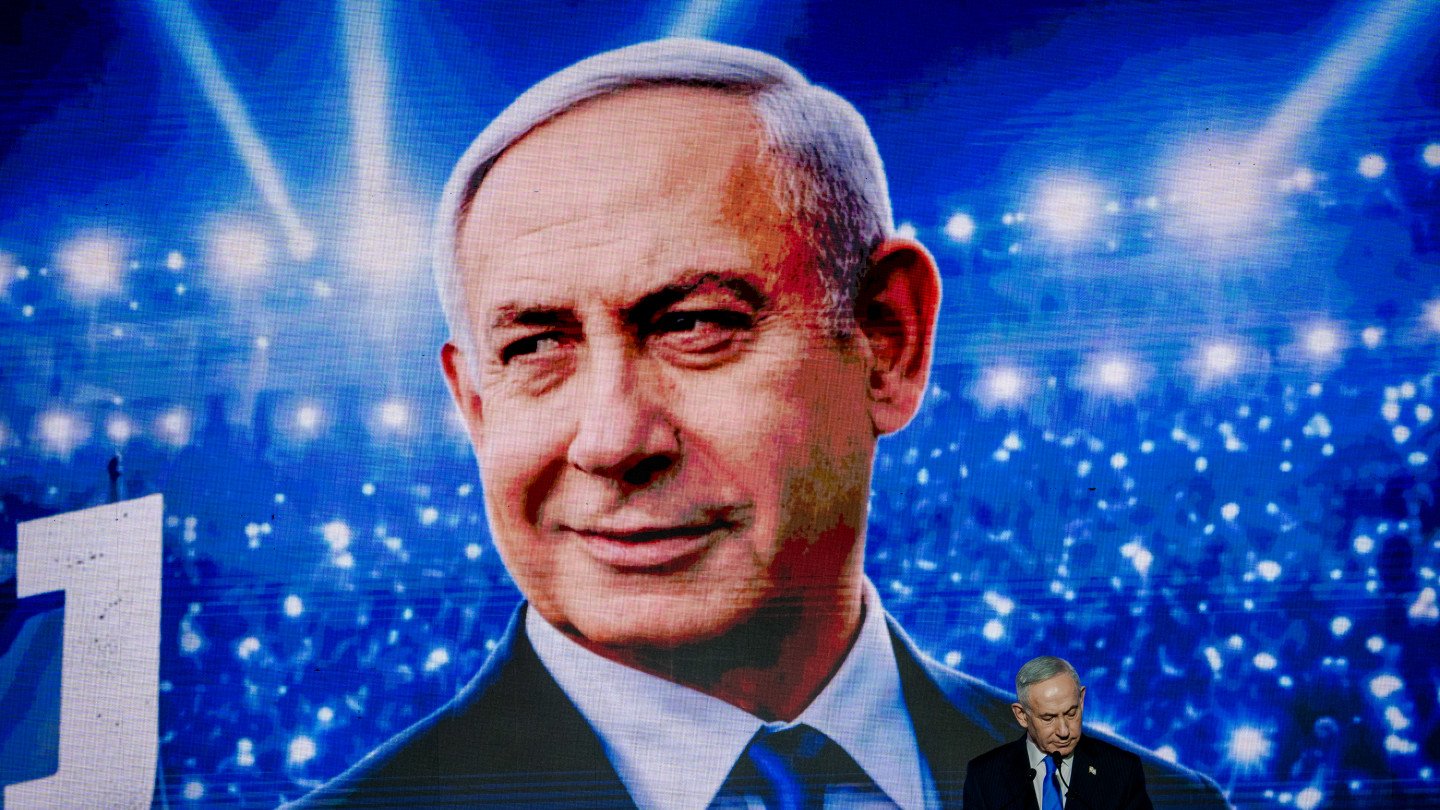
Israel’s election may alter coalition tone and far-right leverage, but mainstream candidates share strategic assumptions on Iran, Hezbollah, Hamas, and Palestinian rights, leaving Israeli foreign policy direction largely intact despite leadership change.
Israeli Foreign Policy Continuity Persists
Israel’s 27 October election could produce a major political turning point domestically. However, it is unlikely to lead to any dramatic shifts in Israeli foreign policy that many around the world might hope for.
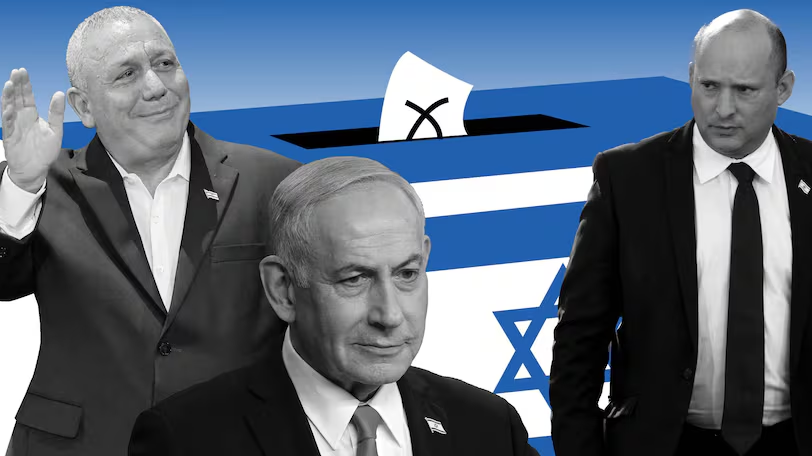
A victory for Prime Minister Benjamin Netanyahu would likely strengthen the influence of Israel’s far-right parties, while a government led by figures such as Gadi Eisenkot, Naftali Bennett, or other opposition leaders could bring a less confrontational tone and greater diplomatic flexibility.
Nonetheless, there is notable continuity across Israel’s political mainstream regarding Iran, Lebanon, and the Palestinians. This month’s election, therefore, is unlikely to fundamentally change how Tel Aviv approaches the region.

War and Isolation Shape the Vote
Three years after the Hamas-led attack on southern Israel on 7 October 2023, Israel remains at war, its relations with certain Western countries have significantly deteriorated, and tensions with Jordan and Egypt are increasingly tied to developments in Gaza and the West Bank.
Yet, the election offers no obvious choice between fundamentally different visions of Israel’s regional role. The opposition has a shot at defeating Netanyahu, but the leading candidates largely agree on the centrality of military power, threat perceptions of Iran, Hezbollah, and Hamas, and the rejection of basic rights for Palestinians.
Far-Right Partners Hold Real Sway
Nonetheless, this is not to say that the question of who will be Israel’s prime minister is not important. Netanyahu has become increasingly dependent on far-right partners such as Finance Minister Bezalel Smotrich and National Security Minister Itamar Ben-Gvir, whose influence extends well beyond their electoral strength.
Their leverage has helped push settlement expansion, the weakening of the Palestinian Authority (PA), and a harder line on Gaza and the West Bank toward the centre of government policy. Netanyahu securing another victory could reinforce the political power of such extremist forces.
However, replacing Netanyahu would not necessarily mean replacing the strategy that has brought Israel into its current confrontation with various regional state and non-state actors.
Opposition Offers Tone, Not Direction
A government led by Eisenkot, Bennett, or another opposition figure would probably be less dependent on the far right, more receptive to American pressure, and more cautious in its rhetoric.
Perhaps such a post-Netanyahu Israeli government could rein in settler violence to some degree, take a more cooperative approach to Gaza’s reconstruction, and give Jordan and Egypt greater diplomatic space, albeit with far narrower differences when it comes to the larger questions – chiefly Iran, Hezbollah, Israeli control of Palestinian territory and Palestinian statehood.
Israel’s political centre has moved so far to the right since the “Oslo years” (1993-2000) that a government led by one of Netanyahu’s challengers could change the tone and tactics of Israeli policy, albeit without making fundamental changes in direction.
Experts See Same Tools, Same Interests
“Chances are that a successor to Netanyahu would find himself handling the same regional issues using the same tools, in pursuit of mostly the same interests. There would be some variance, to be sure, and perhaps Israel would frame its involvement in places like Lebanon, Syria, and Iran differently. But the overall trajectory might be similar,” explained Aron Lund, an associate fellow at the Swedish Institute of International Affairs, in an interview with The New Arab.
“Israel would likely want to hold captured ground, weaken its enemies, and extract a steep price for any concession,” he added. Other experts agree. When discussing the possibility of a post-Netanyahu government resulting from this month’s election, Dr Rouzbeh Parsi, an affiliated researcher at Lund University, said we should not expect any change in Tel Aviv’s foreign policy strategy.
“Eisenkot, Bennett, and Lapid bicker with Netanyahu over the fine-tuning of the approach, the weight of diplomacy, etc. – not whether the wars are necessary or the way they are conducted as such. While they may be more willing to accommodate any US administration on tactics, they will follow the same strategy,” he told The New Arab.
“Capitals in the region are less concerned with who becomes prime minister since all the candidates will stay the course on the large issues.”
Israeli Foreign Policy Limits Gaza Shift
Some observers see Gaza as a place to look at in terms of meaningful difference with a post-Netanyahu government that is less dependent on Smotrich and Ben-Gvir in charge.
There might be reason to expect such an Israeli government to be more willing to cooperate with the international efforts aimed at rebuilding the genocide-ravaged enclave and to accept some form of Palestinian administration rather than allowing the current stalemate to persist.
Perhaps this government could also be more responsive to pressure from Washington, Cairo, and other governments seeking to stabilise Gaza after the war.
Still, the room for change would have severe limits. Hamas’s disarmament, Israeli security demands, and the sensitive question of who will ultimately govern Gaza are unlikely to be resolved in the foreseeable future regardless of who Israel’s prime minister is.