
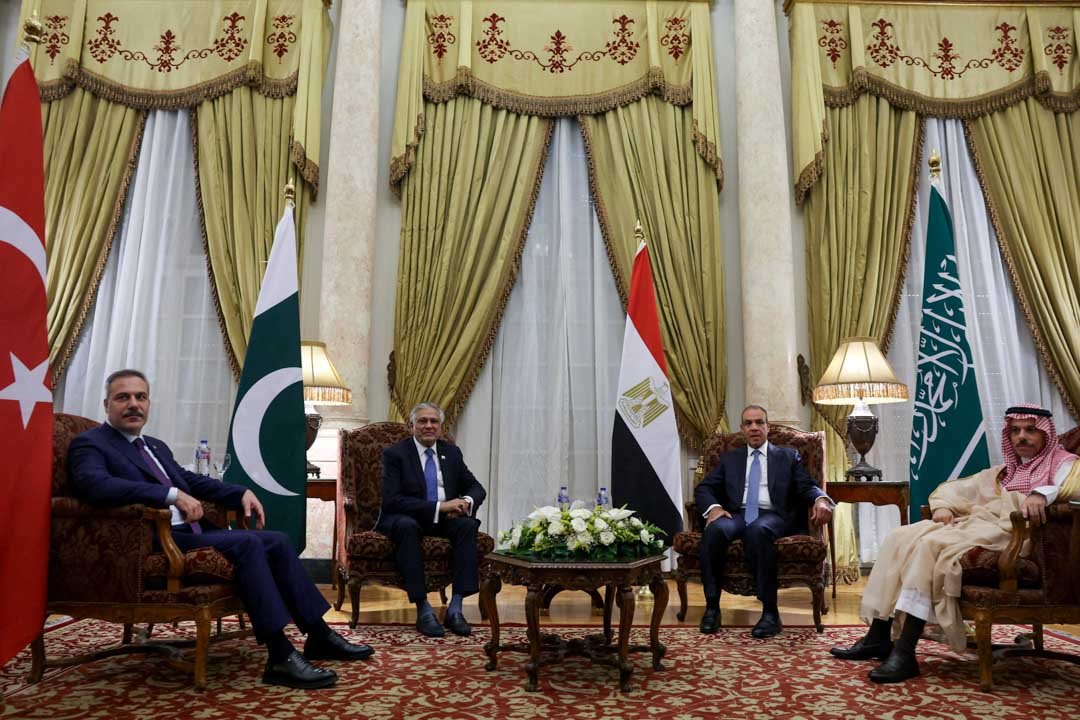
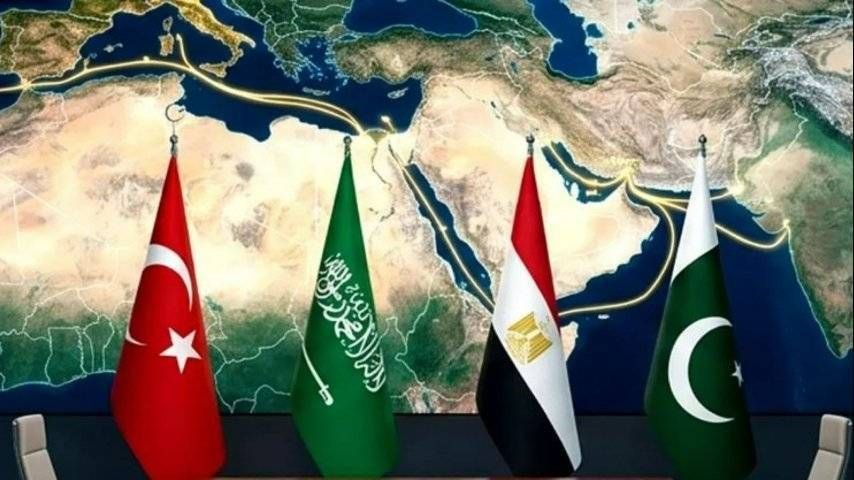
Saudi Arabia, Egypt, Pakistan and turkey formed the Gulf Security Initiative amid U.S.-Iran war. The quadrilateral forum aims to craft regional security norms, reduce dependency on external powers, and manage fallout from hostilities, representing a shift toward collective regional agency.
The emergence of the Gulf Security Initiative, a quadrilateral alignment between Saudi Arabia, Egypt, Pakistan and turkey , signals a fundamental recalibration of regional power dynamics. The U.S.-Israeli military campaign against Iran and Tehran’s retaliatory strikes have exposed the fragility of an order long dominated by external guarantors and coercive rivalries.
These four states, bound by shared exposure to escalating conflict and a mutual interest in stabilising their strategic neighbourhood, have moved beyond ad hoc coordination toward a structured consultative mechanism. The Gulf Security Initiative does not yet constitute a formal alliance, but its rapid consolidation reflects a hard-won recognition that Gulf and wider Middle Eastern security can no longer be outsourced to Washington or left at the mercy of an unresolved U.S.-Iran confrontation. At its core, the initiative seeks to establish regionally rooted norms—sovereignty, non-interference, and collective restraint on militia sponsorship—that apply uniformly to all actors, including Israel and Iran.
The ongoing war has sharpened the urgency, as Gulf states absorbed the brunt of Iranian missile and drone attacks while U.S. air defences prioritised American and Israeli assets. This catalytic moment has accelerated diplomatic and military coordination among the four, raising the prospect of a more autonomous security architecture that, if sustained, could reshape the Middle East’s geopolitical contours.
Gulf Security Initiative Amid Rising Tensions
With hostilities between the United States and Iran breaking out again in the Gulf, a new framework for safeguarding peace in the region may warrant closer attention. The emergence of the “regional four”, or R4, as Saudi Arabia, Pakistan, Egypt and turkey call their nascent grouping, reflects a hard-won realisation among these four states: security in their neighbourhood can no longer be left at the mercy of rivalry between the U.S. and Israel, on one side, and Iran, on the other.
Many officials in these countries had reached this conclusion before the U.S. and Israel launched their assault on Iran in late February. But the war and subsequent Iranian retaliation, including both missile and drone strikes on Gulf Arab states and closure of the Strait of Hormuz, lent it fresh and urgent impetus.
Not all member states have the same vision for the R4’s future. Some R4 officials speak of it as the informal nucleus of a possibly wider grouping grounded in rules that apply to all, rather than coercive hegemony exercised by any single power or axis. Others invoke a more modest framework that can help with case-by-case coordination. Regardless, the grouping has the potential to reshape the regional order, if incrementally, with the first test being whether it can help bring about a stable outcome to the U.S.-Israeli war with Iran.
Whether it can meet that challenge will depend on answers to several questions: can the R4 reconcile its members’ differing threat perceptions? Can these members maintain their respective relationships with Washington without falling prey to its demands? Most pressing, can the grouping achieve an understanding with Iran that assuages the Gulf states, which have borne the brunt of Iran’s counterstrikes, even if an eventual U.S.-Iran settlement gives their concerns short shrift?
How the Gulf Security Initiative Formed
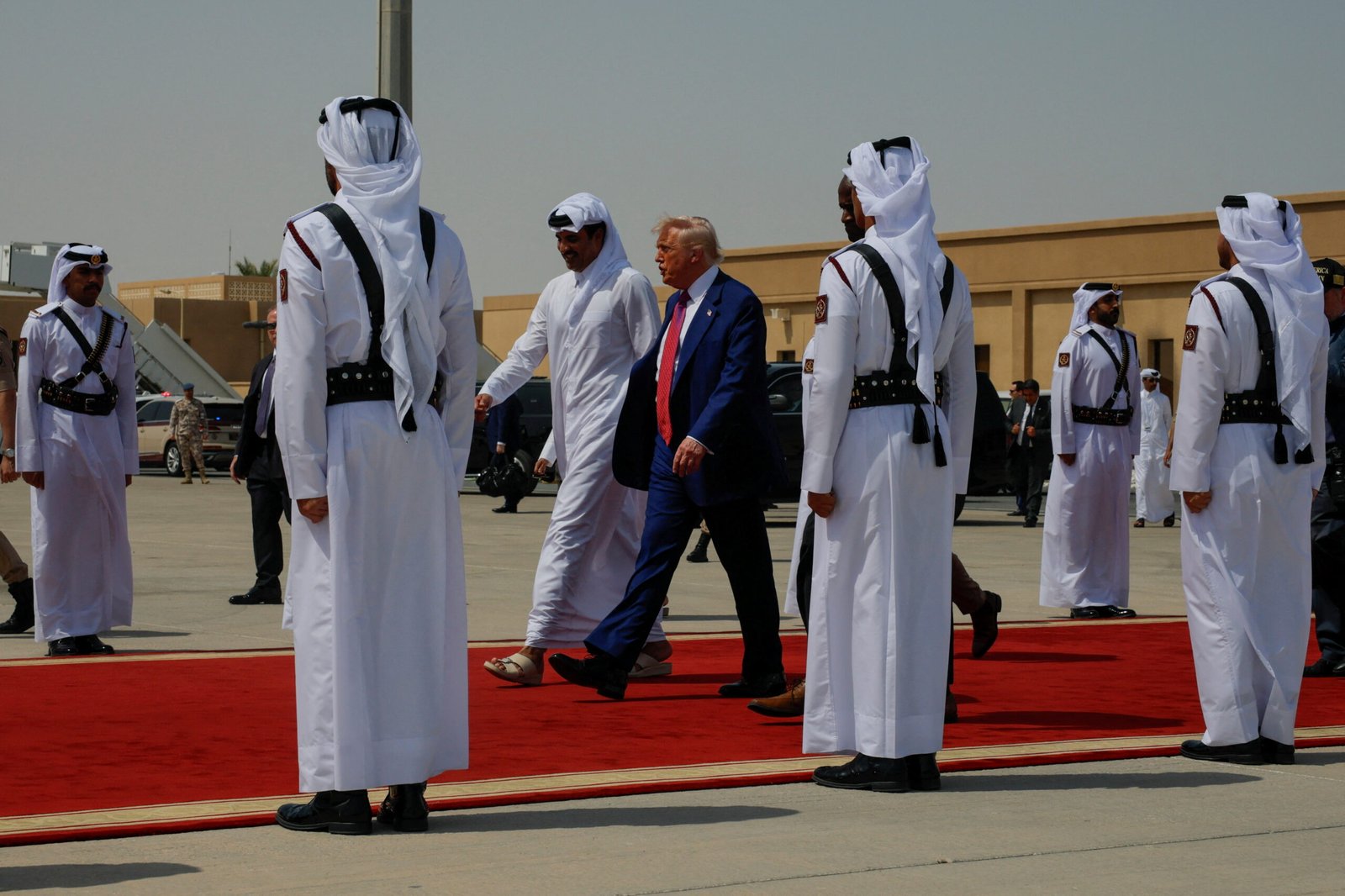
The building blocks for the R4 have been in place for nearly a year. Between the twelve-day war in June 2025 and the latest war, which began on 28 February, Egypt, Saudi Arabia, turkey and Pakistan were coordinating frequently on various subjects, including Gaza, the Horn of Africa and mutual defence, against the backdrop of continued Israeli military campaigns in the Middle East as well as an emerging rift between Saudi Arabia and the United Arab Emirates.
All four states tried to ease the U.S.-Israeli-Iranian tensions that lingered after the twelve-day war. On 9 September 2025, Egypt helped broker an agreement between Iran and the International Atomic Energy Agency on restoring nuclear inspection protocols. turkey offered to arrange a call between the U.S. and Iranian presidents, as well as to host talks about regional issues in parallel to the nuclear negotiations that began early the following February.
Pakistan, bound to Saudi Arabia by a new mutual defence pact signed in September 2025, was invited to the proposed meeting in Istanbul. Finally, Saudi Arabia signalled that it was open to proposals regarding regional nuclear cooperation, in which both Tehran and Riyadh would have equivalent rights to enrich uranium for peaceful purposes.
Israel’s attack on Qatar on 9 September 2025 targeting members of the Hamas leadership accelerated the quadrilateral dynamics. A week later, Riyadh announced the above-mentioned Pakistan defence pact, accompanied by messaging making clear it was driven by concern about not only Israel’s conduct but also Iranian retaliation for renewed U.S.-Israeli attacks if diplomacy failed. The next month, in January, the Pakistani defence minister and Turkish foreign minister confirmed that talks about an accord among Saudi Arabia, turkey and Pakistan had taken place. In February, turkey signed a formal Military Framework Agreement with Egypt and advanced a joint aerospace manufacturing understanding with Saudi Arabia.
The four countries also made common cause to stop Israel’s war in Gaza. All four joined Indonesia, the UAE, Qatar and Jordan, among others, in what became known as the Group of Eight, which met with U.S. President Donald Trump on 23 September 2025 to press for a Gaza ceasefire. The four countries later became members of Trump’s Board of Peace, with three aims: keeping his administration involved in efforts to end the Gaza conflict, which they viewed as the only way of exerting the requisite pressure on Israel; remaining in the U.S. president’s good graces; and countering Israeli threats to their own national security.
Gulf Security Initiative and Iran’s Retaliation
Focusing Minds
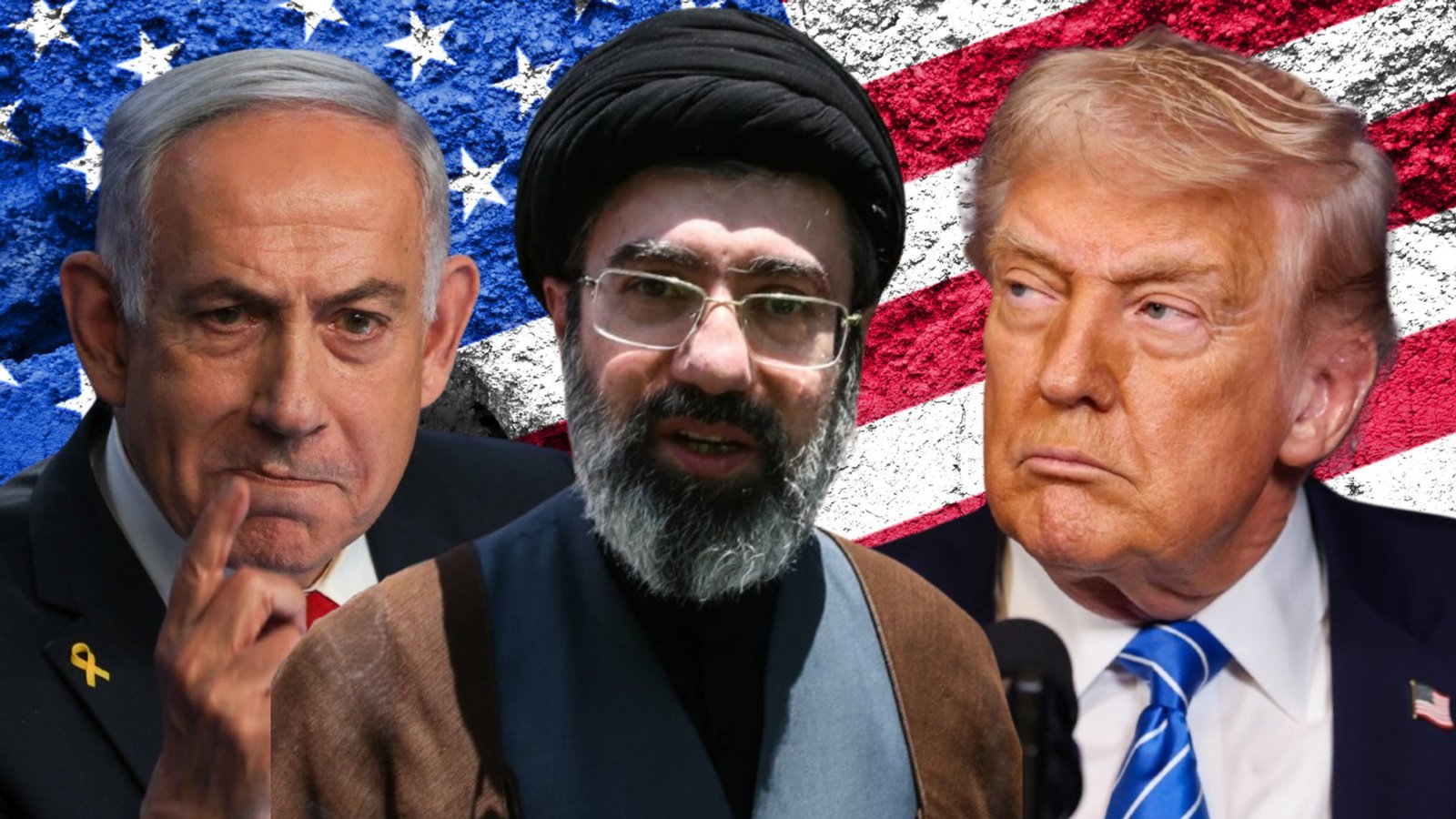
Then came the U.S.-Israeli attack on Iran, and Tehran’s drone and missile barrages in response, which focused minds in all the R4 capitals. The scope of Iran’s retaliation shattered the limited trust that had been built over two years of détente in the Gulf.
It also exposed the inadequacy of Gulf-only diplomacy with Iran when other interested parties – chiefly the U.S., but also to some extent China and, at least as far as military action is concerned, Israel – are not sufficiently susceptible to Gulf influence.
With differing views among Gulf states as to how to respond to Iran’s actions, an informal format involving countries that those states had previously regarded as interlopers began gaining traction in the Gulf capitals that were more open to a ceasefire. That format crystallised when Saudi Arabia convened a four-way ministerial meeting in Riyadh on 18 March, on the sidelines of a gathering of twelve states – eight of which Iran had attacked – with Iranian missiles exploding in the distance.
The Saudi strategy was to galvanise regional support amid a war it could not stop, despite its close ties to the U.S., and for which it was now paying a price, despite its reinvigorated diplomacy with Iran. Other R4 states had their own motivations: they worried about both the war’s regional implications and their own possible entanglement in it.
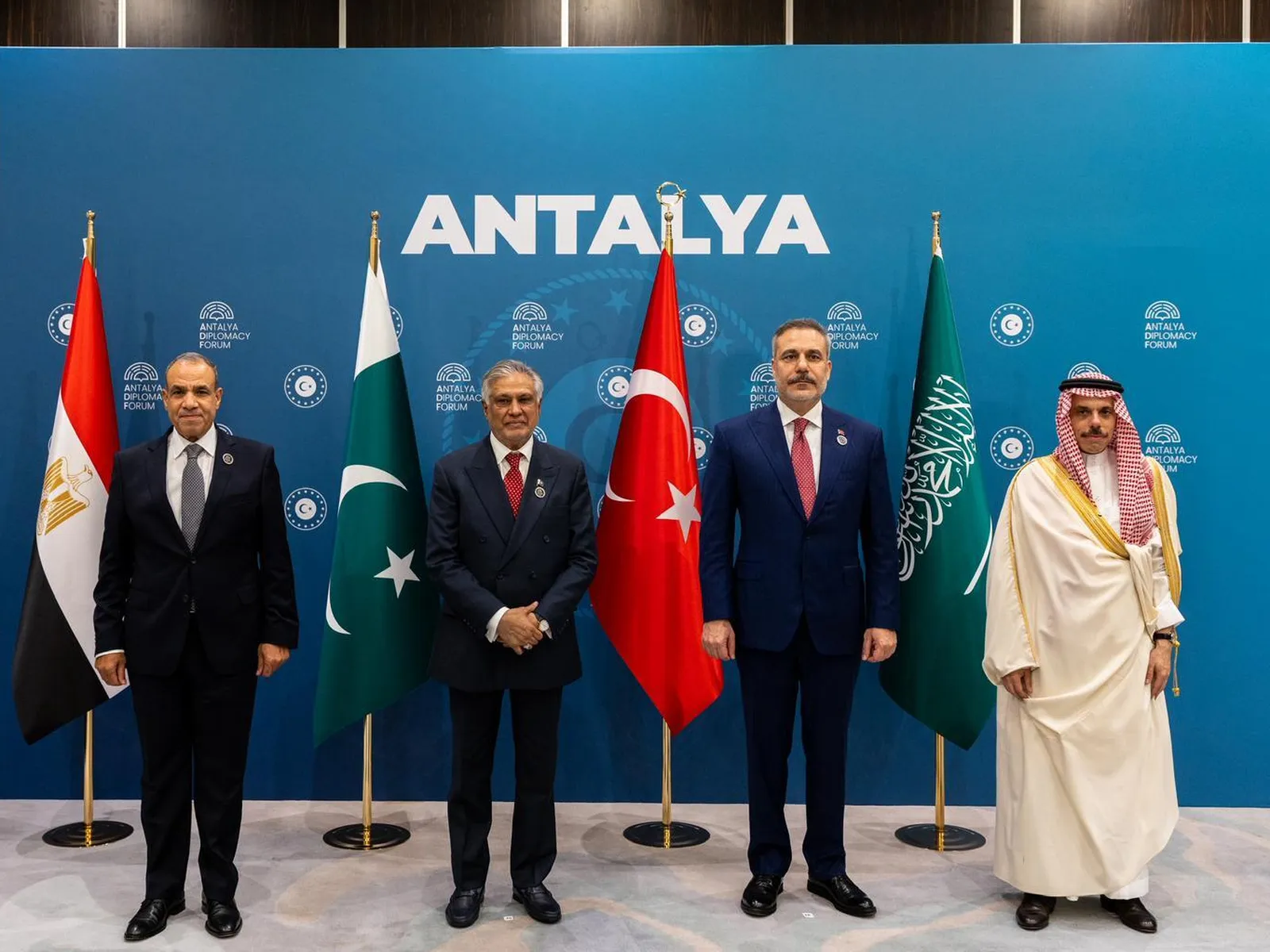
Follow-up meetings in Islamabad on 26 March, and Antalya on 18 April, in addition to a gathering of senior officials on 14 April, cemented the format, even as the four countries continued to act as members of larger ad hoc groupings as needed. Together with Qatar and China, the four helped engineer the 8 April ceasefire between the U.S. and Iran, a particularly welcome de-escalation given President Trump’s threat the previous day that “a whole civilisation is about to die tonight” and Tehran’s warning that it would expand counterstrikes on critical infrastructure in the Gulf.
The R4 assembled for the fourth time in Cairo on 21 June, seven days after the U.S. and Iran consolidated the (now collapsing) ceasefire in a memorandum of understanding and as the two sides were meeting in Lucerne, Switzerland.
At the Cairo meeting, officials formally adopted the R4 designation and, in their first joint statement, welcomed the memorandum, commended Pakistani and Qatari mediation efforts, stressed that security arrangements needed to address the concerns of Gulf states and the Levant, and reiterated “the centrality of the Palestinian cause for peace and stability in the region”.
On the eve of that meeting, three R4 members, Egypt, turkey and Saudi Arabia, met with Massad Boulos, the U.S. senior adviser for Arab and African affairs, to discuss political developments in Libya; Pakistan, for its part, has reportedly been involved in mediation efforts in that country. The R4 members, particularly Egypt, turkey and Saudi Arabia, have also increased coordination vis-à-vis Horn of Africa disputes in recent months.
Is the Gulf Security Initiative a Bloc?
Not a Bloc, but a Framework
R4 members present the group as an informal consultative forum for states that are worried about the spread of wars in the greater Middle East. The corollary is that, while still indispensable, the U.S. can no longer be relied upon to forge peace in the region, meaning that states in the neighbourhood must take up this mantle themselves. The R4 members see both Iranian and Israeli actions as menacing, albeit representing differing levels of immediate threat to each member.
But R4 officials made clear to Crisis Group that they do not wish to single out any country as an adversary; rather, they prefer to frame their effort as a call on all states to abide by shared norms that will undergird a more stable regional security architecture. These include: a two-state solution in Israel-Palestine; respect for states’ sovereignty and territorial integrity; an end to state support for militias; and a commitment to forsake the use of force on behalf of expansionist or power projection agendas. As they see it, other countries could join their forum – including, eventually, Iran and Israel.
R4 officials say the group came together organically as relations among the four countries improved over the past five years. The four countries were all engaged in various reconciliation processes, driven by a disintegrating regional order that threatened their security and pitted them against one another, as well as by Israel’s growing belligerence, notably its devastating war in Gaza, which they consider tantamount to genocide.
Not everyone sees the R4 as such a creature of circumstance. Several Israeli and U.S. commentators and officials have cast it, alternately, as an anti-Israel or anti-Israel/UAE bloc of Sunni states. A number of Iranian analysts have likewise dubbed it a Sunni project, though steering clear, for now, of claiming that it is hostile to Iran. R4 members reject all those framings, sticking with their own.
Coordination among R4 members does not entail a complete alignment of interests. Egypt, Pakistan and turkey have walked a fine line during the U.S.-Israeli war with Iran: they have sought to avoid getting enmeshed, even as Egypt and Pakistan supported Saudi Arabia against Iranian attack and even as Riyadh only reluctantly gave diplomacy a chance to end the war. Egypt and turkey have continued to step gingerly around the Saudi-Emirati rift, being careful not to take sides.
Regarding Syria, Saudi Arabia and turkey are heavily invested in supporting the new government, while Egypt remains wary of its militant Islamist background. In the Red Sea, Egypt and Saudi Arabia agree that security should be the prerogative of all the littoral states, even as they vie with each other for leadership of the Red Sea Council; both work with turkey at times and see it as a competitor at others. Each of the four countries may view itself as important enough to lead the group. Nevertheless, so far the R4 has channelled competition among its members into a framework for consultation and, increasingly, coordination.
Gulf Security Initiative: Starting with Iran
Starting with Iran
As for its immediate challenge, influencing the outcome of the U.S.-Israeli war with Iran, the R4’s outlook rests on what its members perceive as a functional gap in U.S.-Iran negotiations and a structural one in the regional order. Despite Qatar’s and Oman’s roles as mediators, and notwithstanding continuous briefings to Gulf states on the status of U.S.-Iran talks, Gulf capitals fear that Washington and Tehran will fail to reach what they describe as a “comprehensive deal” that addresses the gamut of their concerns. These include: the full, unfettered reopening of the Strait of Hormuz; restrictions on Iran’s missile and drone programs; and an end to Tehran’s interference in their domestic affairs or support for violent non-state actors.
Gulf states likewise fear that hostilities – either direct clashes between the U.S. and Iran or actions by an Israel the U.S. has failed to restrain – could escalate, triggering an even more damaging cycle of Iranian retaliation aimed at them. Already, events have borne out these concerns: with the fraying of the memorandum of understanding, the shooting has restarted, including Iranian attacks on Gulf ships transiting the Strait of Hormuz and on the territory of several Gulf states.
Structurally, the war underlined a fact that Gulf states had long grasped but could not address: they cannot rely exclusively on powerful outside security guarantors whose priorities often diverge from their own and over whom they have only limited sway.
The U.S., with its military might, intelligence capabilities and ability to levy sanctions, remains a critical partner, and Gulf officials acknowledge that they must still count on Washington (and, in the UAE’s case, on military cooperation with Israel). But the U.S. continues to treat them as weaker parties in need of protection, as potential mediators or as hosts for its military bases. Iran views them as both vulnerable targets and possible channels to Washington. As for Israel, it hardly appears to take them into account in its military calculations.
Absent from all this is any meaningful consideration of the Gulf states’ own core security interests. Rather, as those states increasingly see it, U.S. actions in the name of security may serve U.S. and Israeli security but consistently come at the expense of theirs, regardless of who is sitting in the White House.
They point to numerous examples. To list some of the most prominent: in 2003, when the U.S. invaded Iraq, Saudi Arabia blamed Washington for handing the country to Iran; in 2015, when President Barack Obama’s administration struck a nuclear deal with Iran, it failed to involve its regional partners or take their interests into account;
in 2019, the first Trump administration did not respond to Iranian-backed attacks on Saudi Arabian oil facilities; during two years of war in Gaza in 2023-2025, the U.S. rebuffed the Gulf states’ pleas to get Israel to stand down until its war in Gaza reached Qatar in September 2025; and during the latest war with Iran, the U.S. trained its air defence systems primarily on projectiles headed for U.S. and Israeli targets while the Gulf states got pummelled.
Moreover, both Israel and the U.S. defied Gulf state requests to refrain from attacking Iran’s critical infrastructure lest Iran retaliate against their own. The clause in the memorandum of understanding providing for a $300 billion fund to help Iran’s recovery is an instance where Gulf countries believe financial commitments are made in their name (at least implicitly) without their direct consent or involvement.
Likewise, the Gulf states have concluded that their investment in détente with Iran over the past three years has reached the limits of what it could achieve. While they were well aware that Iran might strike U.S. military sites on their soil, they were surprised by the scale of the attacks by Iranian missiles and drones and their targets – including airports, energy facilities and civilian neighbourhoods – as well as by the enormous damage most of their economies suffered as a result. The war both diminished the perceived value of diplomatic engagement and vindicated those who had argued for a more hawkish stance.
A consolidated R4 could begin to alter this dynamic. It would not replace bilateral diplomacy with Iran, meaningfully reduce Gulf states’ dependency on the U.S. security umbrella or substitute for the economic leverage provided by U.S. sanctions on Iran. Officials in the Gulf also know that their states are likely to be Iranian targets again whenever hostilities occur.
Still, members of this grouping could provide a degree of collective political, economic and even military muscle that neither any one of them nor any Gulf Cooperation Council (GCC) state possesses individually. Already, Pakistan and Egypt have stationed troops in Gulf states, a cautious signal to both those countries and Iran that they are prepared to invest in a more regionally rooted and deterrence-oriented security architecture.
Moreover, as U.S.-Iranian negotiations proceed, the R4 countries can hold out the prospect of economic and diplomatic incentives that the Islamic Republic may find more meaningful than those coming from individual Gulf states. Assuming requisite U.S. sanctions relief, such a framework would enable them to share the political and economic risks of engaging Iran economically, and of amplifying its benefits, in a manner somewhat akin to the multilateral investment-and-risk-sharing model regional countries are adopting in Syria.
Given their combined heft and broad alignment in favour of dialogue with Iran, the R4 also might modulate more hawkish voices on both sides of the Gulf and beyond, including in Washington and European capitals. Especially if the group’s membership were to expand, it could better reflect Gulf states’ interests when dealing with Washington, Tehran, Beijing, Moscow and various European capitals.
The R4 pointed in this direction when, in their first joint statement, issued after the 21 June meeting in Cairo, they “commended the efforts undertaken” to bring about the U.S.-Iran memorandum of understanding and emphasised “that such efforts should take into account the concerns of countries of the region, particularly with regard to the security and stability of the Gulf states, as well as the Levant region”.
The Path Ahead for Gulf Security Initiative
The Path Ahead
None of the tasks that lie before the R4 will be straightforward. Should it occur, the R4’s consolidation as a regional mechanism will take time, as its members readily acknowledge, and require constant management of internal differences. In addition, Iran, other regional states and the U.S. will have to accept the grouping as an informal platform for regional coordination or, at a minimum, not seek to undermine it. For now, putative regional negotiations with Iran represent the first, most pressing test of that potential.
Insofar as Egypt, Pakistan and turkey are not prepared to single out the Iranian threat in the way Saudi Arabia and several other Gulf states do, one approach might be for the R4 to propose a regional security dialogue that does not address Tehran’s behaviour in isolation.
Rather, it could treat Iran’s backing of proxies as part of a structural deficiency that includes Israeli expansionism, has spurred harmful rivalry among the four states themselves, has led to failed states and recurrent conflicts, and has left much of the region overly dependent on precarious U.S. security guarantees. The desired end state would be a regional security architecture in which all states refrain from funding and arming militias, interfering in one another’s domestic affairs, using force to impose their agenda, promoting state collapse or enabling attacks on their neighbours – in other words, a standard that applies equally to all.
By the same token, the R4 is more likely to be viewed as an effective interlocutor with Iran if it can gain wider support from other Gulf states. Though Saudi Arabia is the central power in the Gulf, it would be on firmer footing if it closely coordinated with other GCC members. If other Gulf states resist giving Riyadh this role, preferring to keep pursuing bilateral bargains with Iran, they risk deepening GCC divisions and undermining the effectiveness of regional diplomacy. In this respect, Saudi Arabia could benefit from Egyptian, and especially Qatari, ties with other Gulf states to build consensus behind a collective vision.
Though all four countries are and will remain U.S. military partners, their arrangements with Washington vary substantially. turkey , Egypt and Pakistan rely first and foremost on their own militaries to defend national territory and – if necessary – launch operations in their immediate vicinities.
They also tend to favour a security architecture rooted in regional capacity and threat perceptions, and thus less dependent on U.S. decisions on war and peace. turkey, though itself a NATO member, has also been unambiguous about the need for a separate architecture rooted entirely in regional ownership rather than reliance on any external actor. The history of Saudi Arabia and other Gulf states differs: they tend to rely more on the U.S. (which has provided security assurances though not legally binding guarantees), as well as partnerships with other external powers.
This difference has manifested itself in various ways. In 1991, 2005 and then again in 2015, Saudi Arabia and other Gulf states snubbed Egyptian proposals regarding joint Arab defence and security arrangements. For its part, Egypt withdrew from Saudi-backed negotiations aimed at forming a U.S.-led Middle East strategic alliance in 2019, partly out of fear that such a pact could both drag Cairo into confrontation with Iran and compel it to forge closer military ties with Israel.
More broadly, and as already has been made clear, the Gulf states’ extensive basing and access arrangements with Washington mean they almost certainly will be implicated in any U.S. or perhaps even Israeli military confrontation with Iran. Such ties to the U.S. could also be a source of tension with R4 members, as evidenced during the latest war.
Though Pakistan and Egypt condemned Iran’s attacks on Gulf countries and deployed troops in Gulf states, and while their mediation efforts were focused on persuading Iran to hold its fire and coordinated with Saudi Arabia, some of the other Gulf countries clearly expected greater political and military support. Such disconnects will need to be managed if the framework is to mature and, potentially, expand to other Gulf states whose security is even more closely intertwined with the U.S. and Israel – namely, the UAE and Bahrain.
These and other powerful challenges to establishing regionally based security arrangements cannot be dismissed. Still, as Gulf perceptions of the effectiveness and sustainability of U.S. deterrence were shaken during the latest war, elements of a complementary, more defensive and regionally anchored security order are already being established or appear to be emerging. These include the new Turkish base in Qatar; Egyptian and Pakistani defensive deployments in Saudi Arabia, the UAE, Qatar and Kuwait; and credible reports of Saudi and Emirati military responses inside Iraq and Iran; as well as Saudi and Kuwaiti rejection of U.S. requests for use of land and airspace to provide force protection for Operation Project Freedom, which aimed at forcibly reopening the Strait of Hormuz.
Can the Gulf Security Initiative Mature?
For now, the R4 remains a loose, informal consultative forum. In their first joint statement, its members described themselves “as an important platform for structured dialogue, strategic consultation and policy coordination on issues of common interest”. The statement’s very broad language masks different views regarding the future. Some members are sceptical that the R4 can develop into a more formal grouping; others have suggested that the members establish working groups and hold regular meetings, eventually at the level of heads of state. So far, only the Egyptian president has publicly called for making the R4 a formal institution.
Whether the R4 can become the nucleus of a durable, regionally led security order that gives Middle Eastern and neighbouring states a more central role in shaping the environment that governs their own security remains to be seen. How it contributes to peacemaking among the U.S., Israel and Iran and helps manage the fallout from their latest war will begin to provide an answer.