
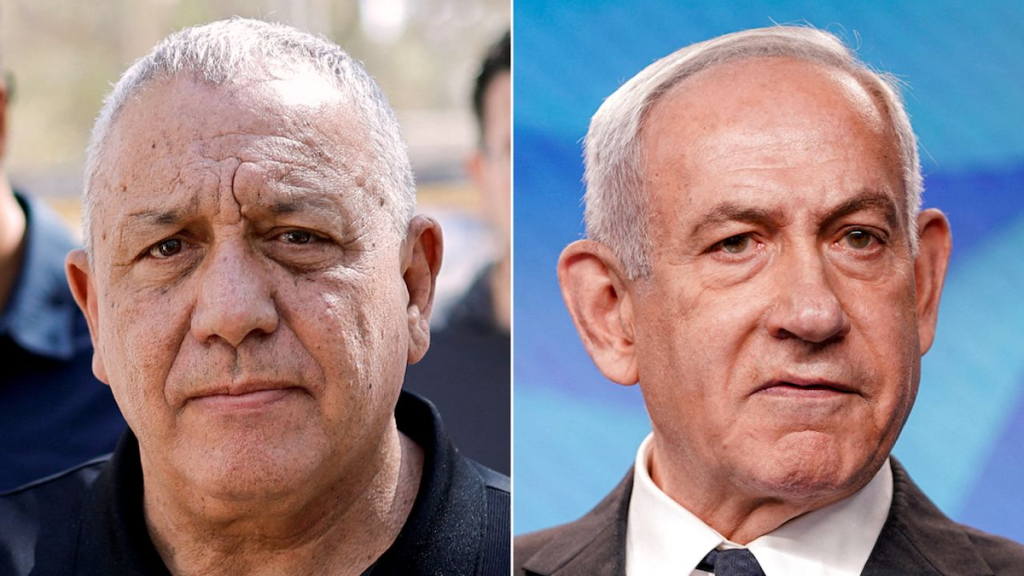
Record Arab turnout near 80 percent denied Netanyahu a majority and left Eisenkot short of one as well. Four coalition paths remain blocked by campaign promises, final results are due November 4, and the deadlock now rests on Bennett, Liberman and Herzog’s consultations.
Neither bloc reaches the governing threshold
Israelis turned out in numbers not seen in a generation, and handed both of their would-be prime ministers the same verdict: not enough. On the partial count this morning, neither Benjamin Netanyahu’s bloc nor Gadi Eisenkot’s reaches the 61 seats needed to govern.
Both men have nonetheless claimed the night. Eisenkot told supporters the old era was over and a new one beginning. Netanyahu answered that Likud is the largest party by a wide margin and that the right holds a decisive majority among Jewish and Zionist voters.
Each is describing something real. The result is less a winner and loser than a map of a divided country, and the bargaining that follows will matter more than the ballots themselves.
With roughly 55% of votes counted, the outgoing coalition holds 56 seats, the opposition “change” bloc 49, and the Arab-led parties 15. Likud leads all lists with 27 seats; Eisenkot’s new Yashar party is second with 21.
Behind them sit Naftali Bennett and Yair Lapid’s joint list Together and the Arab-led Joint List at 11 each, Yair Golan’s Democrats and United Torah Judaism at nine and Avigdor Liberman’s Yisrael Beytenu at eight. Shas and Itamar Ben-Gvir’s Otzma Yehudit have seven each, Bezalel Smotrich’s Religious Zionist list six and Ra’am four.
The count has drifted toward Netanyahu overnight. Exit polls on the main channels had the blocs roughly level, with Channel 12 and Kan putting Eisenkot’s side narrowly ahead. The overnight tallies have since moved the coalition up by several seats.
Two things are true at once. Likud remains comfortably Israel’s largest party, as it has been for most of a decade. But 27 seats would be a sharp fall from the 32 it won in 2022, and the coalition as a whole is down from the 64 that made Netanyahu’s last government possible.
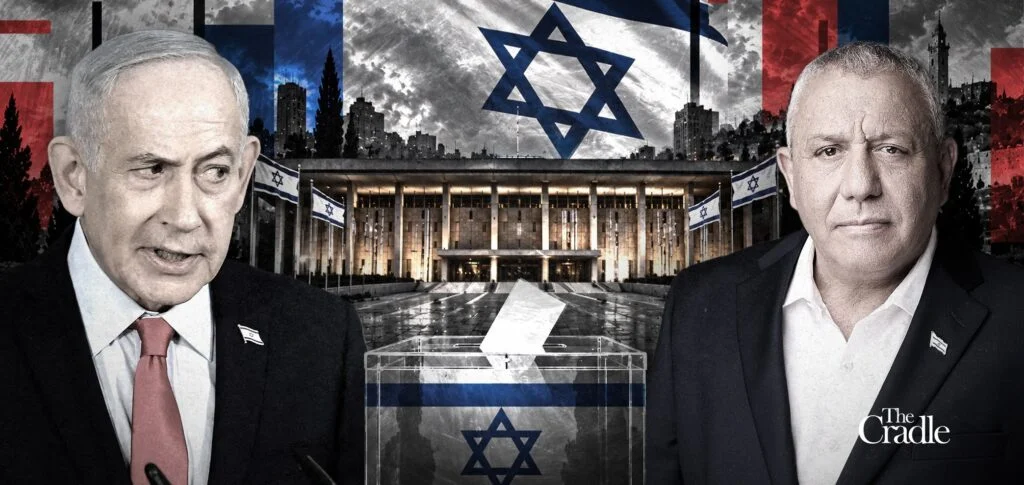
Arab turnout fuels the Israel election deadlock
Turnout reached 77.7%, the highest since 1999 and seven points higher than in 2022. Whatever else this election was, it was not an apathetic one.
The sharpest rise came among Arab citizens, roughly a fifth of the population, where turnout was put at about 80%. Exit polls gave Ra’am and the Joint List a combined 17 to 19 seats, which would be their strongest showing ever; the partial count has them at 15.
That surge is the hinge of the whole result. It is the main reason Netanyahu’s bloc sits short of a majority. Yet it doesn’t hand one to Eisenkot either, because two of his own partners have ruled out relying on Arab parties.
The campaign’s final day showed how charged this is. Netanyahu warned supporters about heavy Arab turnout; Arab party leaders called that incitement meant to frighten right-wing voters to the polls. Ra’am’s Mansour Abbas, in turn, credited the record vote to resentment of the outgoing government.
Four doors, all of them heavy
On today’s numbers, every route to a government requires someone to break a campaign promise.
A Netanyahu government. The coalition needs five more seats. The obvious candidates are hard to reach: Liberman has refused to serve under Netanyahu or alongside the ultra-Orthodox parties, and Bennett told supporters last night that Netanyahu had lost. A late shift in the count is Netanyahu’s simplest path.
An Eisenkot government. The opposition parties together are well short of 61. A majority exists only if Arab parties are counted in, and Bennett and Liberman reject that. Eisenkot himself has said partners must accept Israel as a Jewish state and the dismantling of Hamas, terms most Arab lawmakers are unlikely to accept. A minority government with outside Arab support has been floated inside his camp, but his allies oppose it.
A unity government. Likud and Yashar together would clear 61 comfortably. TIME reported before the vote that Netanyahu would prefer such a deal, and Liberman has accused Eisenkot of seeking one. For Eisenkot, it would mean propping up the leader he campaigned to replace.
Another election. If no one can form a government, Israel returns to the polls, with Netanyahu staying on as caretaker prime minister. After five elections between 2019 and 2022, few Israelis would welcome a sixth round so soon, but it is a live possibility.
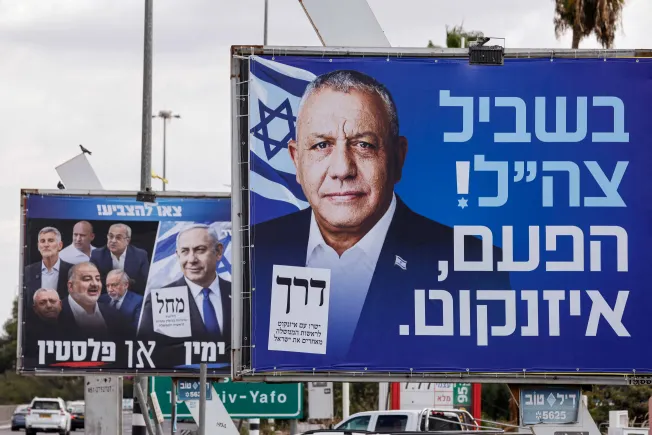
October 7 frames a wartime verdict
This was the first national vote since the Hamas-led attack of October 7, 2023, and it was widely framed as a referendum on Netanyahu’s leadership through it and the wars that followed in Gaza, Lebanon and against Iran.
The two camps read that record very differently. Netanyahu’s supporters see a wartime leader who struck Israel’s enemies hard and kept close ties with Washington. His opponents blame him for the failures that preceded October 7 and for the divisions of the years since, from judicial reform to the ultra-Orthodox draft dispute that helped bring this government down.
Notably, the main challengers did not run as a left. Eisenkot, Bennett and Liberman are security hawks; the contest was as much about trust and governance as about policy toward the Palestinians.
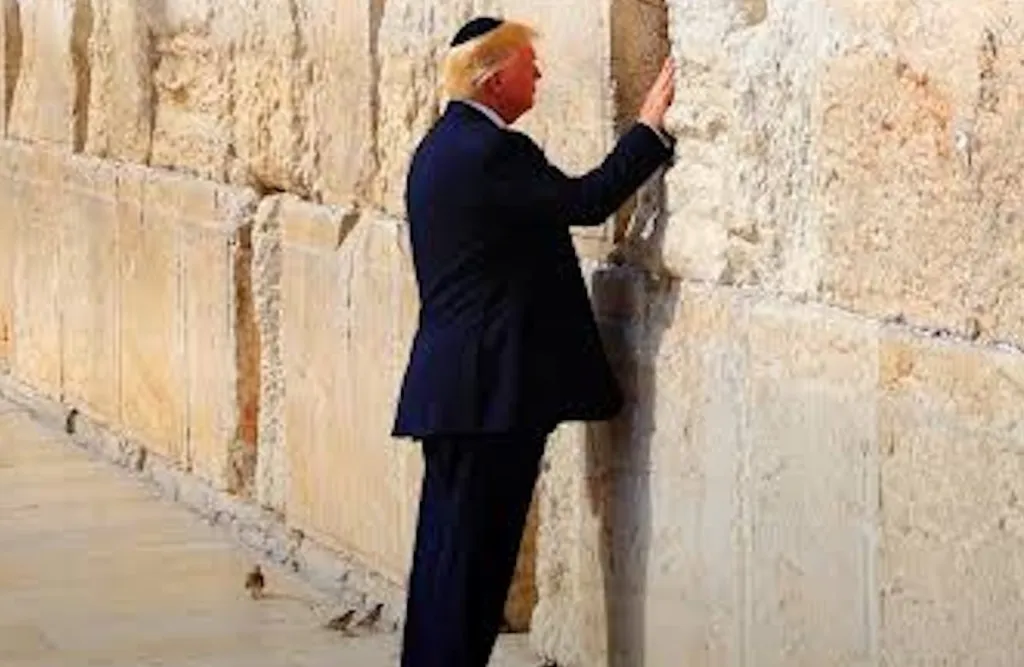
Trump endorsement lands without a ripple
Washington was also on the ballot, in a way. Donald Trump publicly endorsed Netanyahu nine days before the vote, reportedly the first explicit endorsement by a US president in an Israeli election. Analysts doubted it would move many votes, citing Israeli frustration over how the Iran war ended. Eisenkot’s response was that only Israelis choose their leader.
The final tally is expected by Friday (October 30), and official results are scheduled to be published on November 4. In a race this close, a seat or two can change which doors are open, especially for lists near the threshold.
President Isaac Herzog will then consult party leaders and task whoever has the best chance of forming a government, who gets up to 42 days. Watch the recommendations of Bennett, Liberman and the two Arab parties: they, more than either frontrunner, now set the terms.
Israel election deadlock hinges on compromise
The big picture is this. Israelis voted in huge numbers, and they voted to deny anyone a clean mandate. Netanyahu’s era has not ended, and Eisenkot’s has not begun. What comes next will be decided less by who won than by who is willing to compromise, and with whom.