
Republicans hold 218 House seats but polls and Cook projections point to Democratic gains of 12 to 22 seats. Deportations, tariffs, and the Iran war’s fuel price shock erode Trump’s middle America coalition, while the Senate map still favors Republicans.
Republican House Majority on the line
Republican anxiety is rising ahead of the US midterm election. Tradition dictates that the party occupying the White House generally loses seats in one or both chambers of Congress midway through its executive tenure. Sometimes these lost seats end up costing the party overall control of the legislature.
History offers only a handful of exceptions to this pattern of mid-term losses. In 1998, during Bill Clinton’s Democratic presidency, his party in fact gained seats in the House of Representatives, thanks to a booming economy. Four years later, in 2002, the Republicans also increased their representation in the same chamber, buoyed by strong public support for President George W. Bush’s ‘war on terror’ after the 9/11 attacks.
Losses suffered by the president’s party mid-term are typically attributed to public dissatisfaction with White House decisions, lower turnout among supporters of the ruling party, and higher turnout from supporters of the opposition. For his part, US President Donald Trump has good reason to be worried. His repeated pleas for his base to turn out to vote demonstrate this concern.
Polls point to Democratic gains
Polls suggest that Republicans could lose control of the House of Representatives on 3 November, when all 435 seats will be contested. Their current majority is precarious, with 218 Republican seats against 214 Democratic seats, alongside one independent and two vacancies. A joint Reuters/Ipsos survey conducted between 16 and 19 October found that 47% of registered voters intend to vote Democratic and 35% Republican.
Because the election is fought across 435 separate Congressional districts, US polling is notoriously imprecise. Political allegiances and electoral conditions vary considerably from one district to another. Still, analysts think a significant shift in the House’s composition is possible. On 23 October, the Cook Political Report projected net Democratic gains of between 12 and 22 seats, enough for a majority. It had 220 districts as Democrat, 198 as Republican, and 17 as toss-ups (i.e. too close to call).
The Senate presents a bigger challenge for the Democrats. Of its 100 seats, 35 are being contested, including 33 in regularly scheduled elections and two in special elections in Ohio and Florida. Those two seats were previously held by Vice President JD Vance and Secretary of State Marco Rubio, respectively. To secure a majority of 51, the Democrats must retain all 47 seats they currently hold (including those of the two independents who caucus with them, Bernie Sanders of Vermont and Angus King of Maine), while making a net gain of four.
Contentious races
Electoral assessments differ over which states are most competitive and how many races remain in contention. The Cook Political Report, for example, identifies seven states where the contest is finely balanced: Alaska, Iowa, Kansas, Maine, Michigan, Ohio and Texas. Republicans hold six of them, while Democrats hold Michigan. Democratic gains of three seats or fewer would still leave the Republicans in control of the Senate, because even if both parties have 50 seats each, Republicans would retain control of the chamber through Vice President JD Vance’s casting vote.
To mount a substantial challenge to the Trump administration’s political and legislative agenda during the last two years of his second presidential term, the Democrats would need to control both chambers of Congress. Control of the House alone would let them block legislation, strengthen Congressional oversight, and launch investigations, but they would still lack full control over the legislative agenda or the power to veto presidential appointments requiring Senate confirmation.
Unkept promises
A second factor complicates the Republicans’ prospects in these midterm elections: Trump’s record during his first two years back in the White House. His victory in 2024 owed much to his success in winning over ‘middle America,’ a relatively broad section of independent and undecided voters. He appealed to them with promises to reduce the cost of living and cut illegal immigration.
Although he has made progress on the latter issue, which Republicans broadly agree on, Maria Elvira Salazar, a Republican Congresswoman from Florida, criticised the deportations, warning that many Latino voters who helped Trump to victory in 2024 now feel betrayed. Republican Senator Roger Marshall of Kansas, while supporting the need to combat illegal immigration, criticised federal enforcement operations in his state (which, he said, came as a surprise to local police departments) because of the disruption they caused. One example is that workers have stayed away from their jobs, causing some meat processing plants to suspend operations.
Tariffs and fuel prices bite
Particularly damaging were the steep, punitive tariffs imposed on imports from most countries. For his part, Mike Rogers, the Republican Senate candidate in Michigan, has urged an end to the trade war with Canada (with which his state maintains extensive commercial ties, particularly in the automotive industry).
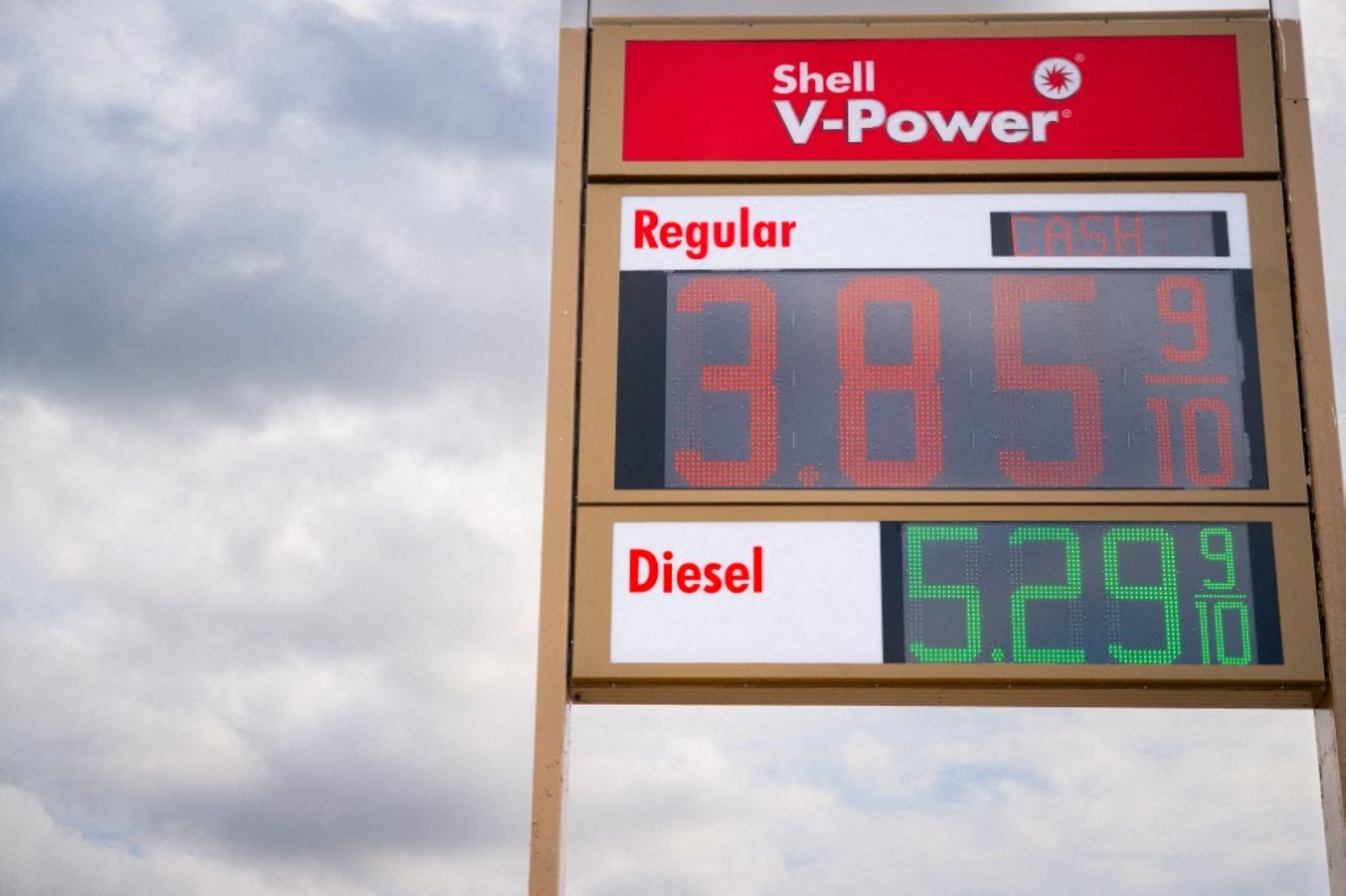
On the issue of war with Iran, Republican candidates in Iowa and Michigan, for example, have called for a swift end to the conflict. and his decision to wage war on Iran with Israel, which sent fuel prices soaring after Tehran closed the Strait of Hormuz, locking oil and gas into the Gulf. Republicans know they may pay a heavy electoral price for this, even if individual candidates may not have endorsed the policies, either in whole or in part. Some have consequently sought to distance themselves from the White House, while taking care not to criticise Trump.
A question of strategy
Trump’s political rhetoric tends to downplay difficulties by minimising consequences, but ordinary Americans feel the impact of his policies every day, so the strategy may now be problematic. While supporting Republican candidates, Trump said the sharp rise in fuel prices following his decision to wage war against Iran (42% for petrol and more than 70% for diesel) is a small price to pay to stop Iran getting a nuclear weapon, but the public remains unconvinced.
Republican House Majority faces verdict
Trump claims that the US has achieved a crushing military victory over Iran, yet the Iranian regime has not fallen, the strait remains hostage, and his administration still seeks to negotiate with Iranian leaders, either directly or through intermediaries, to reach a peaceful settlement. The Democrats are pointing out these contradictions, portraying Trump and the Republicans as selfishly preoccupied with their own political interests and increasingly detached from the concerns and daily struggles of ordinary Americans. The results will soon show which strategy paid off.