
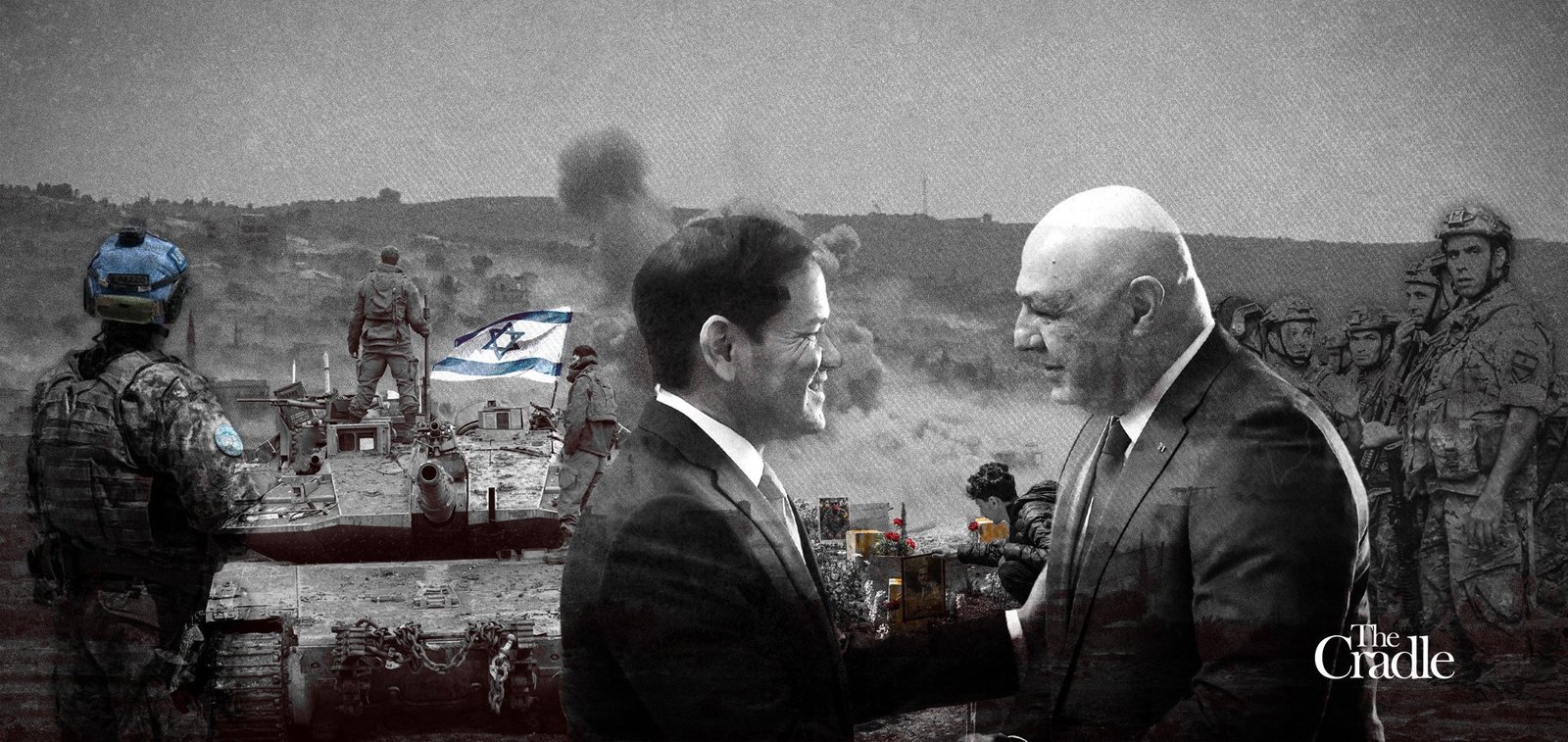
Lebanon’s army is asked to enforce weapons decisions while Israel occupies the south, UNIFIL withdraws, and Washington demands results. Disarming Hezbollah requires a political decision the army cannot make alone without risking internal conflict.
Disarming Hezbollah Tests Lebanon’s Army
The Lebanese army is being asked to secure the borders, implement government decisions, and establish state authority over weapons at a time when US pressure is mounting, and Israel continues to occupy parts of southern Lebanon.
Hezbollah, meanwhile, refuses to surrender its arms while Israeli forces remain on Lebanese soil. The approaching end of the UN peacekeeping mission and Washington’s demands for direct military communication with Israel have made the army’s position still more precarious.
The military leadership must carry out the decisions of the political authorities, preserve foreign assistance, and retain public confidence without being drawn into an internal confrontation that could threaten the institution itself. Where, then, can the army draw the limits of its confrontation with Hezbollah, and who bears responsibility for deciding them?
A seized shipment tests the army
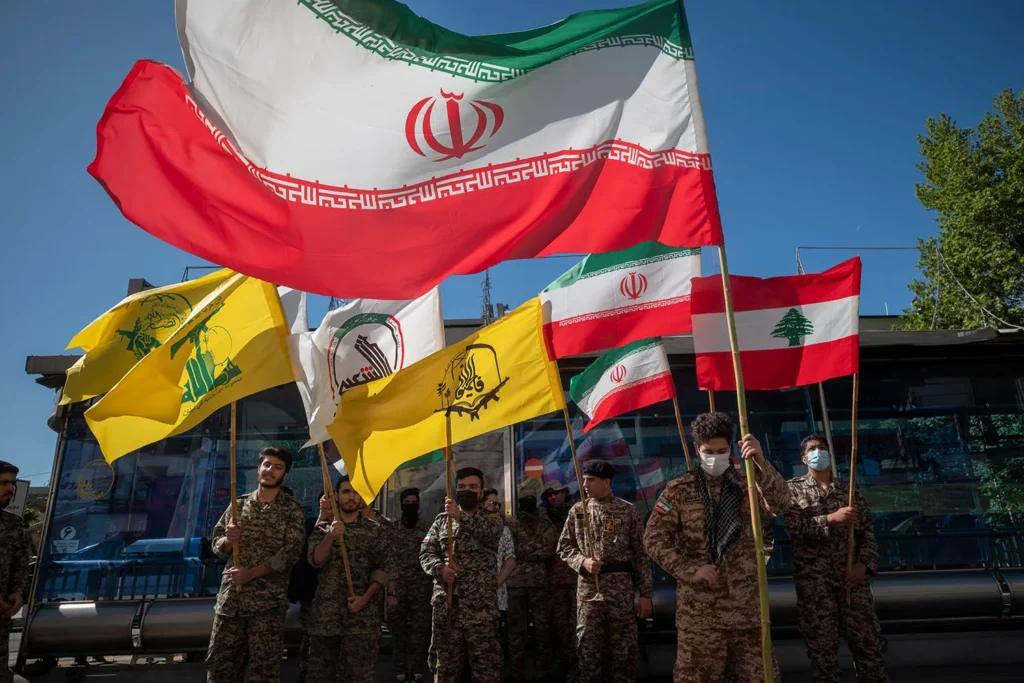
The seizure of a shipment of explosives at the Dahr al-Baydar checkpoint, which Hezbollah acknowledged belonged to it, offered an early test of the new pressures facing the army. Hezbollah MP Hassan Fadlallah said the explosives were intended for use against Israeli occupation forces inside Lebanese territory, rejecting allegations that they were meant for attacks within Lebanon.
Yet the case quickly moved beyond a security and judicial investigation to become a political test of the state’s determination to enforce its decisions on weapons.
During a call with Lebanese President Joseph Aoun, US Secretary of State Marco Rubio demanded accountability for those who ordered, financed, and directed the shipment, insisting that the explosives must not be returned to Hezbollah.
He also called for direct communication between the Lebanese and Israeli militaries to prevent friction and miscalculation. Aoun, for his part, stressed that the army and security forces were implementing decisions to prevent armed displays, confiscate weapons and ammunition, and combat smuggling. He urged Washington to pressure Israel to halt its attacks on Lebanon.
Washington is no longer satisfied with declarations of support for placing weapons under state control. It wants concrete security and judicial measures. Every step taken by the army is now subject to American scrutiny, while also testing how far Hezbollah is prepared to tolerate the enforcement of government decisions.
The army’s delicate balance with Hezbollah
Preserving a working relationship with Hezbollah has become one of the army leadership’s most difficult tasks. As an institution answerable to the state, the army cannot treat government decisions on weapons as optional recommendations. Yet its commanders understand the difference between restricting armed movements or confiscating a shipment and attempting to seize Hezbollah’s arsenal by force.
An informed military source tells The Cradle:
“There is a fundamental difference between confiscating a shipment in violation of the law, seizing an arms depot, or preventing armed movement, and launching a large-scale military operation targeting Hezbollah’s organizational and military structure. The first measures can be included in the state’s natural security powers, provided that they are carried out in accordance with the law and under the supervision of the competent authorities. The second option carries the possibility of an armed clash whose repercussions go beyond the relationship between the army and the party, affecting the political and sectarian balances, and perhaps the cohesion of the military establishment.”
The source adds:
“This does not mean that the army is necessarily incapable of carrying out its missions, but its ability to use force remains linked to the nature of the mission, the clarity of the political decision, and the size of the national cover available to it. The army, which is asked to impose the authority of the state, needs first of all a state that bears responsibility for its choices. Placing the burden of resolving a political and national dispute of this magnitude on the military leadership alone may turn it from a guarantor of stability to a direct party in an open internal crisis, and this is what we do not want.”
The old Arabic expression “Muawiya’s hair,” attributed to the first Umayyad caliph, holds that when one side pulls, the other must loosen its grip to prevent the thread from snapping. For the Lebanese army, preserving that fragile balance with Hezbollah means extending state authority without allowing the enforcement of government decisions to trigger an internal confrontation.
As a senior Lebanese officer recently told The Cradle, disarmament on this scale requires political consensus if the institution is to remain united.
Israel turns Kafra into an accusation
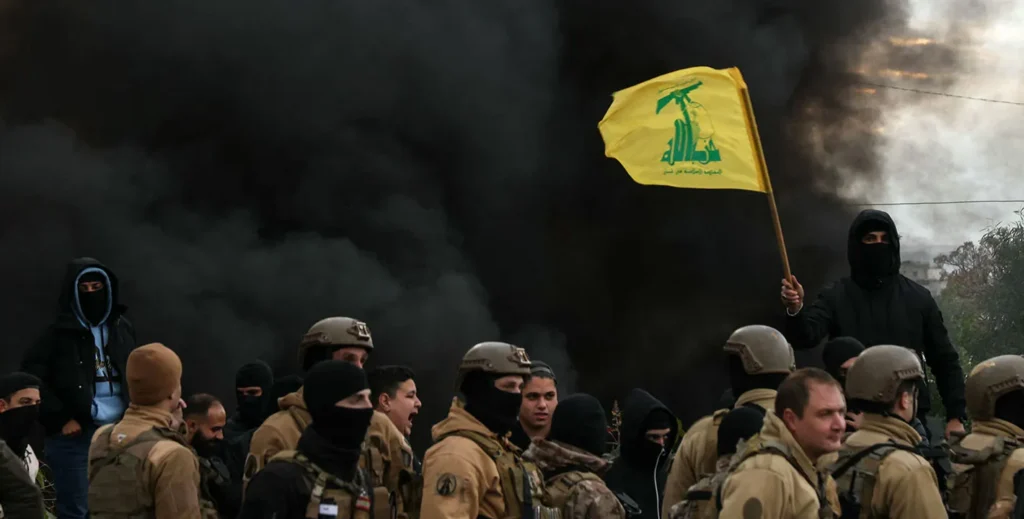
Israel is pulling at that thread too. As Lebanese and Israeli military representatives prepared for talks in Tampa, Florida, on 20–21 October, the Israeli military released footage on Tuesday that it claimed showed Hezbollah members moving weapons from a military facility in Kafra, southern Lebanon.
It alleged that the Lebanese army had reported securing the site following a request through the US-led monitoring mechanism in December 2025, yet Hezbollah continued to access it.
The Israeli statement went further, alleging that members of the Lebanese army had coordinated with Hezbollah during operations to address armed sites. Such accusations are part of a broader Israeli campaign questioning the army’s willingness to act against Hezbollah and its ability to control the south.
But the Lebanese army’s response on 20 October supplied a crucial detail missing from the Israeli account. Its units began work at the Kafra facility in December 2025 and continued until 16 March 2026, when they withdrew at the monitoring mechanism’s request because Israel threatened to bomb the site.
The army said it had explicitly informed the mechanism that the operation was unfinished and that military equipment and ammunition remained there. The facility was subsequently struck by Israel. Army command rejected the Israeli allegations as false.
Israel can thus cite the Lebanese army’s failure to complete an operation disrupted by its own threats as justification for prolonging its occupation. At the same time, it casts the army’s restraint toward Hezbollah as complicity, while any attempt to disarm the party by force risks plunging the military into an internal conflict.
The south after UNIFIL
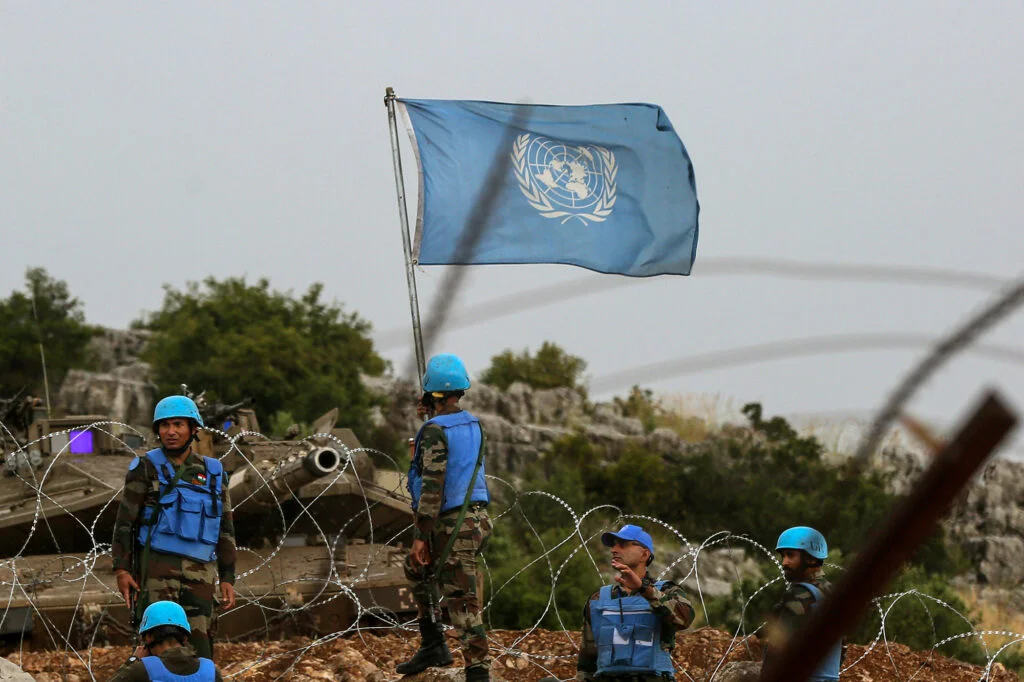
The internal challenge coincides with a major change in the south. Under UN Security Council Resolution 2790, the UN Interim Force in Lebanon (UNIFIL) must cease operations on 31 December 2026, with an orderly withdrawal to follow over the subsequent year.
Its departure will mean more than the loss of foreign troops deployed along the border. UNIFIL also provides monitoring, liaison channels between the Lebanese and Israeli sides, and logistical and operational assistance to the Lebanese army. During a recent visit to Beirut, UN peacekeeping chief Jean-Pierre Lacroix discussed the unresolved arrangements for the period following the mission’s departure.
On 12 October, the EU approved a three-year support mission for Lebanon’s armed forces and Internal Security Forces, covering advice, training, border management, maritime security, and related capabilities. Its operational launch, however, still requires a separate EU decision.
Training and advice, however valuable, cannot immediately replace an international presence on the ground or make up for shortages of personnel, equipment, and logistics. As UNIFIL withdraws, the Lebanese army will face demands to extend its deployment, secure the borders, restrict armed movements, and respond to Israeli violations while implementing state decisions on Hezbollah’s weapons.
The continued Israeli military presence inside Lebanon makes those responsibilities harder still. How can the army be expected to exercise full security control over territory partly occupied by Israel and repeatedly subjected to airstrikes and incursions? Without sustained assistance, clear guarantees, and an actual Israeli withdrawal, the end of UNIFIL threatens to leave the army with responsibilities far beyond its resources.
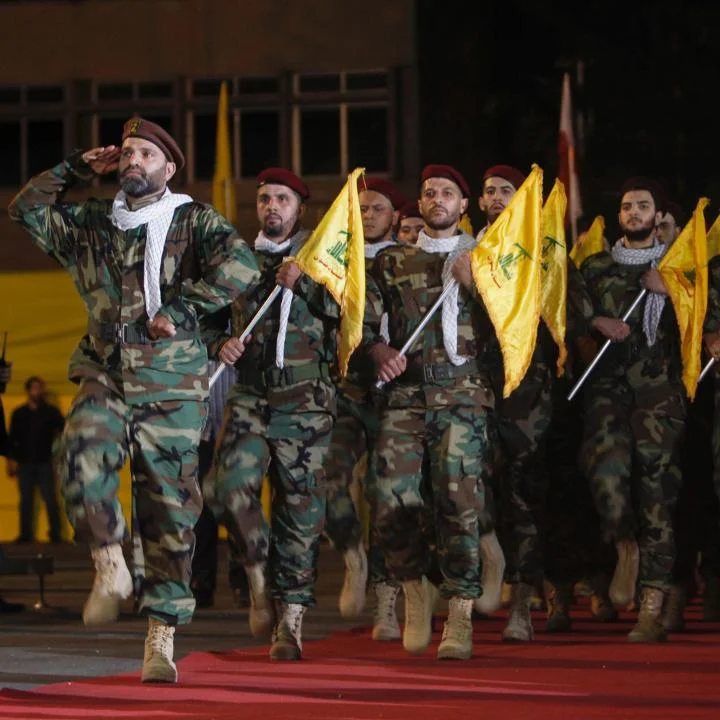
Tampa: Military contact or political opening?
The most sensitive issue is Washington’s push for direct military contact between Lebanon and Israel. At US Central Command (CENTCOM) headquarters in Tampa, Florida, Lebanese and Israeli military representatives began two days of talks on 20 October under American auspices, focusing on security arrangements and the implementation of the US-brokered framework agreement.
The talks came just days before Israel’s 27 October election, amid continuing strikes, demolitions, and military incursions in southern Lebanon, as well as renewed drone activity over Beirut and its southern suburbs. Expectations of a breakthrough remain limited, raising fears in Beirut that negotiations will allow Israel to prolong its occupation while attaching new conditions to withdrawal.
According to Lebanese reporting on the Tampa discussions, Beirut is demanding an end to Israeli attacks, full implementation of the ceasefire, Israeli withdrawal, the return of prisoners, and arrangements for verifying commitments in pilot areas on either side of the Litani River.
Israel, meanwhile, continues to question the army’s willingness and ability to disarm Hezbollah. Reports also indicate that Israeli negotiators are pressing for more direct military coordination, potentially including a joint mechanism to verify the absence of weapons in designated areas – proposals that face Lebanese objections. Washington is seeking measurable steps by the Lebanese army alongside corresponding Israeli measures.
A narrowly defined military channel can help prevent miscalculations, particularly once UNIFIL’s liaison role disappears. But the issue is who determines the limits of such contact. There is a substantial difference between resolving incidents on the ground and creating a negotiating channel that gradually encompasses political and security arrangements beyond the military’s mandate.
Lebanon still regards Israel as an enemy state. Any ambiguity over the purpose of direct contact risks provoking domestic opposition, particularly if technical discussions become a route to broader political commitments.
The army therefore needs explicit instructions from the political authorities, clearly defined objectives, and protection against being made responsible for decisions that properly belong to the government.
Washington targets the boycott law
US pressure is also reaching the laws governing Beirut’s relationship with Tel Aviv. During the same call with Aoun, Rubio raised the 1955 law boycotting Israel, according to Axios, quoting a State Department official who argued that the legislation was being used for politicized prosecutions that obstruct steps toward peace.
Rubio’s intervention followed a judicial complaint against Lebanon’s ambassador to Washington, Nada Hamadeh Moawad, over reports that she had contacted Israeli Ambassador Yechiel Leiter after his son was seriously wounded in a car-ramming attack in the occupied West Bank. The alleged contact was disputed, and the complaint was dismissed on 15 October. Nevertheless, the case became part of Washington’s wider pressure to dismantle legal restrictions on dealings with Israel.
Lebanese coverage of the dispute indicates that US officials have also raised possible changes to the boycott legislation with lawmakers. These demands sit alongside Washington’s pressure for Hezbollah’s disarmament and its objections to the handling of politically sensitive cases.
The Lebanese presidency’s account of the Rubio call, however, announced no agreement to amend the law and instead emphasized the need to end Israeli attacks.
The political obstacles remain formidable. Parliament Speaker Nabih Berri said on 21 October that any attempt to repeal the boycott law would fail in parliament. Altering legislation criminalizing dealings with Israel before an Israeli withdrawal or a peace agreement would also deprive Beirut of leverage while leaving the army exposed to further controversy over the scope of its military contacts.
The danger of an internal clash
The gravest danger is that American demands for tighter enforcement could develop into pressure for the forcible disarmament of Hezbollah. The army can conduct targeted operations against smuggling, seize weapons, and restrict armed activity. An offensive against Hezbollah’s military structure would carry consequences on an entirely different scale.
Beyond the immediate risk of armed clashes, such an operation could draw Lebanon’s political and sectarian divisions into the military itself. The Lebanese Armed Forces (LAF) depends in large measure on its national character and its ability to avoid becoming a party to domestic struggles. Forcing the institution to settle the dispute with Hezbollah through arms could put that cohesion under severe strain.
Yet avoiding an internal clash cannot indefinitely suspend government decisions on weapons. Their implementation requires a political and security plan that the state itself is prepared to enforce.
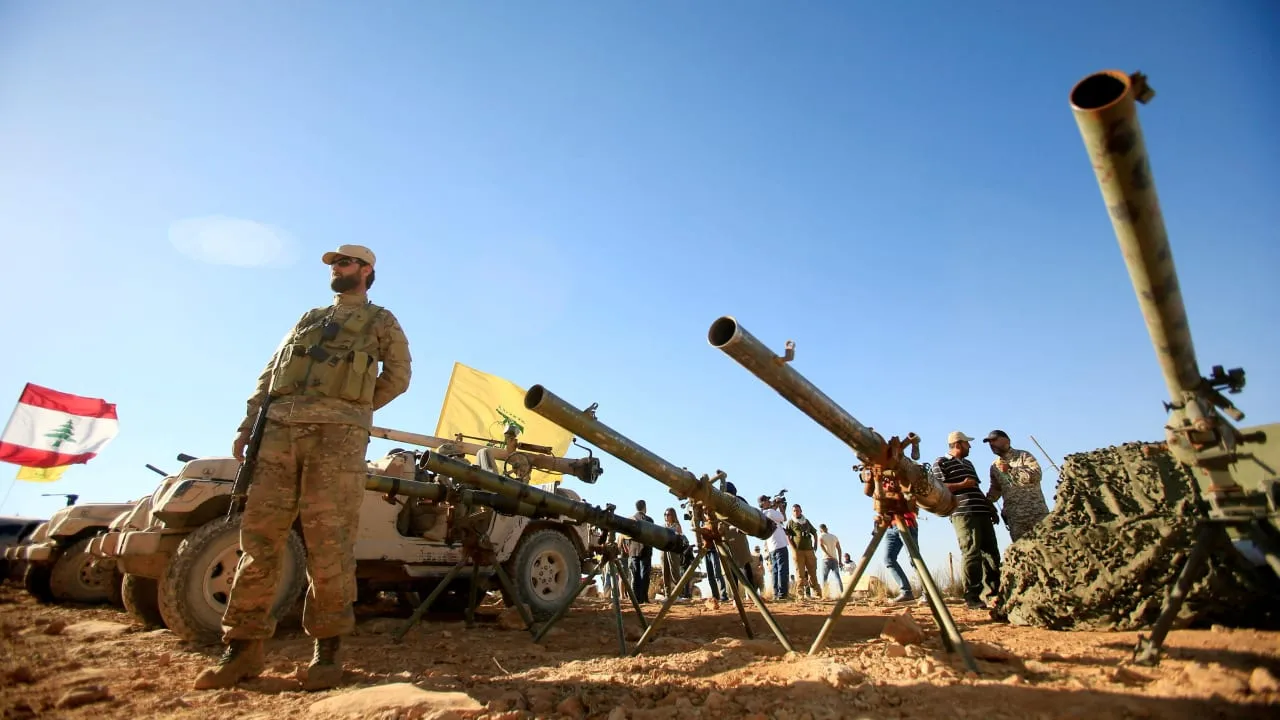
Disarming Hezbollah Requires Political Decision
Caught between US demands, Hezbollah’s refusal to disarm, Israel’s continued occupation, allegations against its officers, and the approaching UNIFIL withdrawal, the Lebanese army faces one of the most difficult periods in its recent history.
Its commanders cannot be expected to determine the limits of confrontation on their own. Decisions about the timing, scope, and guarantees of placing weapons under state control belong to Lebanon’s constitutional institutions.
If Washington expects results, Beirut needs the political space to carry out its commitments without igniting an internal conflict, while Israeli withdrawal and an end to attacks must form part of the process.
The red line that neither foreign pressure nor domestic political calculations should cross is the transformation of the Lebanese army from a national institution into a party to another civil conflict.
A state seeking a single army and a monopoly over arms must first reach a unified political decision and accept responsibility for carrying it out. It cannot leave the military alone to absorb the consequences of Lebanon’s internal divisions and the demands of foreign powers.